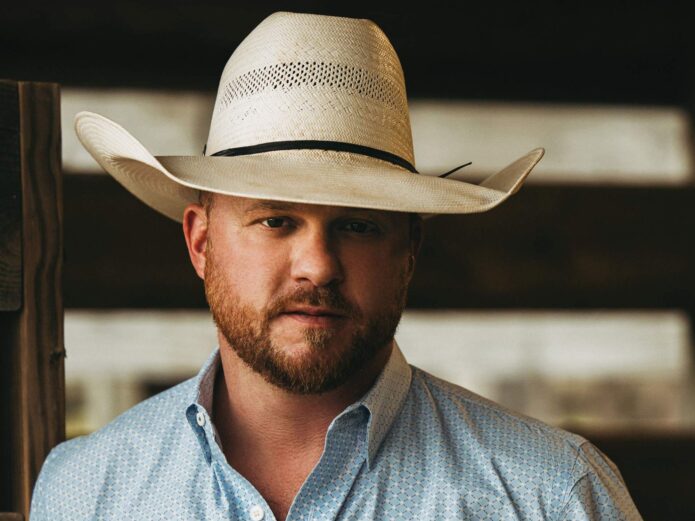
Cody Johnson’s tattoos are easy to underestimate if you only notice the ink on his hands when he is wearing a pearl-snap shirt. There is a lot more going on. His collection runs across his back, chest, arms, hands and even the bottom of one foot. The designs are not a random pile of flash. They point back to his family, his East Texas home, his old band, his work on the road and the country music that shaped him.
Johnson has explained unusually specific details about the collection during tattoo tours and interviews. That makes it possible to describe the obvious shapes and the stories behind them. His own stories identify the people, places and decisions behind several pieces. Where a photograph only shows a design, the description stays visual. Where Johnson has given a reason, that reason is included without dressing it up as something deeper than he said.
The timeline matters as well. Some of the tattoos were done when Johnson was travelling with his band and tattoo artist Buffalo Jake. Others came from particular points in his family life or his career. The result is a body map that feels personal without needing one grand explanation for every piece.
The back cross marks the beginning of Cody Johnson’s tattoo story
Johnson says his large cross on his back was his first tattoo. It is the starting point for the whole collection, and he has called it his worst tattoo when looking back at it. That comment is useful because it makes the piece feel like an early decision rather than a perfectly planned centrepiece. It came first, before the sleeve, the logos and the family designs that now make the collection much denser.
The cross is also tied to a scar from neck surgery. During the tattoo tour, Johnson points out the scar above the tattoo and jokes that scars count as tattoos too. The scar is obviously not ink, but it becomes part of the story because it sits close to the first piece and changes how that area is read. A photograph can show both marks, while Johnson’s explanation supplies the personal timeline.
It is tempting to describe the cross as a complete statement of faith, but the available interviews do not require that much interpretation. The confirmed details are its size, its placement, its position as Johnson’s first tattoo and the way he talks about the result now. Those facts are enough to make it interesting. Early tattoos often carry the history of a person’s taste at that moment, even when the wearer later laughs at the execution.
That early back piece also explains why a current photograph should not be treated as a complete inventory. Clothing hides most of the back during performances, and later tattoos draw attention toward his hands and arms. The cross belongs in the guide because Johnson names it himself, even if it is not the design most readers notice first.
Hand logos turn Cody Johnson’s handshake into a personal code
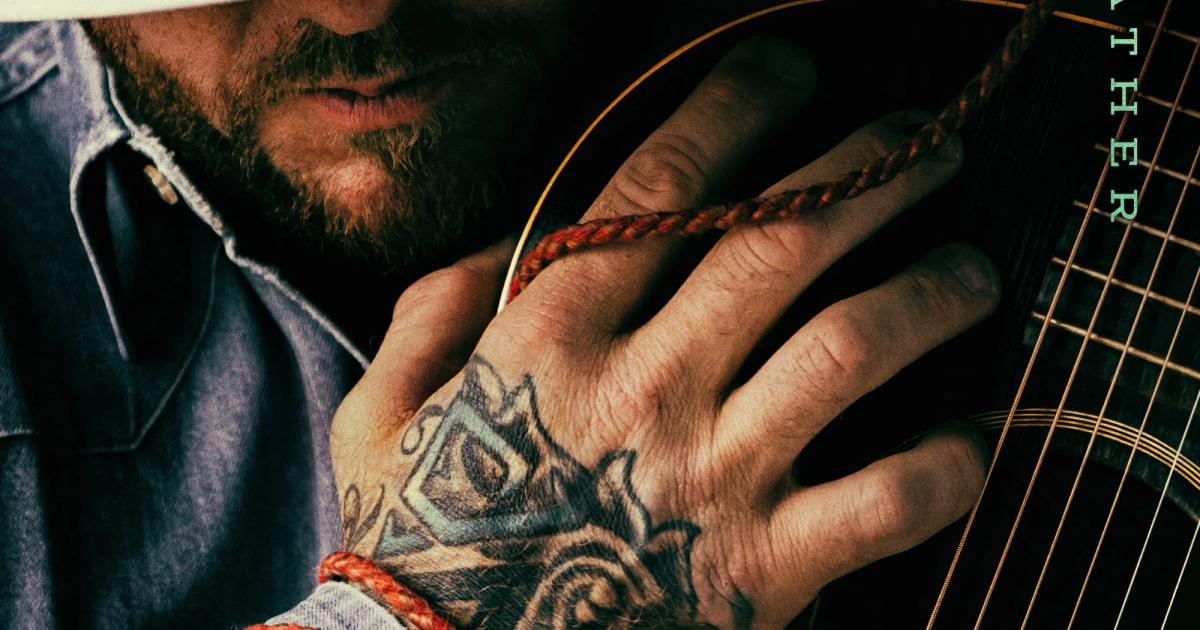
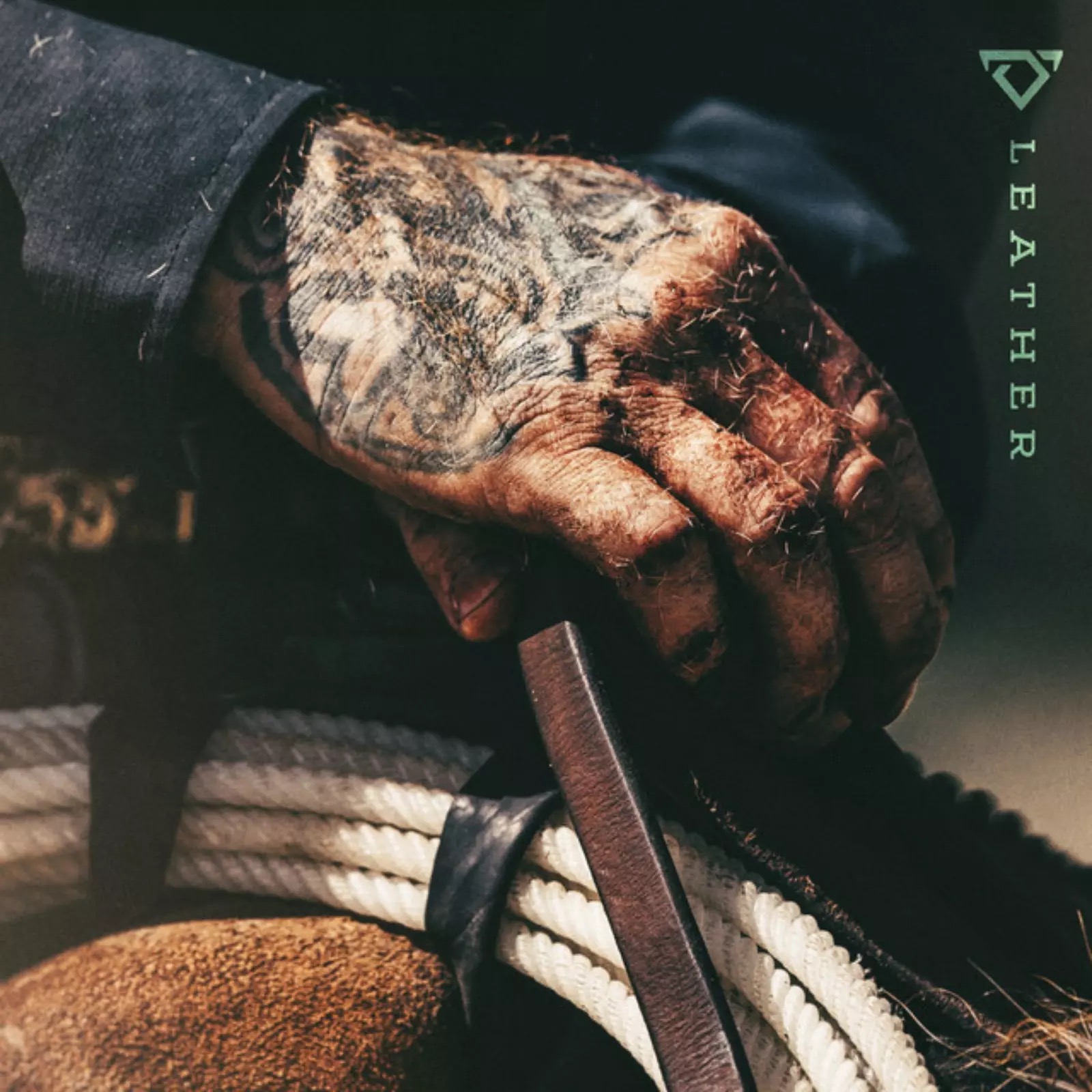
The tattoos on Johnson’s hands are small compared with the arm work, but they carry some of the clearest explanations in the collection. One is the old Rockin’ CJB logo, referring to the Cody Johnson Band. Another is the CoJo logo used across his wider camp, including merchandise and buses. These marks connect the person holding the guitar to the working organisation that helped build his career.
Johnson says he put the logos on his hands so that the message would be present whenever he shook somebody’s hand. His explanation is about accountability. The marks remind him who he represents, the people he works hard for and the standards he wants to live up to. That is a more specific meaning than simply calling them branding tattoos. They are visible reminders attached to an everyday gesture.
The hand placement changes the feel of the designs. A logo on an upper arm can disappear under a sleeve, but a hand tattoo follows Johnson into interviews, performances and introductions. It is almost impossible to separate the ink from the way he presents himself as a working musician. The design may be compact, yet the placement gives it a public role.
Hand tattoos also fade and soften faster than ink in areas protected by clothing. That is worth keeping in mind when comparing photographs. A later image can make a small logo look lighter or less precise without proving that the design was replaced. The safest description is the symbol Johnson identifies, the hand placement and the band or brand context he gives it.
The same close-up views show that the hand work sits beside larger pieces running up the arm. That contrast is part of the appeal. The logos are graphic and compact, while the sleeve uses feathers, flowers and larger shapes. Together they make the hand look like the starting point of a much bigger composition rather than a separate collection of tiny marks.
Brandi, Clara Mae and Cori appear in the arm sleeve
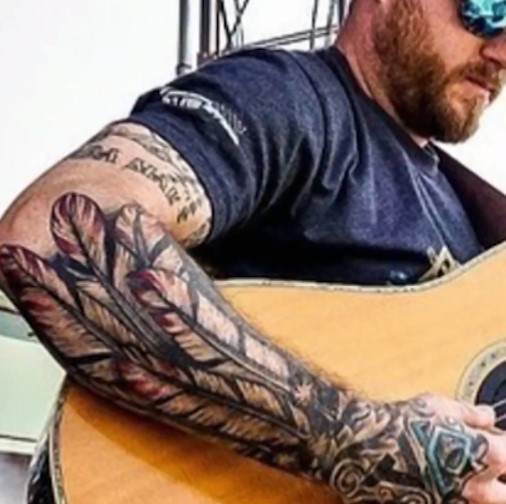
Johnson’s arm tattoos are where the collection becomes most obviously about family. He has a piece with his wife Brandi’s name, surrounded by flowers that bloom around her birthday. The floral framing gives the lettering a softer edge, but the important fact is the connection he explains himself. This is not an anonymous script tattoo that fans have assigned to a relationship. Johnson identifies the name and the reason for the surrounding flowers.
Another design is a sunshine tattoo for his daughter Clara Mae. Johnson says Clara designed the image for him. That detail changes how the piece should be read. It is not just a sun chosen from a catalogue. The design carries the physical mark of a child’s idea, which is exactly why a simple image can matter so much inside a larger sleeve.
He also has a tattoo linked to his daughter Cori, who was born close to Valentine’s Day. The reported design uses Valentine’s imagery, giving the arm another family marker without copying the Brandi or Clara Mae pieces. The three tattoos are worth discussing separately because they refer to different people and use different visual cues: lettering and flowers for his wife, sunshine for Clara Mae and a Valentine’s reference for Cori.
That separation makes the sleeve easier to understand. It is not one generic family tribute spread across the arm. It is a set of individual pieces added at different moments, each with its own image and relationship. The photographs show how the designs sit together, while Johnson’s explanations keep the meanings from being flattened into a sentimental caption.
The arm also includes larger traditional and illustrative elements around the family tattoos. Feathers and darker outlines give the sleeve more weight, especially when the tattoos are photographed beside a guitar or stage clothing. These surrounding details should be described as visible parts of the sleeve, not automatically assigned a private meaning. The documented family pieces have clear explanations; the rest can remain visual.
Texas tattoos, Resistol and the foot line finish the map
Johnson’s connection to East Texas appears directly in the tattoo inventory. A forearm piece combines Texas pine trees with the words Native ETX. He explains that the design marks where he is from and the place he will continue to call home, no matter how many countries or cities he visits to play music. The wording gives the tattoo a plain, strong purpose. It is a home marker, not a vague claim about being a country singer.
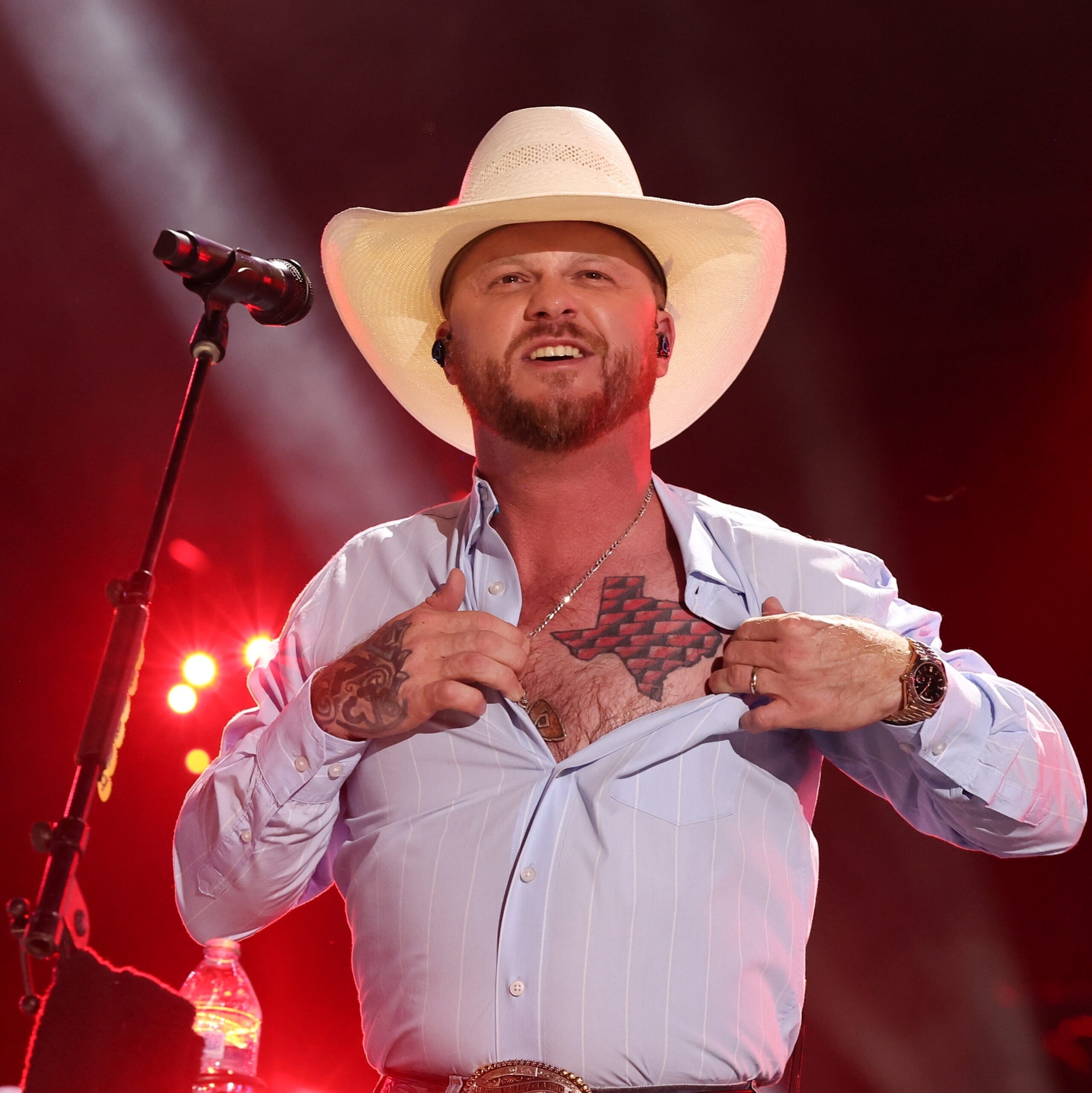
There is also a Texas outline filled with red bricks over his heart. Johnson has connected that piece with his time working at a state penitentiary as a corrections officer. The brick pattern makes the outline different from a simple state silhouette. It adds a reference to the environment where he worked before his music career became his full-time life. The chest placement gives the design extra weight, but the meaning still comes from the story he tells about the job and the state.
A Resistol hat logo records another part of his working life. Johnson got it after securing a hat deal, so it belongs to the part of the collection connected with his career and western identity. The logo is more direct than the family pieces. It names a brand that became part of his public image and his relationship with the country audience. It should be described as a logo tattoo rather than turned into a larger theory about commercial success.
The strangest placement is the bottom-of-the-foot tattoo. Johnson says he and Buffalo Jake were talking on his bus about body parts the artist had never tattooed. When Jake mentioned the sole of the foot, Johnson decided to try it after a show. The finished mark is a line connected to Waylon Jennings’s song “I’ve Always Been Crazy” and the lyric about having one foot over a line.
Johnson has joked that the session tickled and that the final result includes a few rough marks around the stronger line. That makes the tattoo memorable because it is both deliberate and slightly ridiculous. It also fits the way several of his tattoos were made on the road: a conversation turns into an idea, and the idea becomes permanent before anyone has time to overplan it.
Put together, the cross, hand logos, family sleeve, Texas designs, Resistol mark and foot line give Cody Johnson’s collection a clear shape. The tattoos move from early faith imagery to band identity, family, home and country music history. Some pieces are large and easy to photograph, while others need a close-up or a story from Johnson himself. That is why a useful guide needs more than a generic portrait. Each section should name the design, locate it, show it clearly and keep the explanation tied to what he has actually said.
The collection is still capable of changing. New work, fading ink and cover-ups can alter the map, and different shirts reveal different areas. The most reliable way to follow it is to keep dated photographs beside the specific tattoos they show. Johnson’s own accounts give the guide its strongest details, while the images let readers see how the separate pieces sit together on the body.
The arm sleeve carries separate family tattoos, not one giant tribute
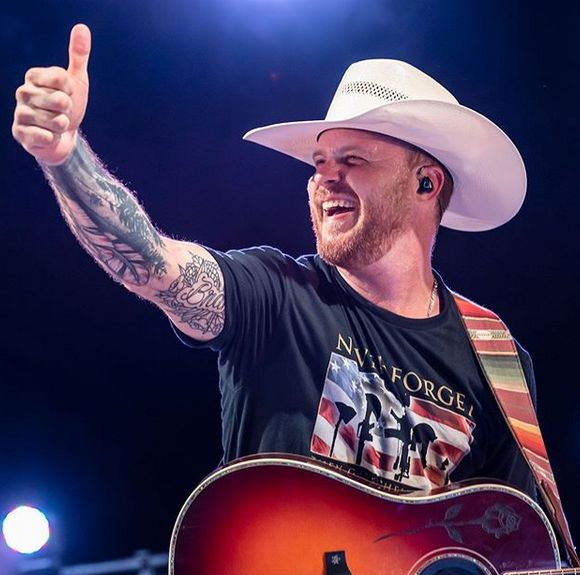
The sleeve deserves a closer breakdown because the family pieces are not one blended design. Johnson describes Brandi’s name and birthday flowers, Clara Mae’s sunshine and Cori’s Valentine’s Day mark as separate tattoos. The arm photograph shows how they share the same area while keeping different shapes, line weights and colours.
The visible lettering is especially useful in a close view. It gives the sleeve a human scale that a distant stage photograph loses. The flowers around Brandi’s name soften the script, while the sunshine and Valentine’s design read more like personal symbols. Johnson has supplied the relationships behind the pieces, but the photographs still matter because they show how the symbols sit beside the larger work.
Native ETX is a tattoo about home rather than a generic Texas slogan

The Native ETX forearm piece should have its own entry because it is more specific than a general Texas reference. Johnson uses the words alongside pine-tree imagery to identify East Texas as home. He has said that playing around the world does not change where he considers himself to be from.
The pine trees give the lettering a landscape around it. That matters visually: this is not simply a set of initials written across bare skin. It combines a place abbreviation with a regional image, so readers can understand why it belongs beside the family tattoos as its own design. The placement also makes sense for a touring musician because the forearm is visible while he performs and plays guitar.
The Texas chest map and hand ink need separate close views
Johnson’s Texas outline filled with red brick is a chest tattoo, while the smaller hand marks sit much closer to the camera in the same kind of photograph. They should not be treated as one piece. The map records Texas and his former corrections work; the hand designs record the Cody Johnson Band, the CoJo identity and the accountability he associates with a handshake.
A wide portrait can prove that both areas are tattooed, but it cannot show every edge clearly. A closer chest view makes the red-brick fill visible, while a hand image lets readers see why the logos are readable marks rather than anonymous dark shapes. Separating the images also prevents the featured portrait from doing work it cannot do.
The map has a different emotional register from the career logos. One points to a state and a former job; the other points to the working team Johnson built around his music. Both are public-facing tattoos, but they tell different parts of the story.