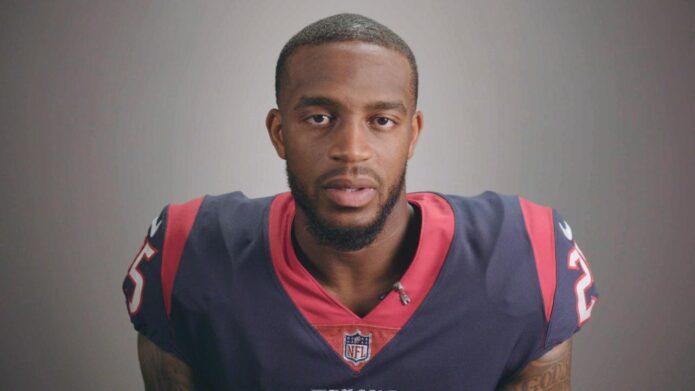
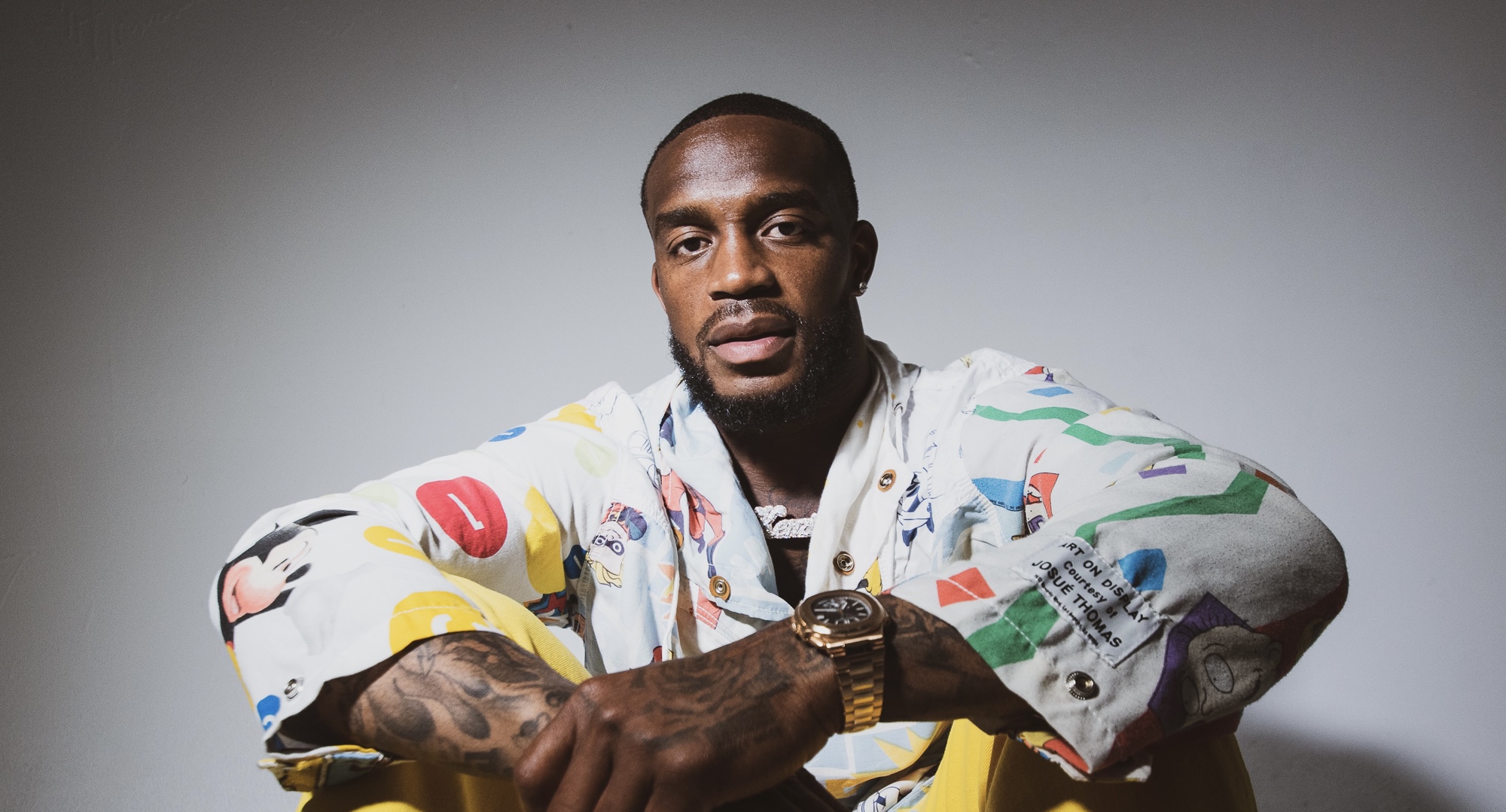
Kareem Jackson has never treated tattoos like random decoration. His ink is personal, crowded, and tied to the people and ideas he carries with him. Family names sit beside religious imagery, portraits of Black cultural figures, football references, and tributes to friends. The whole thing has grown over years, with pieces eventually running together like a shirt.
Jackson started young, then built out most of the collection after entering the NFL. He has talked about long tattoo sessions, visiting artists, and even turning basketball tournament weekends into tattoo parties. That history matters because his work isn’t a neat set of matching flash designs. It’s a timeline on skin, with each new piece adding another layer.
The Georgia Boy wall brings his family into the picture
One of Jackson’s biggest themes is home. The words “Georgia Boy” appear as part of what he describes as a graffiti-style wall, and the design pulls together the people and places that shaped him. His mother’s name, his sister’s name, his father’s name, and a map of Georgia all sit in the same general story.
It feels less like one isolated tattoo and more like a whole section of a scrapbook. The lettering and map give the piece a hometown feel, while the names keep it grounded in real people. Jackson grew up in Macon, and that Georgia connection shows up again and again when he talks about his ink.
A breast cancer ribbon honours his mother’s fight
The breast cancer ribbon is one of the clearest examples of Jackson using a tattoo to keep a family story close. His mother survived breast cancer twice, and he has explained that the ribbon represents more than an awareness symbol. It stands for her resilience and for the fact that she kept showing up for him and his sisters through it all.
That’s why the ribbon lands differently from a generic cause-related design. It’s attached to a specific person and a specific history. In the middle of a large collection, this is one of the pieces with an especially direct meaning.
His first tattoo was a Jesus portrait
Jackson has said his first tattoo came in the tenth grade. He chose a portrait of Jesus, partly because he was lifting weights, feeling himself, and watching older people around him get tattooed. The original work wasn’t perfect, and he has joked that the artist was tattooing just about everyone at the time.
The portrait has since been refurbished, which gives it an interesting place in the collection. It’s both the starting point and a reminder of how his taste changed as he found more experienced artists. Even with newer, more polished work around it, the first piece still matters because it began the whole process.
Roses and grandmother names make the bicep piece personal
On his bicep, Jackson has roses with both of his grandmothers’ names worked into the design. The flowers are familiar tattoo language, but the names are what make this one unmistakably his. It’s a memorial-style idea without needing to be loud about it.
The rose layout also fits the way his collection mixes classic imagery with family details. He has crosses, angels, lettering, portraits, and symbols throughout the work, but the most memorable parts are often the names hidden inside those bigger designs.
The wrist tattoo is for his brothers from another mother

Jackson shares a wrist tattoo with his closest friends. The wording, “brothers from another mother,” sums up the point pretty neatly: these are chosen-family tattoos. It marks the people he grew up with and the bond that survived long after everyone’s paths started moving in different directions.
Compared with the large portraits and packed chest work, a wrist piece can look simple. That simplicity is part of its appeal. It’s a small, easy-to-see reminder that doesn’t need a complicated image to carry a lot of history.
Portraits of his daughters are among his favourite pieces

Jackson has also had portraits of his daughters added to his body, and he has called that work his favourite tattoo. That makes sense: the portraits connect the older family tributes to the next generation. His collection isn’t only about where he came from; it also keeps the people he’s raising close.
Portrait tattoos need a lot of care because small changes in expression can change the whole likeness. In Jackson’s case, the design is important precisely because it’s recognisable and intimate. It’s one of the places where the collection feels less like a public statement and more like a family album.
His legs carry a personal Black history gallery
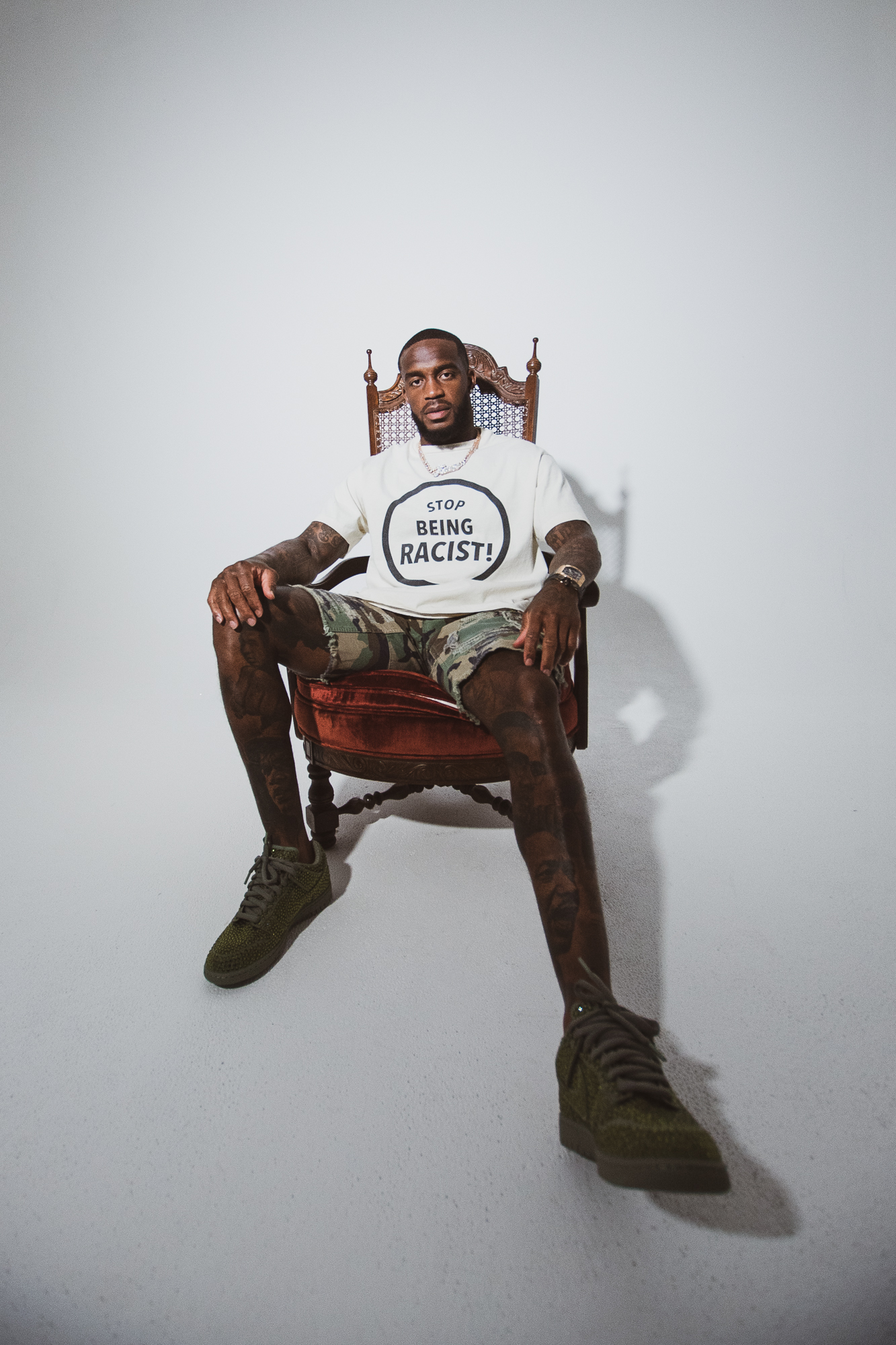
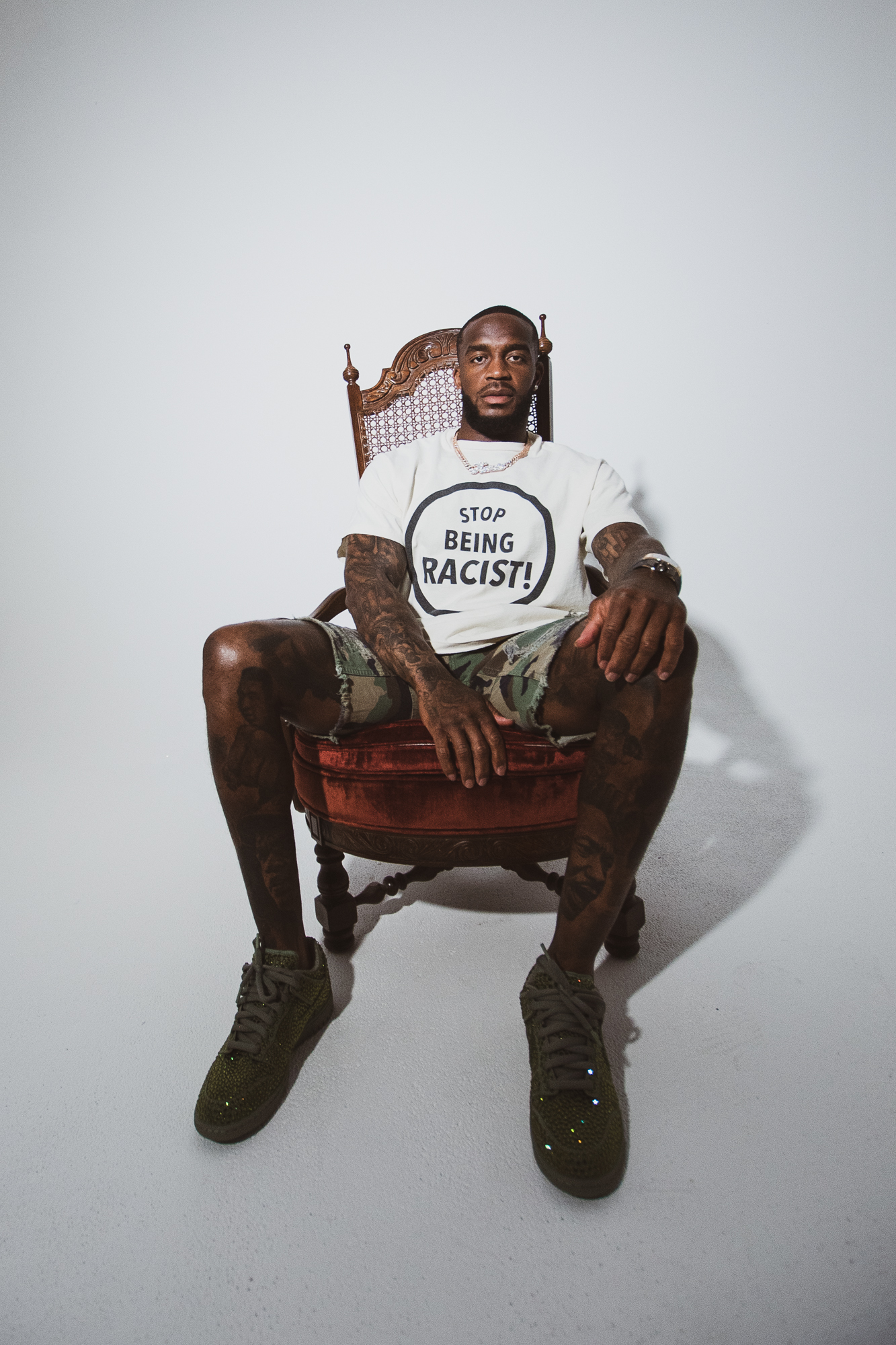
Jackson’s leg tattoos include portraits of Rosa Parks, Martin Luther King Jr., Malcolm X, Jackie Robinson, and Muhammad Ali. That’s a striking group of figures, and it turns his legs into something close to a personal gallery of Black history, protest, sport, and leadership.
Each portrait points to a different kind of influence. Rosa Parks and Martin Luther King Jr. connect to civil rights history. Malcolm X brings another voice and another approach to liberation. Jackie Robinson represents the pressure and importance of breaking a colour barrier in professional baseball, while Muhammad Ali brings together athletic excellence, confidence, and political courage.
Jackson’s choice to put these figures on his legs also fits his larger approach: the tattoos are visible, but they’re not empty celebrity imagery. They’re people he says are close to his heart and part of the ideas he wants to carry forward.
Angels, ribbons, and names cover the chest
On his chest, Jackson has two angels holding a ribbon that carries the names of his uncle and grandfather. Religious imagery comes up often in his collection, and this piece brings faith and family together in one scene.
The angels aren’t there just to fill space. In the context of his other work, they suggest protection, memory, and the people he believes are still part of his life. The ribbon keeps the names central, so the design reads as a tribute first and a decorative composition second.
His back carries a simple message about ambition
Across his back, Jackson has the words “believe in your dreams,” with two angels below and football laces worked into the design. It’s a straightforward message, but it makes sense for an athlete whose career was built over time rather than handed to him.
The football detail stops the quote from feeling like a generic motivational poster. It ties the sentiment back to his own route through college football and the NFL. The angels and religious references keep the message connected to the faith-based side of his collection too.
One Love keeps Demaryius Thomas close
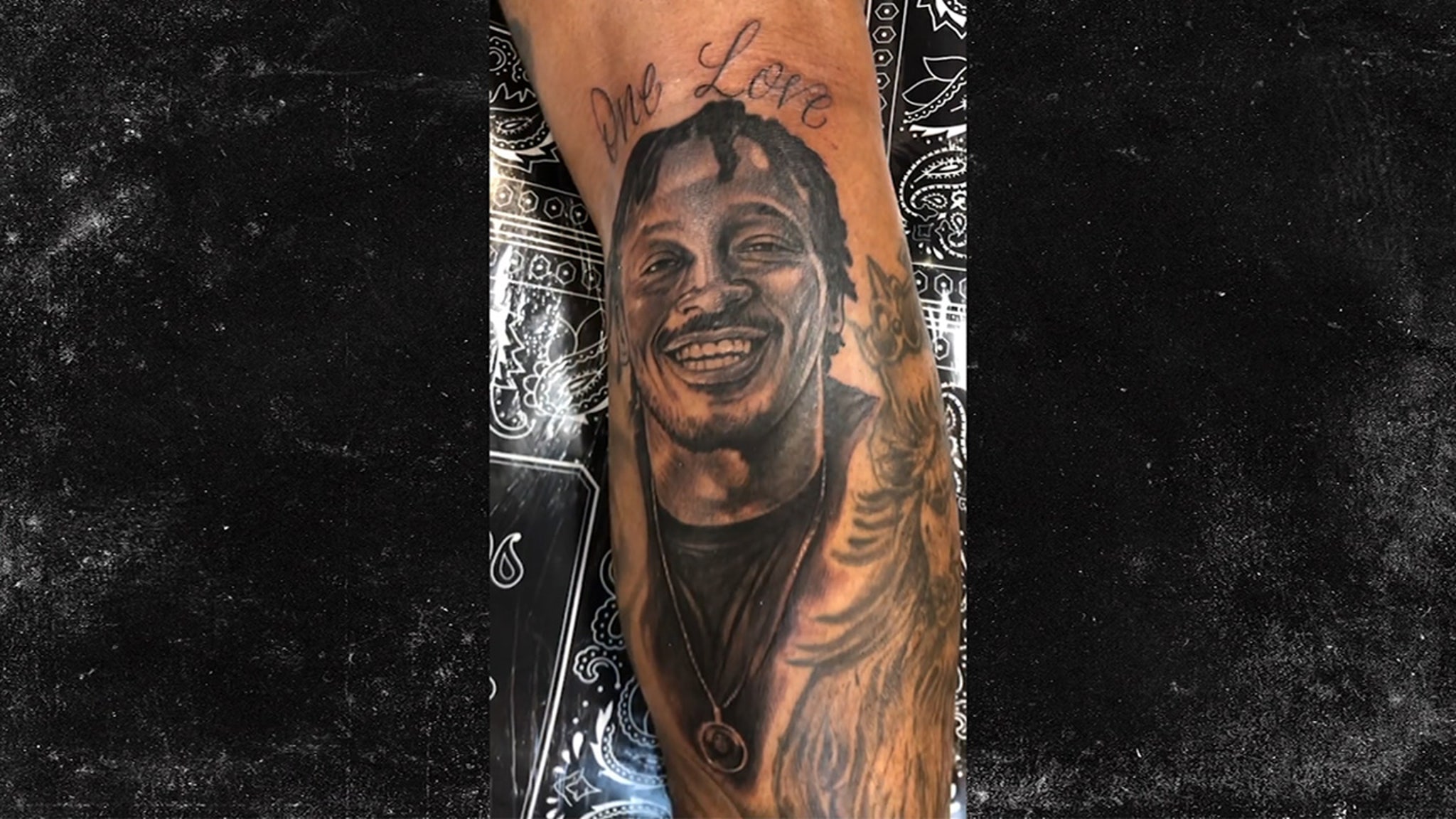
After Demaryius Thomas died, Jackson added a portrait tribute on his leg with “One Love” above it. Jackson and Thomas shared Georgia roots and time with the Denver Broncos, so the tattoo carries both friendship and football history.
The portrait is one of the newer, more specific memorial pieces in the collection. It also shows how Jackson’s tattoos keep changing with his life. A tattoo can honour someone who is gone, but it can also keep a shared chapter visible long after the season ends.
Religious symbols help tie the collection together
Crosses, angels, and other religious references appear throughout Jackson’s tattoos. He has spoken about growing up in church and singing in the choir, even though an NFL schedule makes Sundays look very different now. Those pieces give the wider collection a steady thread.
That thread matters because the tattoos cover a lot of ground. Family, friends, Black history, football, grief, and hometown pride could easily feel disconnected, but faith imagery helps them sit alongside each other. Jackson has described the tattoos as merging into something like a shirt, and that layered effect is part of what makes the collection recognisable.
Why Kareem Jackson’s tattoos feel like a timeline
Jackson has estimated that he has lost count of the total because so many pieces have started to mesh. He has also talked about finishing more of his hamstrings and quads, so the collection may not be completely settled.
The best way to understand the ink is as a timeline rather than a checklist. The Jesus portrait marks the beginning. The tattoo parties show the years when he was building out the work quickly. The family names, portraits, and tributes show what stayed important as his career moved forward.
There’s a relaxed honesty to that. Not every piece needs a dramatic explanation, and not every section has to match. Together, the tattoos show a man making room for family, faith, history, friendship, and football in the same visual language.