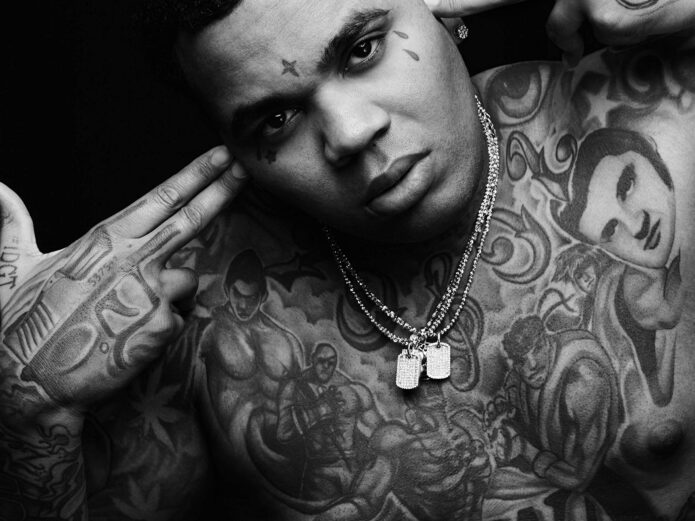
Kevin Gates has never treated tattoos like background decoration. A lot of his ink is right there in the open: across his face, down his chest, over his arms and around the symbols he talks about in interviews. Some pieces are easy to spot in a music video. Others only make sense when a clear shirtless photo catches the lettering, portraits and smaller marks that disappear under clothes.
He has also explained that the designs come from real parts of his life. When he talked about the ink on his face, he said, “They all come from pain.” That line is useful without turning every tattoo into a dramatic mystery. Gates has a big collection, but the details don’t all have one neat explanation. Some have a story attached. Some are symbols he wanted close to him. Some are simply designs he liked enough to keep.
The clearest way to look at Kevin Gates’ tattoos is piece by piece. His forehead mark, teardrops, Elvis portrait, house, PR2 lettering and chest figures don’t all belong to the same idea. They sit together because his body became the place where those different chapters ended up.
The forehead soldier sign is often mistaken for a cross
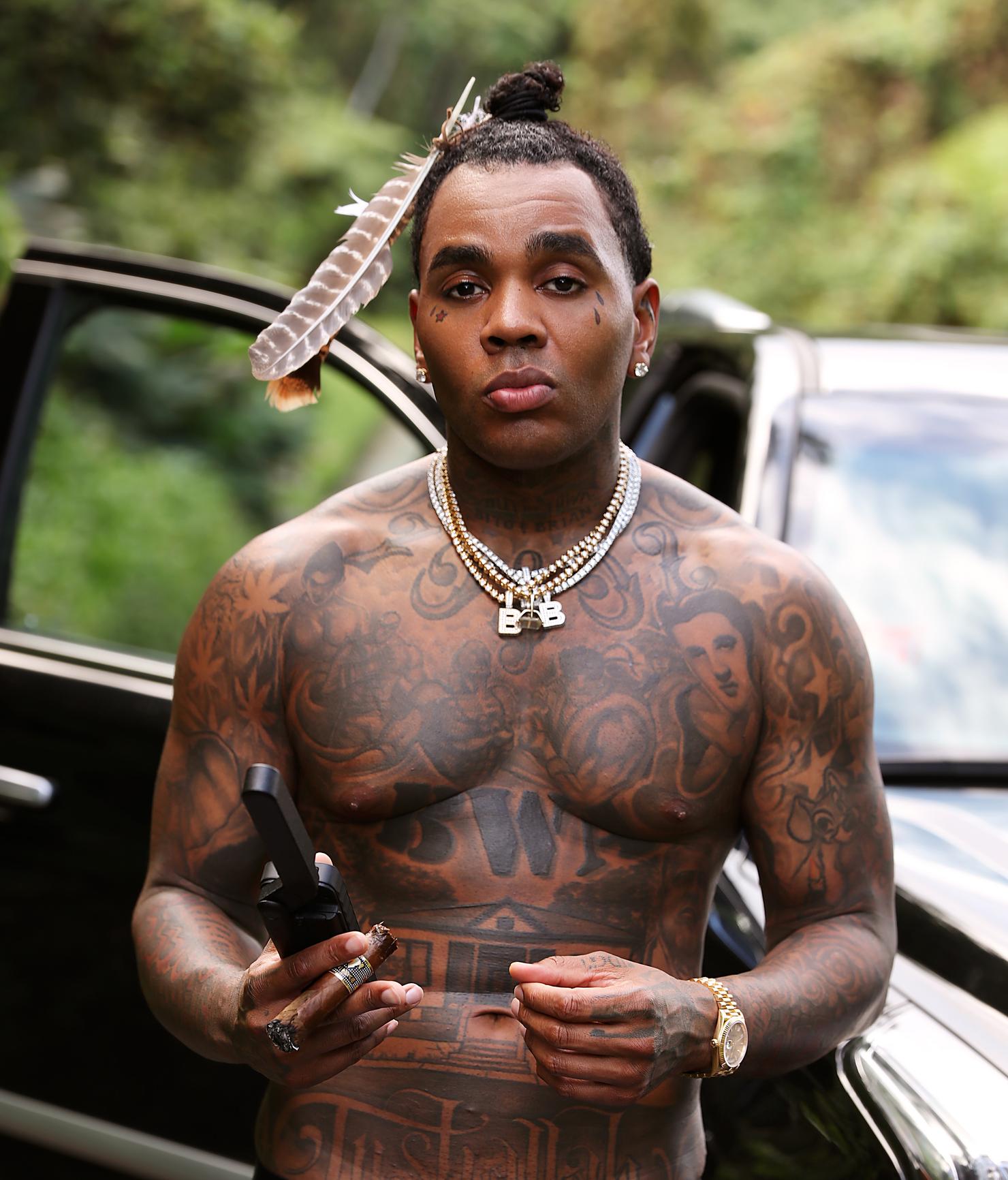
The small mark in the middle of Gates’ forehead is one of the first things people notice. It’s often described as a cross, but Gates has explained that he sees it as a soldier sign. That distinction matters because the shape can look different depending on the light, the angle and how much of his forehead is visible.
It isn’t a huge tattoo, yet it carries a lot of visual weight. Face ink does that. A little symbol can change the whole feel of a portrait, especially when it sits between the eyebrows and becomes part of the person’s expression. In Gates’ case, the forehead design works alongside the marks around his eyes rather than sitting there as a standalone logo.
There’s no need to add a bigger meaning than the explanation he has already given. Calling it a soldier sign keeps the description close to what he said. The tattoo looks simple, but its position makes it one of the most recognisable pieces in his collection.
His teardrops come with a very direct explanation
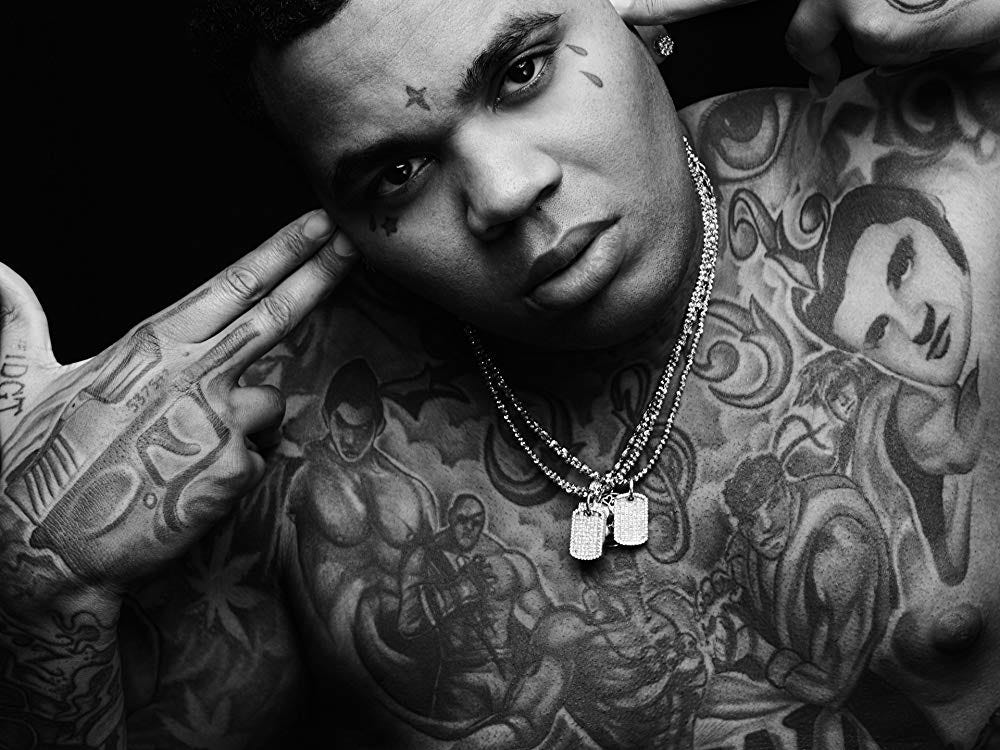
Gates’ teardrop tattoos are another part of his face work that people tend to interpret before hearing him speak. He has said the teardrops mean “forever in sorrow.” That’s a short explanation, but it gives the marks a clear emotional direction without needing a made-up backstory.
The teardrops are small compared with the chest pieces, and they can be missed in a wide shot. In a close portrait, though, they sit beside the eyes and change the mood of the whole image. They’re also a good example of why a tattoo guide needs more than a generic publicity photo. The face marks need a sharp frame, otherwise readers are left looking at shadows and guessing.
Gates has other small facial details as well, including star-like marks and lettering that appear in different photos. Not every tiny line has a published explanation, so it’s better to describe what can actually be seen and keep the confirmed meaning attached to the teardrops. That leaves room for the ink to look complicated without pretending every mark has a secret code.
Elvis on the chest is one of his best-known portraits
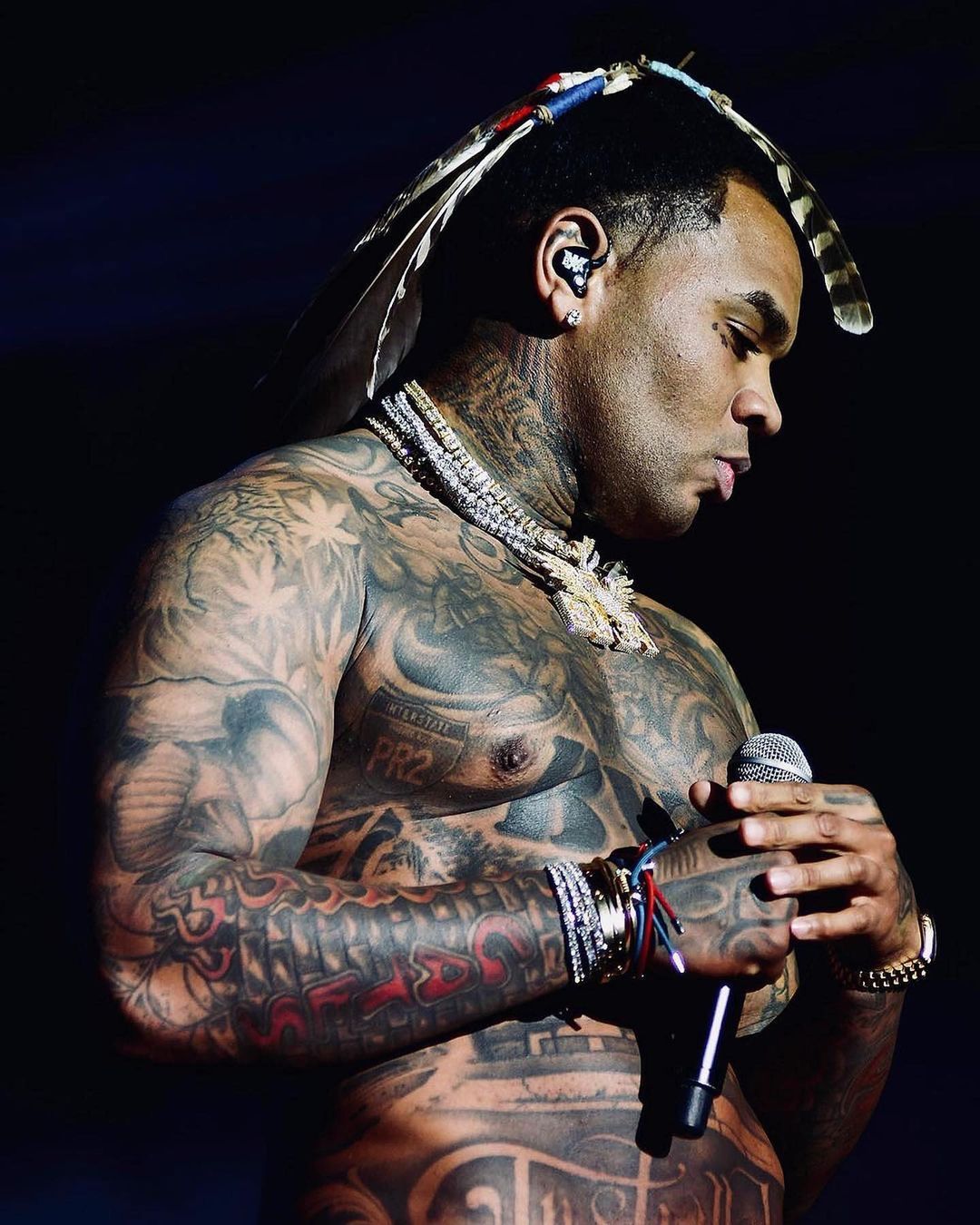
The portrait of Elvis on Gates’ chest is probably his most talked-about tattoo outside the face work. In an interview, he explained it in a blunt, memorable way: “I got Elvis on my chest.” He has also connected the piece to a story from his time in prison, which gives the portrait more context than simply calling it a celebrity image.
It’s a large piece, so the details come through differently in different photographs. A stage shot might show the outline of the portrait and the surrounding lettering, while a closer frame makes the face and shading easier to pick out. The tattoo sits in the middle of a busy upper body, with other designs running across the chest and shoulders.
Gates has said he tattoos the people and things he naturally loves or respects. That makes the Elvis piece feel like part of his taste and his personal history, not a random rock-and-roll reference. It also fits the way he talks about his tattoos generally: the designs are tied to memories, interests and people who mattered to him at a particular point.
The house on his stomach is a separate, personal symbol
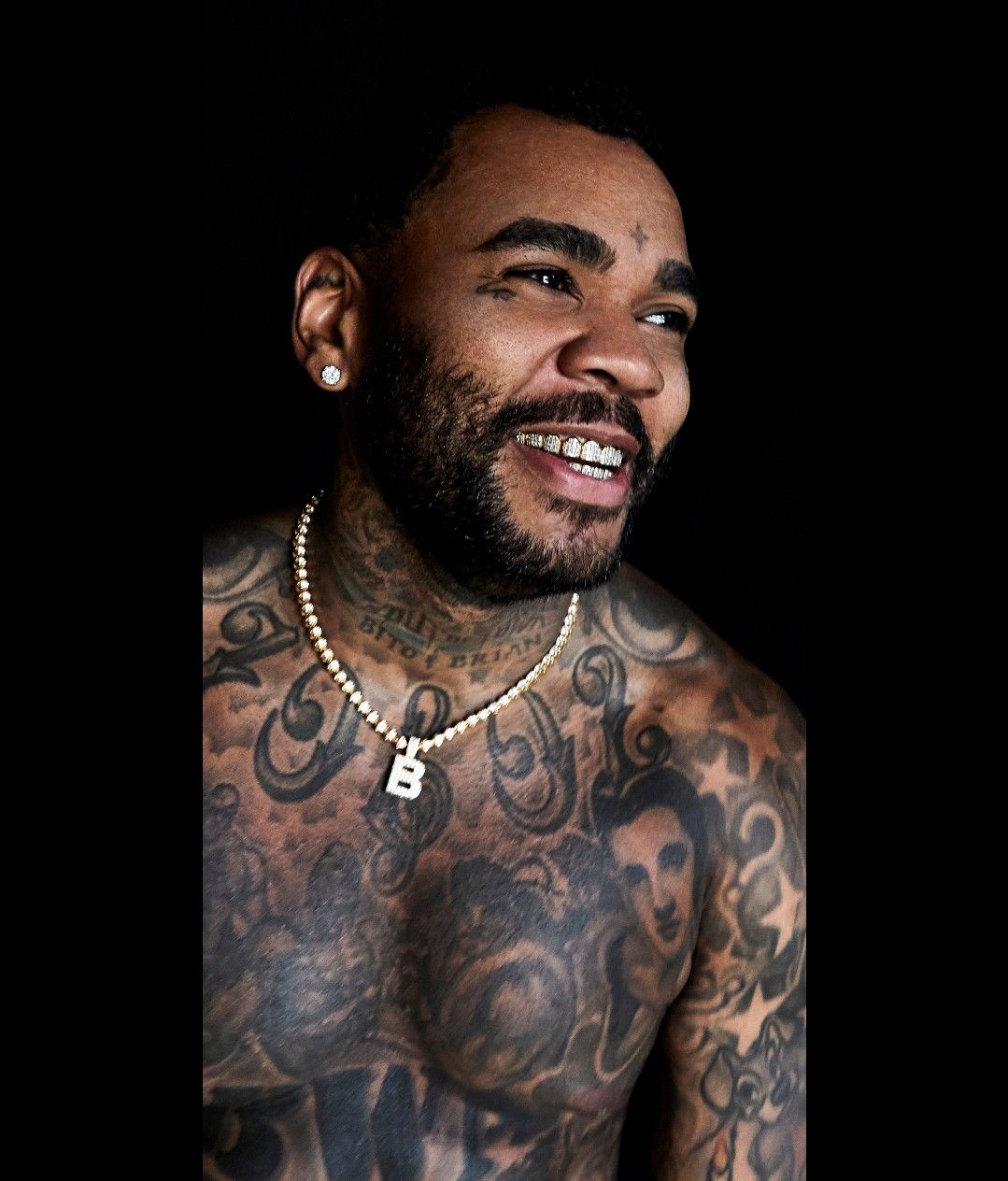
Lower down, Gates has a house tattoo across his stomach. It’s one of the designs that becomes much clearer in a full shirtless photograph because clothing covers the area completely. In close-up portraits, the house can blend into the other torso work, but a wider view shows where it sits and how the lines connect with the surrounding ink.
Reports and tattoo features have described the house as meaningful to him. The exact personal story is less consistently explained than the soldier sign or the teardrops, so the safest reading is also the simplest one: it’s a home image placed on the body, and Gates has treated it as a personal symbol rather than a throwaway decoration.
The house also gives the collection a different kind of visual break. His face tattoos are tiny and direct. Elvis is a portrait. The house is an architectural shape, with straight lines and a recognisable outline. It shows how Gates mixes portraits, words and symbols without trying to make every part look like the same style.
PR2 and the chest lettering sit inside a much bigger piece
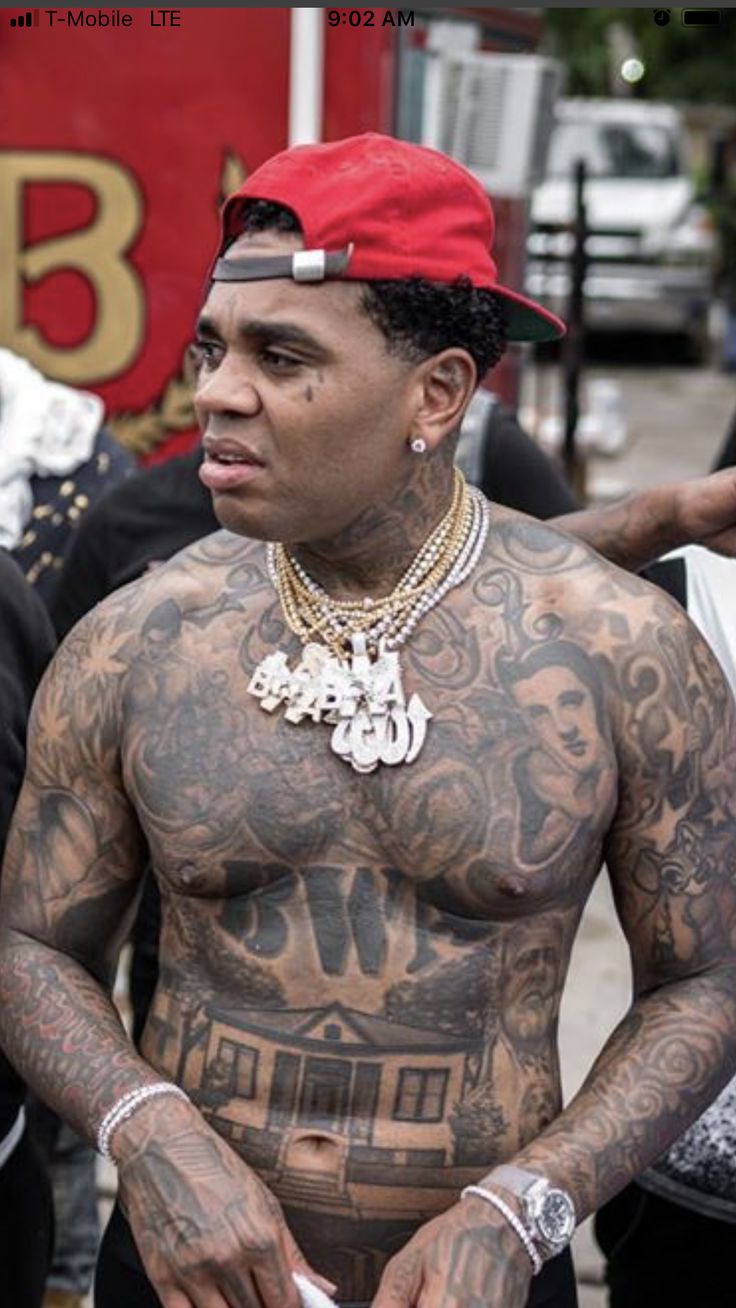
PR2 is visible across Gates’ chest in performance photos, surrounded by other lettering and images. It’s the sort of design that can look like a single bold label from a distance, but a closer look shows a layered chest rather than one isolated word. Chains, microphones, shadows and movement can cover parts of it when he’s on stage.
The chest also includes figures and faces that have been described in tattoo interviews and profiles. Gates has spoken about having Street Fighter characters tattooed on his chest, which gives the artwork a more personal pop-culture connection. He doesn’t talk about the pieces as if they were chosen to fit one polished theme. They’re more like things he wanted to carry with him.
That helps explain why the torso can look busy without looking accidental. The designs come from different interests, but the placement makes them part of the same visual field. A photograph of the full chest is useful here because it lets readers see PR2 alongside the portraits and figures, while a closer image would only prove one small detail.
The arms and smaller marks fill in the rest of the picture
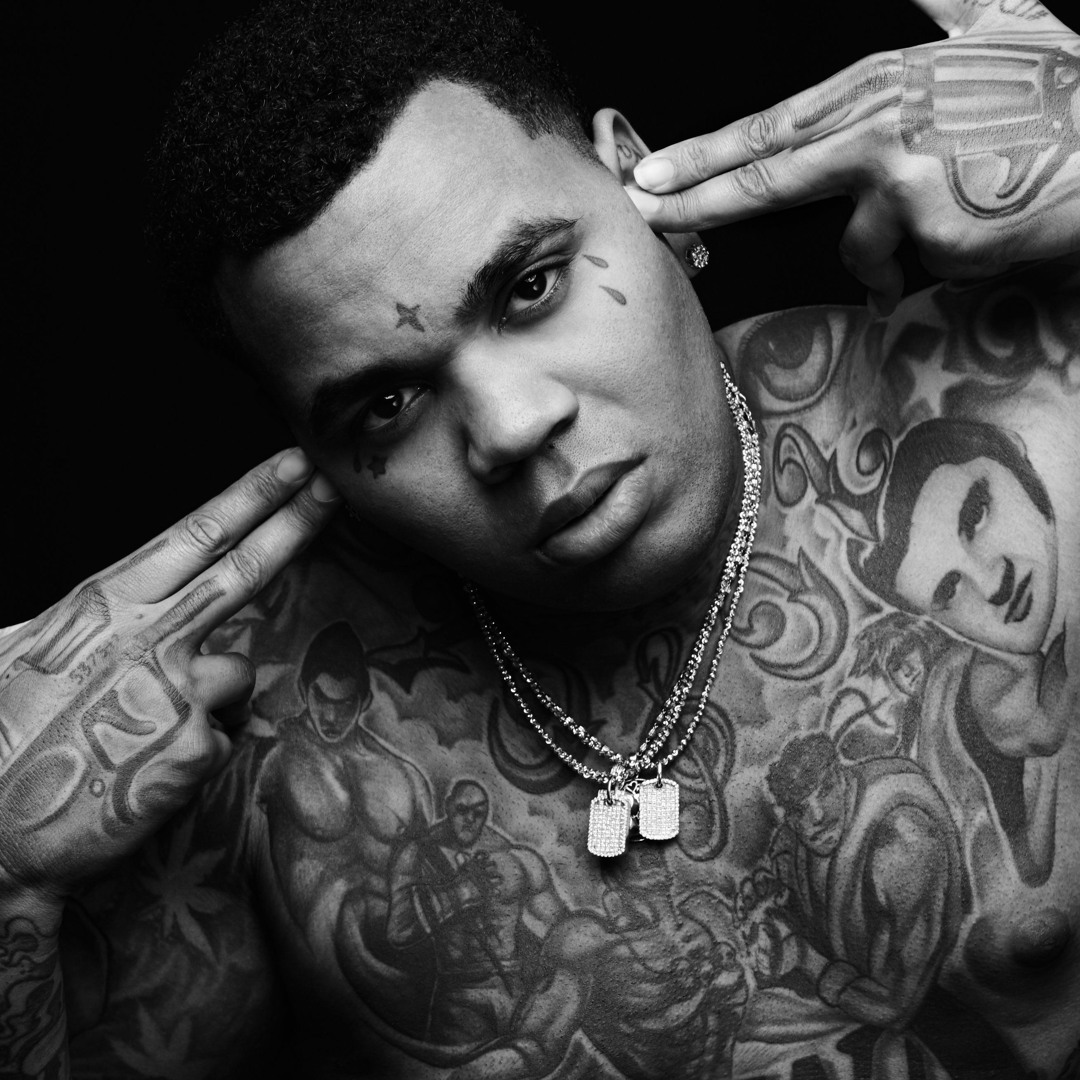
Gates’ arms carry plenty of additional work, including lettering, symbols and smaller images that show up when his sleeves are pushed back or he performs shirtless. The arms aren’t as easy to summarise as the forehead mark or the Elvis portrait because the designs appear across several areas and in photographs from different points in his career.
There are also face and hand details that only appear clearly in close shots. Some look like stars, small symbols or compact lettering. It’s tempting to name every dark patch, but that would turn a careful inventory into guesswork. The useful part is knowing that the collection extends well beyond the headline tattoos and that the smaller pieces change how the larger chest work reads.
His approach to tattooing seems personal but not overly tidy. Gates has talked about drawing and creative expression, and he has described tattooing as something he naturally gravitates toward. That attitude comes through in the mix: a soldier sign, sorrow marks, a famous face, a house, gaming characters, chest lettering and lots of smaller details around them.
Why the collection feels tied to pain, memory and taste
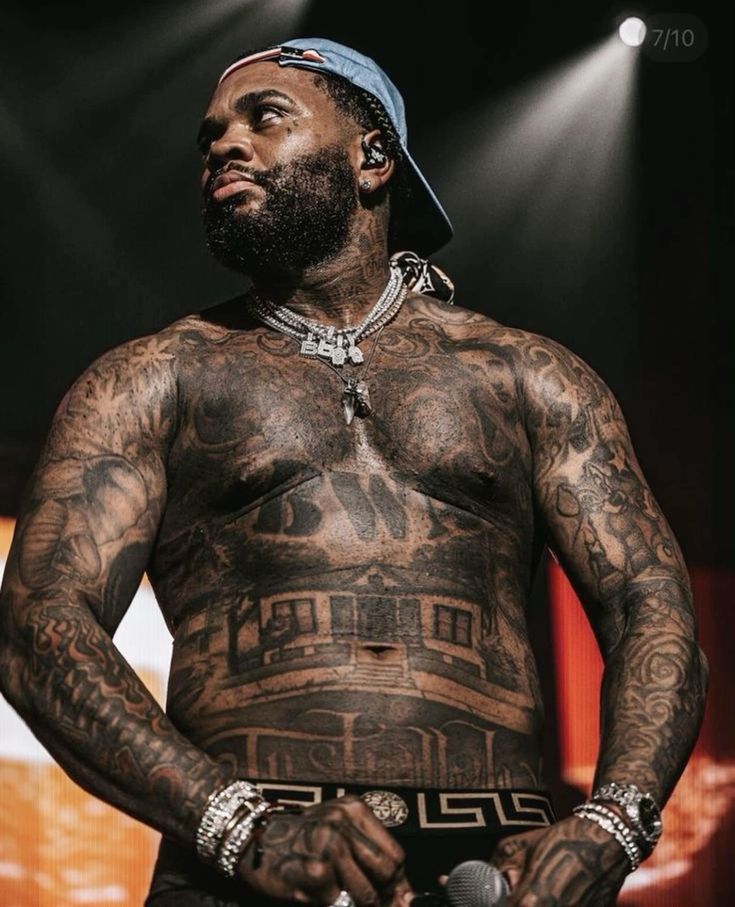
Gates’ own comments give the tattoos a loose thread without forcing them into one neat explanation. The face work is tied to pain and sorrow. Elvis connects to a personal prison story. The house reads as a private symbol. PR2 and the Street Fighter figures sit inside his music, interests and the people or ideas he respects.
That mixture is what makes the ink interesting. It’s not a matching set designed in one afternoon. The tattoos built up over time, and each new piece had to find space beside older work. Some areas are bold and easy to identify. Others only show themselves when the photograph is sharp enough and the angle is right.
So, when you look at Kevin Gates’ tattoos, the best approach is to stay specific. Name the soldier sign, the teardrops, Elvis, the house, PR2 and the Street Fighter references. Describe the placement and the way the pieces sit together. Where Gates has explained the meaning, use his words. Where a picture only shows a small mark, leave it open rather than inventing a story.
Seen that way, his tattoos feel less like a fashion accessory and more like a running record of the things he’s carried with him. There’s pain in the face work, memory in the portraits, home in the house and a lot of personal taste in the chest and arm designs. The collection is crowded, but it still has a shape once you stop trying to make every tattoo mean the same thing.