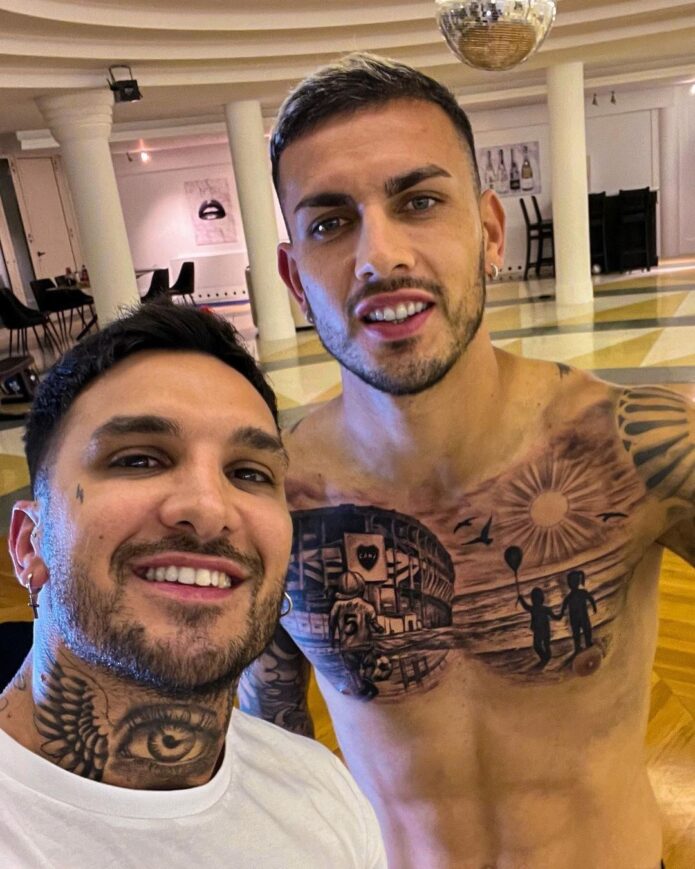
Leandro Paredes has the sort of tattoo collection that makes a football shirt feel like it’s hiding half the story. Once the shirt comes off, there’s a big chest scene, religious artwork, lettering, dates, family details and plenty of black-and-grey work running down both arms.
It’s not all one neat theme, either. Some of the ink is about Boca Juniors and Argentina, some of it is clearly personal, and some of the smaller marks are easier to spot in close-up match photos than in a quick interview clip. Here’s what can be seen and what has actually been reported about it.
La Bombonera and the beach scene across Paredes’ chest
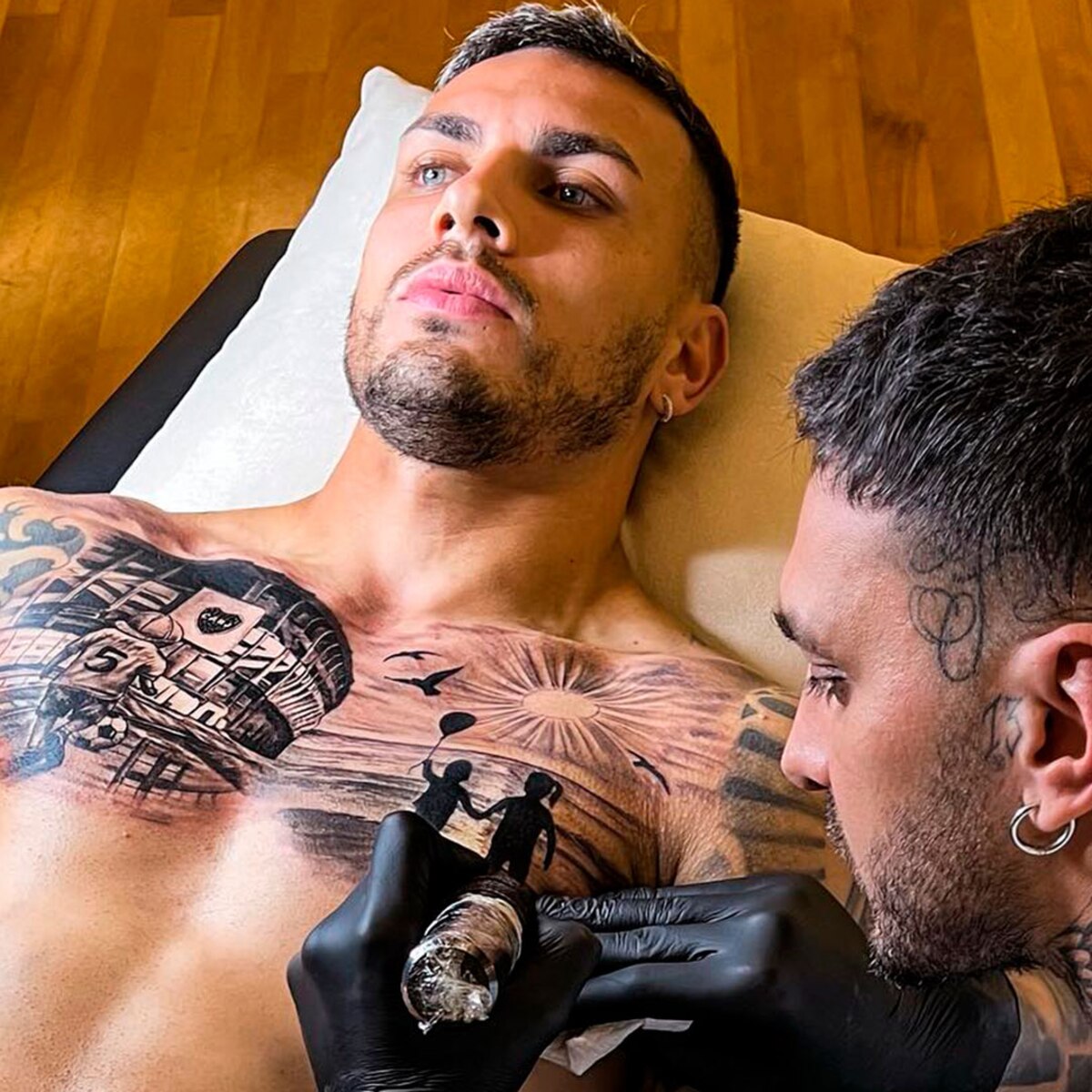
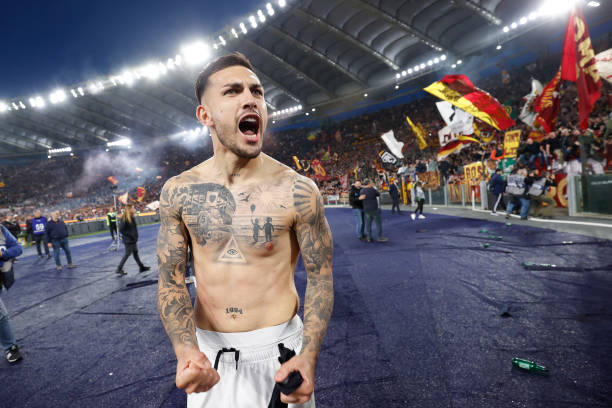
The biggest talking point is the chest piece Paredes got to honour Boca Juniors. The right side shows La Bombonera, the stadium where his football story started, drawn with a lot of fine detail rather than reduced to a simple club badge.
There’s a small footballer wearing number five in the design, which is a nice personal touch because five is Paredes’ shirt number. The stadium, the boy and the ball turn the tattoo into a little football memory rather than just a big building inked across his chest.
The other side moves away from the stadium and into a beach scene. Two children are shown holding hands, with a balloon, the sun and birds worked into the background. Reports connect the two children with his family, although the safest way to describe it is as a family-focused scene rather than guessing at every private detail behind it.
That contrast is what makes the piece work. One side is noisy and football-heavy; the other is softer and more nostalgic. They sit together across the chest, but they don’t look like one generic flash design. Paredes has let the personal side and the Boca side share the same space.
The religious figures on his shoulder and upper arm

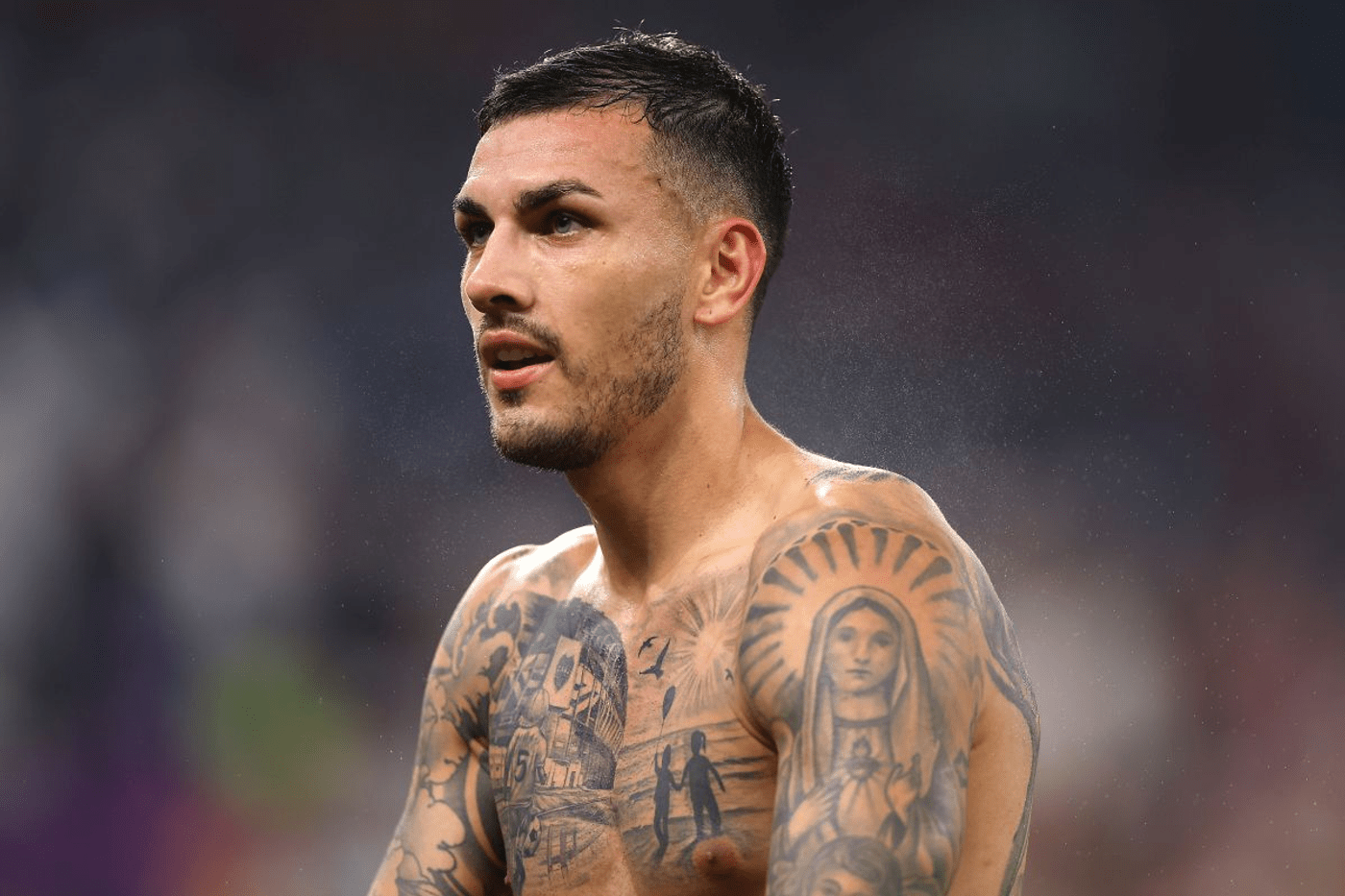
Paredes’ right shoulder and upper arm carry some of the most recognisable images in the collection. The Virgin Mary is visible in a large black-and-grey portrait, framed by radiating lines that make the whole shoulder stand out even from a distance.
Below that, another religious figure sits on the upper arm, with the shading giving the piece a much heavier look than the cleaner lines on the chest. These aren’t tiny symbols tucked away near the wrist. They take up real space and help explain why his arms look so heavily tattooed when he’s playing in short sleeves.
It’s easy to look at footballers’ religious tattoos and immediately invent a dramatic meaning. With Paredes, the images are clear, but the exact private reason for every part hasn’t been explained in detail. So the fair description is simple: religious portraits and devotional imagery form a major part of his upper-body work.
The style is classic black and grey, with faces, soft shading and strong outlines doing most of the work. It also ties the shoulder into the chest instead of leaving it as a separate sticker-like piece. From the front, the sunburst and religious portrait create a strong visual frame around the rest of the chest tattoos.
“VIVERE” on the neck and the 1994 date on his stomach
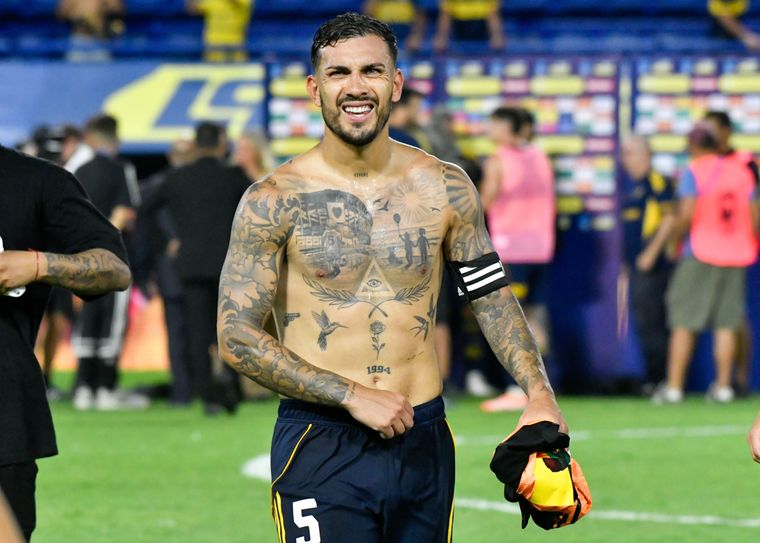
Two of the easiest details to miss are the small pieces in the centre of his body. The word “VIVERE” sits low on the neck, while 1994 is placed on the abdomen. The date is his birth year, so it gives the larger collection a simple personal anchor.
“Vivere” means “to live” in Italian, which fits a player whose career has moved through Italy, France, Russia and Argentina. It’s a short word, but the placement makes it noticeable whenever he’s photographed shirtless. It sits right above the chest work without trying to compete with it.
The 1994 tattoo is much plainer. There’s no portrait or big scene attached to it, just the four numbers in a clear type style. That kind of small date is useful in a collection this busy because it breaks up the heavier shading and gives the eye somewhere quieter to land.
Under the date, photographs also show a triangle with an eye, laurel-style branches, small birds and a flower. Not every tiny mark has a confirmed explanation, so it’s better to describe what is visible than turn the whole stomach area into a made-up symbol story.
Black-and-grey arm work, birds and the smaller chest symbols
The arms are packed with black-and-grey work, and they look different depending on whether Paredes is standing front-on or turning to the side. There are clouds, dark shaded sections and smaller images running from the shoulders towards the wrists.
Across the chest, the little birds and black shapes help join the larger pictures together. They’re not the headline tattoos, but they stop the stadium, sun and family scene from floating in empty skin. The same goes for the leaves, flower and small marks around the stomach.
One of the more interesting things about this collection is how it mixes detailed realism with simple symbols. A realistic religious portrait can sit a few inches from a tiny bird or a plain date without everything needing to match perfectly. That gives the work a lived-in feel, like it grew over time instead of being planned as one full bodysuit.
There are also family names and lettering reported around his wrist and lower arm, including his son Giovanni’s name. They’re harder to read in wide match photos, but close-ups show that the smaller pieces matter just as much as the big chest work. They give the collection a more personal side without turning every tattoo into a public statement.
The chest piece was done by Valentino Russo
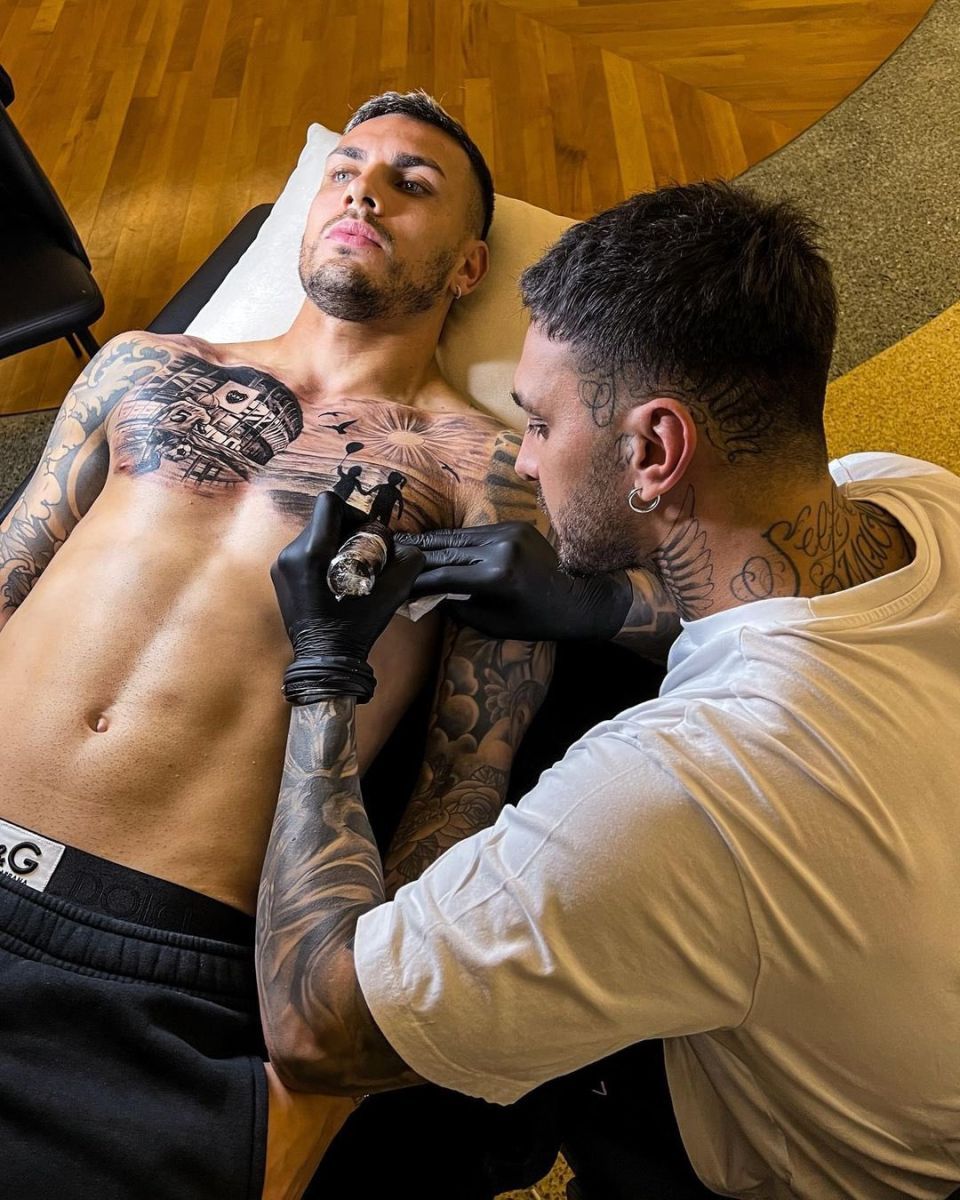
The Bombonera piece was made by Italian tattoo artist Valentino Russo. Photos from the session show the work being built across the chest, with the stadium and beach scene taking shape in layers of black and grey.
That session matters because it explains why the tattoo looks so detailed in finished photographs. The stadium façade, the number five shirt, the children, the sun and the birds all need different levels of shading. It isn’t a quick little emblem that could be finished in an hour.
It also explains why older photos of Paredes can look noticeably different. The chest piece wasn’t always there, and newer images show a much fuller front than the early pictures from his time in Europe. Tattoo collections change, especially when a player keeps adding work around existing pieces.
Russo’s design connects Paredes’ football past with his family life without forcing them into one literal portrait. La Bombonera covers the club that raised him, while the children and beach scene point towards home and memory. That mix is more interesting than simply putting a Boca crest in the middle of the chest.
The Copa América tattoo and the football memories on his legs
Paredes also has football-related ink lower down the body. After Argentina won the 2021 Copa América, reports noted that he showed a tattoo of the trophy on his left leg. It was a natural choice for a player who had just won his first senior international title with Argentina.
Leg tattoos are easy to miss because match kits cover most of them, and even warm-up photos only show small sections. That’s why one clear leg image can tell readers more than ten standard action shots. It helps separate the Copa América piece from the chest work instead of making the whole collection sound like it is only about one big tattoo.
His football memories aren’t limited to one trophy. The number five appears in different parts of his collection, while the Bombonera scene links his childhood club to the player he became. Those details make the football theme feel personal rather than like a row of random team logos.
Seen together, the tattoos move from Boca and family scenes to Argentina memories, religious portraits and small lettering. Some meanings have been explained, while others are simply visible details that should be left open. That balance keeps the guide accurate without pretending Paredes has published a full catalogue of every mark on his body.
What Leandro Paredes’ tattoos say as a whole
Paredes has a lot of ink, but the collection doesn’t feel random. The strongest ideas keep coming back to family, football, faith and the places that shaped him. La Bombonera takes up a huge part of the story, but it sits beside softer images instead of wiping everything else out.
The smaller details stop the larger pieces becoming too heavy. 1994, VIVERE, birds, flowers, names and little symbols give the eye a break between the portraits and the stadium scene. They also show how the collection has grown in stages rather than arriving as one perfectly planned design.
There’s plenty that can be confirmed from photographs: the religious portraits, the Bombonera, the beach scene, the date, the neck lettering, the family references and the Copa América memory. Other marks are too small or too covered to name with confidence. That isn’t a problem. A good tattoo guide can say what is there without inventing a backstory for every shadow.
What stands out most is how comfortable Paredes seems with the mix. He can show a huge chest tribute to Boca, a religious portrait on his arm and a tiny date on his stomach in the same frame. The result is busy, personal and very footballer-like, but it still has enough quiet detail to keep looking interesting.