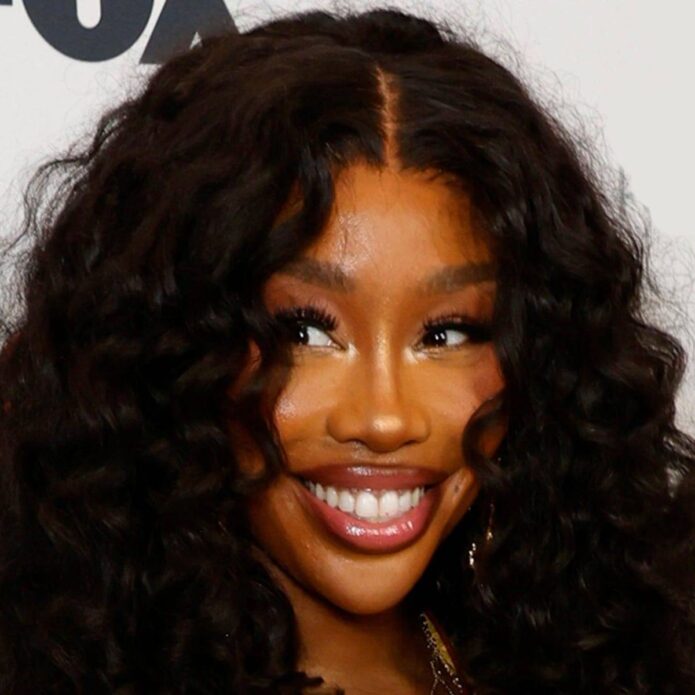
SZA’s tattoos have changed with her music, and they don’t all belong to the same visual style. There are tiny finger inkings, a readable album title, a childhood name across the lower back, a light bulb on the hip, a butterfly on the arm and newer work that carries family history across the chest. Some pieces are easy to spot in a concert photograph. Others only appear when she turns her body toward the camera or posts a close-up herself.
The useful way to read SZA’s collection is to separate the tattoos she has explained from the ones that are simply visible. She has given a clear story for the “Ctrl” forearm tattoo, the “LANA” lower-back lettering, the Morse-code SOS mark and the Māori-inspired kirituhi pieces. Other designs, such as the light bulb and butterfly, are well documented visually but do not have a confirmed explanation from SZA. The difference matters. A good tattoo guide can describe a design without pretending to know a private reason behind it.
SZA’s Ctrl forearm tattoo marked a new chapter in her career
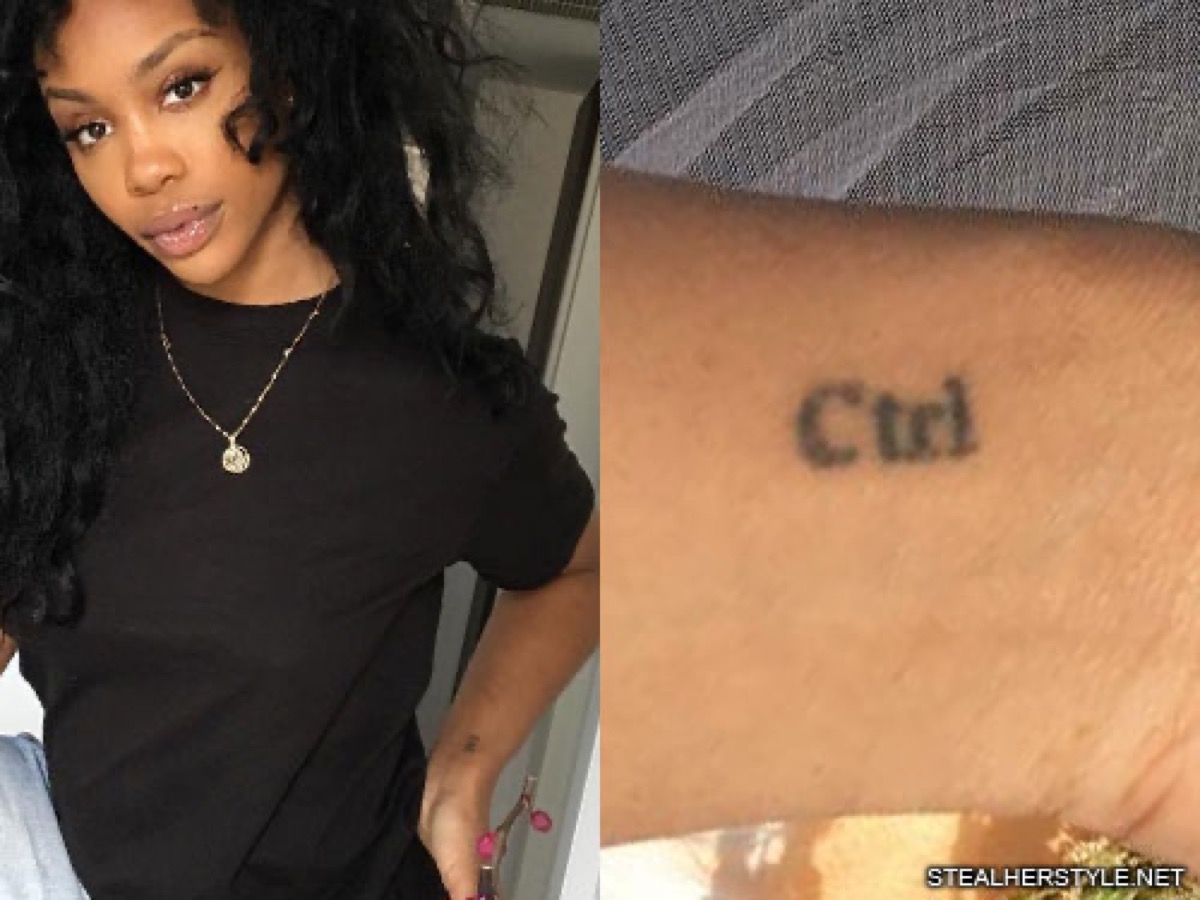
The word “Ctrl” is tattooed on SZA’s left forearm in simple black lettering. It is small, direct and easy to read when her arm is uncovered. The tattoo was connected with her debut studio album, which arrived in 2017, and it appeared before the release. That timing gives the piece a clear place in her career timeline: it was not a random word added years later, but a mark attached to the project that introduced her to a much wider audience.
SZA has spoken about the idea behind the album title. In an interview, she described control as something she wanted, chased and struggled to hold. The tattoo works because the word has several meanings at once. It can refer to the album, but it also reflects the tension in the songs between wanting certainty and accepting that life will not always provide it.
The placement on the forearm makes the lettering easy to show in photographs and performances. It is not hidden beneath a shoulder or tucked around the hip. It sits in a place that can be seen when she holds a microphone, rests her hand near her waist or poses with her arm bent. The design itself stays plain, which keeps the focus on the word rather than on decorative framing.
Fans have copied the title as their own tattoo, but SZA’s version is tied to her release history. That is why the date and the lettering belong together. A reader looking at the ink is seeing both a piece of body art and a small piece of the Ctrl era.
A floral branch sits across SZA’s upper chest
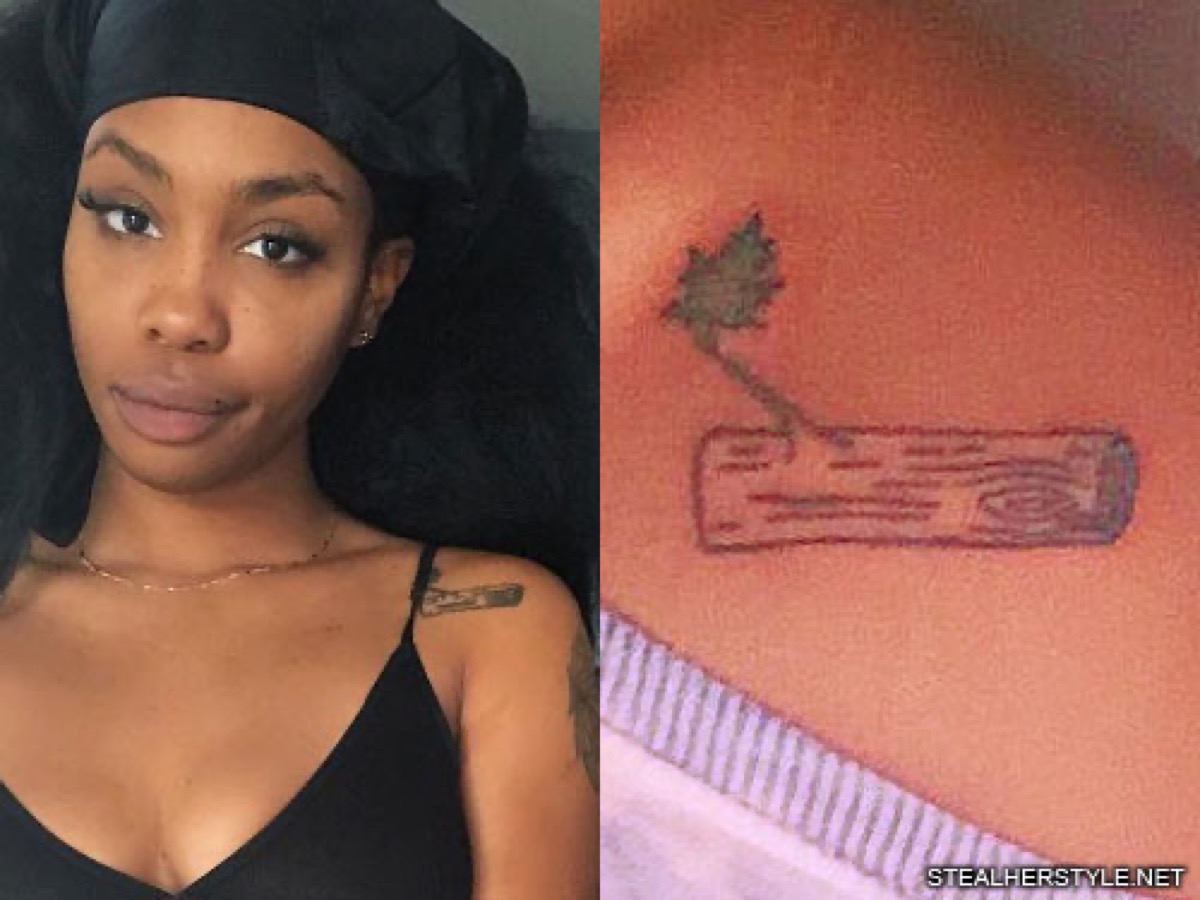
SZA has a small tattoo across the upper chest that is often described as a branch or leafy floral design. The image shows a horizontal shape with a flower at one end and wood-grain lines inside the main form. It sits near the collarbone, where the design can be covered by a strap or revealed by a lower neckline.
The tattoo has a lighter feel than the dense black lettering on her back. Its outline is thin, and the composition depends on the relationship between the branch, the flower and the open skin around it. From far away it can look like a short bar or a small decorative mark. In a closer view, the organic details become easier to separate.
There is no dependable first-person explanation for the exact flower or branch. That means it should not be labelled as a memorial, a family symbol or a reference to one of SZA’s songs without stronger evidence. It is enough to say that the piece adds a small nature motif to the chest and sits apart from the newer kirituhi tattoos.
The placement also shows why SZA’s tattoos can disappear from ordinary press photographs. Hair, jewellery and clothing often cover the collarbone. A clear image of the chest is more useful than a red-carpet portrait where only one end of the design is visible.
The light bulb tattoo on SZA’s hip is small but easy to recognise
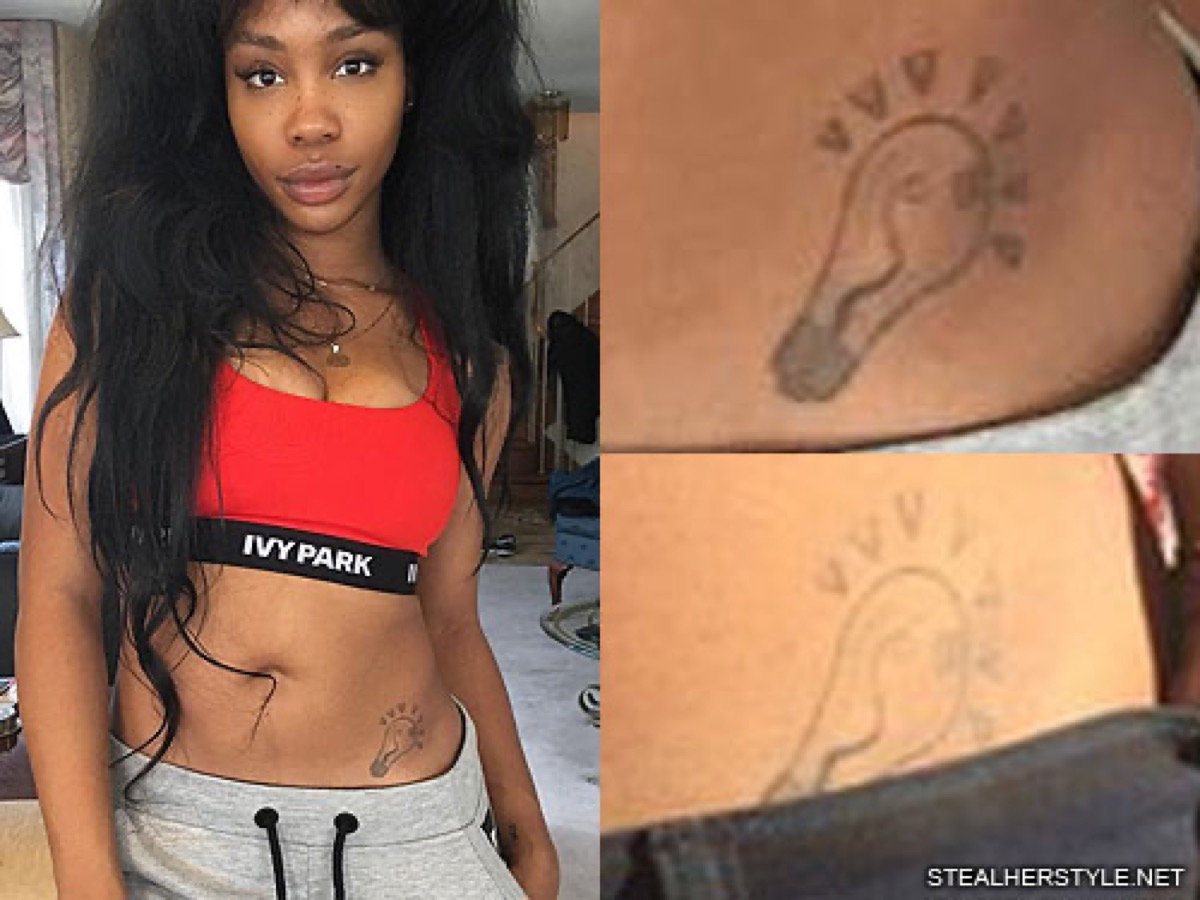
The light bulb on SZA’s left hip is one of the more playful designs in her collection. It has a rounded bulb, a narrow base and short lines around the top suggesting that it is switched on. The shape is drawn in a simple outline style rather than filled with heavy colour. That keeps it readable even though the tattoo itself is fairly small.
Light bulbs are often used as shorthand for an idea or a moment of inspiration, but that general association is not the same as a confirmed meaning from SZA. The photograph establishes the design and the placement. It does not tell us whether she chose it because of music, creativity, a private joke or simply because she liked the shape.
The hip is a very different canvas from the forearm. It is normally covered, so the bulb appears in older personal photographs and fashion images rather than in every public appearance. When it is visible, it gives the collection a softer interruption between larger areas of skin. The tattoo feels almost like a margin note beside the body rather than a headline piece.
Its outline also appears to have softened in some photographs. Lighting and image quality play a part, but the basic shape remains clear. That is why the bulb belongs in a detailed inventory even though it does not carry a long documented story.
SZA’s butterfly tattoo brings a traditional flash shape to the arm
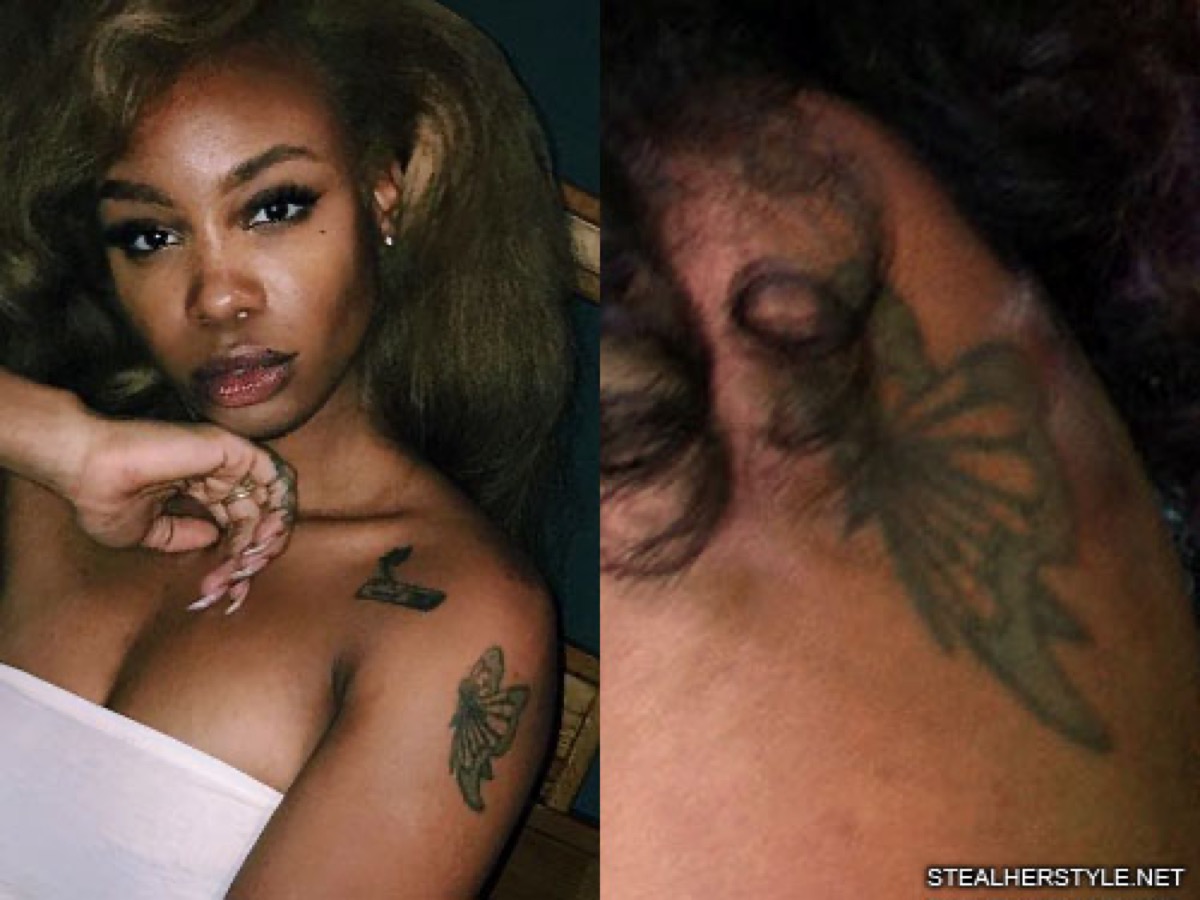
The butterfly on SZA’s upper left arm is a more recognisable traditional-style image. The wings are dark and patterned, with a compact body in the centre. It sits high enough on the arm to show when she wears a strapless top, but it can disappear beneath a sleeve or behind her hair in a casual photograph.
Butterflies are common tattoo subjects, which can make people rush to assign a meaning such as transformation or freedom. Those ideas may fit the general symbol, but SZA has not publicly confirmed that one of them is the reason for this particular piece. The strongest description is visual: a butterfly, placed on the upper arm, with bold wing shapes and a darker outline.
The style is noticeably different from the fine lettering of “Ctrl” and the simple light bulb. That difference is part of the appeal. SZA’s tattoos are not arranged like a single sleeve with one artist or one strict colour palette. They look collected over time, with each design keeping its own character.
The butterfly also shows how a small tattoo can change depending on the pose. In a close portrait it becomes a clear focal point near the shoulder. In a full-body stage photograph it may be reduced to a dark patch. A useful reference needs the closer view so readers can see the wing pattern rather than guessing from a distant outline.
The snake tattoo curls across SZA’s finger
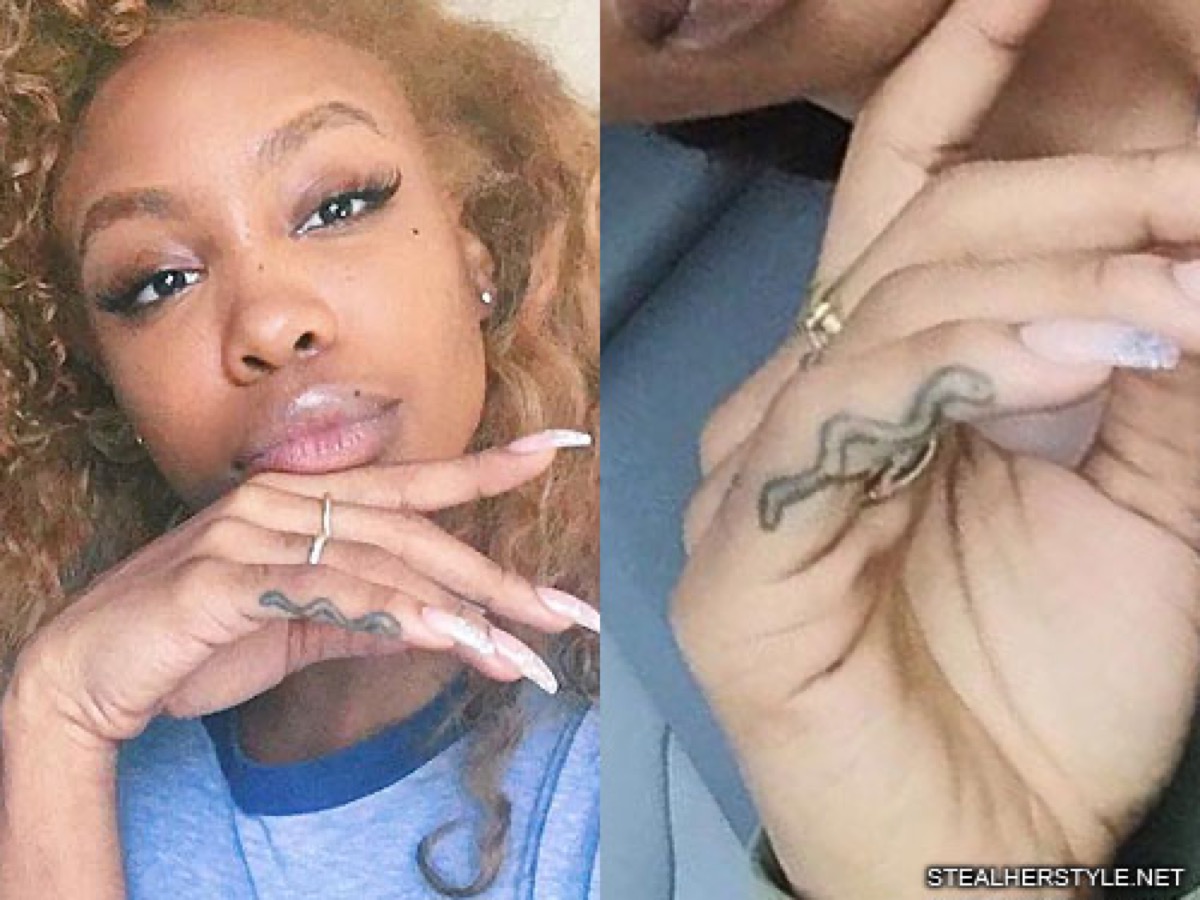
SZA has a small snake tattoo on a finger of her right hand. The design follows the narrow space along the digit, so the body of the snake appears to curl rather than stretch in a straight line. Its scale is much smaller than the butterfly or the chest lettering, but the subject remains recognisable in a close-up.
Finger tattoos are difficult to document because hands are constantly moving, and rings or long nails can cover the design. SZA’s snake is clearest when her hand is held close to the camera. In wider images it can look like a loose squiggle or a shadow across the finger. The close-up makes the head, body and curved outline easier to identify.
There is no confirmed explanation from SZA for this snake. Snakes can represent renewal, danger, protection or simple admiration for the animal. Those possibilities are common tattoo language, not facts about her. The image gives us enough to discuss the design without forcing a symbolic conclusion.
The snake adds another small natural form to a collection that already includes a butterfly, a branch and a light bulb. It also gives the hands a little more visual movement. When the finger bends, the tattoo appears to coil with it, which is one of the reasons finger ink can look different from one photograph to the next.
LANA is SZA’s earliest and most personal tattoo story
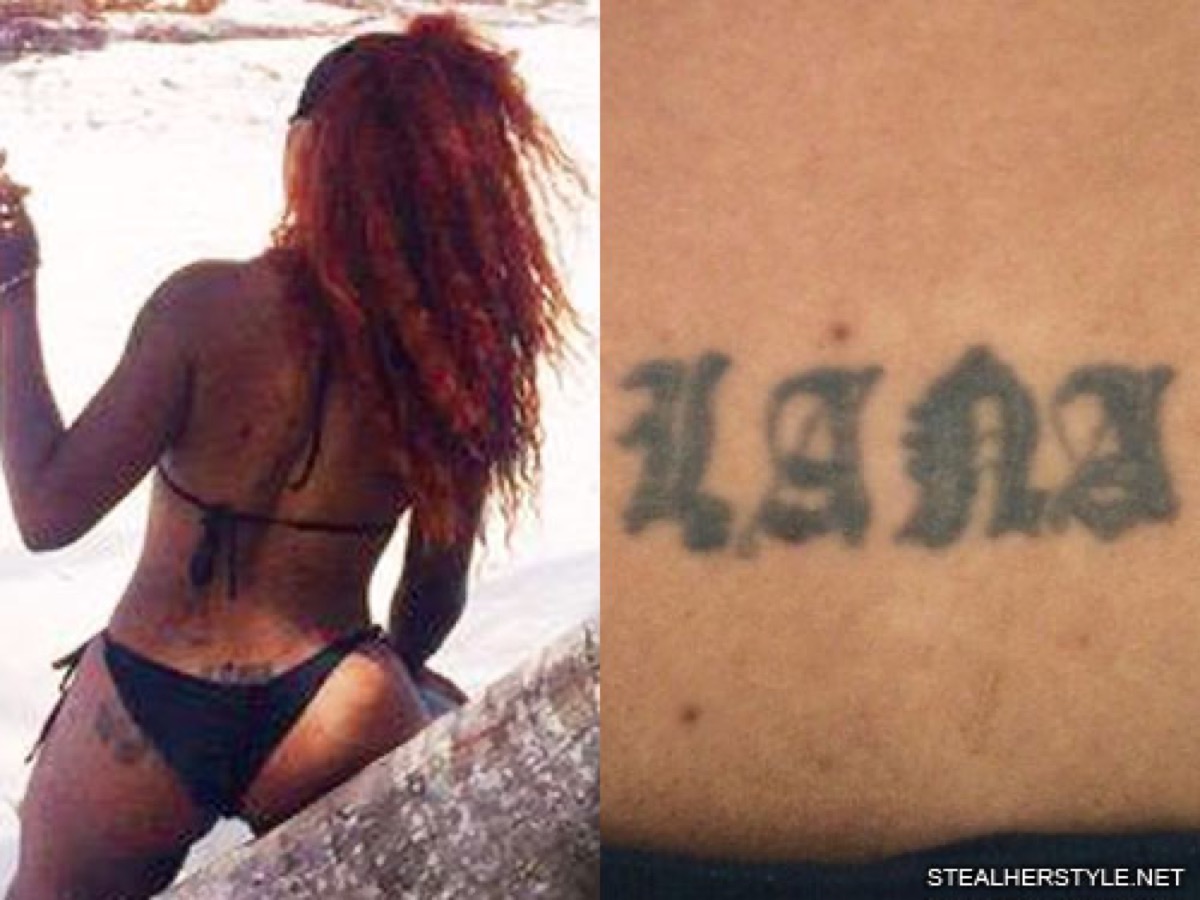
The gothic lettering across SZA’s lower back reads “LANA”. She has said it was her first tattoo and that she got it when she was 13. Lana is a nickname connected with her first name, Solána, so the design is both a name tattoo and a piece of teenage history.
SZA has been honest about having mixed feelings about it. She has joked that she partly regrets the decision while still being attached to the memory. That makes the tattoo more interesting than a polished story about loving every mark forever. It is a permanent reminder of a younger version of herself, including the impulsiveness that came with getting tattooed so early.
The placement is commonly called a lower-back tattoo or tramp stamp, but the phrase should not obscure the actual design. The lettering is large enough to read across the lower back, and the gothic shapes give it a heavier look than the clean “Ctrl” type. It also became associated with the cover art for her song “Sobriety”, which brought the tattoo into her music imagery.
This is one of the strongest examples of a tattoo where the meaning is genuinely documented. SZA has supplied the age, the name connection and the ambivalence. There is no need to add an invented explanation. The story is already personal enough: a nickname, a teenage decision and a tattoo that stayed with her into adulthood.
Kirituhi tattoos honour both sides of SZA’s family
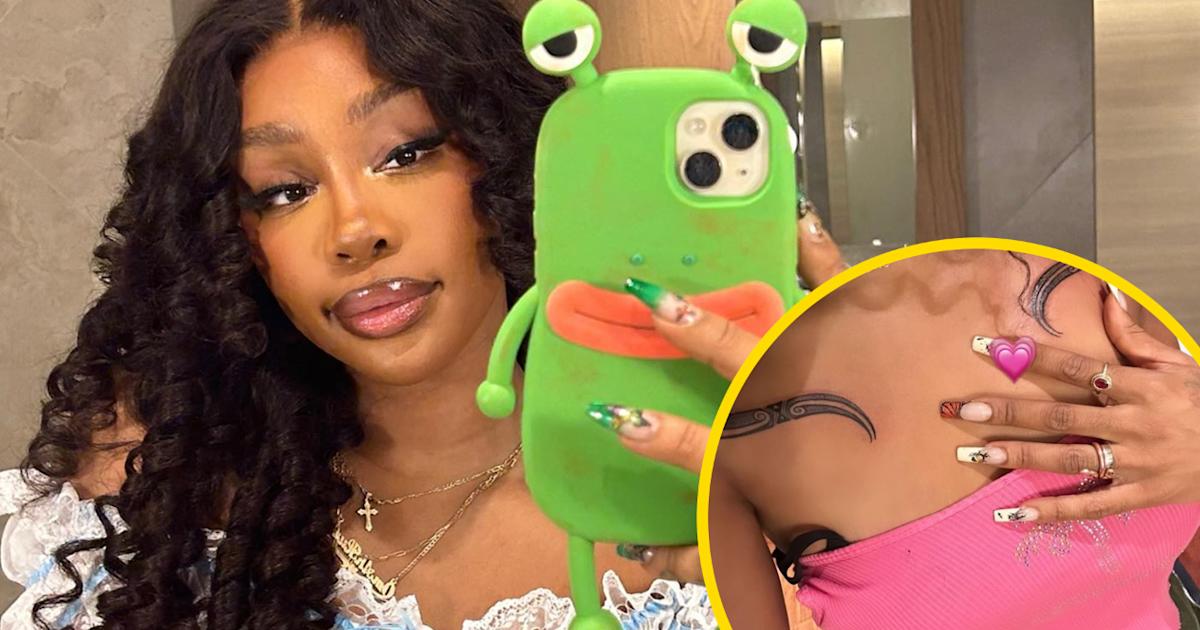
In 2024, while in New Zealand, SZA received kirituhi tattoos from Māori tattoo artist Leroy Roberts of Maia Ink. She shared that one side represented her mother’s lineage and the other represented her father’s. That explanation gives the chest and shoulder work a clear family purpose, unlike several of her earlier small tattoos whose meanings have never been stated.
Kirituhi is often described as Māori-style tattooing created outside the strict lines of traditional tā moko. The distinction matters because cultural tattoo terms are not interchangeable. SZA’s own post and the artist’s involvement provide the immediate context for the pieces, while the photographs show bold, curved black forms placed across the chest and shoulder area.
The newer work is visually stronger than the tiny hip and finger pieces. The lines have more weight, and the placement follows the shape of the upper body instead of sitting like a small isolated sticker. It also changes how older tattoos are seen. The chest branch remains a separate design, while the kirituhi forms create a larger frame around it.
SZA’s collection now covers several different moments: a childhood name, a breakthrough album, small nature pictures, a light bulb, a snake and a family tribute made while travelling. Some designs have a clear story. Some have only a clear image. That is not a weakness. It is the honest shape of a tattoo record built over years.
The best way to follow her ink is to keep the designs beside the evidence that supports them. “Ctrl” belongs to the album period. “LANA” belongs to her early teens. The kirituhi pieces belong to her New Zealand trip and family history. The butterfly, snake, branch and light bulb can be described carefully without pretending that every small mark comes with a public explanation.