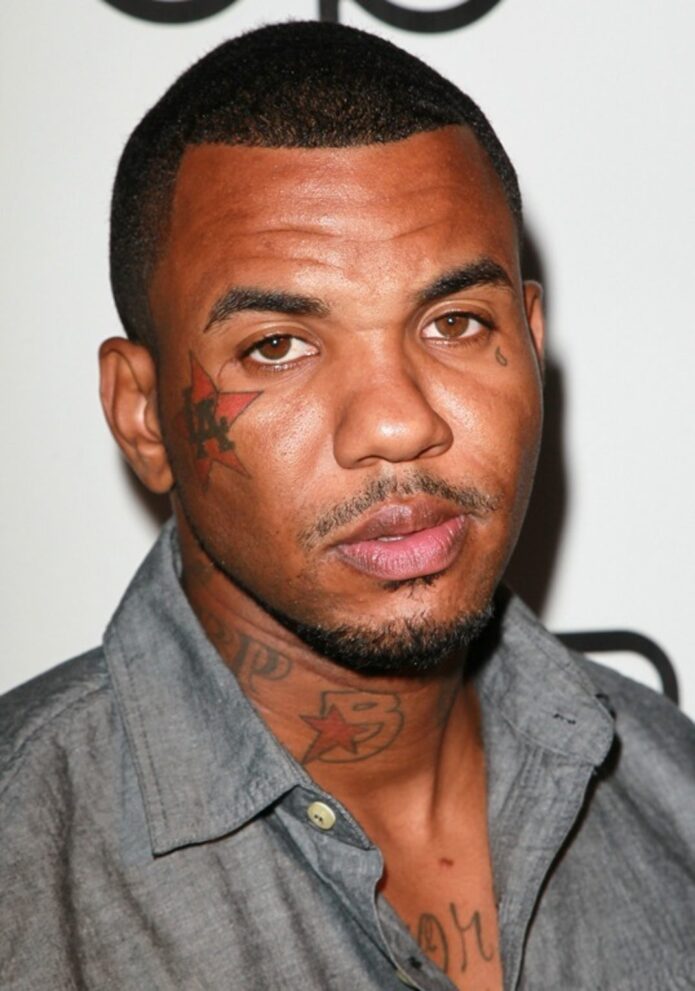
The Game’s tattoos are easy to recognise, but they’re not one single wall of ink. Jayceon Terrell Taylor has built the collection in layers: a red LA mark on his cheek, a teardrop under the eye, N.W.A. across his chest, Compton on his stomach, portraits of people he respects and smaller pieces around his arms and neck.
That’s why one generic photo never really does the job. A close-up is needed for the face work, while a shirtless shot shows the chest and stomach. Older photos catch tattoos that later changed, and newer ones show how cover-ups and additions sit together. This guide sticks to the designs that are clearly documented or easy to see, without pretending every blurry mark has a confirmed meaning.
The relaxed way to read The Game’s tattoos is to follow the actual pieces. The LA tattoo, N.W.A. lettering and Compton work say a lot about where he’s from. The portraits connect him to rap history and people he has spoken about with real respect. The smaller marks fill in the gaps.
The red LA tattoo replaced an earlier butterfly
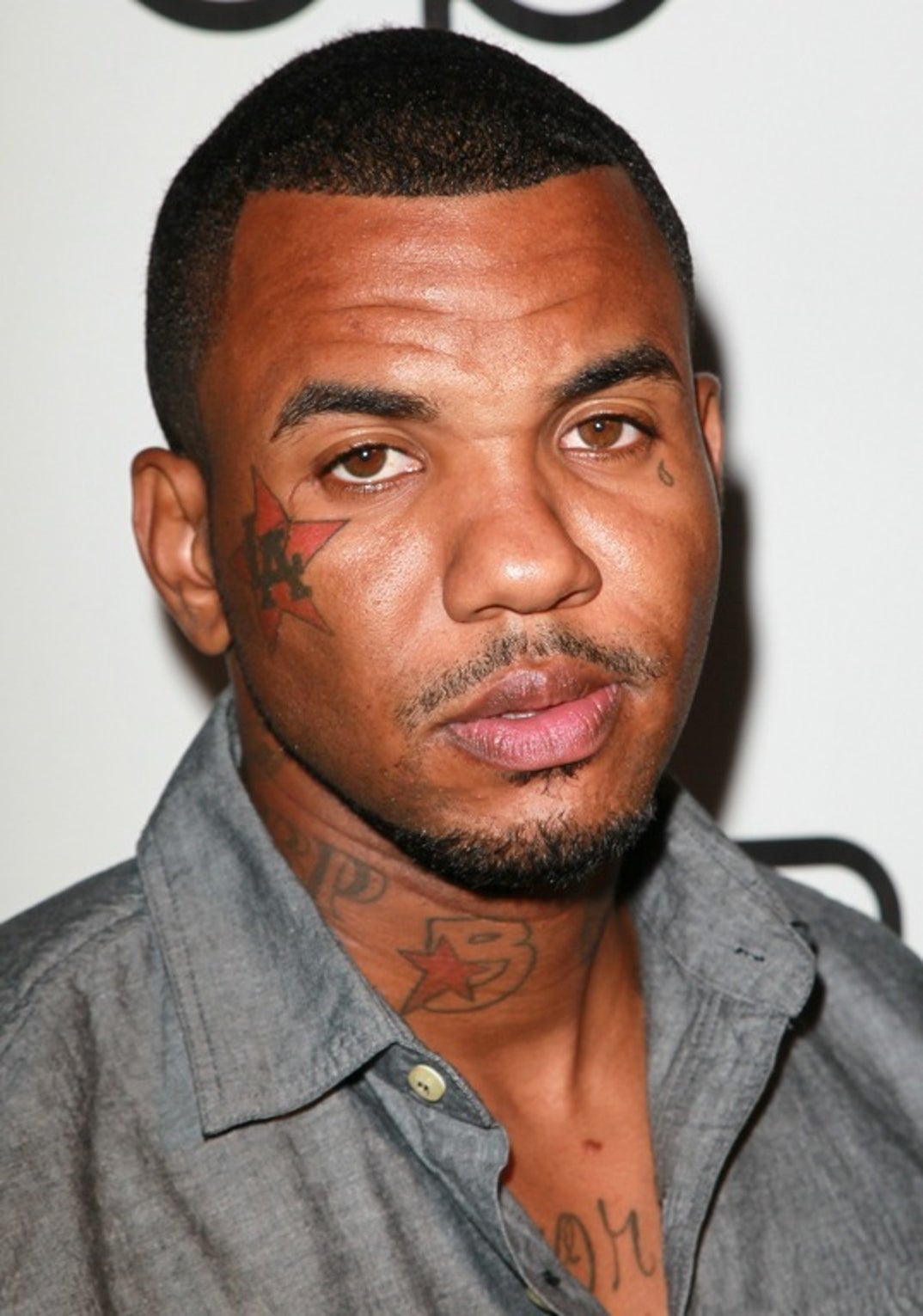
The red LA tattoo on The Game’s cheek is probably the piece people notice first. It sits close to the eye and has become part of his everyday look. The design is usually described as a Los Angeles mark, which fits his Compton identity and the way he represents the city in his music.
It wasn’t always an LA logo. Earlier photos show a small butterfly in that spot. The butterfly was described as a symbol of “new life”, but The Game later covered it with the LA design. A red star was added behind the logo too, making the final piece much bolder than the original mark.
That change is worth keeping in the story because tattoos can shift with someone’s life. The cover-up didn’t erase the first idea; it turned a personal symbol into something tied to home, music and the image he wanted people to see.
The teardrop sits just below the eye
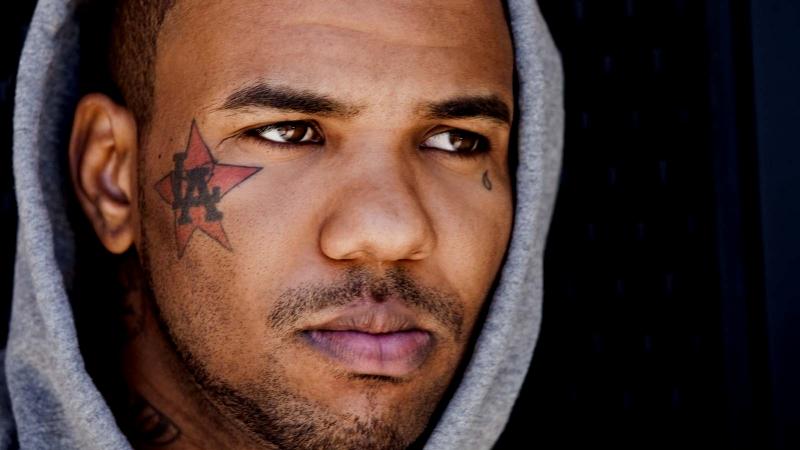
Under the opposite eye, The Game has a small teardrop tattoo. It’s tiny compared with the chest pieces, but it changes the feel of a close portrait. Face tattoos work like that. They don’t need much space to become the detail everyone sees.
The teardrop appears in older and newer images, although colour and clarity change with the light. It’s best described as a teardrop rather than assigning it a story he hasn’t clearly explained. The nearby LA mark and star already give the face a strong Los Angeles look, so the little mark doesn’t need an invented meaning.
Photos from different years also show why dates matter. The face designs don’t always look exactly the same, and a close-up tells readers what is actually there in that frame.
N.W.A. is stamped across the chest
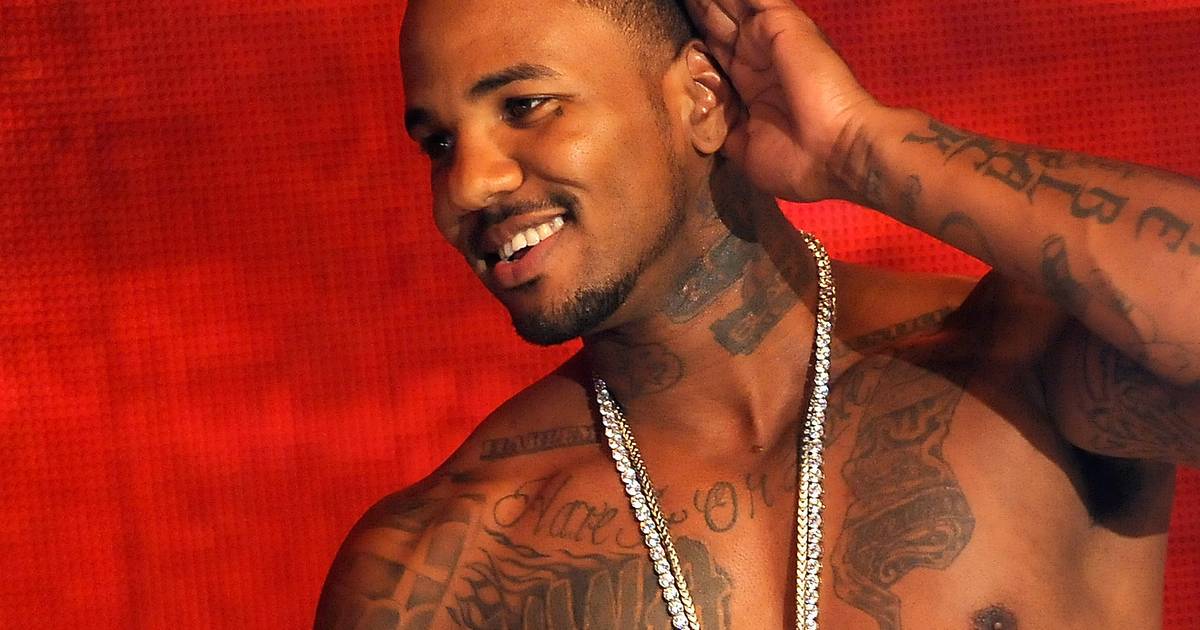
The N.W.A. tattoo on The Game’s chest is one of the clearest pieces in his collection. The letters sit on the right side of his chest and are hard to miss whenever he appears shirtless. It’s a direct tribute to a group that shaped West Coast rap, and it fits his connection to Compton and the wider California scene.
The lettering is bold enough to read in a wide photo, but the surrounding work is what makes the chest look busy. N.W.A. sits beside portraits, script and other symbols, so it isn’t floating on an empty background. Chains and clothing can hide the lower edges, which is why a proper tattoo image needs to show more than his face.
There’s also a nice contrast between the simple block letters and the detailed portrait work nearby. One is instantly readable. The other needs a closer look. Together they show how The Game mixes clean symbols with tattoos that take more time to pick apart.
Compton and The Chronic take over the stomach
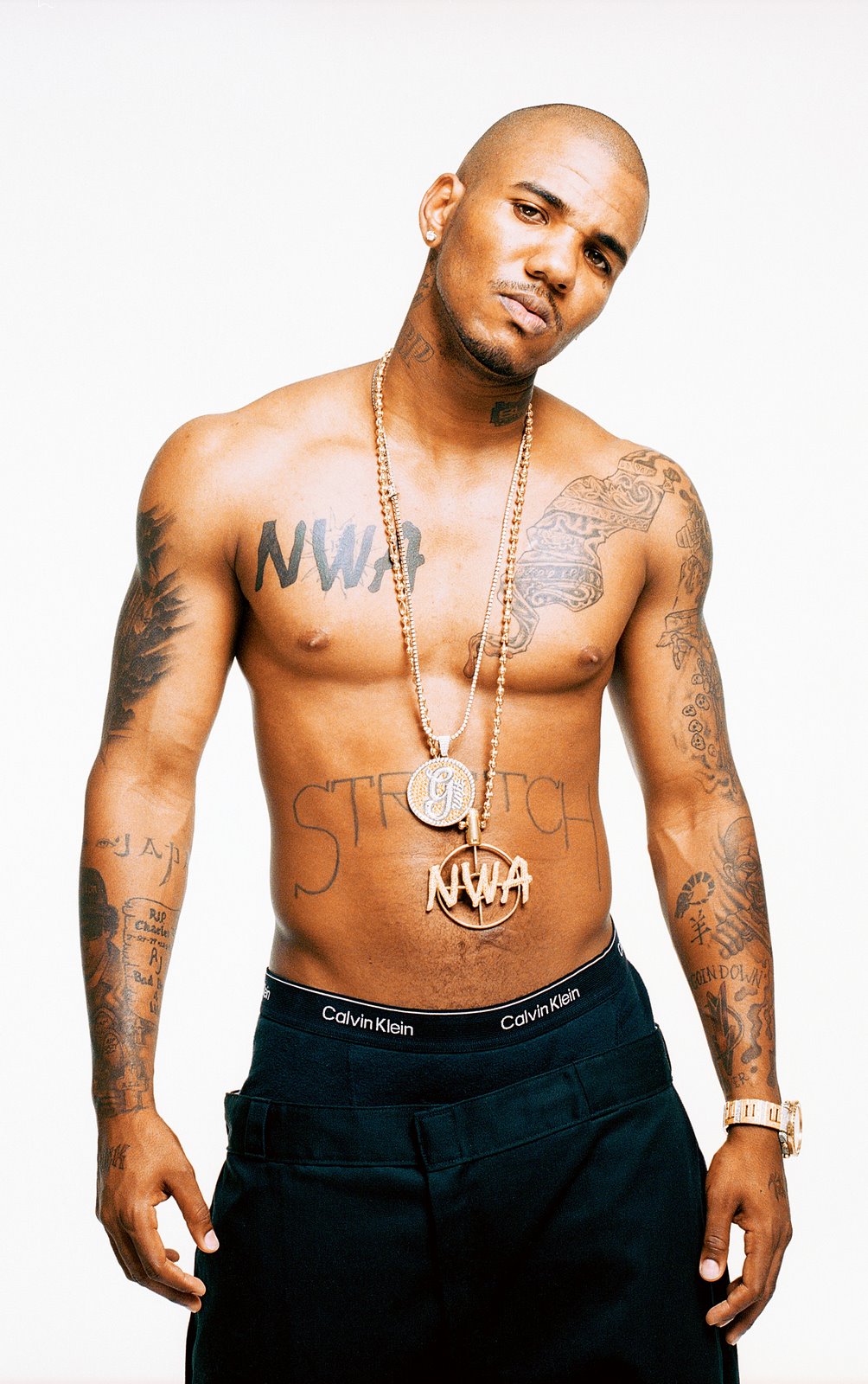
Lower down, Compton is tattooed across The Game’s abdomen. Just below it sits artwork connected to Dr. Dre’s The Chronic, which makes the area feel like a direct link to his city and musical education. The word stretches across the stomach, so it reads like a banner rather than a tiny hidden tribute.
This part can disappear completely under a shirt. A red-carpet photo might show only the face and upper chest, while a shirtless image shows the full idea: N.W.A. higher up, Compton across the middle and the album reference underneath.
The tattoo isn’t subtle, and it doesn’t try to be. It puts place and music right on the body, which is very much in line with the rest of The Game’s well-known ink.
The Obama portrait brought politics into the artwork
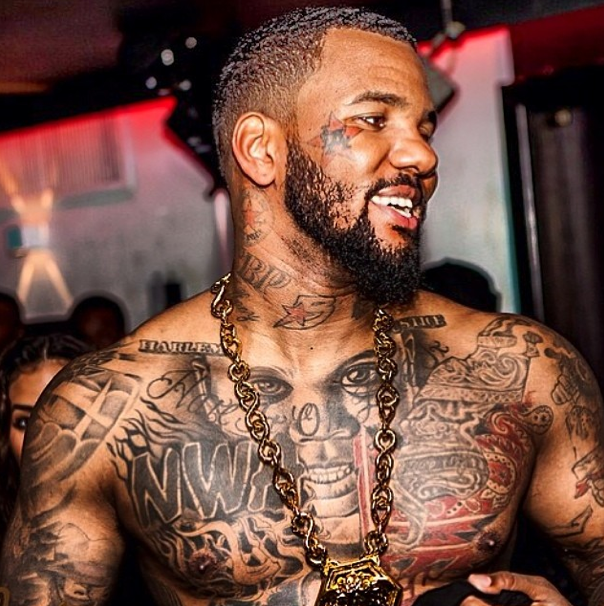
The Game also had a portrait of Barack Obama tattooed on his chest. Reports from the time described the piece as a White House portrait above the Compton lettering. Tattoo artist Carlos Macedo handled the work.
A portrait tattoo needs careful wording. It’s fair to say what the image is and where it sits. It’s also fair to say the choice connected The Game’s public identity with a political figure he wanted to honour. What a photograph can’t prove is every private reason behind it.
The Obama piece adds another kind of subject to the chest. N.W.A. points toward rap history, Compton points home, and Obama brings politics into the same area. Those ideas don’t cancel each other out; they show that several parts of The Game’s life ended up on his skin.
Nate Dogg and other West Coast portraits sit nearby
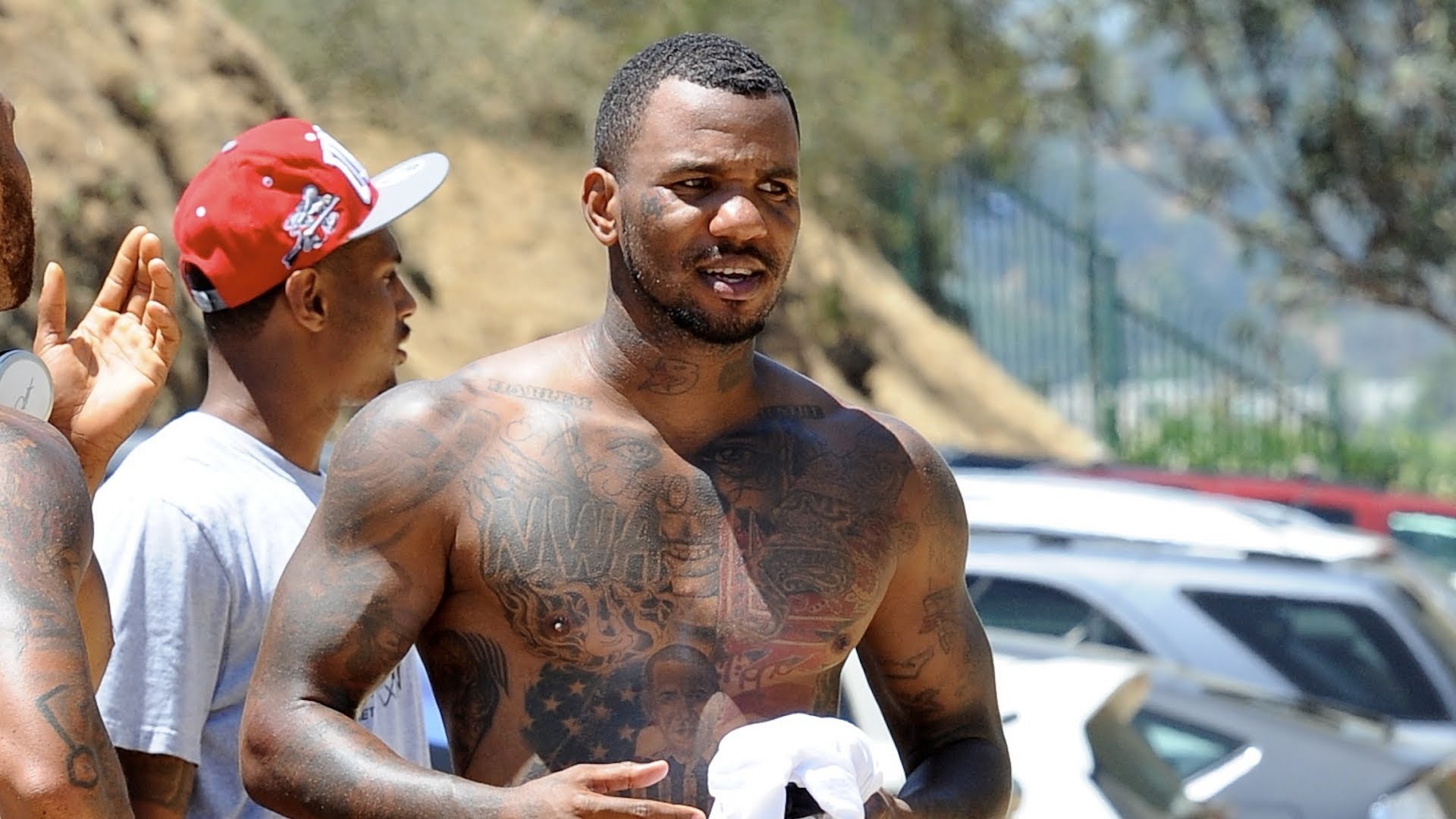
Tribute portraits are a big part of The Game’s style. His collection has included Nate Dogg, along with work linked to Eazy-E and Tupac Shakur. These aren’t random faces picked from a catalogue. They connect him to artists and influences that matter in West Coast rap.
The portraits are harder to read in one full-body picture because the chest and arms are covered in overlapping designs. One angle may show a face clearly while hiding the lettering beside it. Another may show the arm portraits but lose the stomach detail.
That’s why the portraits deserve their own section while still being named individually. Nate Dogg, Eazy-E and Tupac each carry a different connection to the music around The Game.
The old G-Unit tattoo became G-Unot

The Game’s relationship with G-Unit also ended up on his skin. He once had a G-Unit tattoo, then changed it to read “G-Unot” after the split. It’s a clear example of a tattoo being altered because the story around it changed.
The original letters belonged to one part of his career. The altered wording marked a different mood. A photo from the right period can show the older version, while a later image catches the revised statement.
Like the LA butterfly cover-up, the G-Unot piece shows The Game using tattoos as public statements. They aren’t always quiet memorials. Sometimes the ink is blunt, a little cheeky and meant to be seen.
CBP and the Converse mark fill the neck area
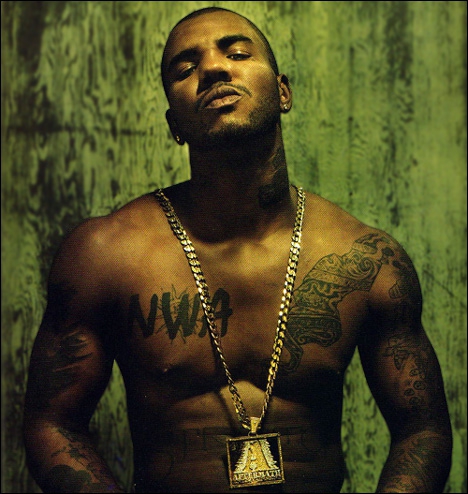
Smaller lettering appears around The Game’s neck and the side of his face. The initials CBP have been linked to Cedar Block Piru, while a Converse All-Star logo has also been noted beneath the ear. These pieces are easy to miss when he’s wearing a high collar, chain or cap.
They show how the collection moves beyond the big headline tattoos. N.W.A. and Compton are obvious. CBP and the Converse mark need a closer frame because they sit in tighter spaces around the jaw and neck.
The red LA star draws the eye first, the teardrop sits under the other eye and the smaller marks make the sides of the head feel less empty. They don’t need to be treated as mystery symbols; they’re part of a busy group of visible tattoos.
The forearms carry more tribute work
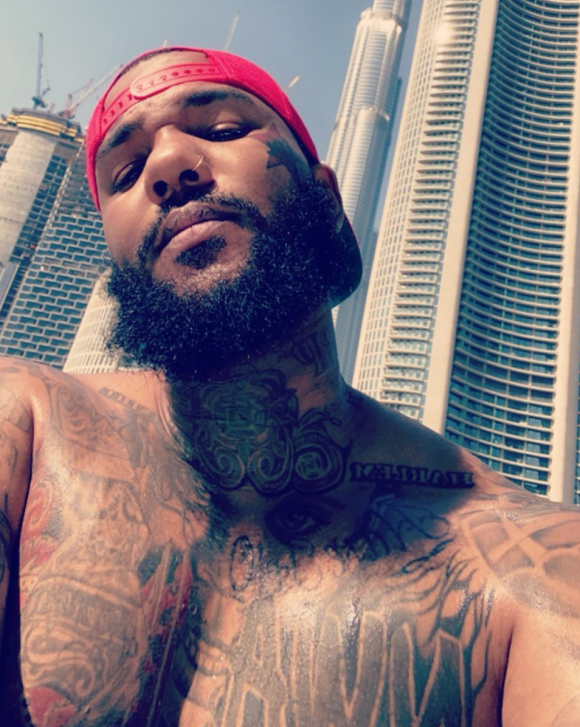
The Game’s forearms carry more of the portrait and tribute work connected to his musical influences. Eazy-E and Tupac are often mentioned when his arm tattoos are discussed, and the placement makes sense for pieces he wants to be seen in photos, performances and interviews.
Arm tattoos change shape depending on how the arm is held. A portrait can look complete when the forearm is relaxed, then appear broken up when he bends his elbow. Sleeves, watches and bracelets cover sections too. That doesn’t mean a new tattoo appeared every time the angle changed; it means the body is a moving surface.
The arm work balances the heavier chest pieces. The chest carries the biggest public statements, while the forearms give the collection more faces and smaller details.
The star and LA lettering became part of his public image
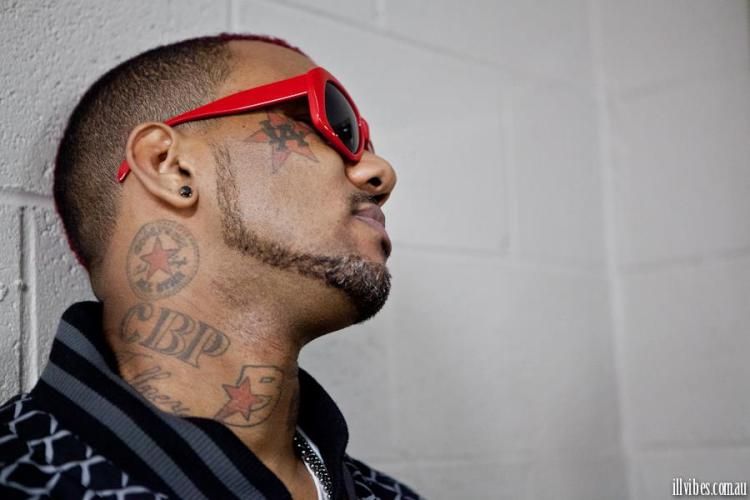
When The Game appears in a close-up, the red star and LA lettering do most of the visual work. They frame the cheek, sit beside the teardrop and give his face a look people can identify quickly. That’s why the face tattoos have stayed part of his public image even when his hair, clothes or beard have changed.
In a similar way to how A$AP Rocky’s A$AP LIFE lettering ties a phrase to the artist’s world, The Game’s LA mark makes his hometown part of the way he presents himself. The comparison is about placement and identity, not about saying the tattoos mean exactly the same thing.
A sharp close-up matters more than a dramatic wide shot here. Readers should be able to see the edge of the star, the LA letters and the teardrop without zooming into a blurry thumbnail.
There are lots of smaller pieces around the main work
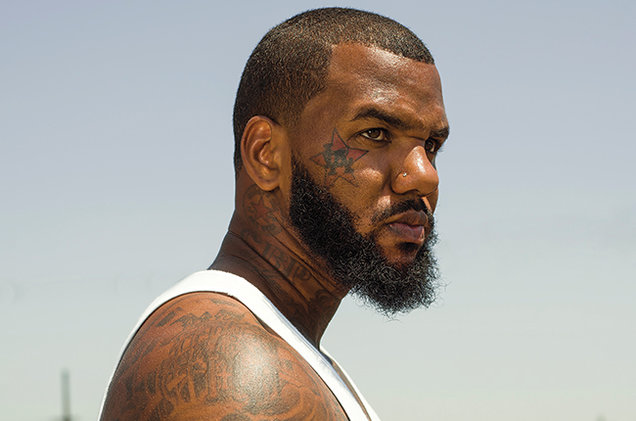
The Game has plenty of smaller marks that don’t get the same attention as N.W.A., Compton or the LA cheek tattoo. Some are bits of lettering. Some are symbols around the shoulders and arms. Some show up only in a particular year or a particular kind of photograph.
It’s better to leave an uncertain mark unnamed than turn a shadow into a fact. The well-supported inventory already includes the butterfly cover-up, LA star, teardrop, N.W.A., Compton, The Chronic reference, Obama, Nate Dogg, Eazy-E, Tupac, G-Unit changing to G-Unot, CBP and the Converse mark. That’s a lot before the smaller pieces are even counted.
The variety is the point. The Game’s tattoos move between hometown pride, rap history, political imagery, personal statements and old arguments. They don’t look like they were designed to match from day one. They look picked up over time, with new pieces finding room beside the older ones.
His calf portraits deserve their own look
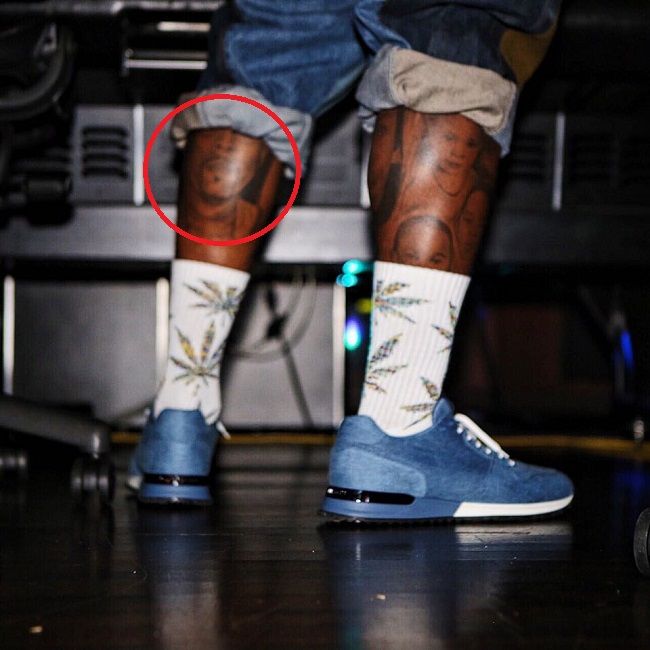
The calf portraits are easy to miss when The Game is photographed from the waist up, but they carry the same tribute-heavy feel as the chest and forearm work. The portrait tattoos sit on the lower legs and are linked to the people and music that matter to him.
A portrait on the calf has to follow the curve of the leg, so the expression and shading can look different when he’s standing, sitting or turning sideways. That’s another reason to use a real photo of the tattoo rather than a vague description. It shows the ink as it actually sits on him.
These pieces also underline how much of The Game’s body is tattooed. The face and chest get the attention because they’re visible in interviews, but the legs add another layer that a standard press photo won’t show.
That’s the part people miss when they only see the face and chest photos. The Game’s ink runs down the body, and the smaller pieces give the bigger tributes some breathing room. A calf portrait, an arm inscription or a neck logo may not dominate a red-carpet shot, but it still belongs in the story.
So the full picture is a lot bigger than N.W.A. and the red LA star. It includes hometown pride, rap history, changing friendships, family portraits, politics and the occasional very public bit of beef. The designs don’t all match, and that’s fine. They look like they were picked up over years, with each new chapter finding space beside the older ones.