
Titus Welliver has almost thirty tattoos, and they are not just there to make him look tougher on screen. The actor has been collecting them since he was young, and a lot of the designs connect to his family, his background, his martial arts training and the things he has been into for years.
That is why the tattoos work so well on Bosch. They look lived in because they are. When Welliver was cast as Harry Bosch, the production could have covered everything with makeup, but he explained that the tattoos were real and the show decided to keep them. The result is a detective character whose sleeves feel like part of his history rather than a costume department idea.
There are some pieces he has explained clearly, while others are only really understood by looking closely. This guide sticks to what Welliver has said and what can be seen in photographs, without pretending that every small mark has a confirmed backstory.
The dojo koi were his first tattoo
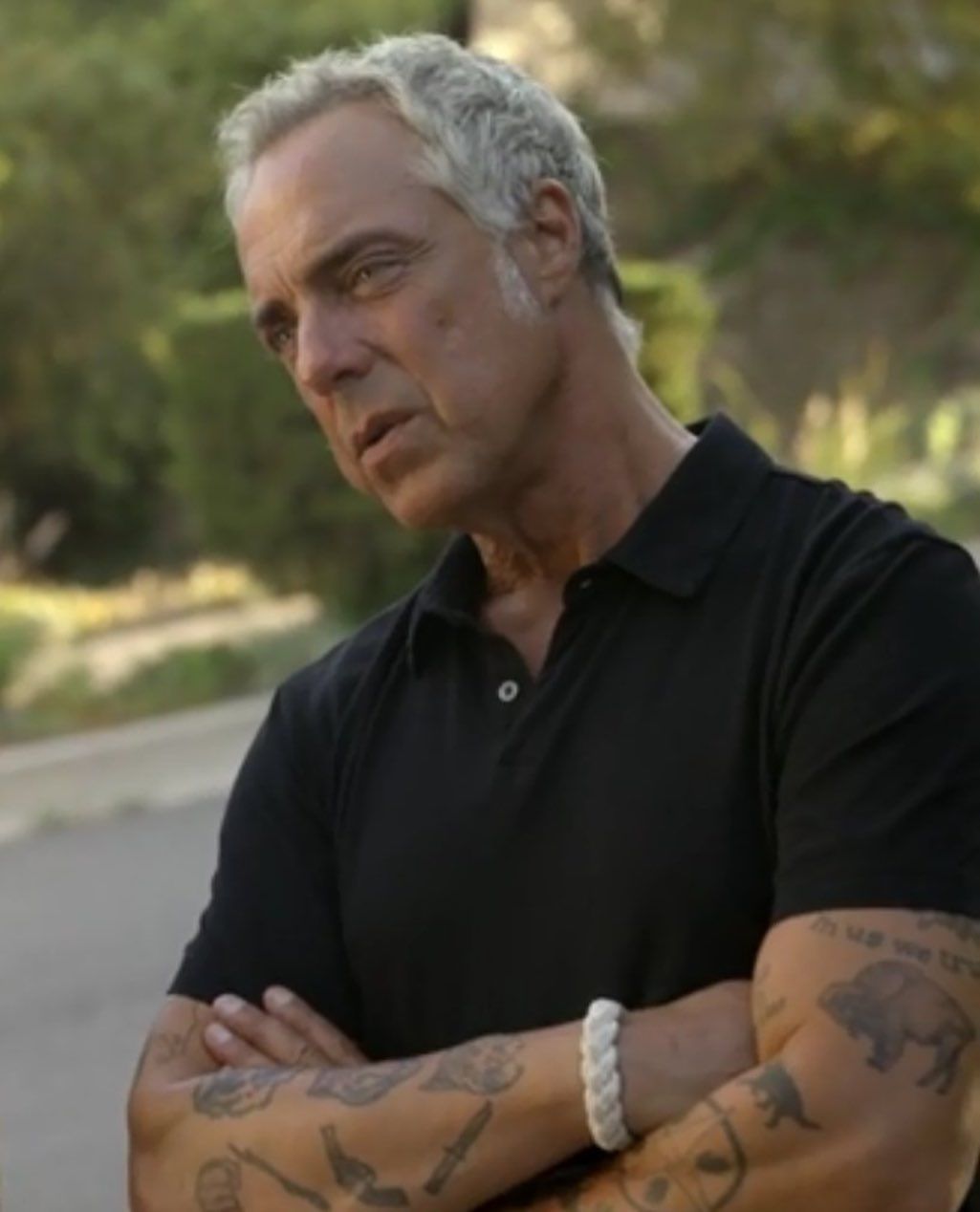
Welliver told Inked that his first tattoo is the symbol of his martial arts dojo: two koi circling a rock. He said the fish represent strength and fluidity, which gives the design a meaning that goes beyond simply liking Japanese-style tattoo work.
The koi sit up around the shoulder area, so they are not always visible when he is wearing a T-shirt. When his arms are uncovered, though, they help explain how the rest of the sleeves developed. The image has a more traditional feel than some of the later lettering and pop-culture pieces, and it gives the collection a solid starting point.
It is a pretty fitting first tattoo. Koi are often used to show movement, persistence and the ability to keep going against resistance. That lines up with the way Welliver talks about the design, but it is still better to stick with his own explanation instead of piling on extra symbolism.
His martial arts connection also comes up when people talk about the way he carries himself. The koi are not a random piece hidden under the sleeve; they are tied to a part of his life that was already important before his biggest television role.
The Silver Surfer brings comic-book colour to the sleeve
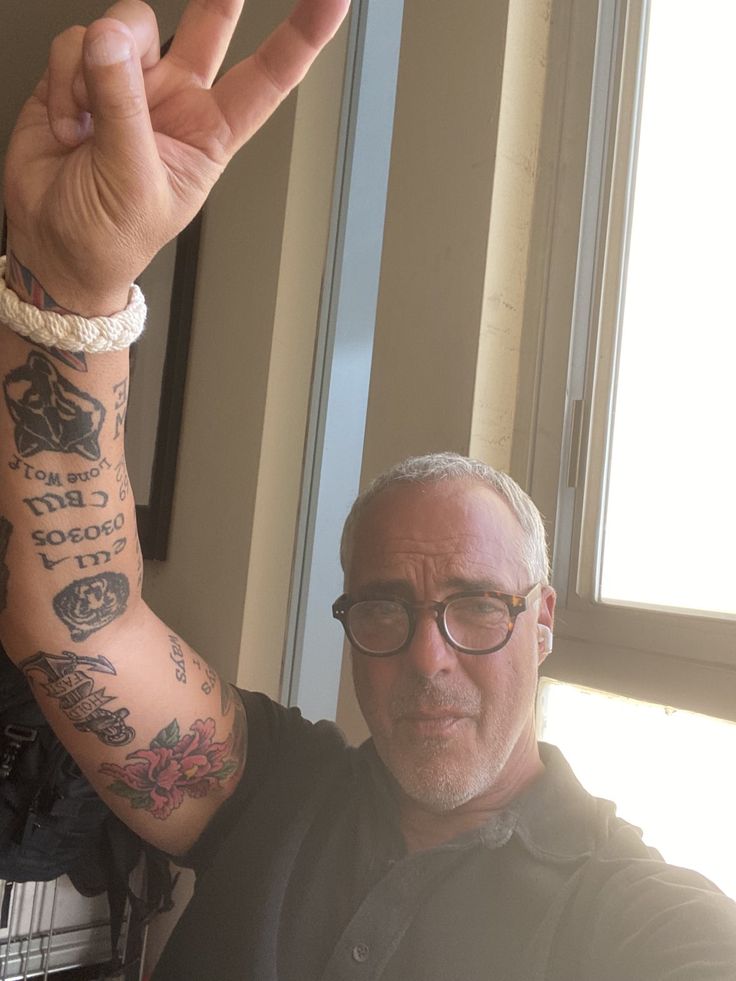
Below the koi, Welliver has a Silver Surfer tattoo. It is one of the more obvious pop-culture references in the collection, and it sits among flowers, lettering and other arm designs instead of being treated like a separate little sticker.
The Silver Surfer is a fun contrast with the tougher animals and weapon images elsewhere on his arms. The character has a very recognisable shape, so even when the full sleeve is busy, the comic-book reference can still stand out. It also shows that Welliver’s tattoos are not limited to family names or serious personal symbols.
That mix is what keeps the arms interesting. One section can have a martial arts symbol, another can carry a comic character, and both can sit next to more traditional tattoo images without looking completely out of place. His collection feels personal, but it still leaves room for things he simply enjoys.
Unlike a lot of actors who keep their fandoms hidden, Welliver has let those references stay visible. They are part of the reason the sleeves look like a real person’s arms rather than a single matching design planned for a photo shoot.
The White Pony tattoo and the words So It Goes
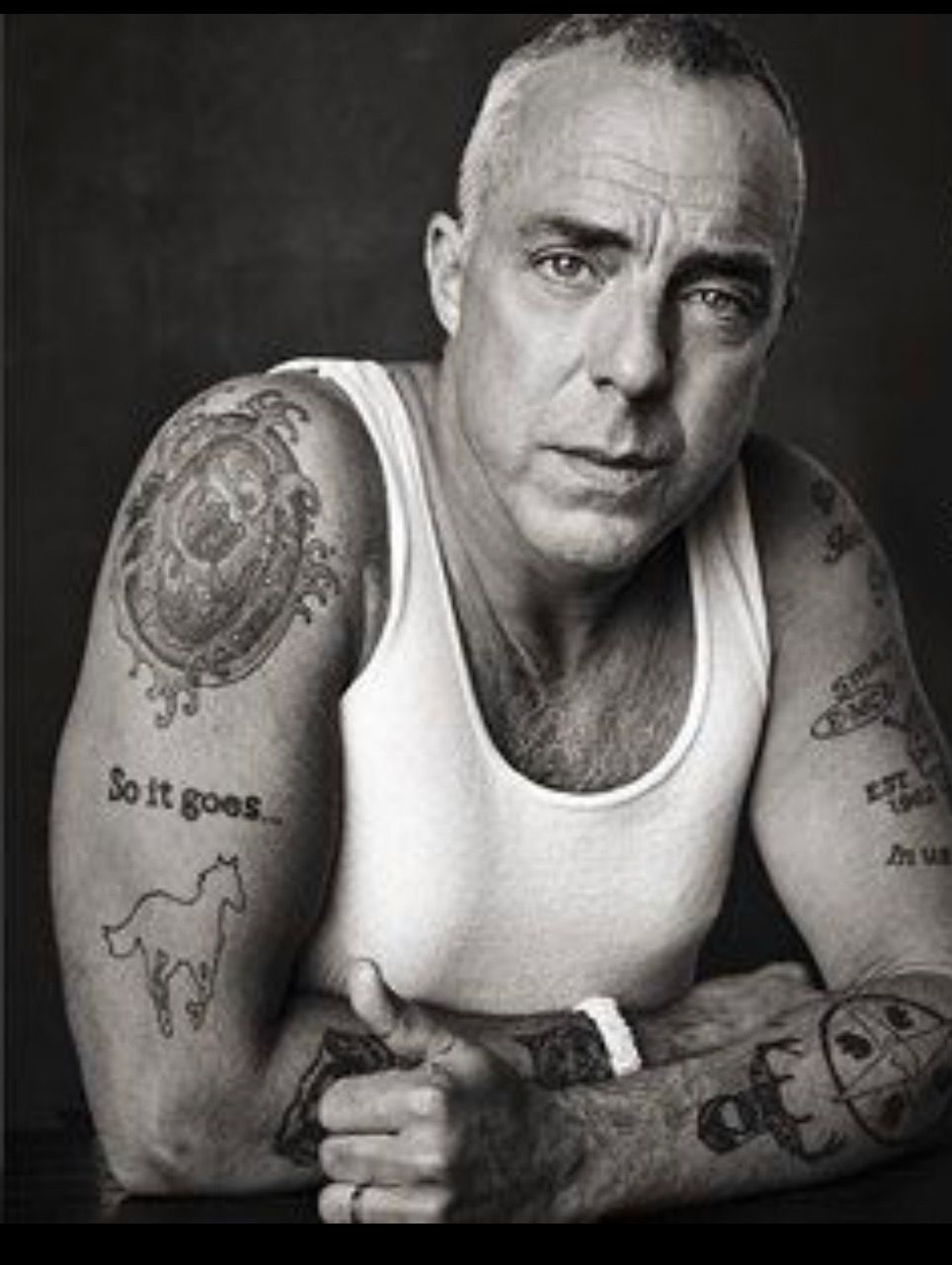
One of Welliver’s clearest music references is the white pony on his arm with the words “So it goes…” above it. He has explained that the tattoo was inspired by the cover of the Deftones album White Pony, one of his favourite bands.
The lettering is easy to spot in older black-and-white portraits because it sits below the sleeve area on the upper arm. The horse is drawn in a simple outline, while the phrase gives the piece a slightly more reflective feel. It is not a giant realistic horse taking over the arm. It is a small image paired with a few words that mean something to him.
“My first tattoo is the symbol of my martial arts dojo. The two koi circling a rock represents strength and fluidity.” That quote gives a good sense of how Welliver talks about his ink. He tends to connect the designs to real parts of his life rather than giving a vague answer about them being “cool.”
The White Pony tattoo also shows why it can be risky to judge a celebrity’s ink from one television still. A sleeve may be partly covered, flipped by the camera or hidden under a costume. In a clear portrait, the little horse and the words are much easier to separate from the surrounding work.
Roses, wildcats and the bold right forearm work
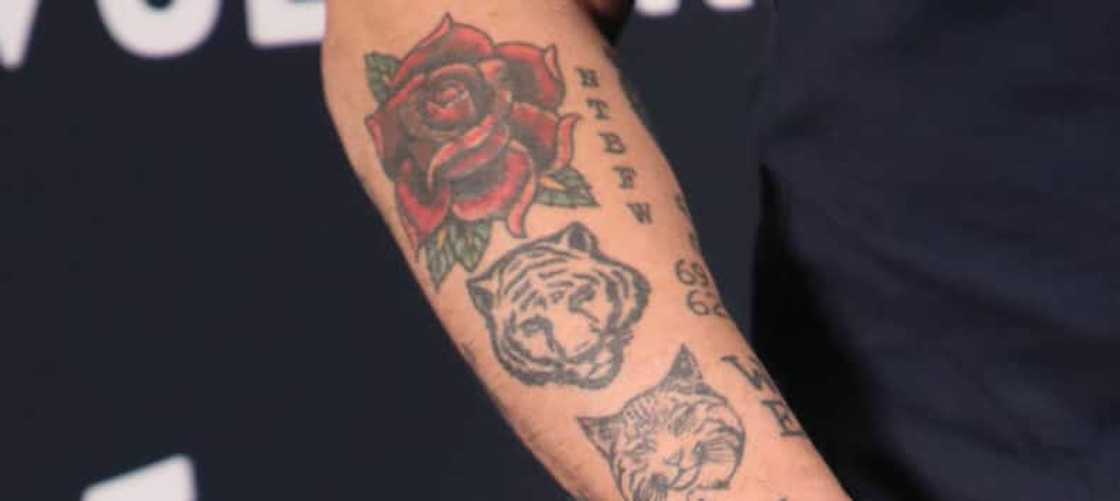
The right forearm is packed with some of the most recognisable images in the collection. There is a red rose above three wildcat heads: a lion, a tiger and a bobcat. The lion was later covered by the rose, which means the section has its own bit of tattoo history built into it.
Welliver has not given a confirmed personal meaning for each animal, so the safest way to describe them is simply as a run of wildcat portraits. People often attach ideas like courage or strength to lions and tigers, but that does not prove those were his reasons. The rose is clearly visible, while the original story behind the lion cover-up is the more interesting detail.
The arm also includes “NTBFW” and the number 69. The initials are commonly read as “Not To Be F***ed With,” but the exact personal reason for the phrase is not something Welliver has laid out in detail. It sits within the sleeve as a hard-edged bit of lettering beside the softer flower and animal faces.
This is the part of his ink that most resembles a traditional biker-style sleeve. The rose, animals, block letters and dark outlines all have that old-school toughness, but the rest of the collection stops it from becoming one single style. His arms are more like a timeline than a matching set.
Guns, knives, stars, bears and the Lone Wolf
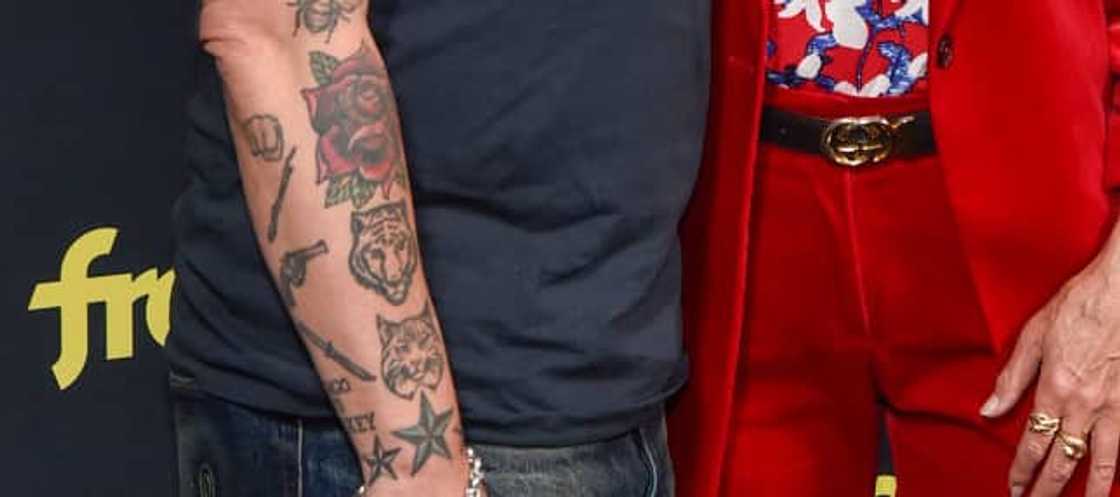
Another section of the sleeve shows a closed fist, a stick, a revolver and a knife. There are also star designs and other small marks filling the gaps around them. These are the tattoos that viewers tend to notice in Bosch, because the camera sometimes catches the forearm when he is holding a file, leaning on a car or rolling up his sleeves.
Welliver has not publicly assigned a meaning to every weapon. They can be described as visible objects rather than symbols with a confirmed message. That matters because tattoo guides often turn any gun or knife into a statement about violence, even when the person wearing it has never said that.
On the inside of the arm, there is a bear with the letters NTBFW, plus a wolf on the wrist with “Lone Wolf” above it. The wolf is one of the easier pieces to connect to a stated idea: Welliver has described it as relating to loyalty and love for his pack. The bear and the lettering sit nearby, making the whole area feel like a group of tough animal and text tattoos.
There is also a blue-and-black star near the wrist, another star enclosed in a circle with footprints, and a logo-like “All Ways” and “Always” design. They are smaller than the wildcats, but they stop the sleeve from becoming a wall of big pictures.
Family, Irish roots and why Bosch kept the real ink
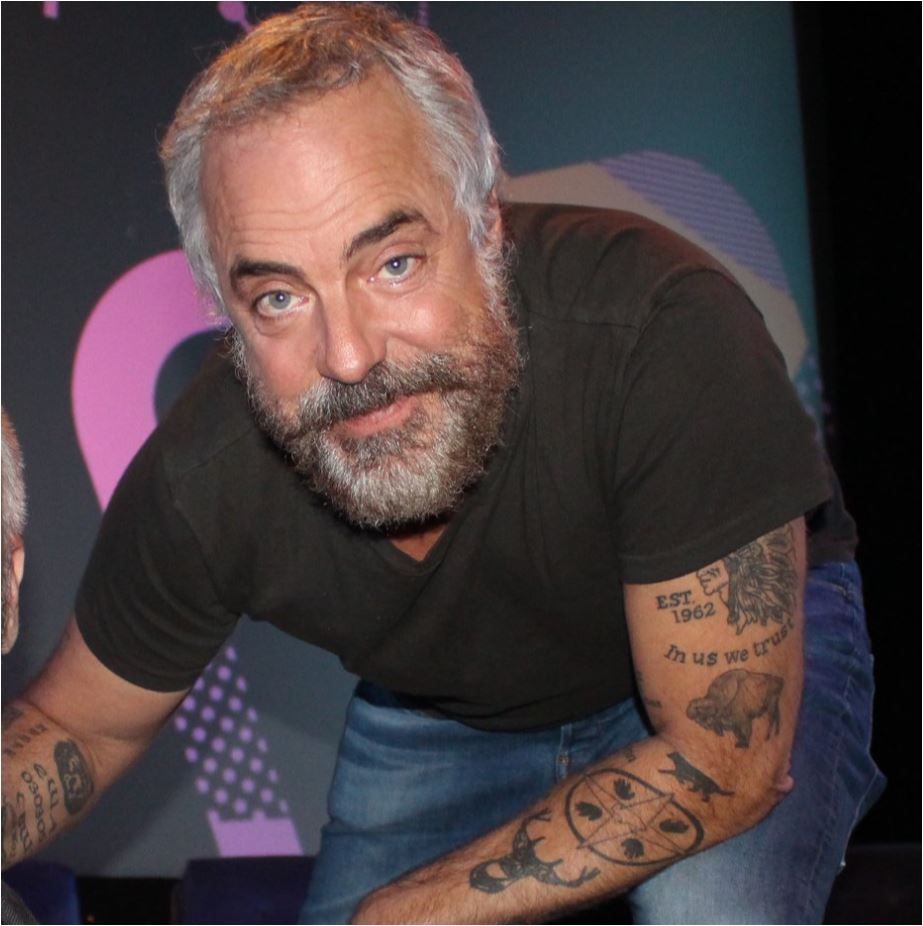
Not every tattoo on Welliver’s arms is an animal, weapon or comic reference. He has said that some of the designs are the names and birth dates of his children. Other pieces relate to his Irish and Native American background. Those details explain why the collection is so varied: not every tattoo was chosen for the same reason or at the same point in his life.
The buffalo and the words “EST. 1962” are visible in one of the arm photographs, along with the phrase “In us we trust.” There are more small images around the forearm, including designs that are difficult to identify from a distance. It is a good example of how a close-up can reveal much more than a red-carpet shot.
His tattoos became part of Harry Bosch almost by accident. Welliver told Inked that covering them would have taken extra time every day, so he spoke with Michael Connelly and the production decided to leave them in place. Bosch’s fictional “Hold Fast” knuckle tattoos were folded into that decision, even though the show does not stop to explain every piece.
That choice gives the character a little extra texture. The arms do not look like temporary props, and they do not disappear whenever the story gets serious. They are just there, the same way they are in Welliver’s life.
His approach is closer to Rag’n’Bone Man’s crowded arm work than to a small, isolated celebrity tattoo. Both collections have a rough, collected feel, with different ideas added over time instead of one perfectly planned sleeve.
In the end, Titus Welliver’s tattoos are interesting because they are real, personal and slightly messy. Koi, the Silver Surfer, the White Pony horse, wildcats, roses, weapons, stars, animals, family details and words all sit together without needing one grand explanation. They tell a story in bits, which is exactly why people keep looking for the next design whenever he rolls up his sleeves.