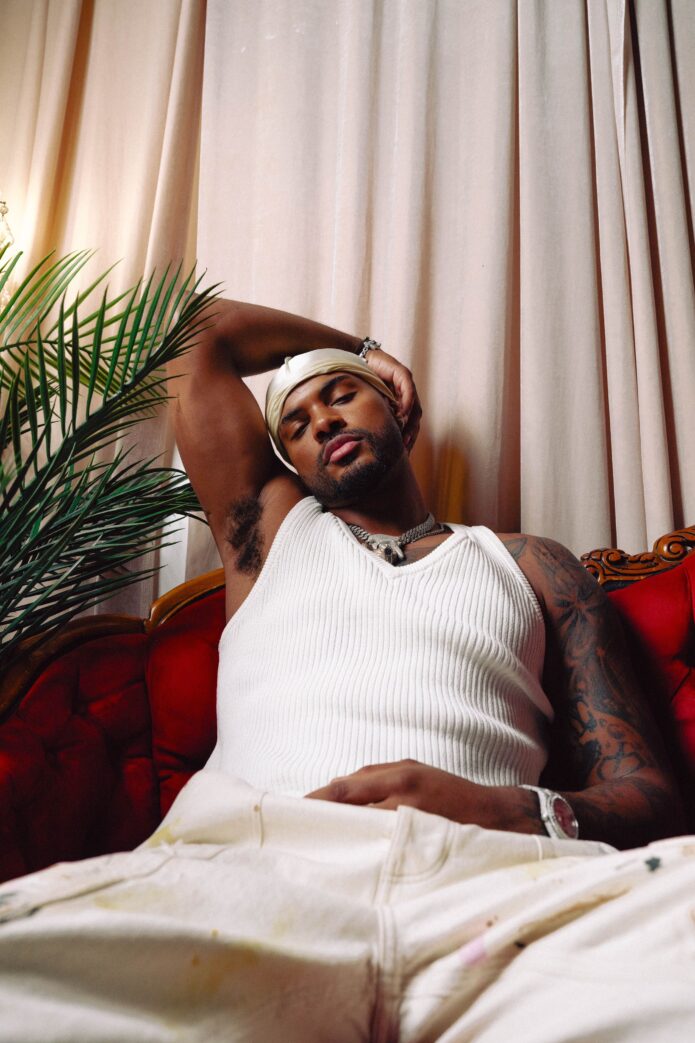
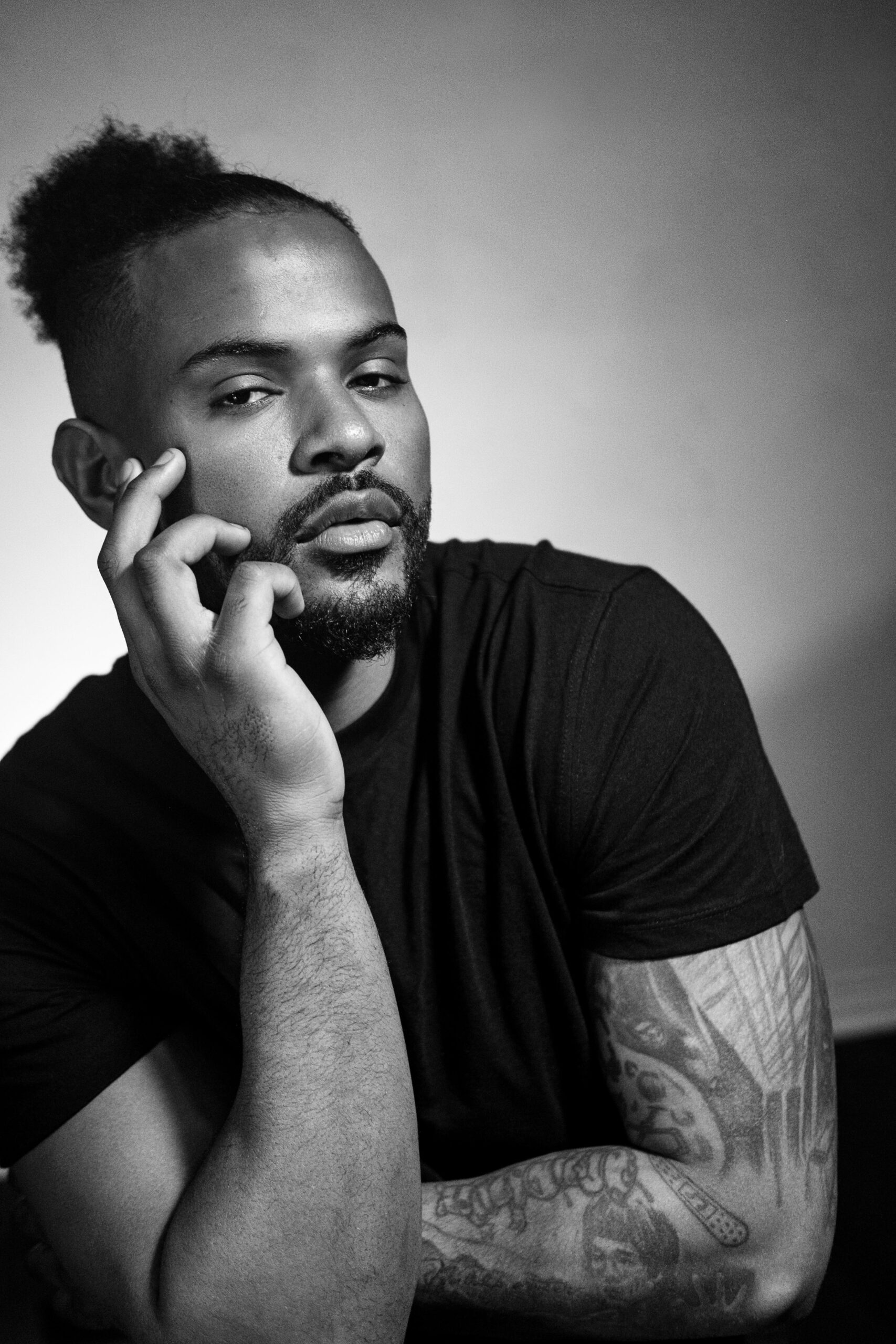
Trevor Jackson doesn’t seem to get tattoos just because he had an empty patch of skin. Most of his ink is tied to a person, a belief, a film, a game or a moment he wanted to keep close. That makes the collection feel less like a random sleeve and more like a running scrapbook.
He has talked openly about the stories behind a lot of it, too. The first piece came from a Bible verse written in his mother’s handwriting, while other tattoos point to family, music, martial arts and the characters that shaped him. There’s even a big back piece connected to a scary time in his life. Here’s a relaxed look at the tattoos Jackson has actually explained, without guessing at every mark that disappears under a shirt.
Trevor Jackson’s first tattoo is a Bible verse from his mother
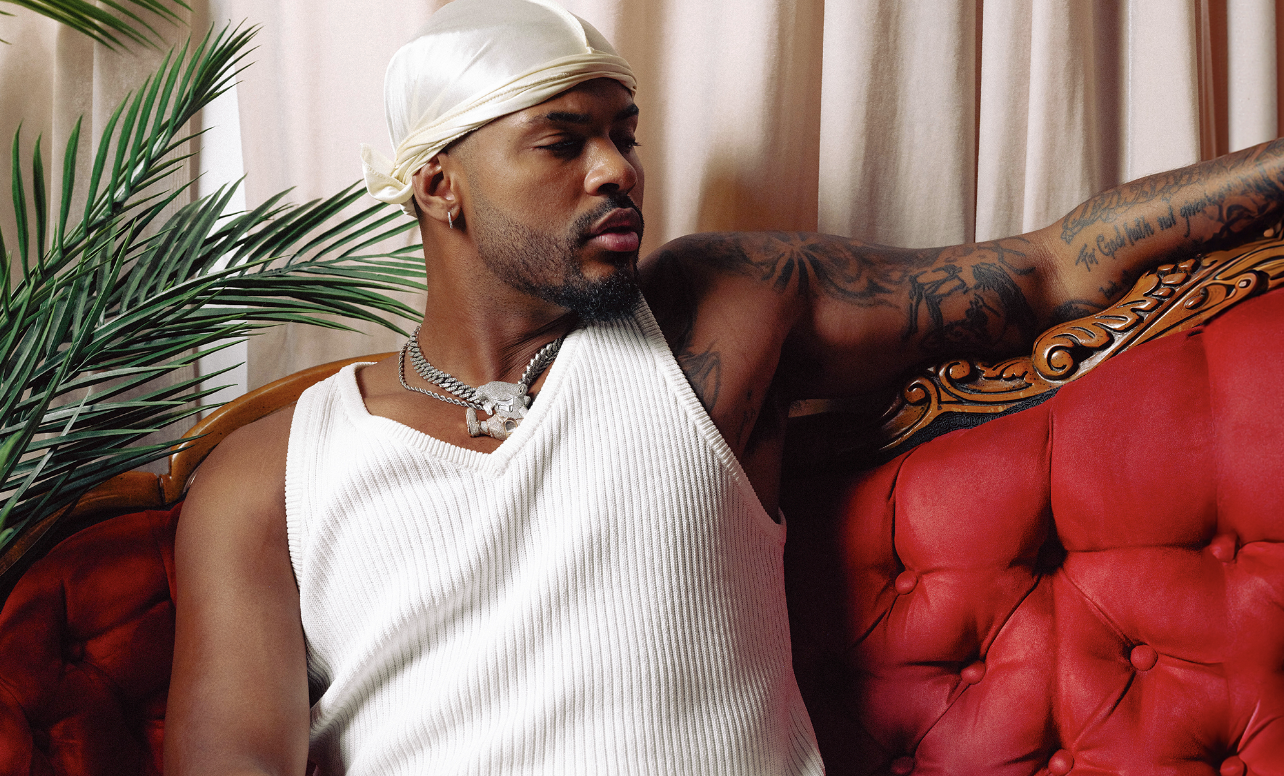
Jackson got his first tattoo when he was 18. It’s 2 Timothy 1:7, the Bible verse his grandmother taught him, but the really personal part is the lettering. He had it written in his mother’s handwriting. That choice made the tattoo easier for her to accept, because it wasn’t just a random piece of text picked from a book. It was a family memory, in a hand he already knew.
The verse is about being given power, love and a sound mind rather than fear. Jackson has described it as the first Bible verse he learned, so it works as both a faith tattoo and a little piece of home. The placement is on the left side of his body, part of the area that later grew into his left-back and left-arm collection.
It’s also a good clue to how he approaches ink. He has said that his tattoos have “extreme meaning” and usually connect to a situation, a value or a belief. In other words, this isn’t a collection built around whatever design happened to look cool that week. Even when the subject is a video game or a comic-book character, there’s normally a reason it matters to him.
The Jesus and Peter back tattoo came from a rough period
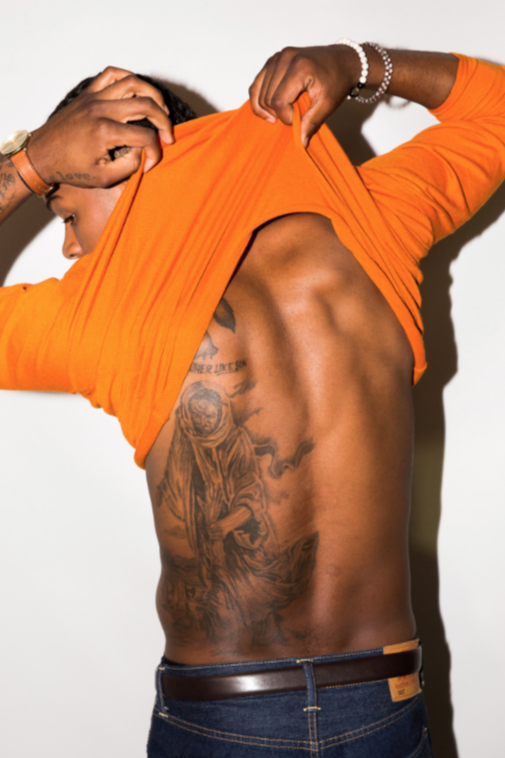
The clearest view of Jackson’s back tattoo shows Jesus pulling Peter out of the water, with a boat worked into the scene. Jackson said the image came from a time when he was going through something difficult and felt as if he had been saved from a situation that could have gone very badly.
This is one of his bigger and more detailed pieces. He said it took three sessions, which makes sense when you look at the amount of shading and the way the figures fill the back. It has the feel of a full scene rather than a small symbol: water, bodies, movement and a religious story all packed into one piece.
The meaning is pretty direct, but it isn’t shallow. The tattoo is about being pulled out of trouble, and that gives it a different weight from the pop-culture pieces on his arm. He has also spoken about being proud of the places in life where he was lost, sad or unsure, because those moments helped shape who he became. The back piece fits that idea better than almost anything else he has shown.
It’s worth keeping the wording careful here. Jackson explained the personal feeling behind the tattoo, but he didn’t turn it into a complete autobiography. The image is a religious reference with a specific connection to survival and relief, not proof that every other tattoo has one hidden religious meaning.
His left arm mixes Mortal Kombat with Toy Story
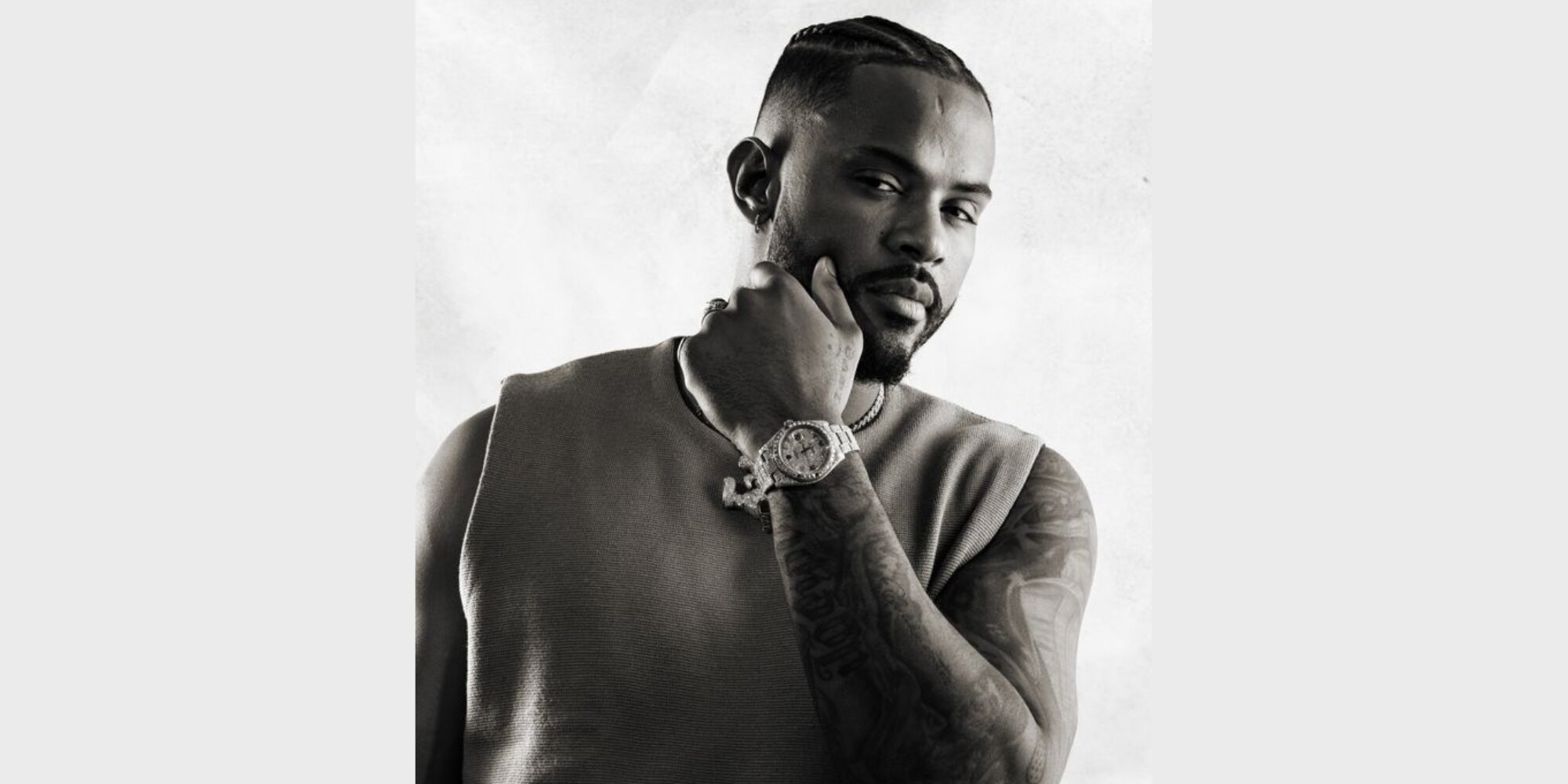
Jackson’s left arm is where the collection gets more playful. He has tattoos connected to Mortal Kombat, the aliens from Toy Story and the famous claw they point toward. Those designs might sound like a strange mix, but they all come from things he genuinely loves.
The Mortal Kombat piece is a straight-up tribute to his favourite game. Jackson jokes about being very good at it and says the tattoo shows that he isn’t someone to be messed with when it comes to Mortal Kombat. It’s a fun bit of personality, but it still fits his bigger rule: the subject has to mean something before it earns a spot on his skin.
The Toy Story aliens carry a more thoughtful idea. In the movie, they’re stuck in a glass case, waiting for the claw to lift them somewhere else. Jackson connected that image with the feeling that people are put on Earth to do something bigger, even if they don’t always know what that is yet. The aliens wanting to ascend became a reminder not to stay stuck or settle for a stationary life.
That’s why these tattoos shouldn’t be written off as simple childhood references. Jackson uses familiar characters as shorthand for his own ideas about ambition, freedom and growing into something bigger. The cartoon look makes the pieces approachable, while the explanation gives them a little more depth.
Prince, Bruce Lee and Capoeira fill out the arm story

There are several other important references on the arm. Jackson has a Prince tattoo, and he connects it to the point when he started becoming more comfortable making his own music and playing guitar. Prince showed him that he could move differently, write for himself and be the captain of his own ship.
He also has a tattoo connected to Bruce Lee. Jackson’s dad made him watch martial-arts movies when he was younger, so Bruce Lee became a big influence. The tattoo is tied to the idea of creating your own path instead of letting other people decide what you should be. Jackson has compared that kind of self-belief with figures such as Muhammad Ali, people who acted like they were great before everyone else caught up.
Another piece represents Capoeira, the African-Brazilian martial art that was disguised as dance when enslaved people in Brazil were not allowed to train openly. Jackson has talked about its mix of discipline, acrobatics, music and movement. That gives the design a cultural and physical side, rather than making it just another portrait or character.
Put together, these tattoos explain a lot about the arm. Prince is about creative freedom. Bruce Lee is about confidence and refusing to copy somebody else’s path. Capoeira brings in discipline and history. The images look different, but the ideas sit next to each other pretty naturally.
Jackson’s approach has something in common with the way Titus Welliver’s tattoos are often discussed: the interesting part isn’t just how much skin is covered, but why certain memories stayed with the person long enough to become permanent.
The Jackson ambigram and Silver Surfer tattoo are all about identity
One of the cleverer tattoos in Jackson’s collection is an ambigram that reads “Jackson” both ways. Turn it around and the name still works. It’s a neat piece of lettering, but it also feels very on-brand for someone who spends a lot of time thinking about identity and how he wants to move through the world.
Above it, he has a Silver Surfer tattoo. Jackson calls the Silver Surfer his favourite superhero because the character gave up his own life to save his world and carries the power of the cosmos. That explanation makes the image less about a comic-book costume and more about sacrifice, scale and choosing a bigger purpose.
The placement makes the two designs read as part of the same visual area. The ambigram is personal and name-based, while the Silver Surfer looks outward toward a larger fictional universe. One says who Jackson is; the other points to the kind of heroic idea he finds inspiring.
Jackson has also given pretty practical advice about tattoo timing: get one when you actually feel ready, not because there is some perfect age or schedule. That sounds simple, but it matches the way he talks about his collection. He isn’t trying to make every piece look like it belongs to one strict style. He’s building a record of what mattered to him at different points.
Family ink, One Love and the woman on his arm

Family is another big thread running through Jackson’s tattoos. He and his father have matching lion designs: a big lion for his dad and a baby lion inside it for him. It’s a simple idea, but the matching setup gives it a clear family connection instead of turning it into a generic animal tattoo.
He also has “One Love” inked on his body. The phrase comes from his family, especially his uncle Squeak, a huge guy Jackson describes as one of the gentlest people he knows. Whenever his uncle saw the tattoo, he would repeat the phrase back to him. It became something the wider family used, so the lettering works like a small private greeting that happens to be permanent.
On the back of his arm, Jackson chose a portrait of a woman he first noticed in a tattoo shop. He didn’t know who the woman was, but he liked the image and asked the artist to use it. Within the portrait are the yin-yang symbol, the number 8 in the earring and 777 in the hat.
Jackson tied those smaller details to balance and favourite numbers. The yin-yang connects to his interest in balance, while eight is his favourite number and sevens have kept showing up in his life. It’s a good example of how he builds meaning into a design after spotting an image that already speaks to him.
He has talked about wanting to balance out the rest of his body with tattoos on his left leg and right side. Those were plans he mentioned, not completed tattoos, so they should stay in the “maybe next” category. The same goes for possible Flash, Ninja Turtles and Rough Drafts pieces. They’re ideas Jackson discussed for future ink, not pieces that should be listed as already finished.
That mix of finished tattoos and future plans is part of what makes the collection interesting. It’s still changing. The best way to read it is as a timeline of people, stories and obsessions rather than a fixed catalogue.
Watch Trevor Jackson break down the stories behind his tattoos in the GQ Tattoo Tour:
One thought on “Mortal Kombat, Family and the Ink Trevor Jackson Chose”