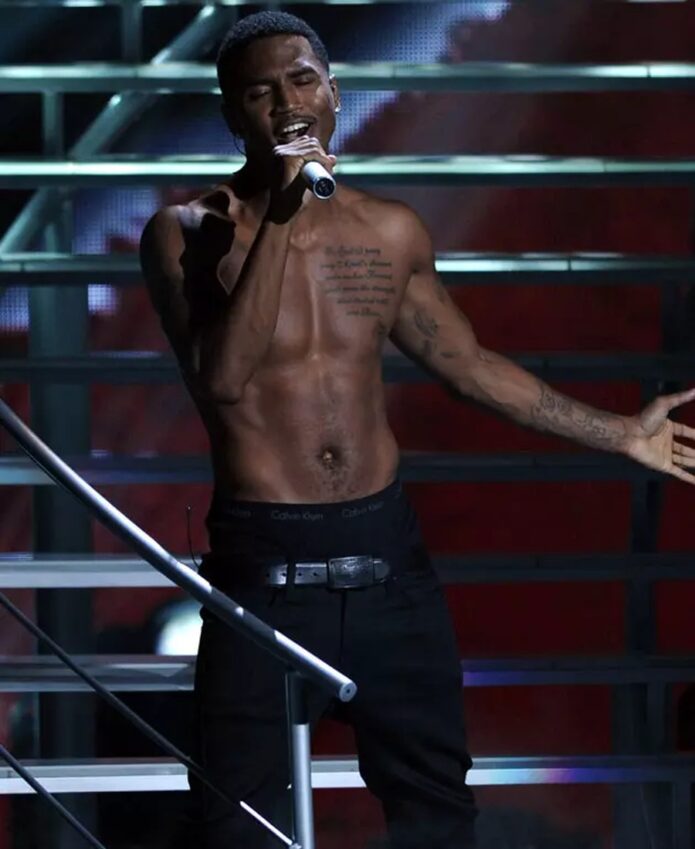
Trey Songz’s tattoos are unusually easy to connect to his own words. In his GQ Tattoo Tour, he explains where the designs came from, who they represent and why some of them have stayed on his skin even after the circumstances changed. The collection includes a teenage cross, a family prayer, angel wings across his back, a storm-and-sun design, initials and a relationship tattoo he has not covered. They do not all look alike, but they share one habit: Trey says he helped draw or shape most of them himself.
The first cross tattoo carries a Tupac-inspired message
Trey says his first tattoo was a cross on his right arm reading “Only God Can Judge Me.” He got it when he was around sixteen or seventeen. The line was partly a way of nodding to Tupac, whose music and image had a major influence on him. It was also a practical choice because he thought his mother might be less angry if the teenage tattoo carried a religious message.
The story is funny in the way Trey tells it, but the design still marks an important beginning. This was not a fully planned sleeve or a piece commissioned after fame. It was a young person choosing a phrase that connected faith, music and a little bit of rebellion. He says his mother was still mad, which makes the memory feel more real than a polished origin story.
The cross is also a good reminder that placement changes how a tattoo is read. On the arm, the image can be seen in photographs and performances, but it can also be hidden by a sleeve. The words carry most of the meaning, while the cross gives the phrase a clear visual anchor.
A chest prayer brings Trey Songz’s family into one design
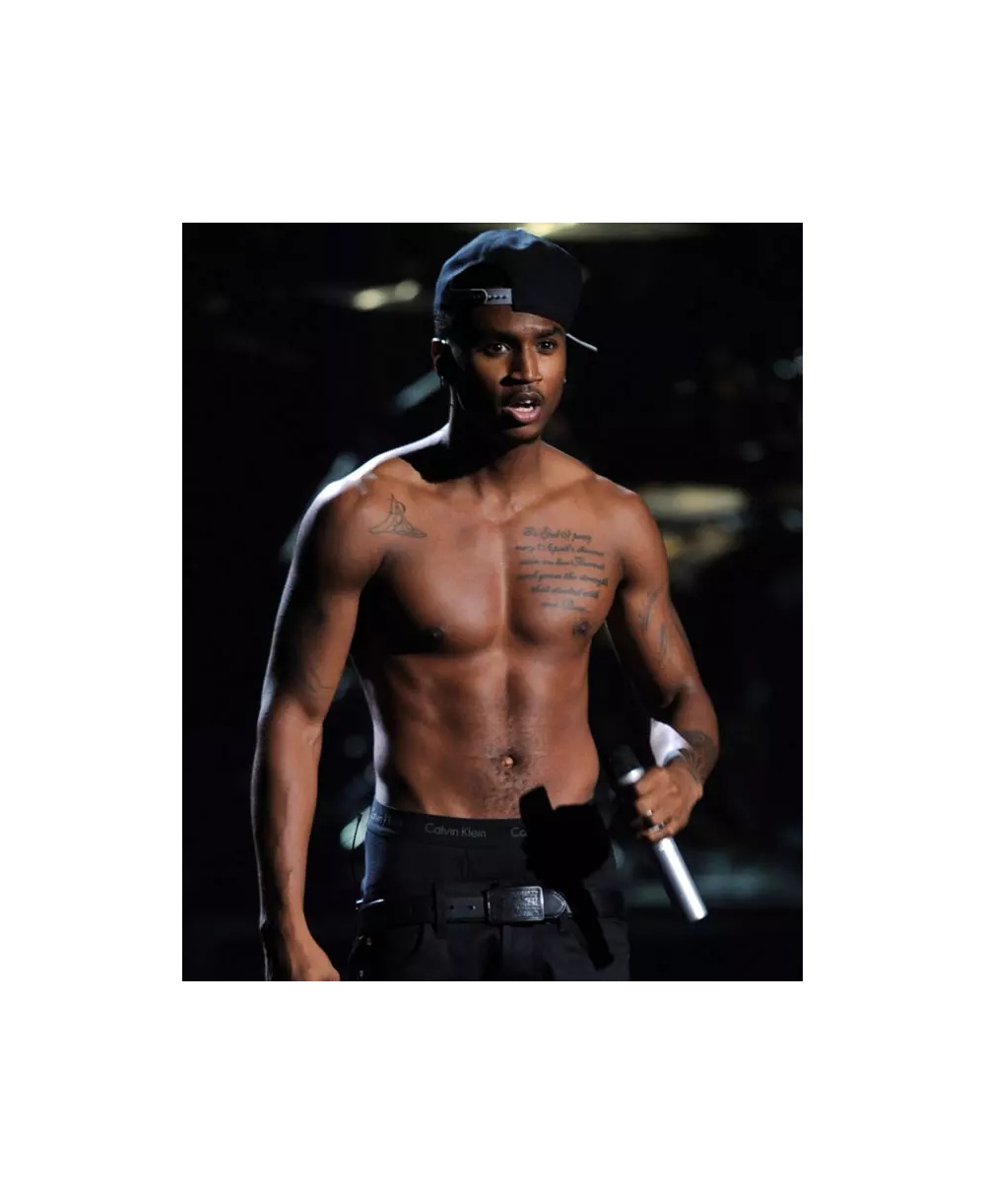
Trey calls the chest prayer his favourite tattoo. He wrote the prayer himself, and the wording brings several family references together: April is his mother, Forrest is his younger brother and Rose is his grandmother. The sentence begins, “To God I pray may April’s showers rain on her Forrest and grow the strength that started with one Rose.”
The wording is personal without being difficult to follow. April’s name becomes a shower of rain, Forrest becomes the person that needs to grow strong and Rose becomes the family starting point. It is a wordplay-heavy way of fitting multiple people into one piece, and Trey explains the links clearly enough that the design does not need invented symbolism.
The chest gives the prayer room to run across the body. Unlike the short phrase on his arm, it needs a wider photograph before the reader can understand its rhythm. A close image also matters because script tattoos can look like dark lines when the photograph is small or poorly lit.
Trey says he worked with the artist rather than simply selecting a finished design. That fits his wider description of the collection. He liked drawing as a child, and he says most of his tattoos came from ideas that resonated at home and were developed with the artist.
Angel wings on the back grew from his grandmother’s warning
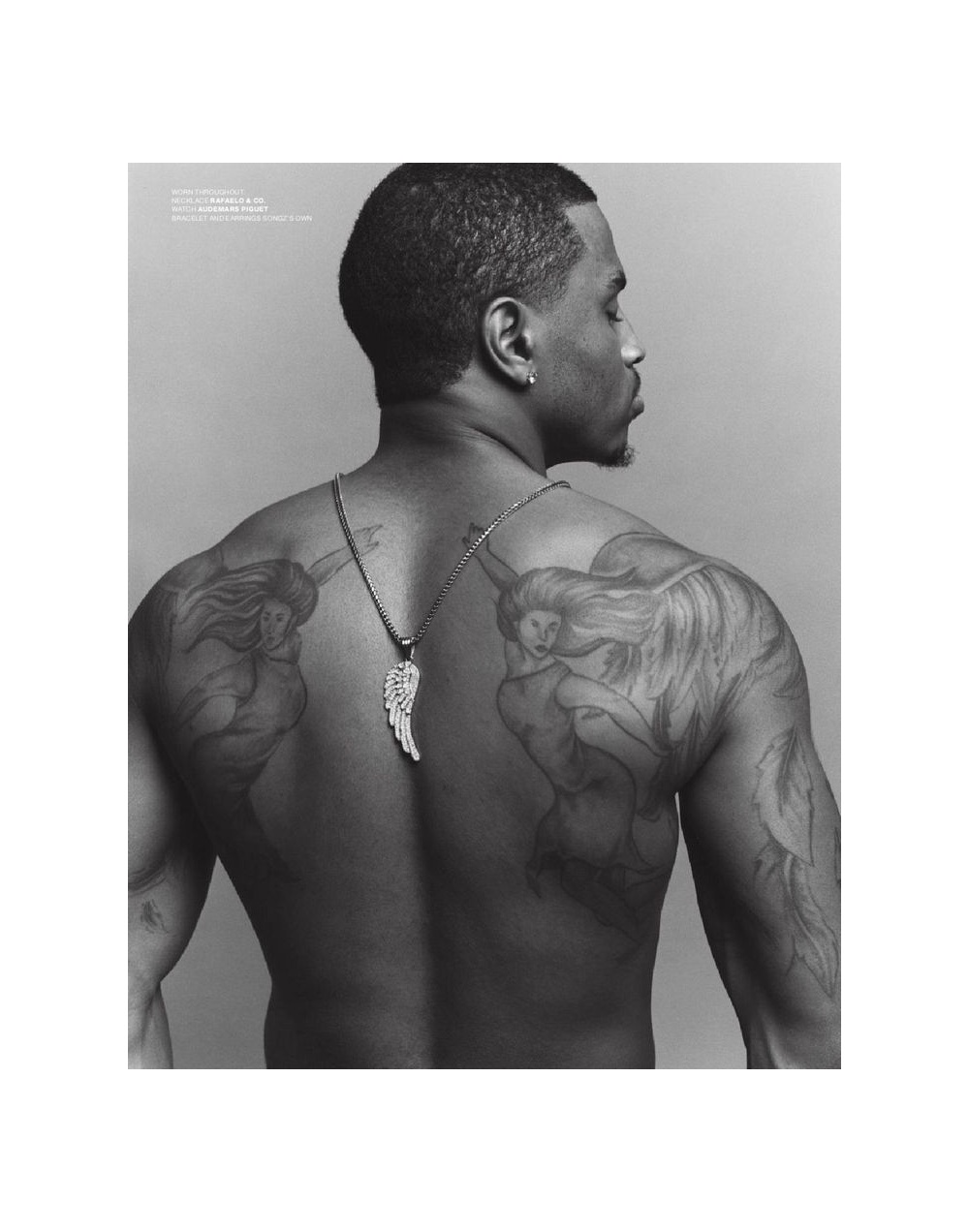
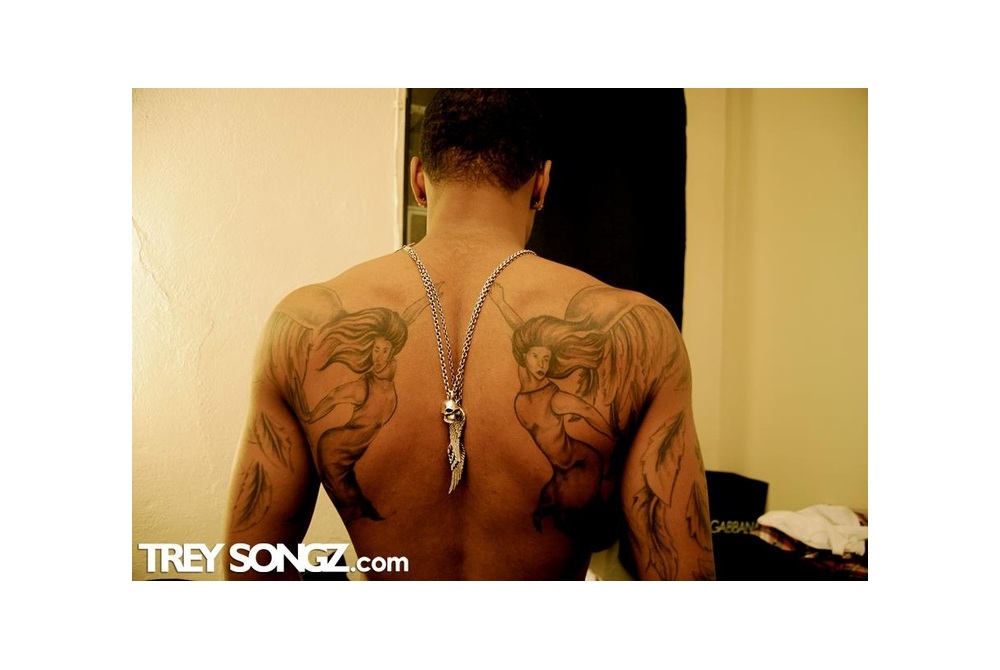
The angel wings on Trey Songz’s back are the most recognisable part of his collection. He says his grandmother always told him to “watch your back” whenever he left the house, even if he was only going out for a few minutes. He turned that repeated warning into a visual idea: angels watching over him.
The wings are not presented as perfectly untouched feathers. Trey describes them as weathered from fighting through storms, with leaves falling away while the angels remain. That detail changes the mood of the design. They are not just decorative wings placed across the shoulder blades. They represent protection that has survived difficult periods.
The back is also a placement that needs more than one photograph. A rear studio portrait shows the full symmetry, while a three-quarter view reveals how the wings move across the shoulders and down the upper arms. Those are genuinely different views of the same tattoo, not separate designs, so the article keeps the composition together rather than pretending every visible feather is its own tattoo.
Trey credits the artist Nelly with building the strongest bond around his body art, and he says the back tattoo dates from 2008, shortly after he cut his braids. The date gives the wings a place in his career timeline. They belong to an early stage of the public Trey Songz image, before some of the later lettering and relationship ink.
The storm tattoo turns hardship into a visual timeline
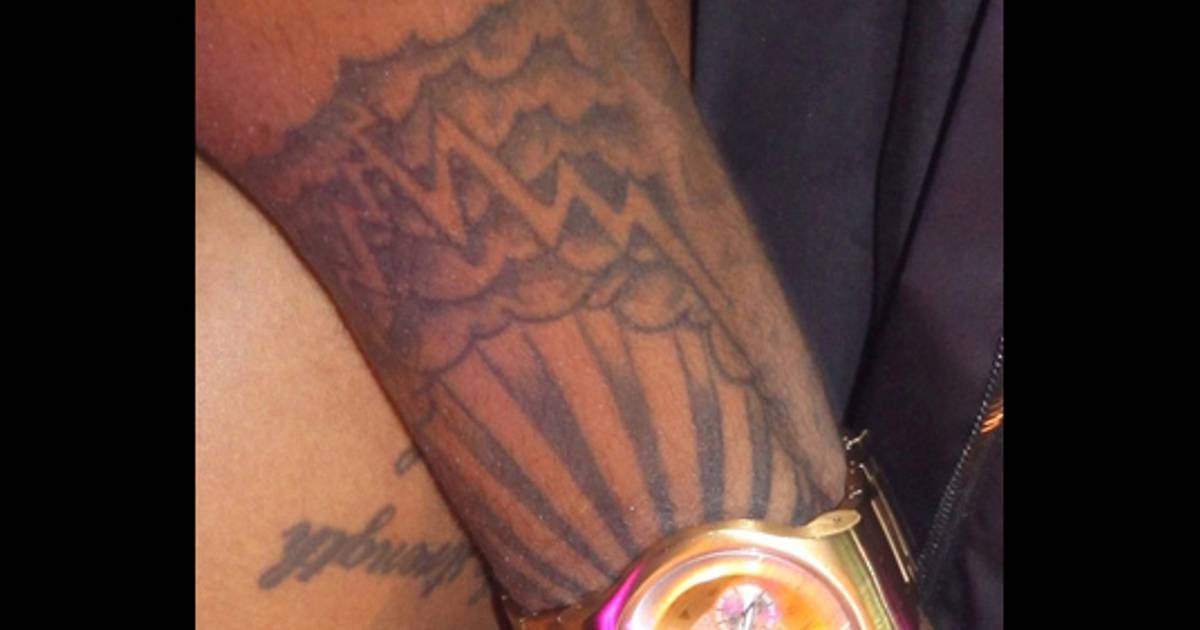
On another part of the collection, Trey describes a storm with the sun shining at the end. His explanation is simple: if you make it through the storm, the sun will shine. The Through the Storm tattoo has clouds, lightning and rays, so the picture carries its message even before he explains it.
This design works differently from the family prayer. The prayer names specific people, while the storm is a more general image of endurance. It can hold different experiences without needing to identify one private event. Trey’s own wording keeps the interpretation grounded in perseverance rather than turning the tattoo into a claim about a particular crisis.
The wrist and arm are practical places for a design that he wants to see often. At the same time, a wrist tattoo is easy for a camera to distort. A watch, bracelet or stage lighting can hide parts of the outline. The BET photograph is useful because it shows the design as a real piece of ink instead of relying on the transcript alone.
The weather language connects back to the angel wings, but the tattoos should still be treated as separate designs. One is about his grandmother’s warning and protection; the other is about getting through hardship. The shared storm idea creates a visual conversation without proving that they were designed as one planned set.
Family initials and relationship ink keep the collection personal

Trey also has a group of initial tattoos for the women who raised him. He names his grandmother, other grandmother, aunts and mother as the people represented. The letters are not as visually loud as the wings or chest prayer, but the idea behind them is just as direct. He was raised mostly by women, so the initials create a compact family record.
There is also a wrist tattoo made with a former girlfriend. It combines their initials with an infinity sign. Trey jokes that the infinity symbol is tricky because they are no longer together, but he has not covered it. His explanation is more thoughtful than the joke: changing the piece would require something that meant more than the love they shared at the time.
That is a useful detail about cover-ups. Leaving a tattoo in place does not necessarily mean the relationship is current, and changing it does not erase the fact that it once mattered. Trey treats the design as part of his history. The photograph identifies the initials and symbol, while his interview explains why the tattoo has remained.
Put together, the collection moves from a teenage Tupac reference to a family prayer, then into protection, recovery and personal relationships. Trey’s tattoos are not simply decoration around a famous singer’s body. They are sketches of the people and ideas he wanted close to him at different ages.
He ends his tattoo tour with practical advice: study the artist, make sure the work is genuinely good and remember that the change is permanent. That advice fits his own collection. The cross, prayer, wings, storm, family initials and infinity mark all came from real moments, and each one still carries a trace of the person Trey was when he chose it. The images show the placement; his explanations supply the meaning; neither needs to be padded with guesses.
The placement changes how the collection is photographed. A back piece needs a rear portrait, a chest prayer needs a front view, and a wrist design is easiest to read in a tight close-up. Those are different photographs, not repeated versions of one image. Clothing, chains, lighting and posture can hide an important line, so a careful guide uses the clearest genuinely separate frame for each tattoo group rather than stretching one picture across the whole page.
That distinction matters when looking at older celebrity tattoo photographs. A picture from one album era may show the wings clearly but hide the wrist, while a later performance shot may reveal the prayer and arm lettering but leave the back covered. The collection should be read as a timeline of separate choices, not as proof that every mark was designed in one sitting. Trey’s own comments make the strongest details clear, especially when he names the people, dates or memories behind a tattoo. For the smaller marks, the responsible approach is to describe what the photograph actually shows and leave private meanings private.
Separate photographs make the placement and lettering easier to read without recycling the same frame.