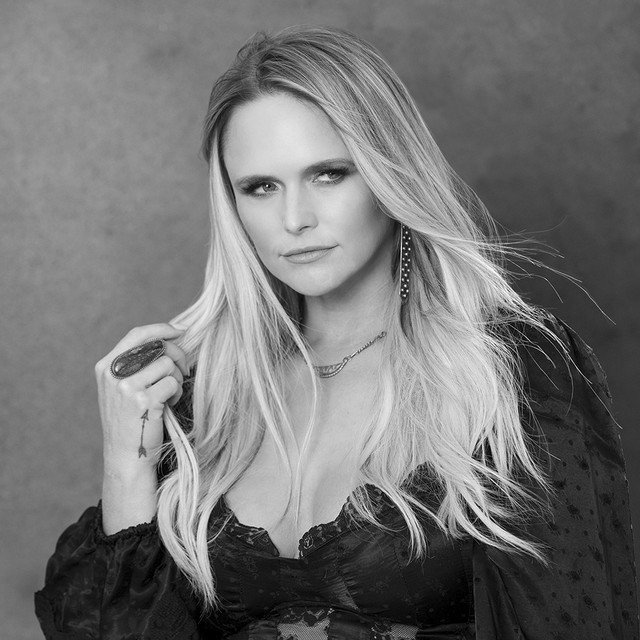
Miranda Lambert’s tattoos are small in number compared with the large sleeves worn by many musicians, but each documented design has a clear place in her life and career. Her ink includes a paw print for animal welfare, an arrow connected with guitarist Scotty Wray, and a pair of winged pistols that celebrate her first gold record. Reading those pieces together is more useful than treating them as a random list of decorations.
Lambert has discussed the stories behind several tattoos in interviews, while close photographs make the placement and designs easier to check. The sources do not establish a complete official inventory of every mark she may have added over time, so this guide separates directly reported meanings from details that are simply visible in photographs.
The winged pistols mark Lambert’s first gold record
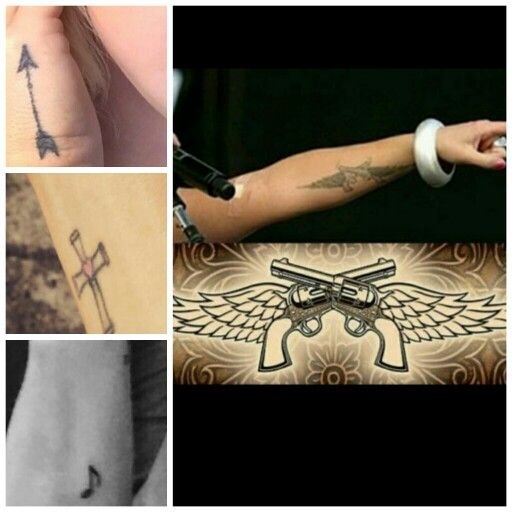
The most distinctive design in Lambert’s tattoo record is the pair of pistols with wings on her forearm. The guns are drawn in black ink and surrounded by feathered wings, giving the piece a mixture of country-western imagery and a playful angel reference. The design was created by her friend Amie Sikes at Junk Gypsies.
Lambert has explained that the tattoo commemorates her first gold record. That context makes the pistols more than a generic music symbol. The weapons fit the visual language of country music and her public image, while the wings connect the design to the phrase “angel and little pistol” used when describing the persona Sikes captured.
The placement is useful when comparing photographs. The tattoo sits on the forearm, where it can be seen when Lambert wears sleeveless clothing or raises her arm onstage. A distant concert photograph may show only the outline, but a closer image reveals the separate wing and pistol elements. The tattoo is therefore best described as a specific forearm composition rather than as a vague gun tattoo.
The arrow remembers guitarist Scotty Wray
Lambert’s arrow tattoo has a different kind of history. She has connected it with Scotty Wray, the guitarist who worked with her and later died. The arrow is a simple design, but its meaning comes from the person and period attached to it rather than from an elaborate picture.
The public record does not require the arrow to be interpreted as a general sign of moving forward. That reading is common in tattoo culture, yet Lambert’s own reported connection to Wray is the stronger evidence. A careful description keeps the design, location and tribute together without expanding the meaning beyond what has been reported.
Photographs place the arrow among the small pieces on Lambert’s arm and hand. The exact angle can make the lines appear longer or shorter, especially when her hand is turned. That is why a dated close photograph is more useful than a stylized tattoo list. It shows the direction of the arrow while avoiding a false claim about changes in the design.
The arrow also shows how Lambert’s tattoos function as reminders of working relationships. Her collection is not built around one uniform style. Some pieces are colorful, some are minimal, and some use recognizable music or western imagery. The common thread is that the designs are attached to specific memories.
A paw print connects the ink to MuttNation
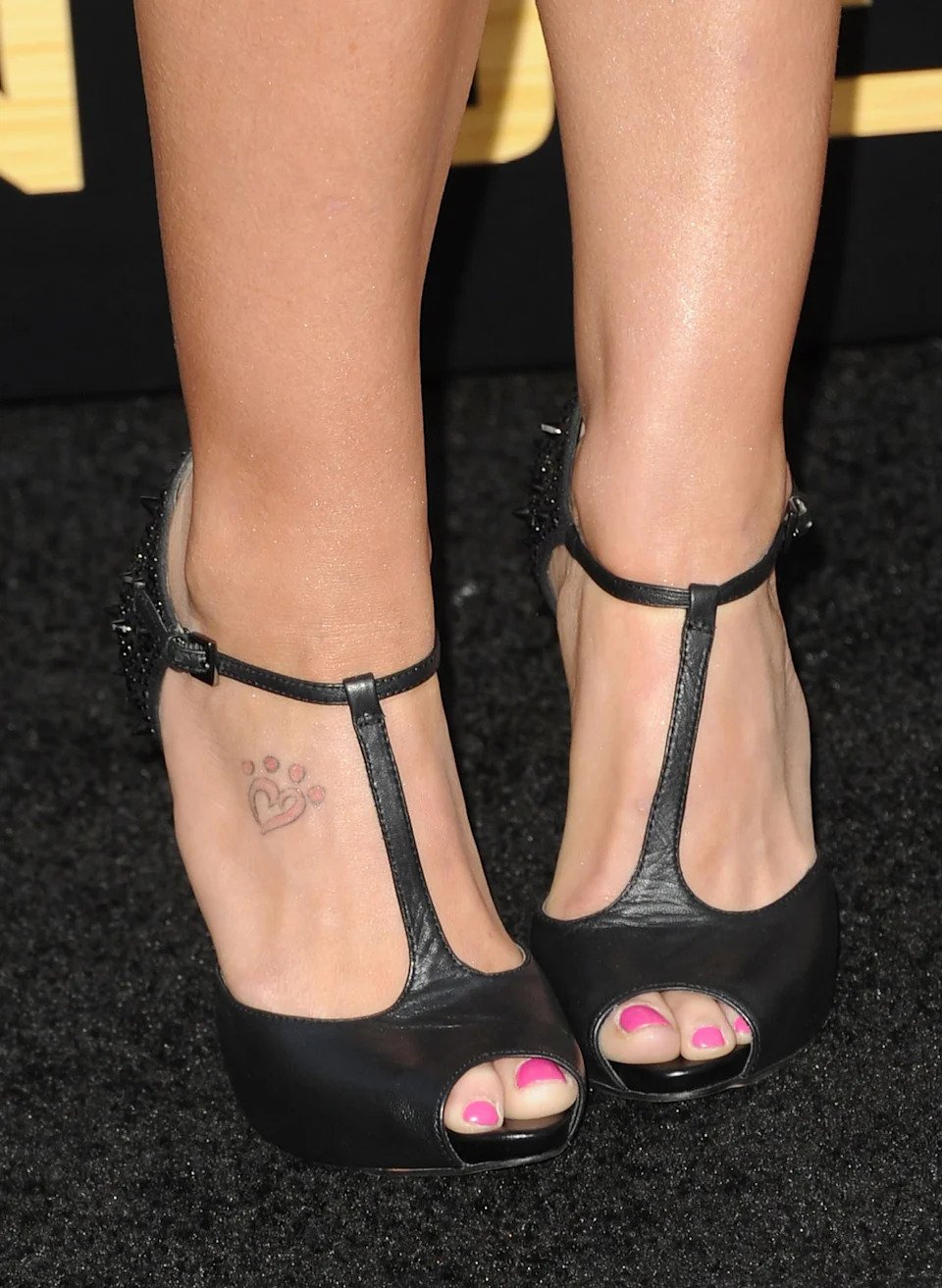
Lambert’s paw-heart tattoo is associated with her love of animals and the MuttNation Foundation, the rescue organization she founded with her mother. The small design is placed on the foot and uses a heart shape with paw-print details. It is easy to miss in ordinary event photographs because shoes and sandals often cover the area.
Lambert has described getting the foot tattoo around 2011, before her marriage to Blake Shelton, and has spoken about its connection with her rescue work. The timing and the foundation link are the useful facts. The design should not be treated as evidence that every animal-related project is represented by a separate tattoo.
The foot placement gives the piece a different visual role from the forearm tattoos. It can be shown clearly in a close-up, but a full-body photograph usually cannot prove its exact shape. Readers comparing images should look for the heart and paw pads rather than relying on a caption that merely says Lambert has a foot tattoo.
The design also fits the practical identity of MuttNation. Lambert’s tattoos often connect a private affection with a public project, but the source record still matters. The paw print is documented as a symbol connected with dogs and rescue work; finer claims about every line or color should remain cautious when the photograph is small.
Other small tattoos add family, faith and music references
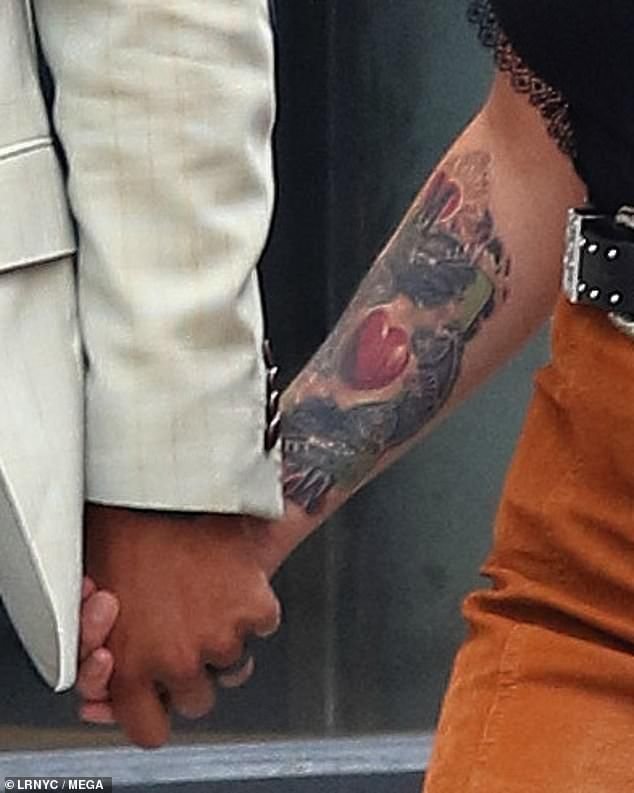
Lambert’s reported collection includes additional small designs, including lettering and music-related marks. These pieces are less consistently documented than the winged pistols, arrow and paw-heart, so they should be handled as secondary inventory entries. A tattoo list can mention a visible mark without pretending that its meaning has been confirmed.
That distinction matters because celebrity tattoo galleries often repeat one another. A phrase from an old article can be copied into newer lists even after the design has faded, changed or been photographed from a poor angle. The most reliable approach is to match a description to a clear image and identify whether the meaning came from Lambert or from an outside interpretation.
Color is another useful part of the record. The winged pistols and other forearm imagery can appear different under stage lighting, while the paw-heart is usually seen in close photographs of the foot. Those are photographic differences, not necessarily evidence of new tattoos. Dating the image is the simplest way to keep the timeline coherent.
Lambert’s tattoos form a compact record of animals, music, friendship and career milestones. The winged pistols represent the first gold record. The arrow is tied to Scotty Wray. The paw-heart reflects her rescue work and affection for dogs. The strongest guide identifies each design, shows where it sits, records the meaning Lambert has actually given it and leaves unsupported details open.
These documented anchors give readers a clear way to compare Lambert photographs while keeping reported meaning separate from visual guesswork.