Musicians

Chris Daughtry’s Tattoos: The Blackout Redesign and the Ink It Replaced

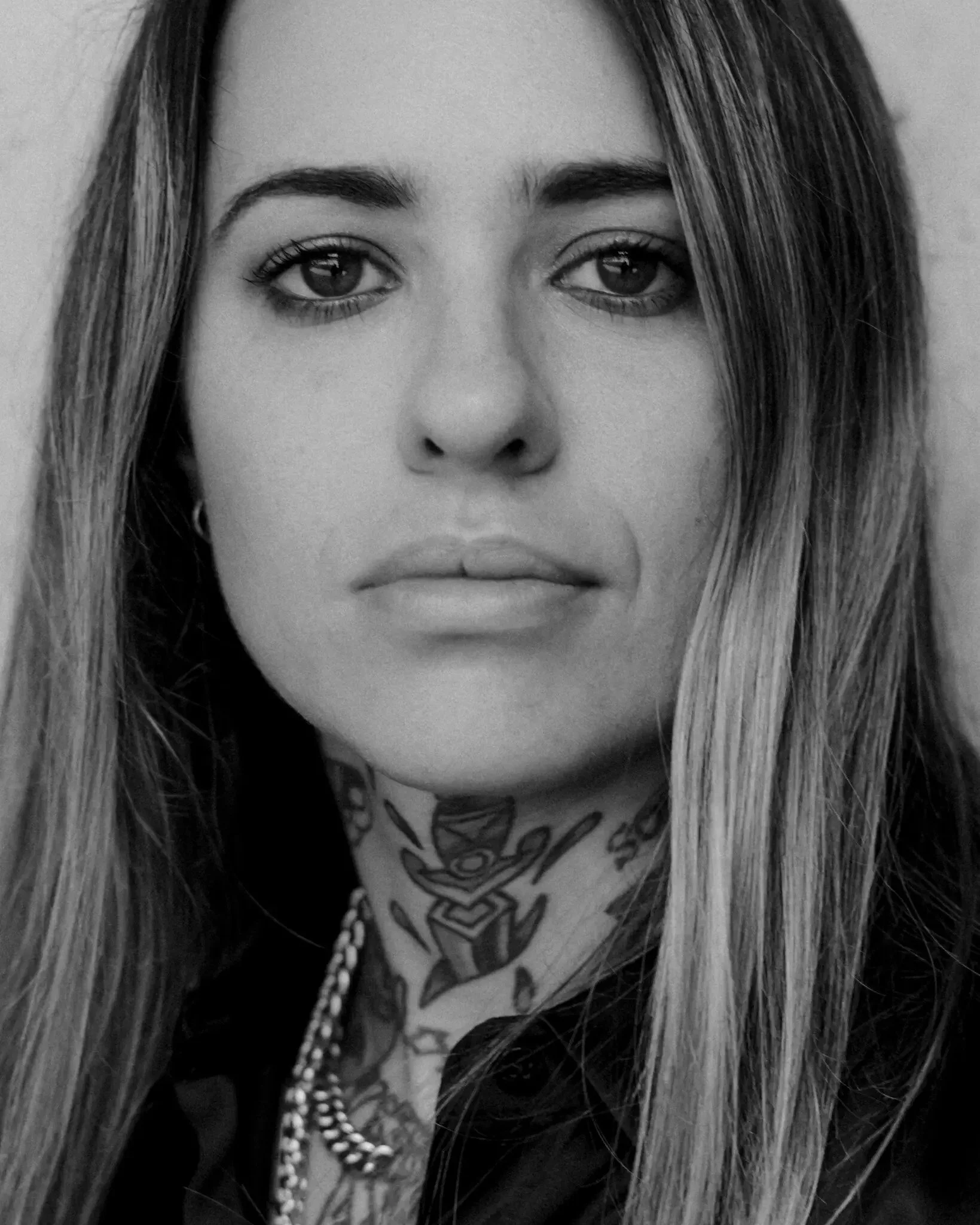
Chris Daughtry’s tattoos are best understood as a visual timeline. Older photographs show colorful, detailed work across his arms, while later coverage focuses on a dramatic blackout redesign. That change can make online tattoo lists confusing because a photograph from one period may show designs that are no longer visible. The most useful account separates the earlier sleeves from the blackwork that replaced or covered much of them.

The public record also has limits. Some individual designs are easy to see, but their personal meanings have not been explained in reliable detail. This article therefore distinguishes what photographs show from what published reports say, and avoids assigning a private story to every shape in an old image.

The colorful sleeves came before the blackout redesign
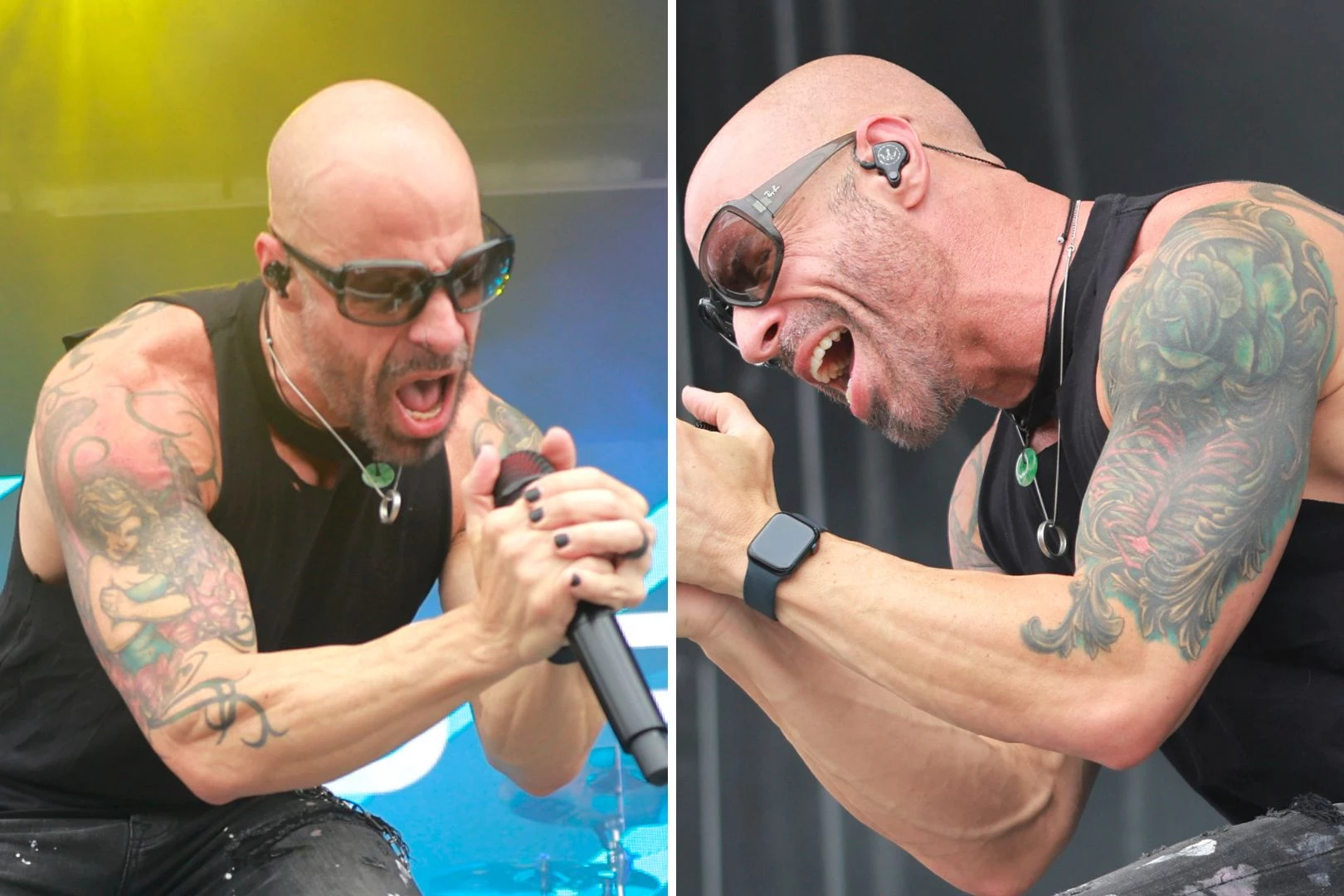
Chris Daughtry showing the colorful tattoos on his arms before the blackout redesign

Before the blackout work, Daughtry was photographed with substantial color and linework on both arms. The images show sleeves built from several elements rather than a single small emblem. Faces, shaded forms and saturated color appear across the upper and lower arm, although the photographs do not provide a dependable design-by-design catalogue.

That earlier record matters because it explains why the later tattoos look so different. Blackout work is a separate layer added over or beside earlier designs. It changes the visual balance of the arms and can obscure the original artwork. A before photograph is therefore useful evidence of the earlier collection, but it should not be treated as a current inventory.

Reports describing the older tattoos sometimes repeat labels without identifying the exact source for each design. The safest description is that Daughtry had colorful arm sleeves with portrait-like and illustrative imagery. Where a photograph does not make a small detail clear, the detail should remain undescribed rather than being turned into a confident claim.

An angel and portrait imagery survives in the older record
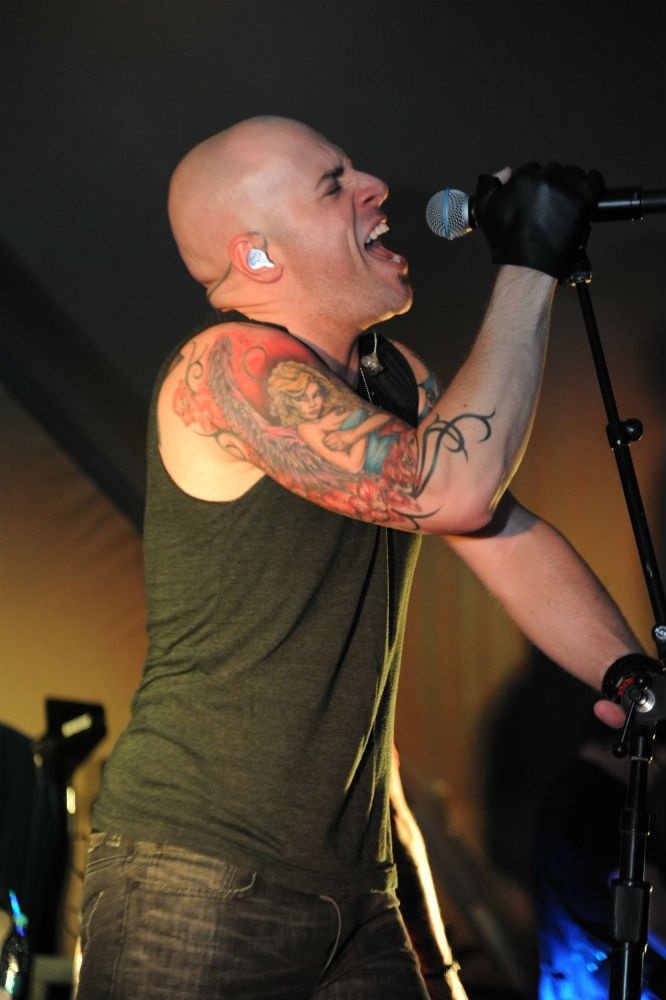
Chris Daughtry showing the angel and colorful tattoo sleeve on his upper arm

One of the clearest visual themes in the pre-blackout photographs is realistic or portrait-style imagery on the upper arm. An angel-like figure and other face-based forms are visible in the older record, but the available sources do not establish a confirmed meaning for each one. They can be catalogued as visible sleeve imagery without inventing a memorial, religious or family explanation.

The distinction is important when comparing photographs from different years. Lighting, clothing and the angle of a performance image can make a detailed sleeve look like a different tattoo. A close view can also exaggerate one section of a larger composition. The image evidence supports describing the visible forms and their placement, but it does not support claiming that every portrait represents a named person.

Daughtry’s tattoo history is often summarized as a collection of colorful designs that preceded the blackout. That summary is accurate at a broad level, yet the older photographs are more useful when read as a record of composition. They show how the arm was covered before the later redesign and why current photographs may not reveal the original work clearly.

The blackout arms use solid ink and negative space
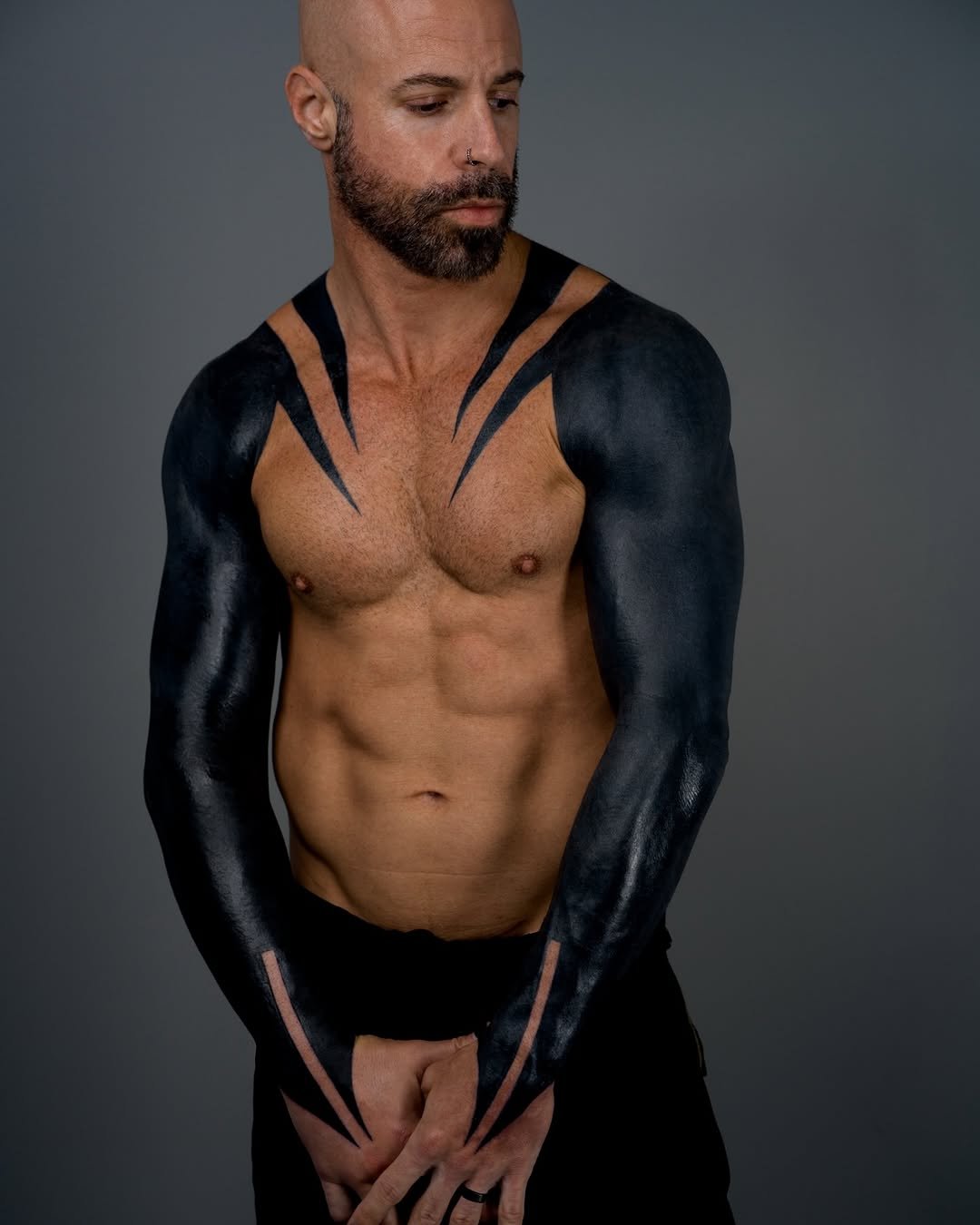
Chris Daughtry showing the solid blackout tattoos and pointed negative-space shoulder stripes

In December 2024, Loudwire reported that Daughtry had received new blackout tattoos from Roxx, the Los Angeles artist also known for working with Machine Gun Kelly. The published description presents the work as a substantial redesign across both arms, with solid black areas broken by negative-space stripes and pointed accents near the shoulders.

Blackout tattooing can function as both a style choice and a cover-up strategy. In Daughtry’s case, the contrast with the earlier colorful sleeves is the central fact. The solid fields reduce the visibility of the previous artwork, while the preserved skin or uninked shapes create the graphic structure. It is more accurate to describe the current work as a coordinated blackwork composition than as a single symbol with one fixed meaning.

The reported scope extends beyond the forearms. Coverage also places blackout work across the upper back and the back of the neck. Those areas are harder to inspect in the available photographs, so they should be treated as reported locations rather than described in detail that the images cannot support. The arms remain the clearest way to understand the redesign.

The negative-space elements are especially important because they prevent the design from reading as an entirely flat block of ink. Reports describe stripes running through the arm area from the knuckles toward the wrists, along with pointed shapes around the shoulders. These details give the blackout work its graphic rhythm, but the exact edges may look different as the tattoos heal, fade or are photographed under changing light.

There is no need to treat the redesign as proof of a particular private motive. Daughtry has been described as viewing the blackout tattoos as cohesive and intentional, and the visible result supports that description. The strongest conclusion is simply that the newer work created a unified blackwork direction and substantially changed how the earlier sleeves could be seen.

How to read Daughtry’s tattoo timeline

The timeline has three useful anchors: colorful arm sleeves in the earlier record, detailed portrait and illustrative imagery within that period, and the later blackout work associated with Roxx. Keeping those stages separate prevents a before photograph from being mistaken for a current view of the arms.

It also explains why different tattoo galleries appear to disagree. They may have been made years apart, before or after the blackout, or from angles that show only part of the arm. A good guide should date an image where possible and identify whether it documents the older sleeves or the current blackwork.

For readers comparing photographs, the arms provide the strongest evidence. The upper back and neck are reported as part of the wider blackout project, but the available record is less detailed there. The responsible approach is to keep those locations in the inventory while avoiding unsupported claims about exact shapes or meanings.

Chris Daughtry’s tattoos are therefore not a static list. They are a before-and-after record of a large visual change, with the blackout redesign becoming the defining recent chapter. The photographs are most useful when they are tied to that timeline and when the boundary between documented appearance and personal interpretation remains clear.
Morgan Wade’s Tattoos: Family Ink, Old-School Flash and the K from Kyle Richards

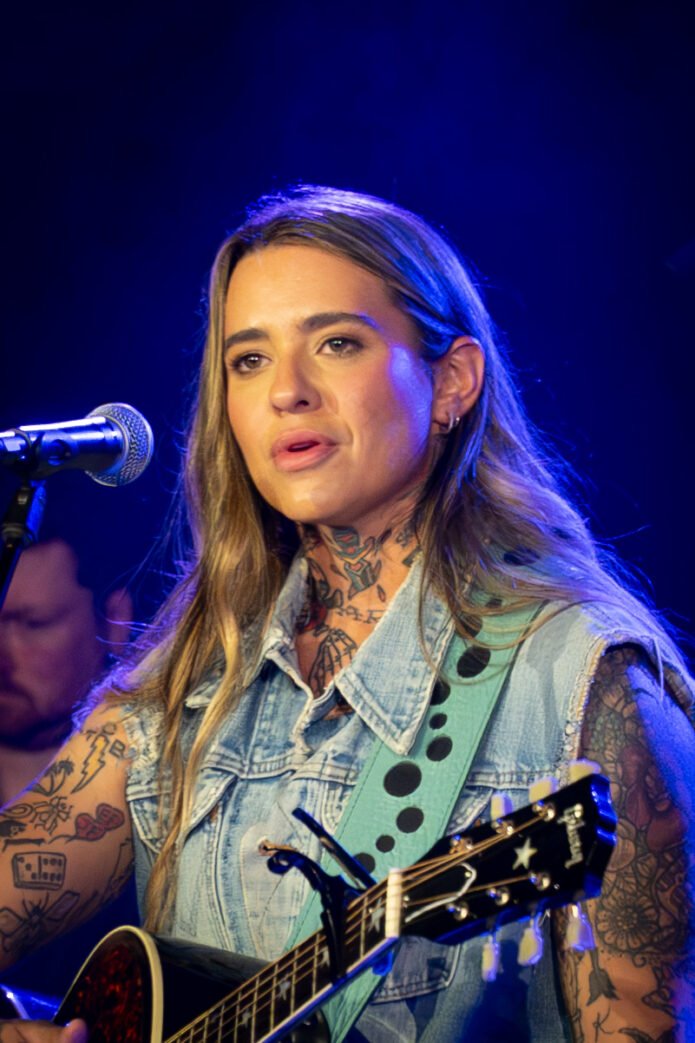
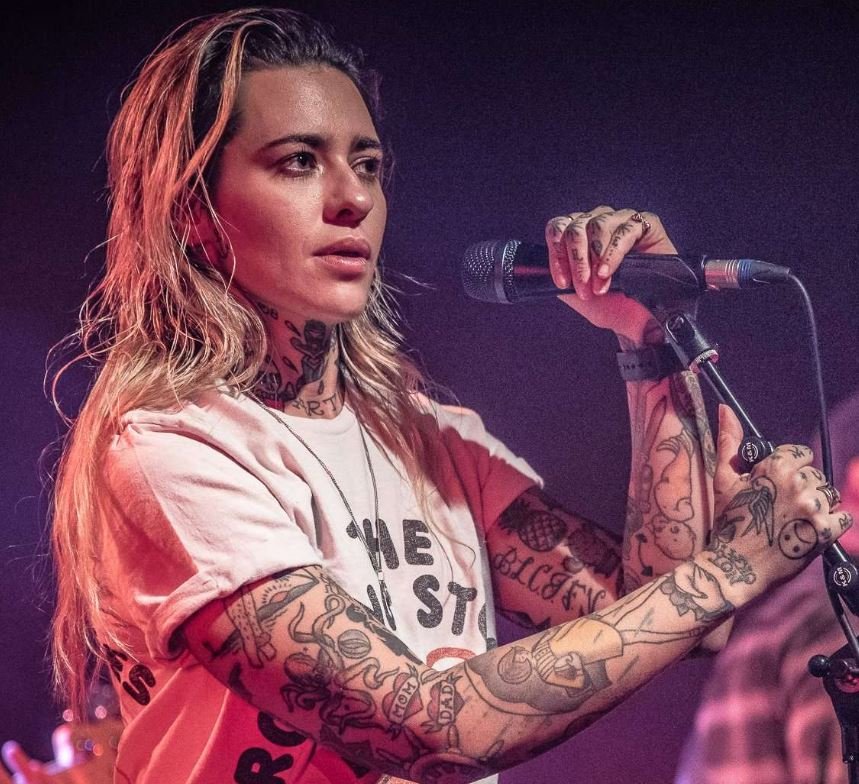
Morgan Wade’s tattoos are not a small set of isolated symbols. The country singer has described a collection that runs from her neck to her feet, built over years and mixed from family references, traditional flash, small jokes and pieces she simply enjoyed. That makes a neat official list impossible, but it does not make the documented tattoos unknowable. Interviews and filmed moments identify several designs clearly enough to discuss without inventing meanings for every mark.

The most useful distinction is between tattoos Wade has explained herself and details that other people have identified while talking about her collection. Her first tattoo, the initials of her four younger siblings, has a direct family explanation. The Morton Salt girl has a specific childhood memory behind it. By contrast, the K on her arm is known because Kyle Richards tattooed it during a television scene, while the exact meaning of many old-school pieces has not been published.

Photographs also need to be dated. Wade’s arms, neck and hands are densely tattooed, and a performance image may show a different part of the collection from a studio portrait. The record below focuses on designs that have a useful source, then keeps the larger visual field in perspective.

Morgan Wade’s four younger siblings’ initials

Morgan Wade showing her four younger siblings initials tattoo area on the arm

Wade told Inked that she got the initials of her four younger siblings on the inside of her arm as her first tattoo. She was in college, had very little money and accepted a friend’s suggestion that a tattoo would suit her. The detail matters because it gives the design a clear place in the timeline and a specific reason for its existence.

It is tempting to turn family initials into a larger statement about Wade’s entire collection, but the evidence supports a narrower conclusion. These letters are a family tattoo because Wade described them that way. The source does not establish that every later piece carries the same meaning, and photographs do not always make each letter legible.

The inside-arm placement also explains why the tattoo can disappear in concert photographs. Microphones, sleeves and crossed arms cover the area easily. A clear image of the arm is more useful than a distant stage shot, particularly when readers are trying to distinguish the first tattoo from the many designs added afterward.

The Morton Salt girl carries a childhood memory.

Wade told the same Inked interviewer that her favourite tattoo is the Morton Salt girl on top of her arm. She connected the design with her grandmother, who would put a can of salt on the table, and with the memory of tracing the figure as a child. That is unusually specific evidence for a celebrity tattoo: it identifies the design, its placement and the personal association in one account.

The story also shows why a visual description should not be replaced by a generic claim about nostalgia. The tattoo is not simply a symbol of family or childhood in the abstract. Wade named the advertising character and supplied the small household memory that makes the piece meaningful to her. The safest article language keeps those facts together rather than assigning a broader message she did not state.

In photographs, the upper-arm design sits among other traditional-looking work. It should be identified as the Morton Salt girl only when the figure is clear enough to separate it from neighboring ink. Older images may show a different level of shading or surrounding work, so the image date remains part of a careful inventory.

The K initial tattoo was made by Kyle Richards

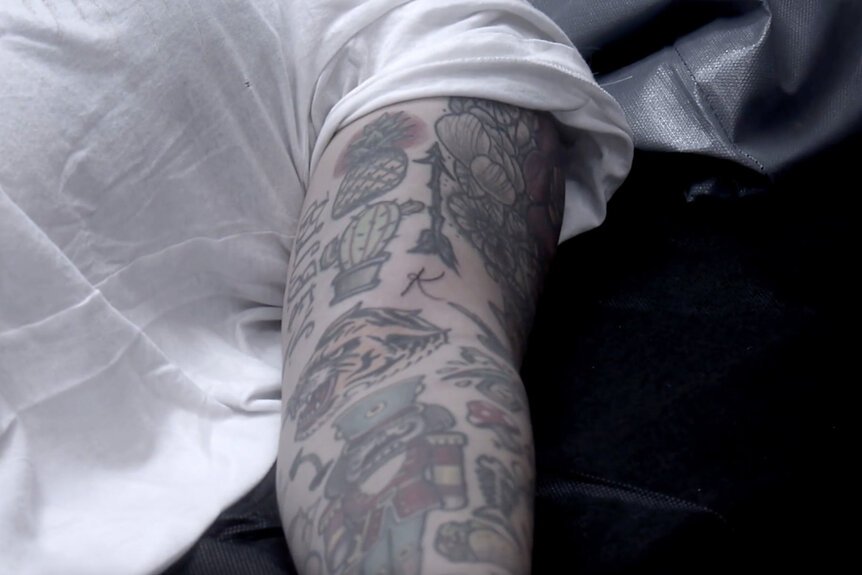
Morgan Wade showing the K initial tattoo made by Kyle Richards on her arm

In 2023, Wade allowed Kyle Richards to tattoo her during a visit to a tattoo shop shown around The Real Housewives of Beverly Hills. The result was a cursive K on Wade’s arm. E! and Us Weekly both described the scene, including Wade’s joke that no one else could say they had been tattooed by Kyle Richards.

The circumstances are documented, but the meaning should be kept in proportion. The K is associated with Richards because Richards made it, yet the reports do not prove that it represents a romantic relationship or a private symbol beyond the friendship context discussed on the show. Bravo reporting also recorded explanations that treated the act as a spontaneous joke, which is why the tattoo belongs in the timeline without requiring a dramatic interpretation.

The K is also a reminder that Wade’s collection includes tattoos made in very different settings. Her siblings’ initials came from a youthful decision, while this mark came from a filmed social moment with a friend. Both are real entries, but their histories are not interchangeable.

Reading the record behind Wade’s collection

Morgan Wade showing neck tattoos and old-school Sailor Jerry style pieces

Wade told Inked that her collection stretches from her neck to her feet and includes old-school Sailor Jerry pieces, a fish bone and a French bulldog honoring her Frenchie, Chop. Those details establish a strong visual direction without pretending that the publication supplied a complete map of every tattoo.

The French bulldog has a named subject and a direct connection to Chop. The fish bone is identifiable as an object, but its personal meaning is not stated in the interview. The phrase old-school Sailor Jerry describes a style reference rather than proving that every traditional design was tattooed by Sailor Jerry or copied from one specific flash sheet. Those distinctions prevent a descriptive guide from becoming an attribution error.

During the K-tattoo report, Richards also referred to a trout and a roll of toilet paper among Wade’s many tattoos. They are useful catalogue clues, but the public reports do not consistently give their positions or meanings. They should therefore remain secondary entries, supported by the source but not inflated into invented stories.

Photos of Wade’s neck, arms and hands show how closely the pieces sit together. A reader can see a coherent taste for bold outlines and compact imagery, but visual style is not the same as a confirmed biography for each mark. The best guide names what the source or image can support, then leaves the unknowns open.

What the available record can and cannot confirm.

Morgan Wade’s tattoo record is substantial, but it is not a catalogue published by Wade herself. The strongest confirmed anchors are the siblings’ initials, the Morton Salt girl, the K made by Kyle Richards, the French bulldog for Chop and the broader collection described in the Inked interview. The fish bone, trout, toilet-paper design and traditional pieces add useful visual context, even when no meaning has been reported.

That evidence hierarchy is important for readers comparing photographs. Start with the designs tied to a clear source, then use the image to understand how the surrounding pieces fit together. Do not assume that a small mark is a reference to a song, a relationship or a recovery milestone just because it appears beside a better documented tattoo.

Wade has also said that she has to be more careful with the space she has left. That comment captures the practical story of the collection: it grew through many separate decisions, and the remaining blank skin changes what can be added next. Her tattoos are best understood as a living archive of family, memories, friendships, pets and visual taste rather than as one code with a single key.

Future interviews or clearer photographs may identify more of the collection. Until then, the responsible account is the one that keeps the clearest designs specific and avoids assigning private meanings to the rest of the available evidence.

Teddy Swims’ Tattoo Collection Runs From Eyelid Ink to Chris Farley

Teddy Swims’ tattoos are easy to misread as one undifferentiated wall of ink. Public images show work across his face, eyelids, arms, torso and back, but the strongest reporting identifies individual designs rather than publishing a complete catalogue. The useful way to read the collection is to separate what Swims has explained from what a photograph merely shows.

That distinction matters because the tattoos come from several sources. Some are tributes to performers and fictional characters, some are words he chose for himself, and some arrived while travelling or working on tour. The record also changes quickly. PEOPLE reported that Swims said roughly 90 percent of his body was tattooed, while an unfinished back piece and ultraviolet work showed that the collection was still developing.

The public record is unusually rich but it is not a numbered official inventory. Inked’s 2025 profile names several designs, Complex records the explanation for the eyelid work, and later interviews add family-related tattoos and a story about an incomplete back piece. The result is enough for a useful guide, provided each design is described at the level the evidence supports.

His eyelid tattoos were inspired by Lil Wayne

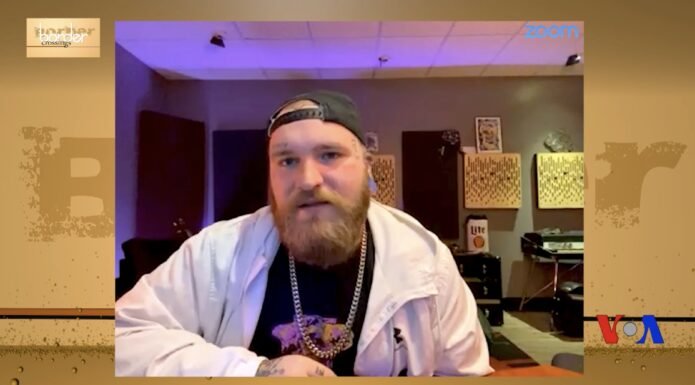
Teddy Swims showing the tattoos around his eyes and face

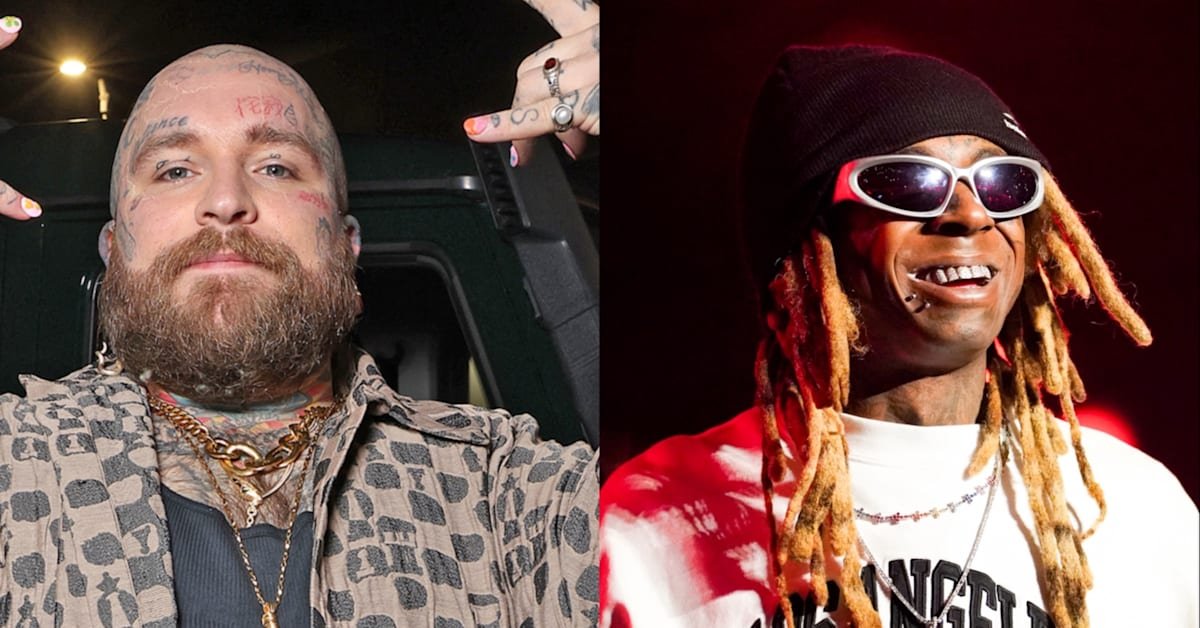
One of the clearest explanations concerns the ink around Swims’ eyes. In an interview reported by Complex, he connected the decision to tattoo his eyelids with his admiration for Lil Wayne. Swims said the rapper’s face tattoos made a strong impression on him when he was younger, and described his own choice as an attempt to look cool like Wayne. That is a documented influence, not a general claim that every mark on Swims’ face carries the same meaning.

The eyelid work is visually demanding because the skin is small and photographs vary with lighting, expression and camera angle. It should therefore be described as lettering and facial ink around the eyes rather than as a perfectly readable list of every character. The explanation supplied by Swims is the important part: the design belongs to a specific musical influence and a particular decision about appearance.

The Complex photograph is useful as a record of the area, but it should not be treated as proof that every small line can be decoded. Some marks sit close to the hairline or are partly obscured by shadow. A careful reader can see the density of the work and the placement around the eyes without turning uncertain details into invented words.

The face tattoo made during Capital Breakfast

Close-up of Teddy Swims showing facial tattoos and cheek lettering

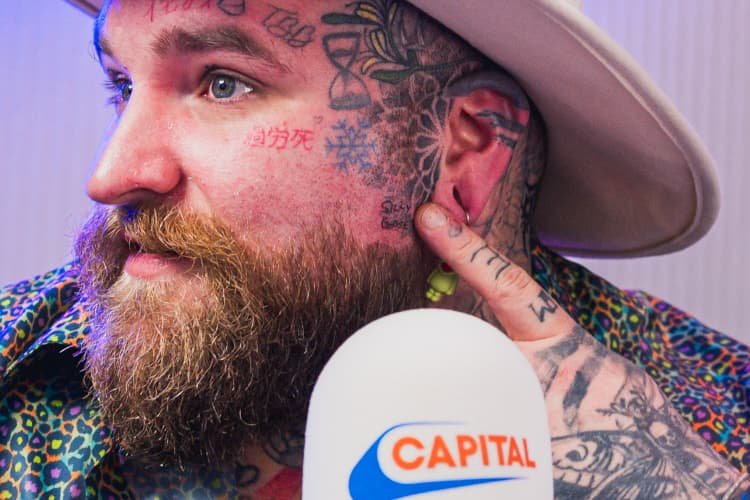
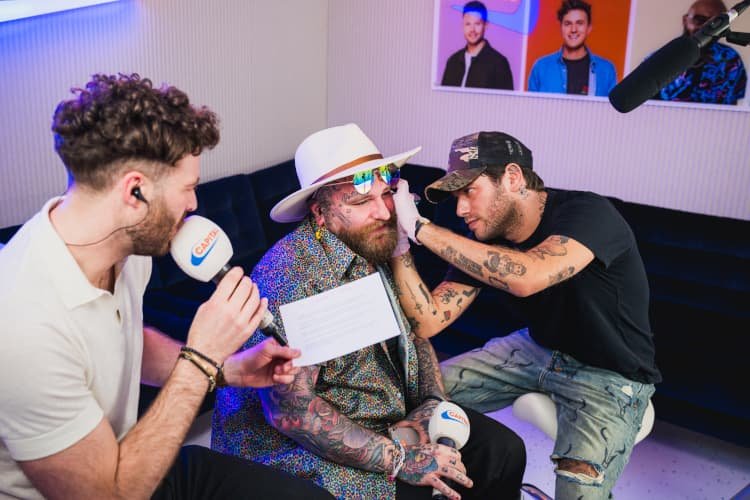
In May 2024, Swims received a new face tattoo during a Capital Breakfast appearance. The programme reported that he chose the words Silly Goose for the side of his face after listeners suggested ideas. The close-up photography from that appearance is useful because it shows the scale and placement of the new lettering more clearly than a distant concert photograph.

This piece should remain separate from the eyelid tattoos. It has a known occasion and a reported phrase, while the surrounding facial work has a different history. Treating the entire face as one design would erase the timeline and make it harder for readers to distinguish a live radio stunt from older tattoos.

The same appearance also shows why the date belongs in the inventory. Swims’ facial coverage has changed as new work has been added, and the expression, hat and coloured studio lighting can alter what appears most prominent. The image establishes a clear side-of-face phrase and surrounding ink, while the written report supplies the unusual story of how the design was selected.

Chris Farley, Chubbs Peterson and Simba are deliberate pop-culture references

Teddy Swims during a tattoo session showing visible arm and facial work

Inked’s 2025 interview identifies two of Swims’ portrait tributes. One honours Chris Farley in his role as Han Solo, while another depicts Carl Weathers as Chubbs Peterson from Happy Gilmore. These are not generic celebrity portraits added to a list because they are recognisable faces. They are specifically reported designs with a clear connection to films and performers Swims chose to celebrate.

The same report places a Simba tattoo on Swims’ right bicep. The location is more specific than the descriptions available for many of his words and expressions, and it gives readers a useful visual anchor when comparing photographs. The design is a reference to The Lion King; no stronger personal explanation is supplied in the interview, so the article should stop at that documented connection.

The source does not provide a full technical catalogue of the portraits’ dimensions, dates or artists, so those details should not be invented. What can be said confidently is that Swims uses large, recognisable cultural references as part of the collection. The portraits also explain why ordinary photographs can be misleading: an arm or torso image may show the work without making the reference legible.

Inked also lists the words Patience and Home at Last among the expressions covering Swims’ body. The wording is reported, but the interview does not assign a confirmed private meaning to each phrase. They should therefore be catalogued as visible lettering and not turned into invented statements about his personality or career.

Swims has also spoken about a large back tattoo based on an internet meme that remains unfinished because the session was painful. PEOPLE reported that he believed he had many hours left on the piece. That detail records a change in the tattoo itself: it is not simply a finished back design whose meaning is unknown, but an incomplete work with a documented reason for its current state.

More recent reporting describes tattoos connected with his son Rambo and the possibility of saving space for future children. Those family references belong to a later period of the collection. The available reports establish the family context, but do not provide a complete design-by-design map or the precise placement of every piece. They should remain separate from the film portraits and the bicep character reference.

Reading the record

The most reliable picture is a changing collection built from musical influence, film and television tributes, personal words, family references and tattoos acquired during travel. Swims has explained some choices directly, while other designs remain visible without a published meaning. Keeping those levels of evidence apart makes the guide more useful than a confident but unsupported count.

Readers comparing photographs should use the date, angle and source alongside the design being discussed. A close-up may establish facial lettering; an arm photograph may identify a character reference; and a later interview may reveal that a large piece is still unfinished. The collection is best understood through those specific anchors rather than a claim that every mark has been publicly explained.

There is also a practical reason to preserve uncertainty. Tattoo coverage can change through additions, cover-ups, fading and photographs taken under different light. A design described by an interview remains useful even when the image is not ideal, while an image can establish location without proving a private meaning. Those are different kinds of evidence, and the article keeps them visibly distinct.

Lady Gaga’s Tattoo Timeline: Roses, Trumpets and Early Symbols

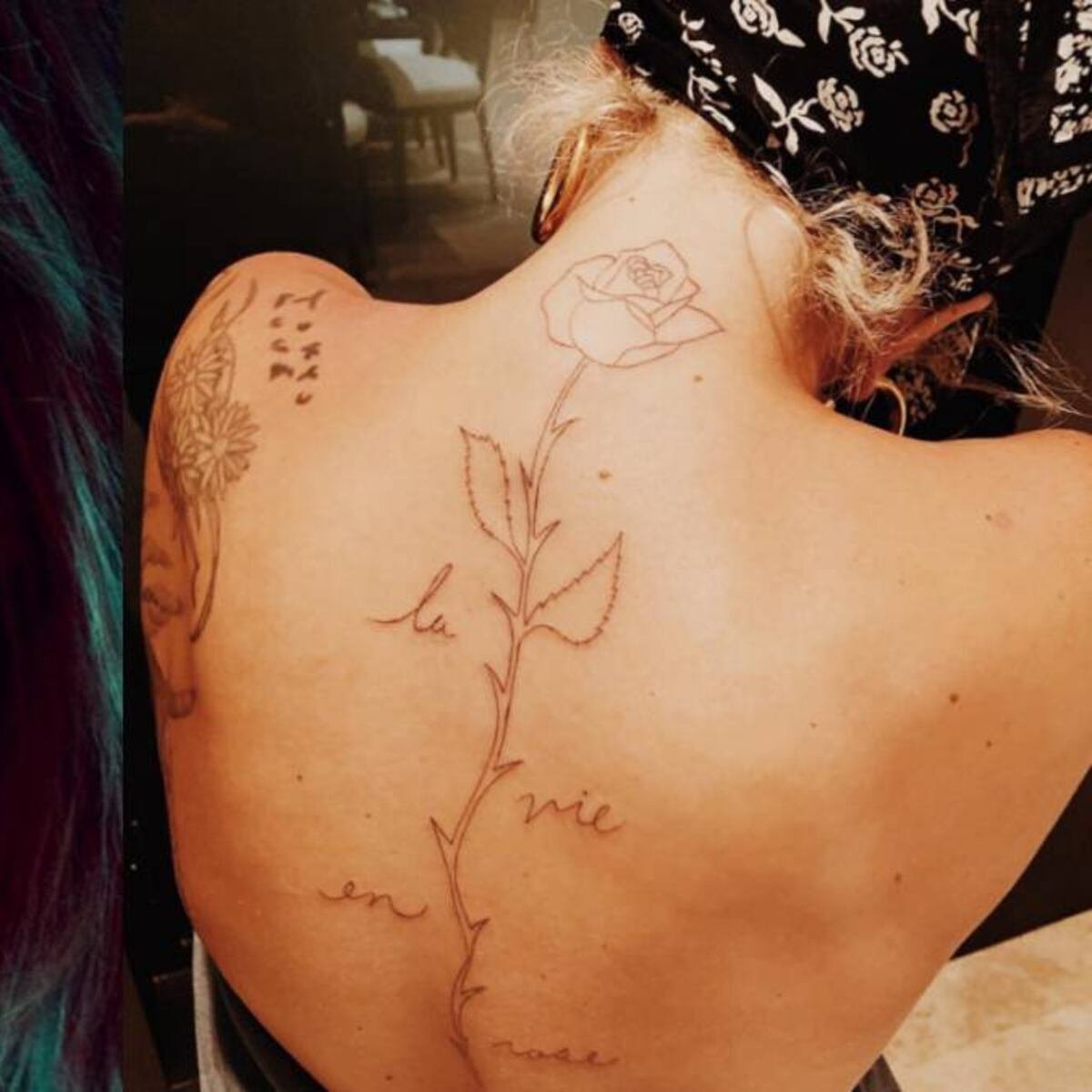
Lady Gaga’s tattoos are closely tied to music, collaborators and the visual eras of her career, but the collection is easier to understand when each design is kept in its own context. The public record includes a large rose on her back, a musical staff, a trumpet linked to Tony Bennett, a peace symbol and several tributes. Some of those tattoos have a direct explanation from Gaga or the artist who made them. Others are established mainly through photographs and reporting.

That difference matters. A clear photograph can confirm a design and its location, but it cannot supply a private meaning that Gaga has never stated. This guide separates visible facts, reported associations and open questions, then follows the best documented pieces through the timeline of her career.

The La Vie en Rose design runs down Gaga’s spine

Lady Gaga's La Vie en Rose rose and musical staff tattoos on her back

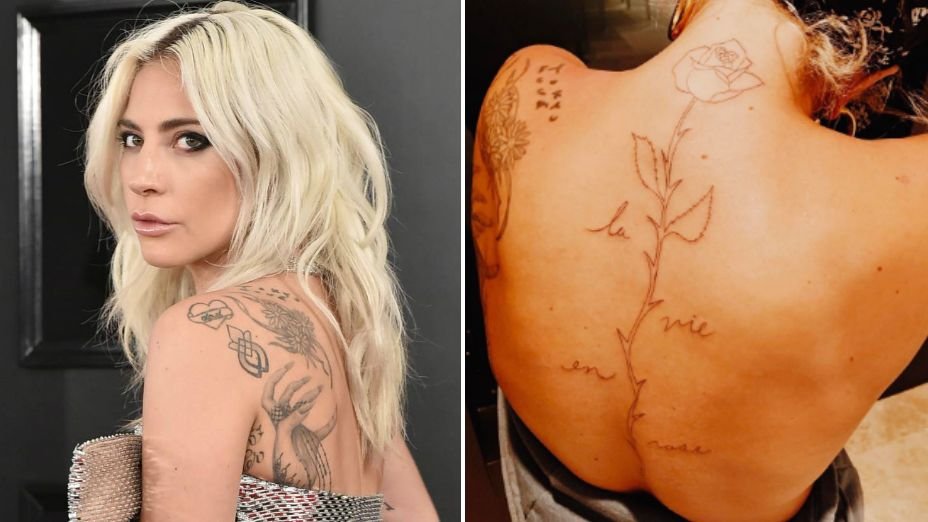
The most visually prominent recent addition is a large rose extending down Gaga’s spine. Allure reported the tattoo in connection with La Vie en Rose, the song and performance history that became part of her work around A Star Is Born. The placement makes the tattoo different from a small emblem that appears only when Gaga raises an arm. It is a central back composition that changes the outline of the collection in photographs taken from behind.

Artist reporting identifies Daniel Winter, also known as Winter Stone, with the work. That attribution should be kept specific to the back design rather than used as proof that he made every tattoo Gaga has. The image shows a rose and surrounding linework, while the reporting supplies the career context. It does not establish a single private interpretation beyond the association with the song and film era.

The wording around the piece is sometimes simplified online into a claim that the tattoo is only a tribute to the film. The safer reading is narrower. Gaga chose a rose and related musical imagery during a period when the song had personal and professional importance. The design can be discussed as a documented reference without turning it into a complete explanation of her inner life.

Her musical staff tattoo had to be corrected

Lady Gaga's musical staff tattoo spelling GAGA on her back

Gaga also has a musical staff tattoo that spells her stage name through the notes. Allure reported a memorable practical detail: the original staff was missing the fifth line required for the notation to read correctly. Gaga and Winter corrected the design after noticing the error. That detail is useful because it is concrete, sourced and visual. It also explains why different photographs may show the back work at slightly different stages.

The tattoo is more than a generic music symbol. The notes form G-A-G-A, so the design connects musical literacy with the public name she built as a performer. The linework sits beside the back flower rather than operating as an unrelated mark. When the two are discussed together, the article should still identify them separately: one is a flower and phrase-related back design, while the other is a piece of musical notation that required a correction.

Images need to be dated when possible. A photograph from before the correction can preserve the first version, while a later photograph may show the completed staff. Treating those images as contradictory would be misleading. They document the same tattoo at different points in its history.

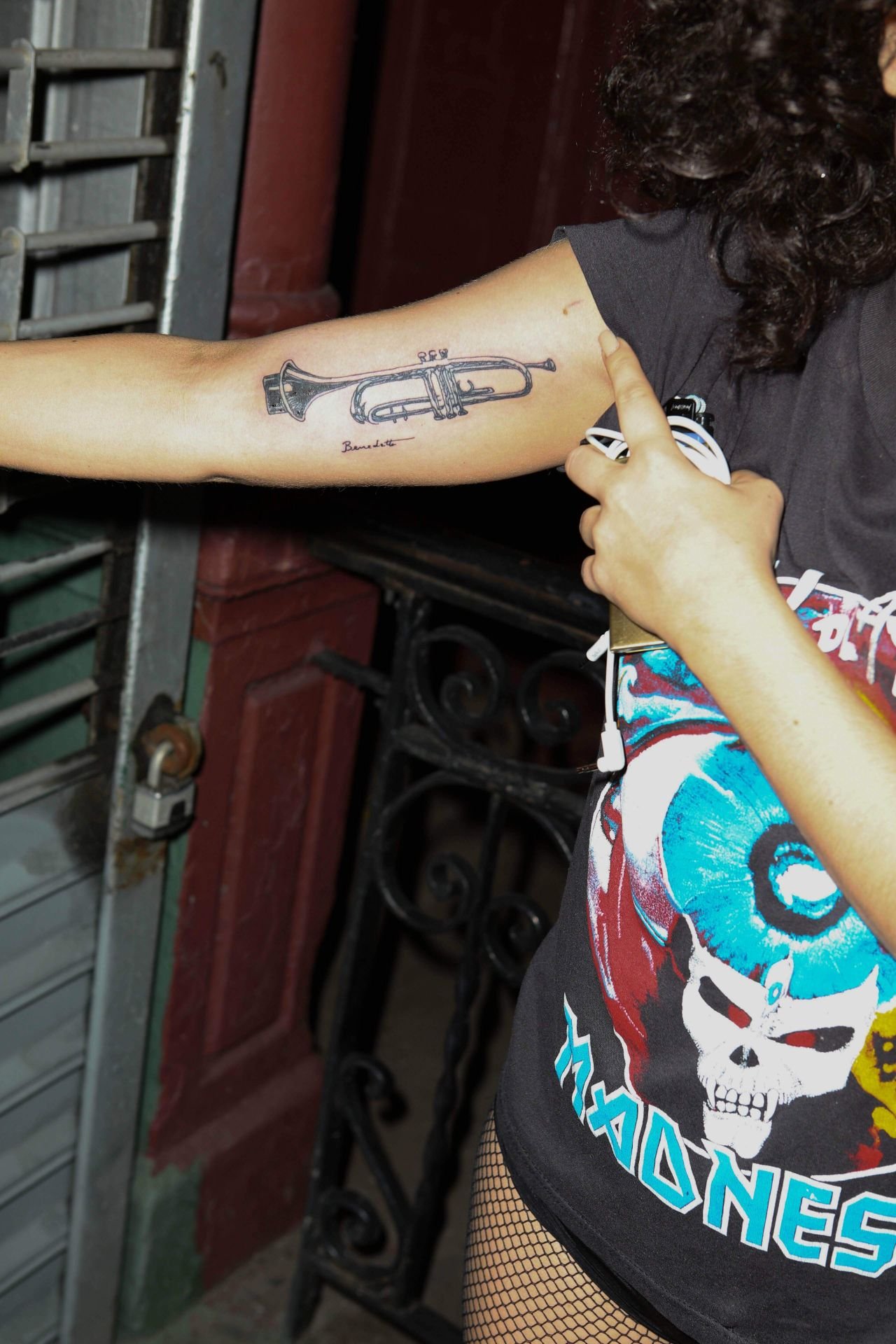
The Benedetto trumpet is a tribute to Tony Bennett

Lady Gaga's Benedetto trumpet tattoo on her inner arm

The trumpet on Gaga’s inner right arm has one of the clearest documented stories in the collection. Reports from the period describe Tony Bennett drawing the instrument for her, with the design connected to the jazz work they shared. The word Benedetto, Bennett’s family name, appears with the tattoo. That combination of instrument, signature and collaboration gives the design a specific identity that does not depend on speculation.

Gaga displayed the tattoo publicly after the release of Cheek to Cheek, the album she made with Bennett. She and Brian Newman also had a related tattoo moment, which is why some accounts describe the piece through both jazz collaboration and friendship. The strongest claim is still the simplest one: this is a trumpet tribute connected to Bennett and to Gaga’s musical life.

The tattoo’s placement is also worth recording accurately. It is on the inner right arm, where close photographs can show the valves, bell and signature more clearly than a distant red-carpet image. A full-body event photograph may establish that the design was present, but a tighter image is the useful visual evidence for readers trying to identify it.

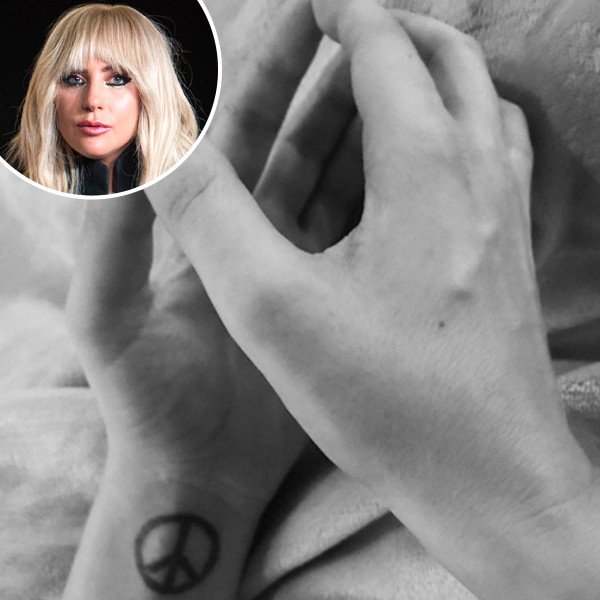
The peace symbol belongs to Gaga’s earlier visual vocabulary

Lady Gaga's peace symbol tattoo on her wrist

A small peace symbol on Gaga’s wrist appears in earlier image records and entertainment coverage. It is one of the designs most often mentioned when her first public era is discussed. The symbol is easy to identify when the wrist is visible, but its existence should not be inflated into a quotation or a complete political biography.

The useful facts are the design, the wrist placement and its early appearance. Gaga’s public work has often included messages about compassion and peace, so the association is understandable. It remains an association unless a source records a direct explanation of why she chose that exact mark. Keeping that boundary makes the guide more accurate, not less interesting.

Wrist tattoos are particularly vulnerable to misreading in photographs. Bracelets, microphone cables and hand position can hide part of the symbol. The E! image provides a better reference than a heavily edited red-carpet photograph because the wrist is actually visible. Readers should compare the mark with that kind of close evidence rather than relying on a listicle’s label alone.

Reading the record

The public record includes additional designs, lettering and tribute work beyond the four clearly pictured sections. Gaga has also been photographed with other marks, and coverage has discussed a David Bowie tribute associated with her later work. Those entries should be dated and named only when the image and source support the claim. A dark shape near the ribs is not automatically a confirmed portrait, and a small line of lettering should not be translated from a blurred photograph.

The Bowie reference is best understood as a tribute in the context of Gaga’s admiration for his influence. It belongs to a different category from the jazz collaboration described earlier, which has a direct artist relationship and a named signature. Reported lettering on her arm is another example of a design whose subject is clearer than its complete personal meaning.

This is why a tattoo inventory needs more than a list of body areas. A body-area label is not useful enough when the source identifies a specific design. Each entry should preserve the literal design, location, period and level of evidence.

Conclusion

Lady Gaga’s tattoo timeline has several firm anchors tied to collaborations, music and earlier imagery. The back work belongs to the A Star Is Born era and was discussed by the artist who worked on it. Additional music and tribute work broadens the collection, but its meanings are not all equally documented.

There is no reliable official catalogue that fixes a final count forever. New work may be added, older marks may be covered or photographed differently, and fan galleries often repeat an attractive explanation without showing where it came from. A careful article therefore updates the inventory when a clearer photograph or direct comment appears, while leaving uncertain details labelled as uncertain.

The collection is most useful when read as a record of Gaga’s relationships with music, collaborators and creative eras. The images show the designs themselves. The sources add dates, artists and context. Keeping those jobs separate gives readers a more accurate account of what her tattoos are, where they sit and what can responsibly be said about them.

21 Savage’s Tattoos: The Dagger, Slaughter Gang and Face Ink

21 Savage’s tattoos are closely connected to the way he has used his face and body to record identity, loss and affiliation. The best-known mark is the dagger between his eyes, but it is only one part of a larger collection that includes face symbols, chest lettering and words tied to his Atlanta music circle. A useful guide has to separate direct explanation from the details that are simply visible in photographs.

Dates also matter. The dagger story belongs to the period when 21 Savage was building his public image, while later portraits show a more extensive torso and facial collection. A design visible in a shirtless portrait is evidence of placement and appearance. It is not automatically evidence of a private meaning. The sections below keep those boundaries clear.
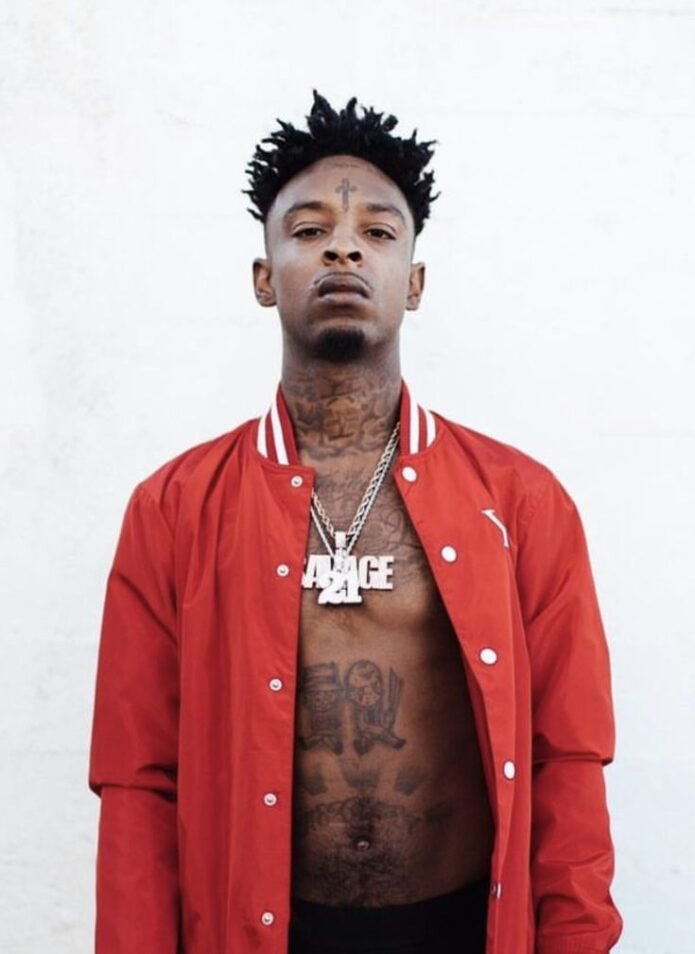
The dagger between 21 Savage’s eyes is a tribute to Tayman

21 Savage showing the Dagger tattoo between his eyes

The most documented 21 Savage tattoo is the dagger between his eyes. DJBooth reported that the design was inspired by the blade tattoo Tony Montana wears in Scarface. Savage and his brothers had discussed getting a similar mark, but his younger brother Tayman went further and placed the dagger on his face. After Tayman was killed, Savage got the same basic design as a tribute.

That account gives the tattoo a stronger documented history than the usual internet claim that a dagger simply represents toughness. The placement is visible in close-up photographs, and the family connection is supported by reporting about the design’s origin. The Scarface reference explains the visual source. The later tattoo turns that shared idea into a memorial link between the brothers.

The design is sometimes described as a cross in casual captions, especially when the photograph is distant. A close front-facing image makes the blade shape easier to distinguish. That is a useful reminder that a correct tattoo article needs to identify what the pixels show before assigning a label or meaning.

Slaughter Gang lettering makes the chest a public identity statement

21 Savage showing the Slaughter Gang chest lettering

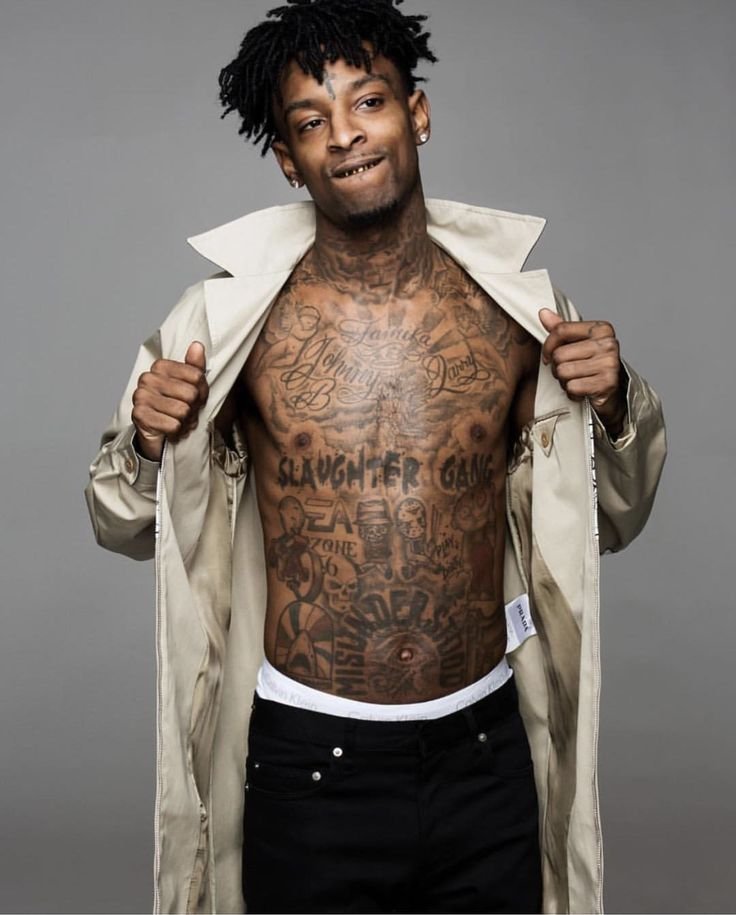
Across 21 Savage’s upper torso, the large Slaughter Gang chest lettering is one of the clearest examples of an affiliation becoming body art. The phrase is connected with the collective and identity surrounding his music, so it functions differently from a small personal symbol whose meaning has never been discussed publicly.

The lettering appears prominently in shirtless portraits and open-jacket photographs. Its scale makes it readable even when smaller chest and abdominal marks are not. The image record supports the wording and the general placement. It does not establish a complete list of every surrounding design, because the rest of the torso is densely tattooed and changes in lighting can hide individual lines.

It is tempting to treat the phrase as a complete explanation of the collection, but that would be too simple. Slaughter Gang is a public affiliation and a recurring part of Savage’s artistic identity. The face tribute has a family story, while the group lettering has a collective one. Those different contexts can exist beside each other without every tattoo being forced into one narrative.

Johnny B Dawg and the torso lettering

Portraits of 21 Savage also show smaller words across the chest and abdomen, including Johnny B Dawg and EA Zone 6. These phrases are visible in published images of his torso and are useful inventory entries because they can be read in the photograph itself. Their presence should not be confused with a confirmed explanation for every surrounding symbol.

The Johnny B Dawg wording is presented as a name or phrase in image records, while EA Zone 6 points toward the Atlanta area associated with Savage’s biography and musical identity. Those associations provide context, not proof of an individual backstory for each mark.

The torso photograph is especially valuable because it shows how the lettering sits among smaller symbols. A cropped face portrait may establish one facial mark but say nothing about the abdomen. A wide shirtless image can document the larger arrangement while leaving fine details uncertain. Both types of evidence have a place, provided the article does not pretend they show the same information.

The Forehead Cross and other face ink

21 Savage showing the Forehead Cross and other face ink

Beyond the main facial mark, 21 Savage has been photographed with additional face and head tattoos, including lettering and symbols around the forehead, cheeks and sides of the face. GQ and HotNewHipHop coverage describe the face as a deliberate place of significance for Savage, but the available reporting does not provide a confirmed private meaning for every small design.

That uncertainty is not a reason to turn the section into a list of guesses. A face tattoo can be catalogued by its shape, approximate location and date of the photograph. If a source identifies a phrase or explains a mark, that detail can be added. If the image is too small or the design changes between periods, the article should say so rather than borrowing a standard interpretation from another person’s tattoo.

The result is a collection with several different layers: a memorial facial mark, collective lettering, torso words that can be read in portrait photography, and smaller symbols whose personal meanings are not always published. That is a more accurate picture than treating all of the ink as one symbol system.

The strongest visual record combines close face photographs with shirtless or open-jacket portraits. The face images are best for the facial work. The torso images make the lettering and family-related words easier to locate. Dated sources help readers understand that the collection expanded over time rather than appearing all at once.

There is no single official public inventory that settles every line. Some web pages repeat one another, some captions confuse symbols and letters, and some photographs show tattoos only at a distance. A careful guide therefore names the designs that can be seen or sourced and leaves unconfirmed meanings open.

21 Savage’s tattoos are most useful when read as a record of relationships and affiliations: a memorial at the center of the face, a collective written across the chest and personal or regional references distributed across the torso. The photographs show the ink. The strongest reporting explains the context. The responsible article keeps those two kinds of evidence together without pretending they are identical.

Snoop Dogg’s Tattoos: Nate Dogg, Boss Lady and West Coast Ink

Snoop Dogg’s tattoos are best understood through the people, teams and music relationships they record. The rapper has been photographed with several prominent black-and-gray pieces, including tributes to Nate Dogg and Shante Broadus, work associated with Mister Cartoon, and a later Lakers and Kobe Bryant forearm tattoo. These are more useful starting points than recycled galleries that attach a meaning to every dark mark in a distant photograph.

The collection also changed over time. A 2011 memorial session documents one part of the forearm work, while the Lakers piece belongs to 2020. Older videos preserve smaller music-related marks, including the R&G initials on the right shoulder. This guide separates what the images and reporting establish from what remains unconfirmed.

The smaller R&G initials on Snoop’s right shoulder are preserved in the music video for Ups & Downs. The footage shows Mr. Cartoon working on a real R&G logo, and the initials connect the mark with the album-era identity of R&G (Rhythm & Gangsta): The Masterpiece.

Video evidence is valuable but limited. Editing and lighting make the shoulder mark harder to inspect than the forearm portraits, so the initials and context are more secure than any elaborate interpretation of what the design meant privately. The mark can be catalogued as music-related work from that period without being used as proof that every tattoo in the collection has an album reference.

The Nate Dogg memorial is Snoop’s clearest tribute tattoo

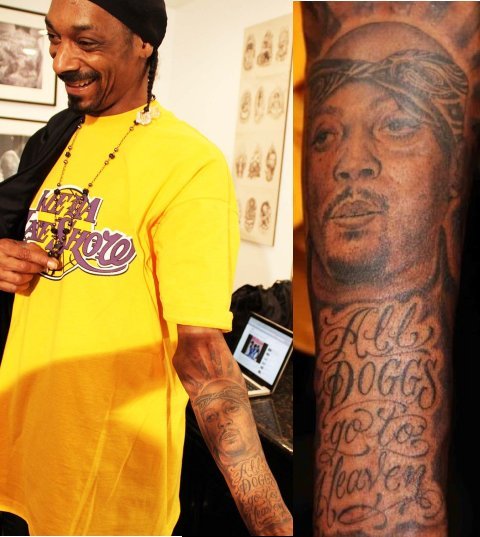
Snoop Dogg showing the Nate Dogg memorial portrait and All Doggs Go To Heaven lettering

The most strongly documented piece is the Nate Dogg memorial portrait on Snoop’s left forearm. The black-and-gray design presents Nate Dogg in portrait form, with radiating lines around the head and the words All Doggs Go To Heaven beneath it. The lettering is part of the memorial, not an unrelated slogan added to a general sleeve.

Nate Dogg was Snoop’s cousin, collaborator and fellow member of Long Beach’s musical community. Reports from Complex and Acclaim place the tattoo in a session with Mister Cartoon, and photographs from that period show Snoop extending his arm while the work is being completed. The image evidence is unusually useful because it shows both the portrait and the inscription together.

The tribute should not be reduced to a vague claim about friendship. The public record supports a specific subject, a specific placement and a memorial purpose. It does not establish every detail of the design process or prove that every nearby mark was made in the same session. The safest catalogue entry is the Nate portrait, the forearm location, the inscription and the artist connection reported by the sources.

The Boss Lady portrait honours Shante Broadus

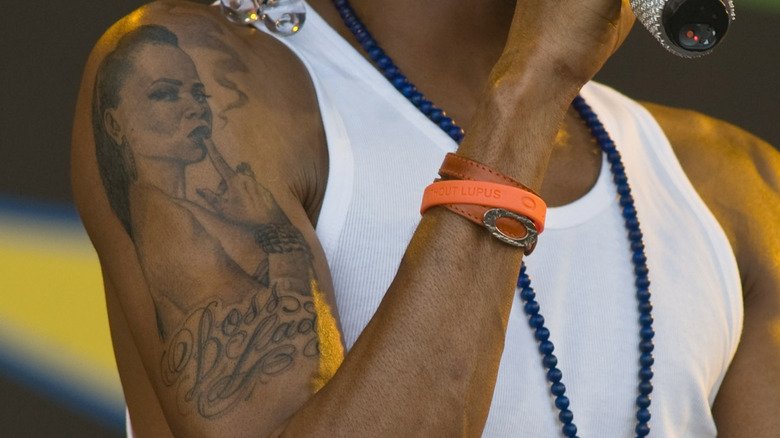
Snoop Dogg showing the Boss Lady portrait tattoo of Shante Broadus

Snoop’s upper arm carries a black-and-gray portrait of Shante Broadus, his wife, with the words Boss Lady beneath the image. Shante has long been known by that nickname in the family and business world around Snoop, so the lettering gives the portrait a clear subject rather than leaving viewers to guess who is depicted.

The relationship has a long public history. Snoop and Shante met while they were teenagers, married in 1997 and renewed their vows in 2008. That context explains why the portrait is commonly read as a tribute to his wife, but it does not justify inventing a precise date or private story for the tattoo. The available reporting establishes the image and wording more securely than it establishes the commission’s full timeline.

The photograph also shows why a tattoo guide needs to distinguish a portrait from a generic event image. The face, hair and hand gesture are clear enough to identify the design, while the surrounding arm work is less consistently documented. The portrait should therefore be described confidently, but smaller shapes around it should not be given names without equally clear evidence.

Snoop’s Lakers and Kobe Bryant tribute was added to the forearm

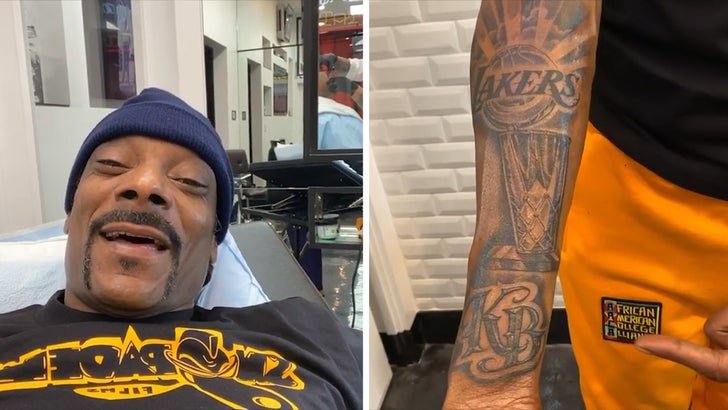
Snoop Dogg showing the Kobe Bryant and Lakers tribute tattoo on his forearm

In 2020, Snoop added a Lakers and Kobe Bryant tribute to his right forearm after the Los Angeles Lakers won their seventeenth NBA championship. TMZ’s report describes a design incorporating the Larry O’Brien trophy, the Lakers logo and Kobe Bryant’s initials, with the piece completed by Mr. Cartoon.

This is a different kind of tribute from the earlier memorial. Both are tributes, but the Lakers piece records a sports allegiance and a public promise rather than a family connection. The visible components make the subject clear: the trophy marks the championship, the Lakers emblem identifies the team and the KB initials point to Bryant.

Because the tattoo is a vertical forearm composition, individual details can disappear when Snoop’s arm is photographed from a distance. A close image is more informative than a red-carpet photograph that shows only a patch of ink. The available close-up also demonstrates why the design should be dated. Later changes to the arm or the surrounding sleeve should not be projected backward onto the earlier 2020 record.

The flowing woman portrait shows Mister Cartoon’s visual language

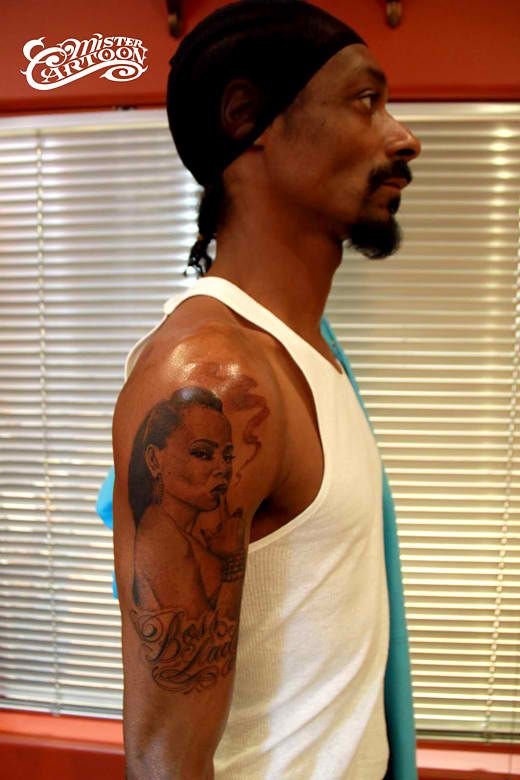
Snoop Dogg showing the flowing woman portrait tattoo on his upper arm

A separate upper-arm photograph shows a flowing woman portrait in black-and-gray with the flowing script associated with Snoop’s wider tattoo work. The image is connected with Mister Cartoon and is useful for understanding the visual language of the collection: a carefully shaded face, ornamental lettering and a composition that follows the curve of the upper arm.

This portrait should not be confused with the earlier wife portrait simply because both use realistic black-and-gray rendering. The available image shows a different crop and a different arrangement of the lettering. It is safer to identify it as an additional portrait associated with Snoop’s Mister Cartoon work unless a stronger source confirms the subject or exact wording.

That distinction matters when comparing online lists. A gallery may repeat one photograph under several labels, or a caption may apply a relationship from one portrait to another. The images establish that Snoop has more than one prominent portrait composition. They do not, by themselves, establish the private identity behind every figure.

Taken together, the documented pieces show a collection shaped by family, collaborators, sport and music. The strongest descriptions stay close to what the photographs and reporting can actually establish, while smaller or poorly documented marks remain open to future evidence.

Inside Post Malone’s Huge Tattoo Collection

Post Malone’s tattoos are easiest to understand as a record of specific designs rather than one undifferentiated collection. Public interviews and close photographs identify face lettering, swords, portraits, hands, arms, neck work and larger chest pieces. Some explanations come from Malone himself. Other details are reported by tattoo coverage or are simply visible in photographs. This guide keeps those levels separate.

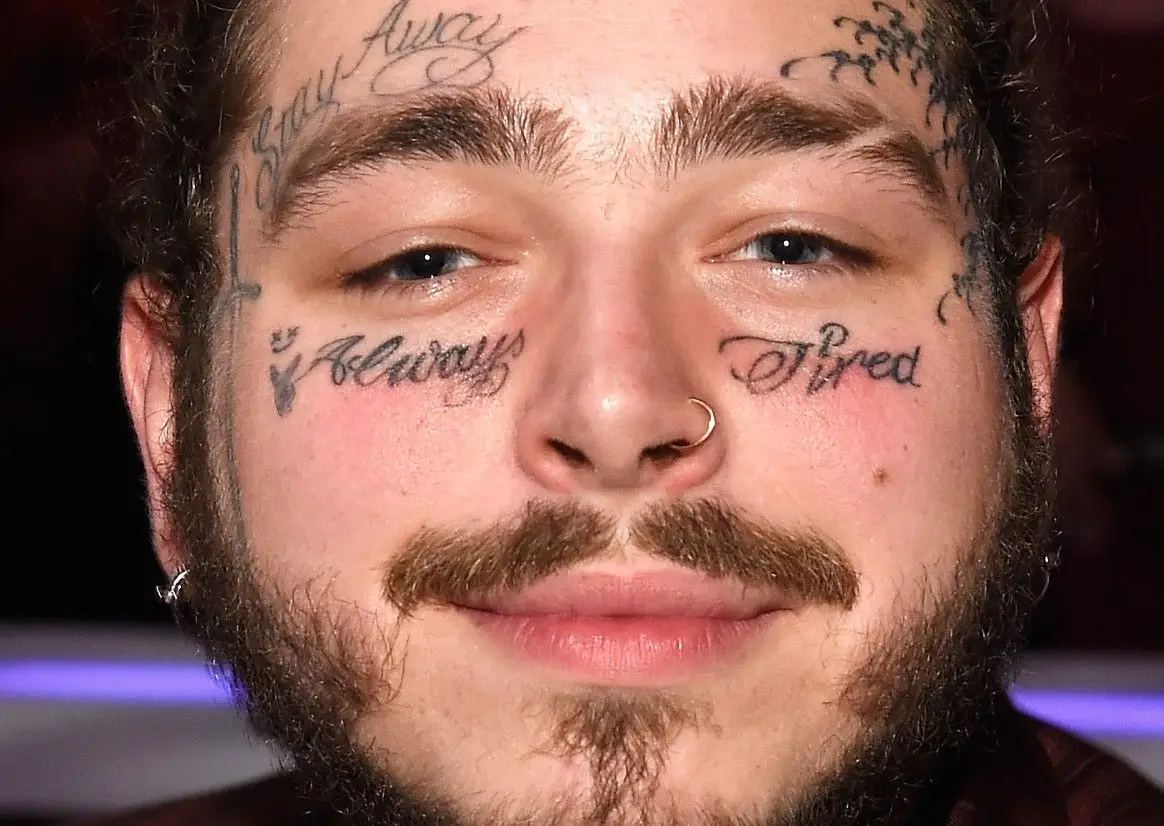
What does Post Malone’s “Always Tired” tattoo mean?

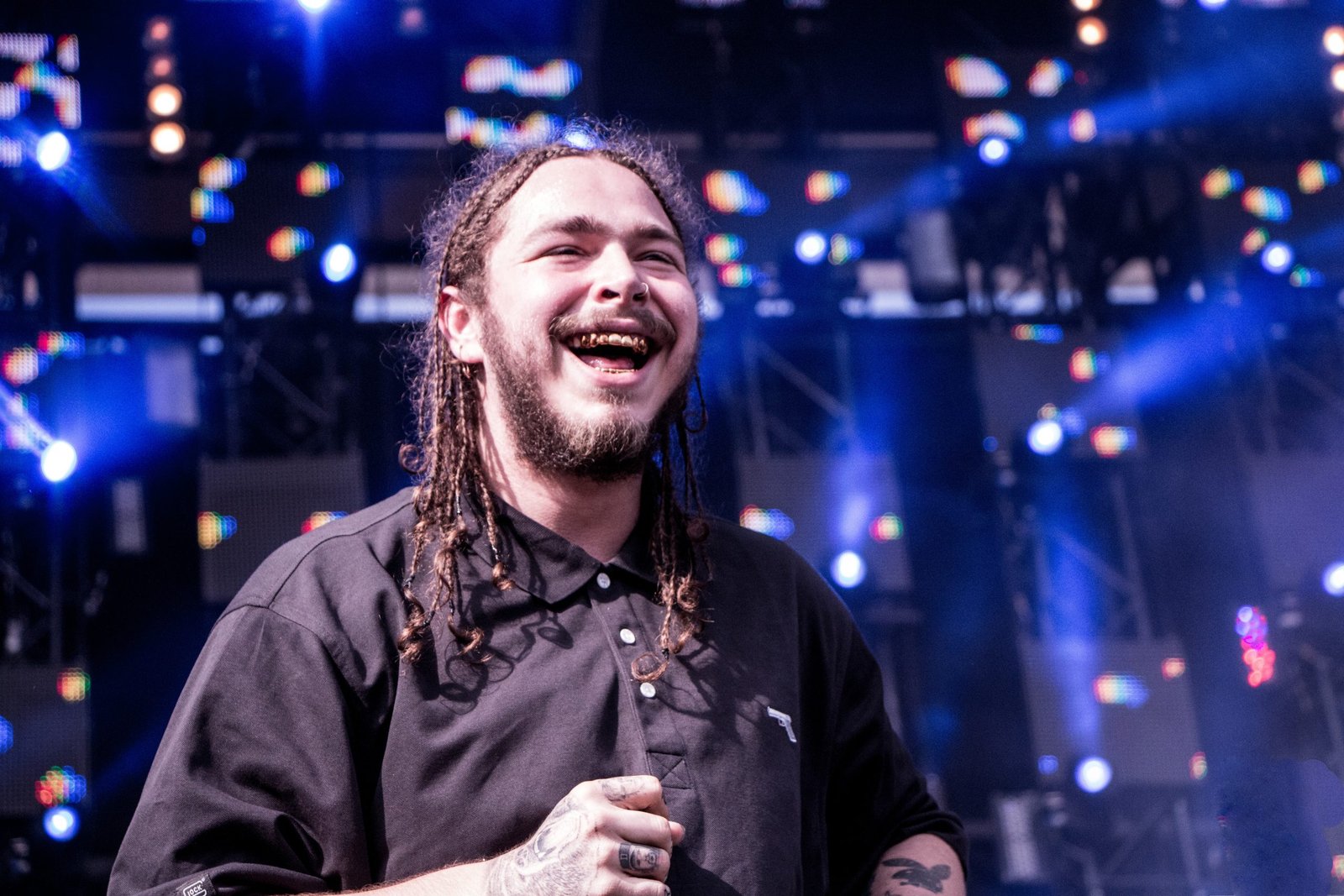
The words “Always Tired” sit beneath Malone’s eyes. In the GQ Taiwan tattoo interview, he connected the phrase with his work schedule and touring life. That is the strongest available explanation because it is attributed to Malone rather than inferred from the lettering. The same interview describes this as the facial tattoo that hurt most, with Malone comparing the sensation to a needle working close to the eye.

Post Malone Always Tired and Stay Away face tattoos

The lettering is a good example of why a close photograph matters. At a distance, the face can look like a mass of small marks. In a close view, the two words and their placement are immediately legible. The wording is confirmed. A broader claim about every facial tattoo having the same meaning would not be supported.

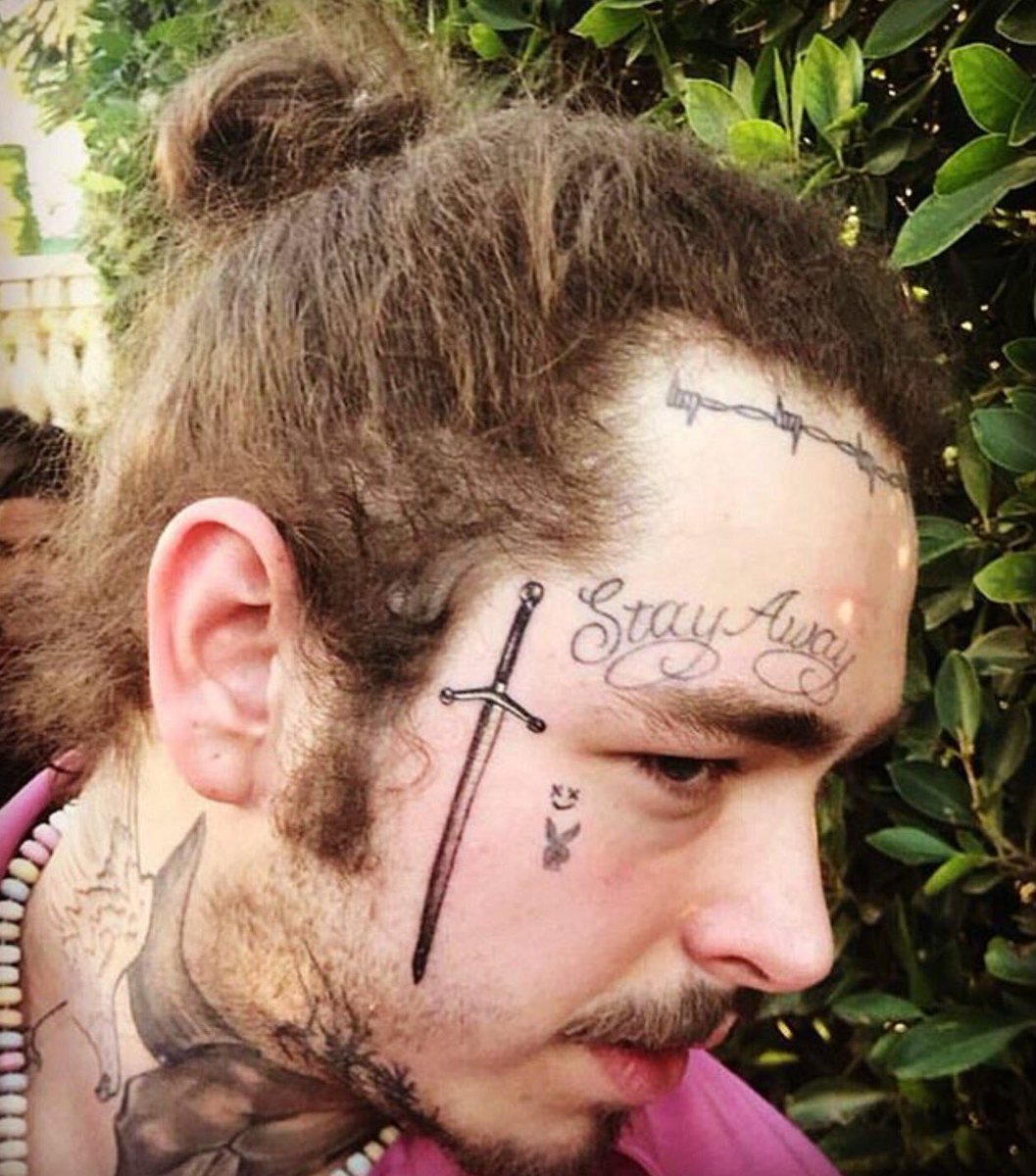
The “Stay Away” tattoo above his eyebrow

“Stay Away” is written above Malone’s right eyebrow. GQ Taiwan reports that the wording was inspired by Nirvana’s song of the same name and that Malone chose a script style after noticing Lil Peep’s “Cry Baby” facial tattoo. The report also says the tattoo was decided on spontaneously while Malone was in Montreal with friends, with playing-card imagery above the lettering adding up to 21.

Post Malone sword and Stay Away face tattoos

The image also shows how the facial designs sit together. The sword tattoo runs vertically beside the eye, while the script occupies the forehead. These are separate tattoos even though they are often discussed together in photographs. The source supports the Nirvana connection for “Stay Away”; it does not prove that every nearby symbol shares that reference.

The sword tattoo on his face

Malone has a sword beside the script on the side of his face. Business Insider’s catalogue also distinguishes this from a sword on the inside of his arm and another across the collarbone. The face sword is therefore not a shorthand name for every sword in the collection. Its exact private meaning is not established in the sources reviewed here. What can be stated confidently is its position, its long vertical shape and its relationship to the other visible face ink.

Other face, forehead and head tattoos

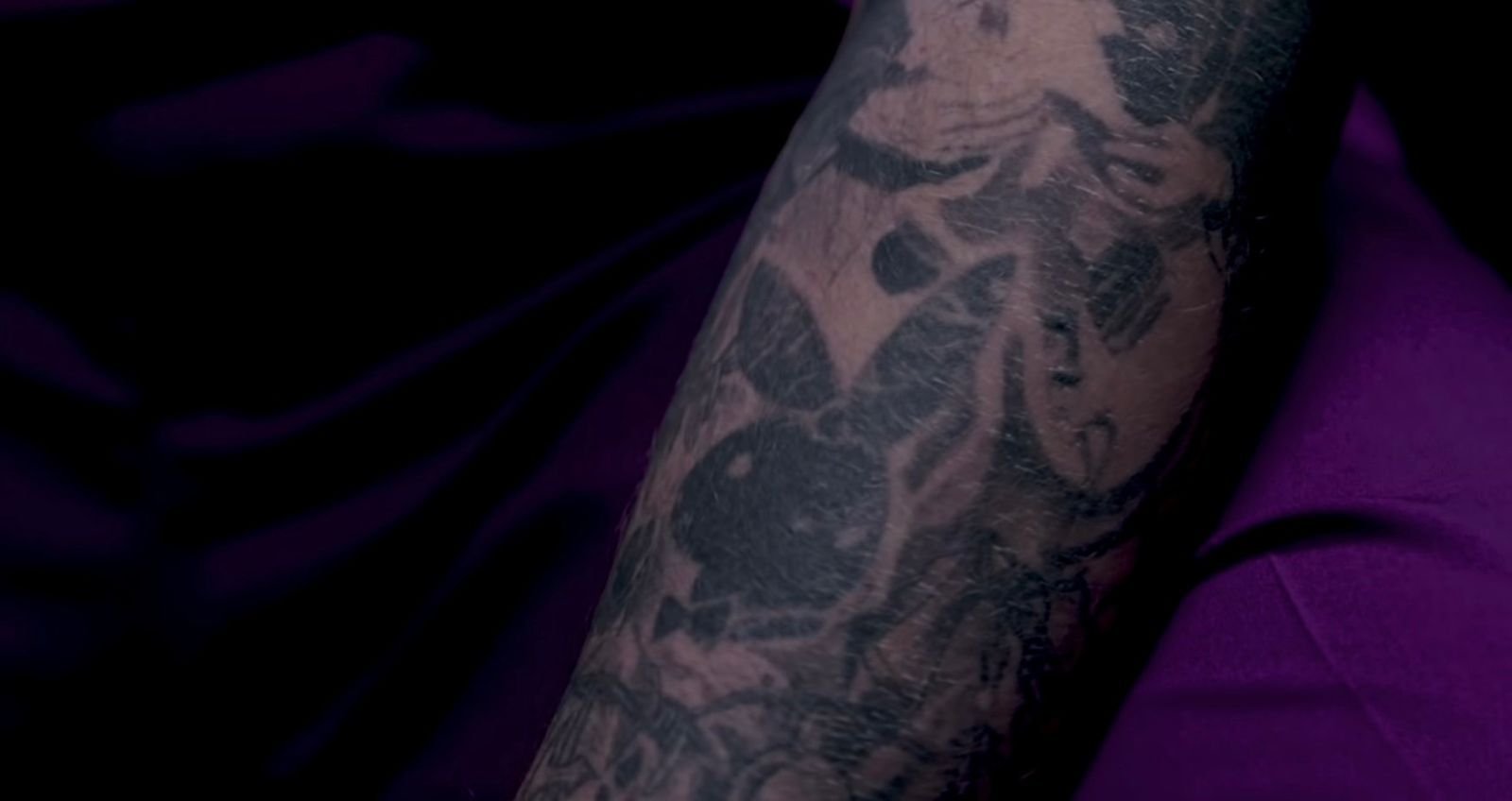
Malone’s face includes several smaller symbols around the lettering. Business Insider identifies a small Playboy bunny beneath a smiley face and records a later red heart on the upper-left forehead. It also reports barbed wire along the hairline. Malone’s explanation for the barbed wire was practical and aesthetic: he said he thought it looked cool as a trim and joked that he might regret its position if he became bald.

Post Malone arm and face tattoos

Later photographs also show extensive ink on the side of his head when his hair is cut short, including a skull, spider and succubus imagery. The timing of individual additions matters. A close-up from one period cannot be treated as a complete current inventory because Malone has continued adding work and some designs are hidden by hair.

Post Malone’s finger portrait tattoos

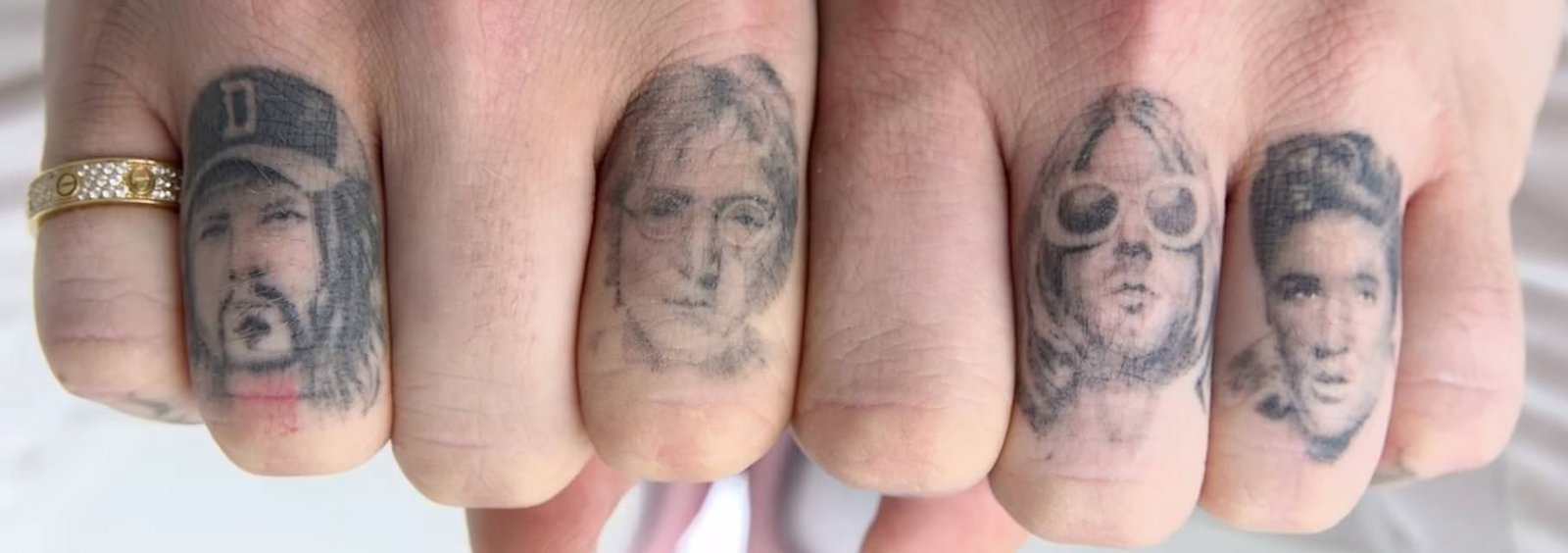
Close images of Malone’s fingers show small portrait tattoos placed across the knuckles and fingers. The available image record identifies portraits of musicians, including John Lennon, Kurt Cobain and Elvis Presley. These are miniature faces, so a distant concert photograph is not enough to identify them reliably. The close detail is useful because it shows that the finger work is portrait based rather than simply a series of generic black marks.

Post Malone portrait tattoos across the fingers

The portraits should not be confused with the larger hand designs. They belong to the same heavily tattooed area, but the scale and subject matter are different. Public sources do not provide a complete authoritative key for every finger portrait, so the identification here is limited to the designs that can be seen clearly in the close-up and described by the source record.

What is on Post Malone’s hands?

One of Malone’s earliest hand tattoos is a Saint Jude image. In the interview quoted by Business Insider, he explained that the design shows Saint Jude lifting his robe to reveal a skeleton. The article also records the words “nevermind” and “whatever” on his palms, attributed to celebrity tattoo artist Jonathan “JonBoy” Valena. Those words are among the more clearly documented artist-linked pieces in the collection.

Post Malone hand and finger tattoos

Business Insider also identifies a small eagle near a Kennedy portrait on Malone’s hand. The eagle’s presence is documented, but its personal meaning has not been confirmed by Malone. That distinction is important: an eagle may carry a familiar cultural association, but the public record does not establish why he chose that particular bird.

The arm portraits and major forearm designs

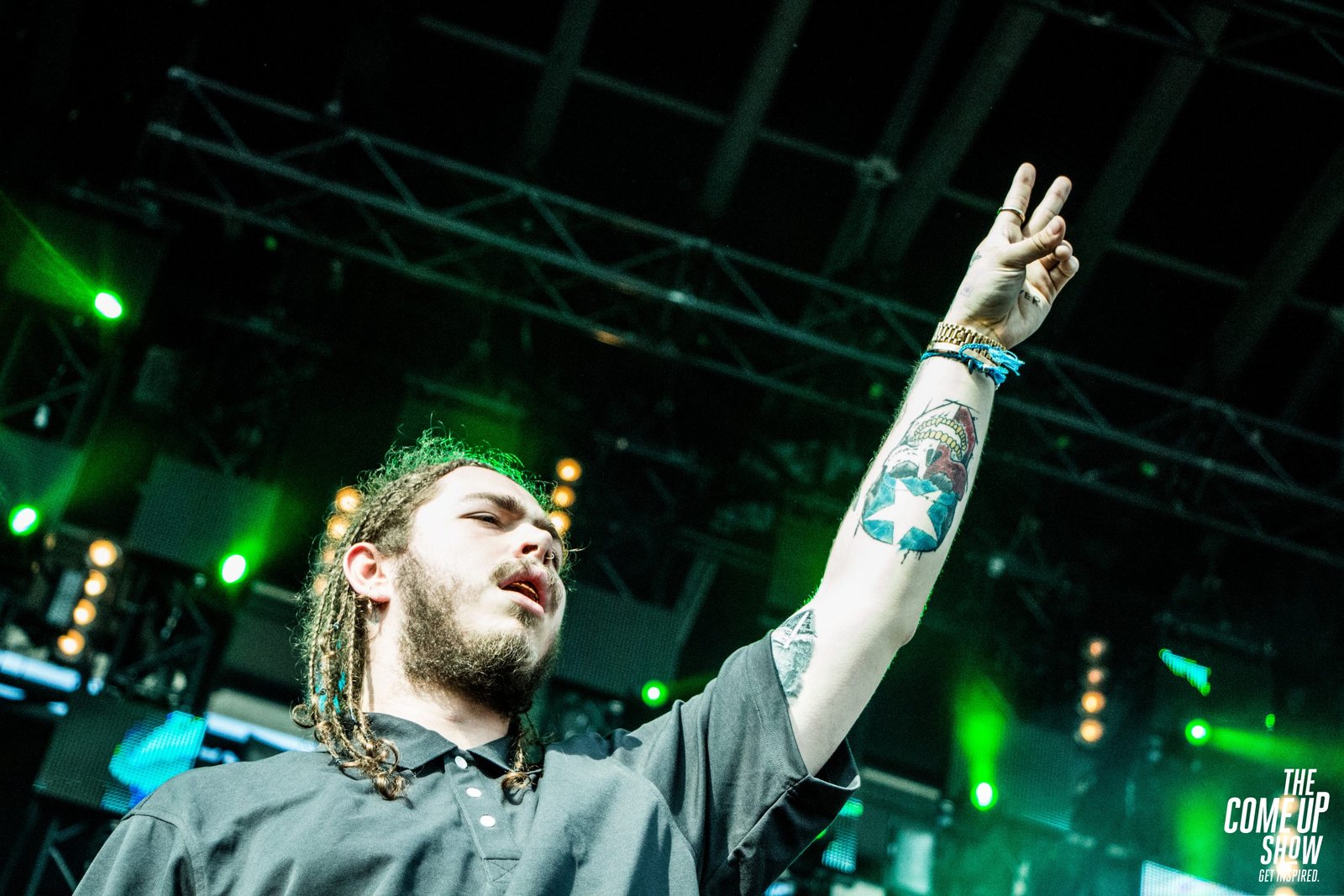
Malone’s arms carry several of the collection’s largest and most recognisable pieces, including a Kurt Cobain portrait. A Kurt Cobain portrait shows the Nirvana frontman playing guitar. Business Insider places it on Malone’s arm and identifies it as one of the musician portraits among the surrounding work. GQ Taiwan also discusses portraits of Kurt Cobain, Lil Peep and Bob Dylan on the arm near the first Playboy bunny tattoo.

Post Malone detailed forearm tattoos

Another forearm design is a minuteman, while a separate piece depicts a knight on horseback stabbing another figure with a spear. Malone described the knight tattoo during the GQ interview, which makes that description stronger than a visual guess. The same source reports that the Sauron tattoo on his forearm was not finished because Malone sometimes stopped when the process became too painful.
Post Malone colorful forearm tattoo collection

The collection also includes a Texas-flag-filled skull near the elbow, a horse representing Malone himself and a small Playboy bunny that he has described as his first tattoo. The bunny was made while he was recording Stoney in 2016. Malone said Justin Bieber damaged it while it was still healing. That story is specific to the first tattoo and should not be extended to the later designs without evidence.

Hand, wrist and arm designs that have a documented connection

Some tattoos have a clear connection to Malone’s work or interests. “Patient,” named after one of his songs, appears on the upper arm. Business Insider identifies the Gallenson’s Gun Shop logo on the inner arm and reports that Malone discussed it in the GQ interview. A snake wrapped around an M16 rifle is also reported as a 2016 tattoo. The public record establishes the design and the gun-related context, but not a single definitive symbolic meaning for every weapon image.

Post Malone arm and hand tattoos

Malone later added Kansas City Chiefs artwork after losing a bet involving Travis Kelce and Patrick Mahomes. TMZ reporting, as summarized by Business Insider, described signatures from both players and the Chiefs logo on his arm. That is a documented circumstance for that group of tattoos, unlike many online lists that attach meanings without a source.

Neck and chest tattoos

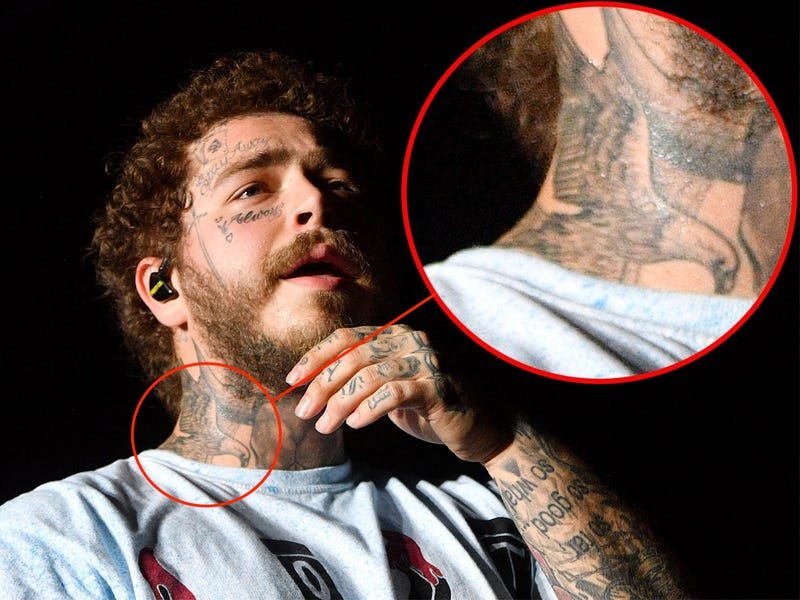
Two eagle tattoos appear on opposite sides of Malone’s neck, one black and one white. Business Insider describes them as framing a cow skull on the neck. Malone has not publicly supplied a confirmed explanation for the eagles, so their placement and appearance are safer facts than any claim about symbolism.

Post Malone cow skull and eagle neck tattoos

The chest and stomach area contains larger designs. GQ Taiwan describes a zombie version of Easter Jesus extending from the chest toward the stomach, alongside the phrase “come and take it” and a Master Shake character from Aqua Teen Hunger Force. Business Insider separately records “Molon Labe,” an ancient Greek phrase commonly translated as “come and take them,” as a stomach tattoo. Malone said the Master Shake tattoo hurt more than the others, but pain is not the same thing as a confirmed meaning.

Post Malone showing the chest and stomach tattoo collection

How Post Malone’s tattoo collection has changed

The timeline is not a simple move from one body area to another. Malone’s first tattoo appeared in 2016, and additions followed quickly across his hands, arms, face, neck, chest, legs and head. Some work is visible only in certain hairstyles or clothing. Some early photographs show a smaller collection, while later close-ups show added lettering, symbols and portraits.

That is why dated evidence matters. A photograph can establish that a tattoo was visible at a particular time, but it cannot by itself prove the date of the appointment or explain a later cover-up. The clearest confirmed statements in this record concern “Always Tired,” “Stay Away,” the barbed-wire hairline tattoo, the first Playboy bunny, the Saint Jude hand piece, the knight, Sauron, Master Shake and the artist-linked hand lettering. The meaning of many other designs remains unknown.

Frequently asked questions

How many tattoos does Post Malone have?

There is no permanent official count. Public coverage has described more than 60 or more than 70 tattoos at different points, but the total changes as Malone adds work and as small or covered pieces are counted differently.

Who tattooed Post Malone?

Jonathan “JonBoy” Valena is linked to the “nevermind” and “whatever” palm lettering. GQ Taiwan also connects work to Ganji, while other individual pieces have been associated with artists including Kyle Hediger, Evan Kim and Lauren Winzer in published coverage. Those names should be attached only to the pieces each source identifies, not to the entire collection.

Are the meanings of all his tattoos known?

No. Some meanings and circumstances are confirmed by Malone or by a source describing his own comments. Many other tattoos are only identifiable by appearance and location. In those cases, unknown is the accurate answer.

A Guide to Rihanna’s Tattoos and Their Meanings

Rihanna’s tattoo collection is best understood as a record of specific designs rather than a fixed count. Some pieces have been explained by Rihanna or her tattoo artists, while others are visible in photographs but have no reliable public meaning. The collection has also changed through cover-ups, additions and changes in style. This guide separates those evidence levels and focuses on the tattoos that can be identified with reasonable confidence.

Rihanna’s henna-inspired hand tattoo

Rihanna henna-style mandala tattoo on her hand

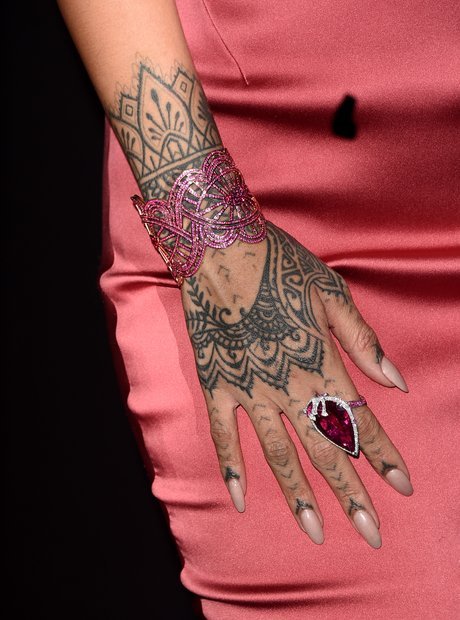
The large hand design is one of Rihanna’s most recognisable tattoos. It uses dense ornamental lines across the hand and wrist, drawing on henna and Maori-inspired visual language. Coverage from E! reported that tattoo artists Bang Bang and Cally-Jo worked on the design during an extended session in the Dominican Republic. The tattoo was developed around an earlier Maori piece that Rihanna had received in New Zealand.

It is important not to describe the hand tattoo as traditional henna. It is permanent ink with a henna-inspired appearance. The distinction matters because the pattern is often discussed as if it were a direct cultural reproduction, while the public reporting is stronger on the design process and artists than on a complete symbolic translation. The broad visual fact is clear: it is a large, highly detailed hand and wrist composition rather than a small isolated symbol.

What “rebelle fleur” means

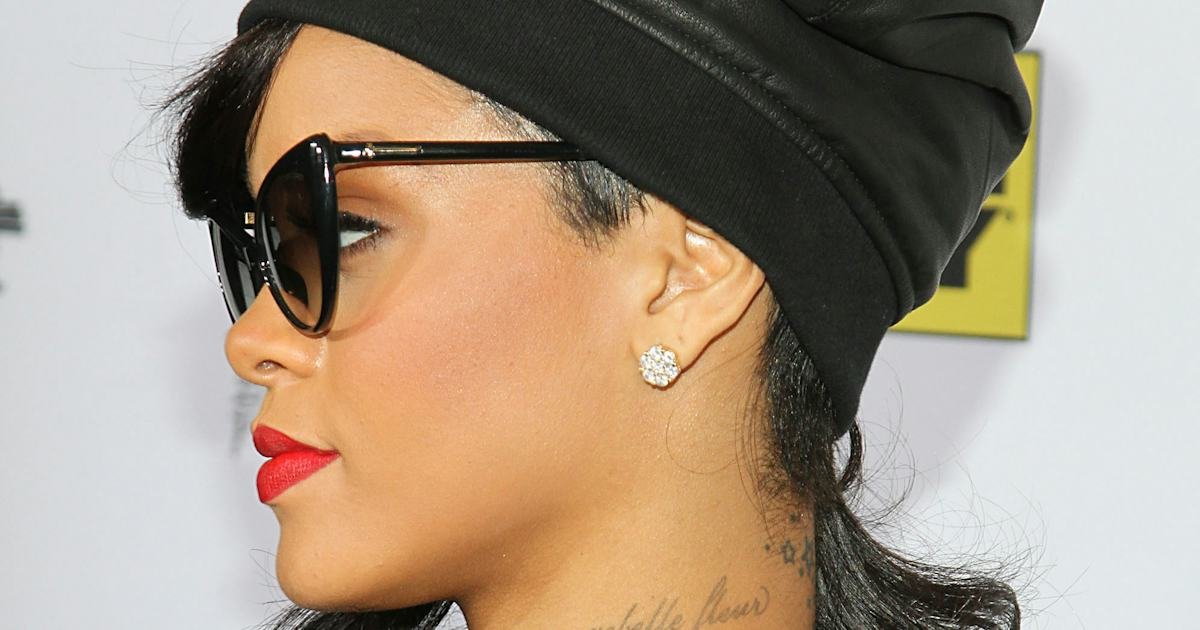
Rihanna Rebelle Fleur neck tattoo

“Rebelle fleur” is written in cursive on the side of Rihanna’s neck. The phrase is commonly translated as “rebel flower.” Vogue’s reporting on Bang Bang identifies the artist as responsible for a number of Rihanna’s well-known tattoos, including the neck lettering. The phrase is associated with Rihanna’s public image and has also been linked with the name of her fragrance, Reb’l Fleur.

The wording has generated discussion because the French phrase does not follow the most expected grammatical order. That does not make the tattoo accidental. The useful confirmed point is the literal wording and its placement. Interpretations about Rihanna’s private intention should remain qualified unless they come from her or a reliable interview. The neck is also visually important because the lettering sits near the later trail of stars that continues toward her back.

The stars running from her neck to her back

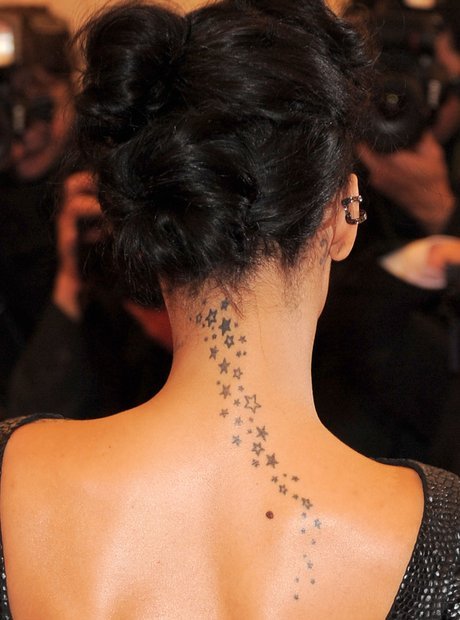
Rihanna star trail tattoo from neck to back

Rihanna’s star trail is a group of small stars that begins around the back of her neck and extends down toward her upper back. Photographs show a mixture of outlined and filled stars, with different sizes creating a loose constellation rather than a single solid block. Bang Bang has been connected with the work, and the design became one of Rihanna’s most photographed tattoos because it is visible with short hair or a backless outfit.

The stars should not be confused with every small mark visible around Rihanna’s neck. The public images support a cascading star design, but they do not establish a complete symbolic explanation for every individual star. Its visual identity comes from the arrangement and placement. It is a good example of a tattoo that can be described accurately without inventing a detailed personal meaning.
The Egyptian falcon and earlier music-note tattoo

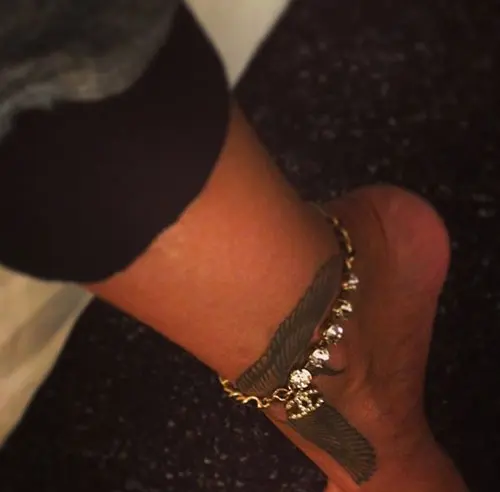
Rihanna Egyptian falcon ankle tattoo

Rihanna’s Egyptian falcon is associated with the inside of her right ankle. Earlier accounts describe a music-note tattoo in the same general history, with the falcon later replacing or covering the earlier design. Rihanna explained the falcon through an image and caption that described it as a light in darkness. Reporting also connected the design with an ancient Egyptian artifact held by New York’s Metropolitan Museum of Art.

The cover-up history is more useful than a simple list of two separate tattoos. It shows that Rihanna’s collection has changed over time and that an older photograph may show a design that no longer represents the current tattoo. The falcon is often described as a symbol of a king in the sky, but that phrase should be attributed to Rihanna’s explanation rather than presented as a universal meaning of Egyptian falcon imagery.

Isis beneath the chest

Rihanna Isis chest tattoo

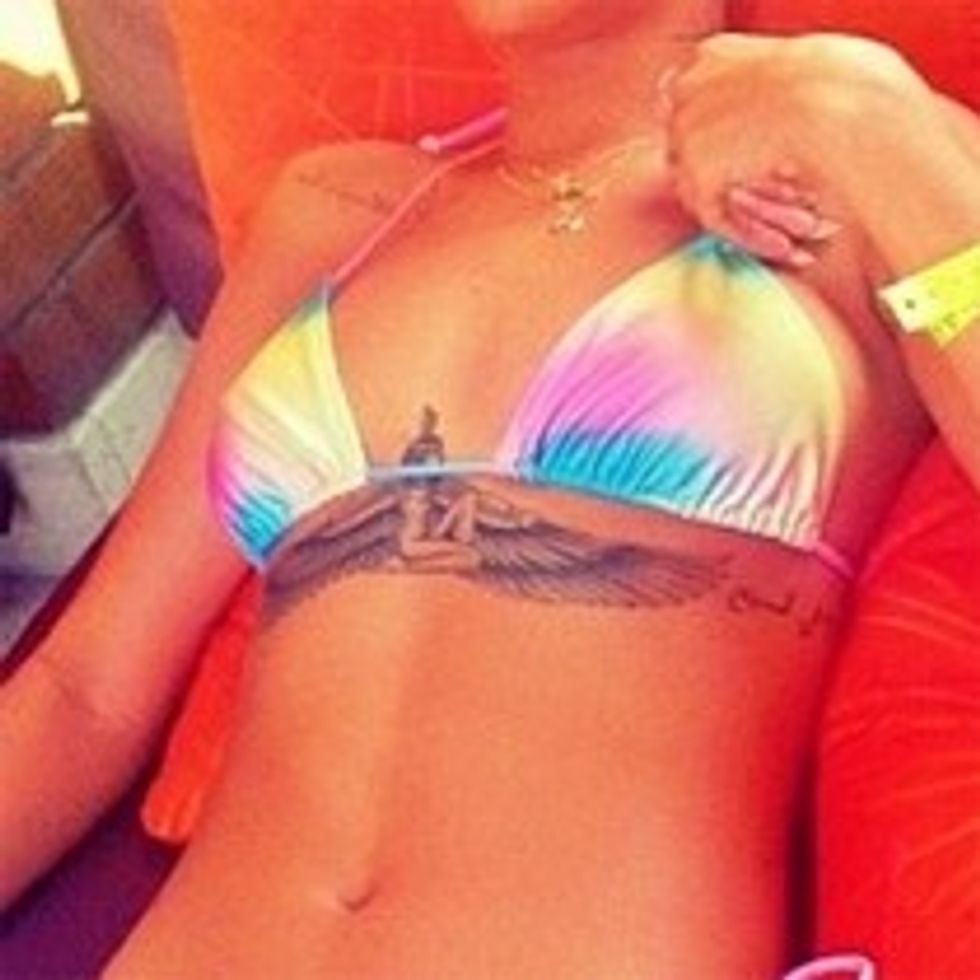
Rihanna has a large Isis tattoo beneath her chest. The winged Egyptian goddess design was publicly associated with her grandmother, whom Rihanna described as a strong influence and role model. Photographs of the tattoo show the figure with outstretched wings across the lower chest and rib area. This is one of the stronger meaning claims in the public record because the family connection has been reported alongside Rihanna’s own explanation.

The tattoo’s position also explains why it is absent from many ordinary event photographs. Clothing often covers the lower chest, while swimwear and carefully framed portraits reveal more of the design. The article should therefore avoid claiming that the tattoo appeared or disappeared based only on whether it is visible in a particular photograph. Visibility is a function of clothing and angle, not proof that the ink changed.

Rihanna’s shark tattoo and the later crown cover-up

Rihanna shark ankle tattoo

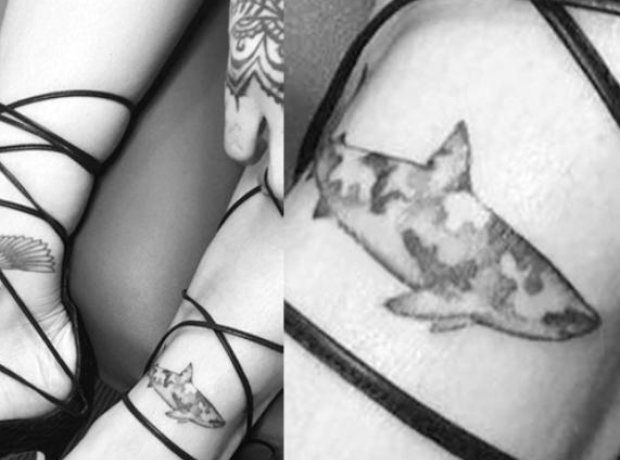
In 2016, Rihanna received a camouflage-pattern shark tattoo on her ankle from Bang Bang. Contemporary reporting connected the tattoo with a stuffed shark associated with Drake and an aquarium visit. That context is widely reported, but it should be separated from claims about the state of their relationship. The design itself is the safer factual subject.

Later photographs indicated that the shark had been covered with a crown. This is an important example of a tattoo changing rather than simply being added to a permanent catalogue. A current image may show the crown while an older image shows the shark. Both can be accurate records of different periods, but they should never be presented as two unchanged tattoos visible at the same time.

The gun, cross and smaller lettering

Rihanna handgun tattoo on her ribcage

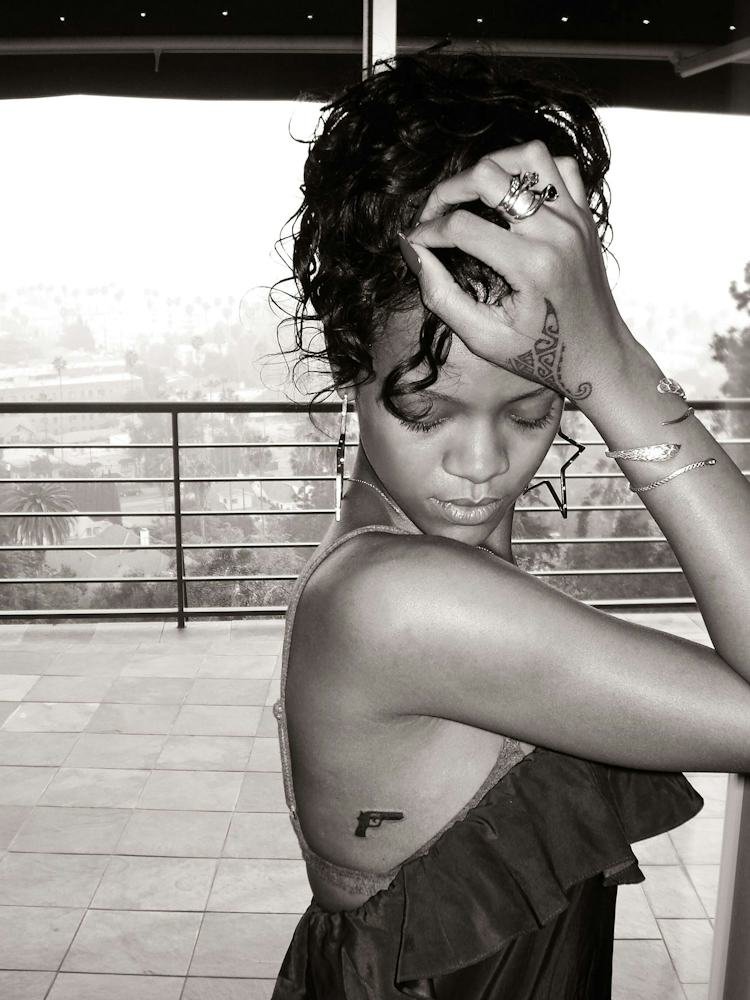
Rihanna has also been photographed with a small handgun tattoo beneath her right arm or along the rib area. Bang Bang discussed the design in an interview and described it as a collaboration of ideas. Its placement makes it difficult to inspect in ordinary red-carpet photographs, so close images are more useful than general portraits.

A small cross has been reported near the collarbone, while other small marks appear around the neck, fingers and hands. The existence of a visible mark does not automatically establish its meaning. The same caution applies to the Sanskrit writing on Rihanna’s hip. Published lists often provide translations, but some reports have questioned the accuracy of the wording. The safe approach is to identify the script and location, then qualify any translation that is not supported by a primary statement or reliable specialist source.

Roman numerals, Pisces and early music notes

Rihanna Roman numeral shoulder tattoo
Rihanna Pisces tattoo behind her ear
Rihanna musical note tattoo on her foot

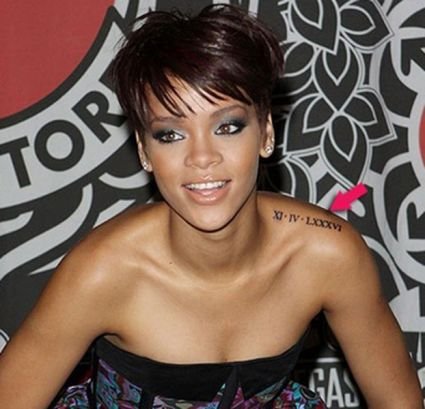
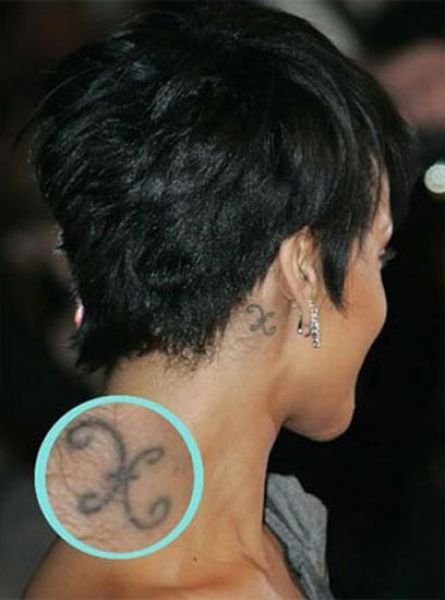
Rihanna’s earlier tattoo history includes small designs such as Roman numerals, a Pisces symbol behind her ear and music notes on her foot. These pieces show how her collection developed from small, discreet marks into larger compositions on the hand, neck, back and chest. The early music-note tattoo is particularly relevant because later reporting connects the ankle area with the Egyptian falcon cover-up.

These smaller tattoos are easy to overstate because online galleries frequently combine photographs from different years and repeat one another’s captions. A list can make the collection seem like a permanent inventory even when a design was altered or covered. Dates and body locations should therefore be treated as part of the identification, not optional background details.

Artists, changes and what remains unknown

Keith “Bang Bang” McCurdy is the artist most consistently connected with Rihanna’s major public tattoos, including the hand design, neck lettering, stars, gun and shark. Cally-Jo has also been associated with the henna-inspired hand session. These connections apply to particular pieces and sessions. They should not be expanded into a claim that one artist created Rihanna’s entire collection.

Rihanna’s tattoo record contains confirmed designs, artist reports, observed details and uncertain interpretations. The strongest article names the design, gives its location, explains the date or change where the record supports it and distinguishes Rihanna’s own explanation from later fan speculation. There is no reliable permanent public count that resolves every small mark and every cover-up.

Frequently asked questions

What is Rihanna’s most recognisable tattoo?

The henna-inspired hand tattoo and the trail of stars from her neck to her back are among her most recognisable designs.

What happened to Rihanna’s shark tattoo?

Reports indicate that the camouflage shark on her ankle was later covered by a crown.

Who is Rihanna’s tattoo artist?

Bang Bang is the artist most often connected with her major public tattoos, while Cally-Jo was involved with the henna-inspired hand work.

Travis Barker’s Face, Family and Music Tattoos

Travis Barker’s tattoos are closely tied to the way he has lived as a drummer, producer and member of Blink-182. His collection is not one uniform style. It combines lettering, religious imagery, family names, music references, car culture and the symbols he chose at different stages of his life. Some meanings come from Barker’s own interviews, while other designs are simply visible pieces whose private significance has not been publicly explained.

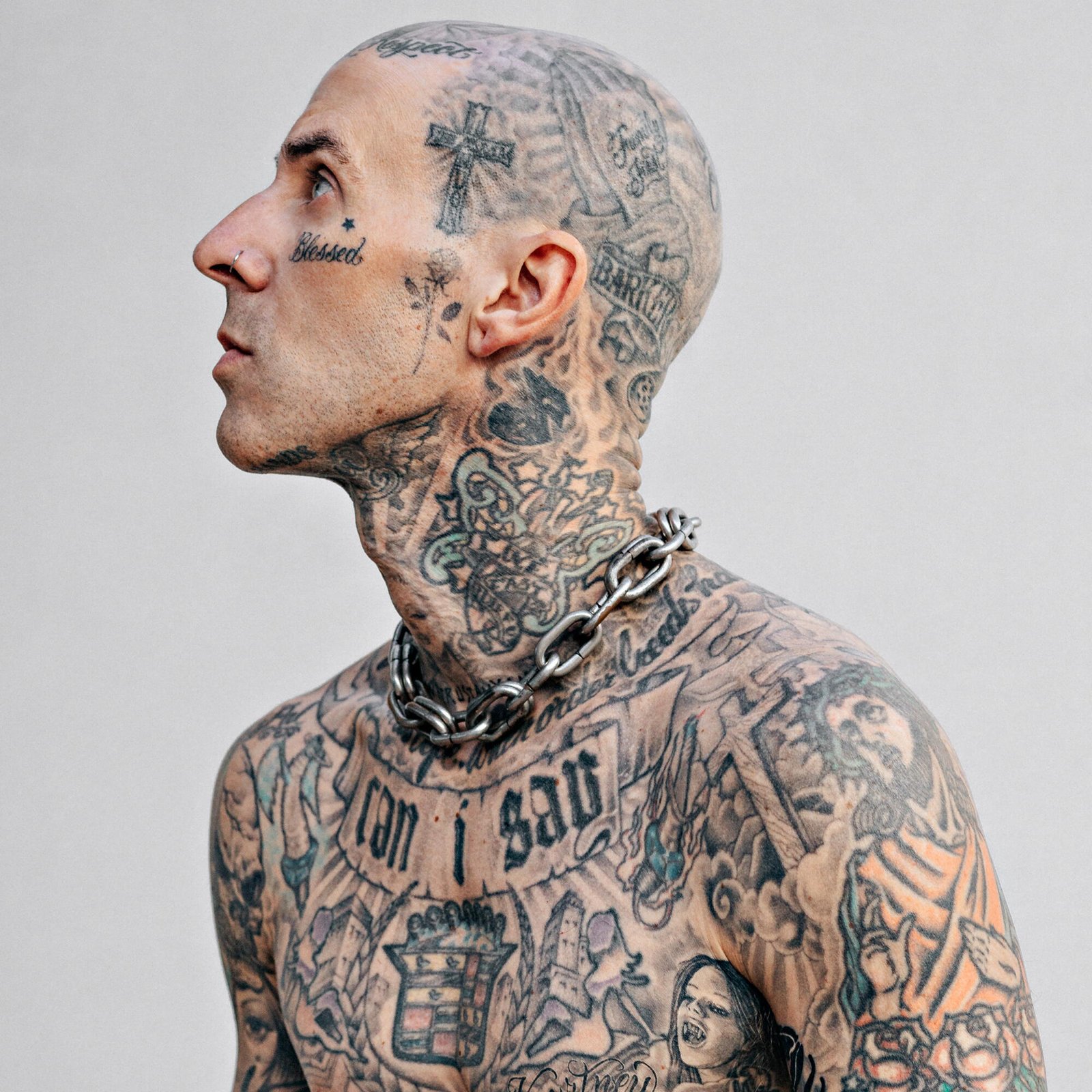
Travis Barker’s face tattoos, including “Blessed”

Travis Barker Blessed face tattoo

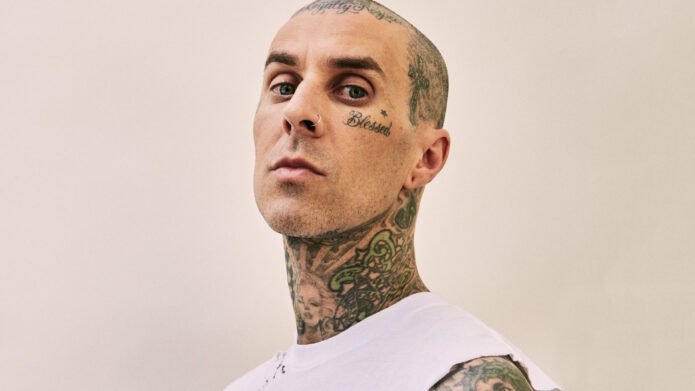
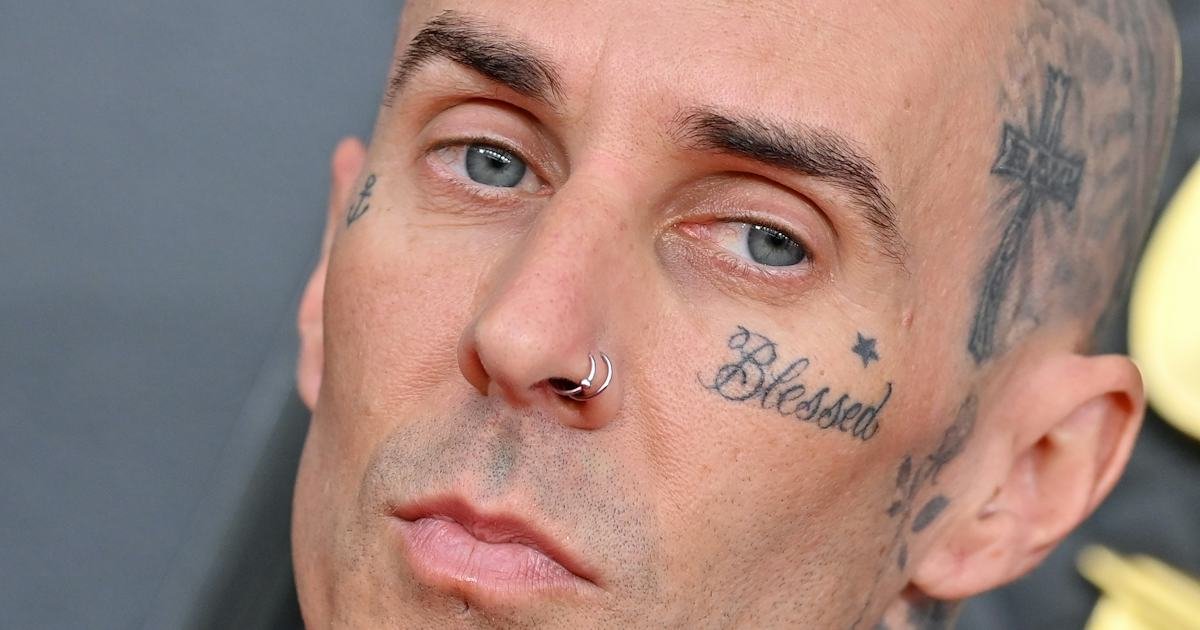
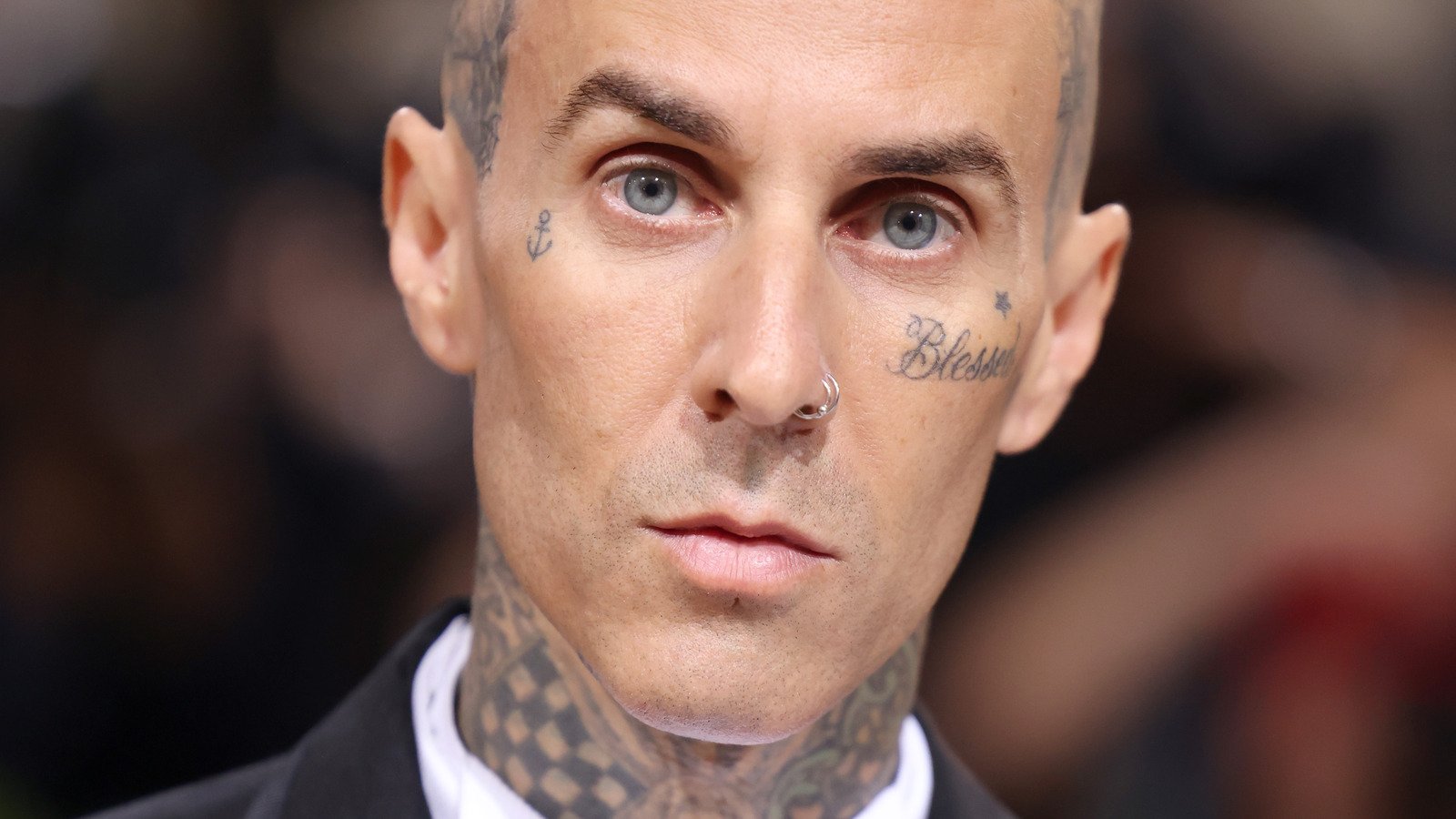
The most immediately recognisable part of Barker’s collection is his face. The word “Blessed” sits beneath his right eye, while small symbols and lettering appear around his eyes, temple and scalp. Photographs also show a cross among the facial and head tattoos. These marks are easy to identify in close portraits, but individual meanings should not be guessed from their placement alone.

The “Blessed” tattoo became especially visible after Barker added it in the early 2020s. Coverage connected the new facial ink with his life after marrying Kourtney Kardashian, but that context is not the same as a confirmed statement that the word has one single meaning. The safest description is the literal one: it is a prominent script tattoo beneath the eye, surrounded by older religious and symbolic designs.

Family names and Barker’s “Family” tattoo

Travis Barker tattoos on hands and neck

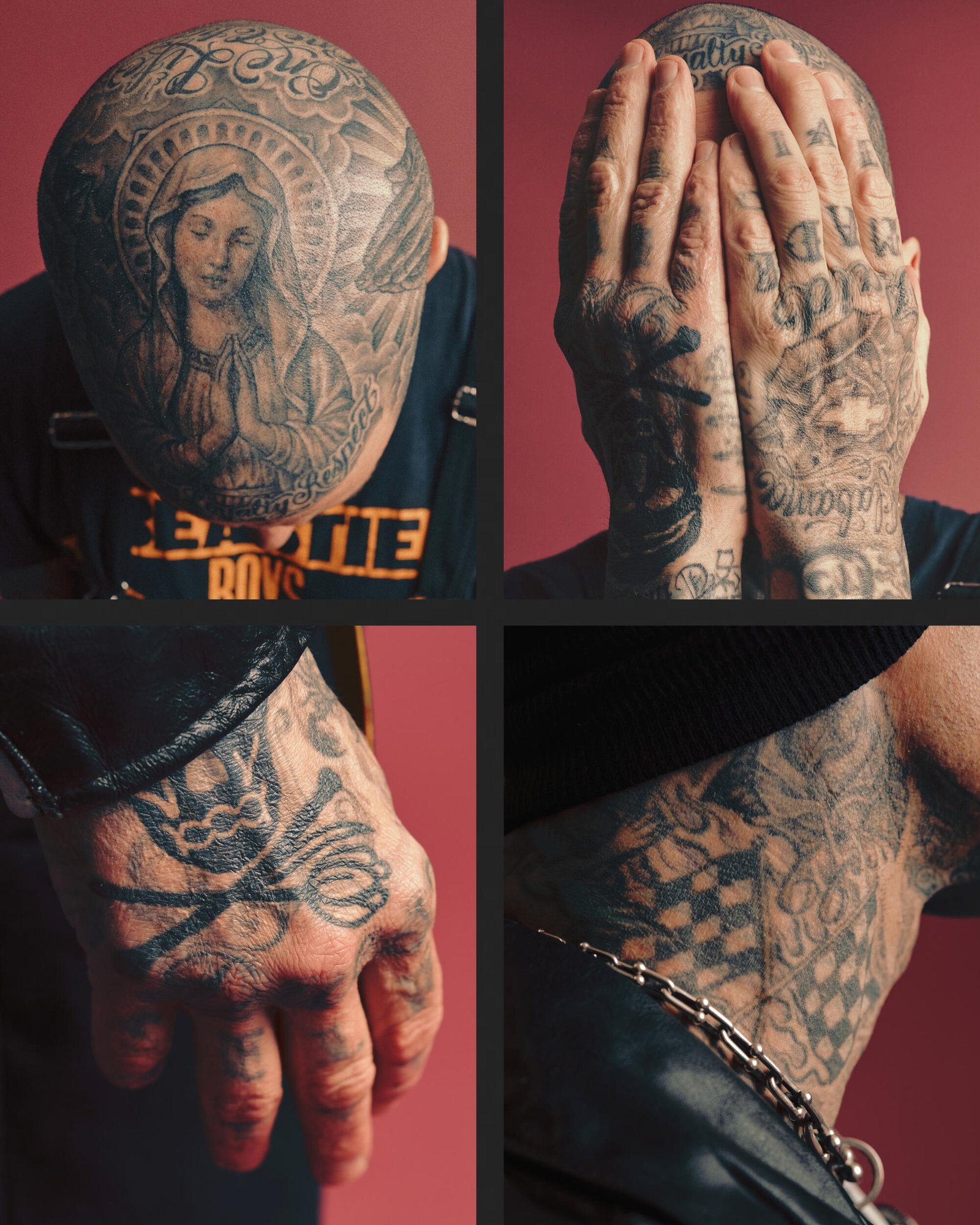
Family is one of the clearest recurring subjects in Barker’s tattoo history. His left wrist has been photographed with “Alabama,” the name of his daughter. Other images and tattoo accounts identify the names of his children and stepdaughter among the lettering on his body. These are not decorative words added at random. They are personal-name tattoos connected to the people Barker has publicly described as his family.
In June 2024, Barker revealed the word “FAMILY” in bold lettering on the inside of his left arm. Reports described it as a tribute to his growing family after the birth of his son Rocky Thirteen. Kourtney Kardashian has also contributed directly to his tattoo record: Barker has discussed tattoos connected with their relationship, including “I love you” and an impression of her lips. Those designs belong to a later chapter of the collection than the older punk and car imagery.

Religious imagery across his head, arms and chest

Travis Barker tattooed profile

Barker has several religious images, including Jesus, praying hands and a Sacred Heart. The praying-hands design on his head is particularly difficult to see when his hair is long, which explains why it appears in some photographs but not others. A portrait or a current event photograph cannot establish that a tattoo has disappeared simply because clothing or hair covers it.

His Catholic upbringing is often given as background for this group of designs, and Barker has spoken about religious imagery in discussions of his tattoos. That background supports a connection between the imagery and his upbringing, but it does not provide a private explanation for every cross, heart or figure. The tattoos are best catalogued by what is visible and by the meanings Barker has actually supplied.

Music, punk and the words on his hands

Travis Barker tattooed portrait

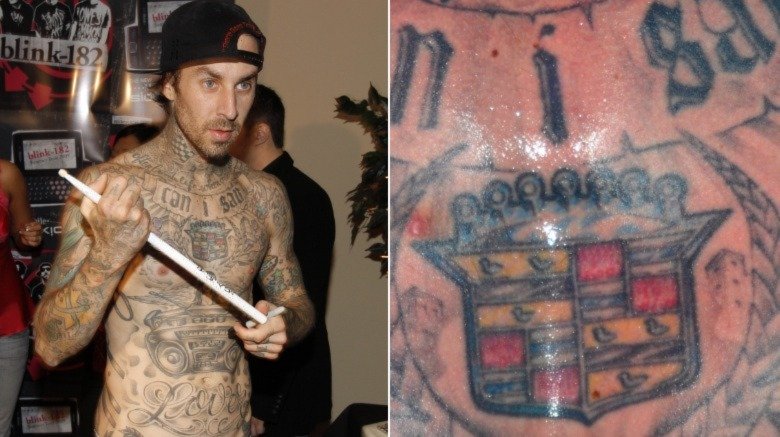
Music is represented in both images and words. Barker has tattoos connected with albums, bands and the work he wanted to make. “Can I Say,” the title of the first album by Dag Nasty, is one of the references associated with his early musical identity. He also has a microphone, drum-related imagery and music notes among the designs reported across his torso and arms.

The word “Self Made” across his fingers is another important piece of lettering. Barker has explained that it reflects his belief that he built his career without being handed success. The phrase fits the path from a young drummer experimenting with tattoos to a professional musician who helped shape pop-punk, hip-hop collaborations and his own label. As with all hand tattoos, the exact visibility changes with angle and age, but the lettering remains a recurring part of close-up photographs.

Cadillac, checkerboards and the number 66

Travis Barker Cadillac chest tattoo

Barker’s love of cars appears directly in his tattoos. Accounts of his collection identify a Cadillac logo between his chest and the word “Cadillac” on his ribs. Checkerboard patterns on his neck have also been associated with the Cadillac model he preferred, including the number 66. These are unusually specific examples of a hobby becoming part of a celebrity tattoo collection rather than a generic symbol of speed or rebellion.

The car designs sit beside tattoos connected with skateboarding and music. That mixture is important because Barker’s body art does not divide neatly into one subject per body area. A neck photograph may show checkerboards, script and religious imagery at the same time. A useful guide therefore needs to identify the individual designs without pretending that every visible mark belongs to one neat theme.

Skulls, numbers and symbols with personal histories

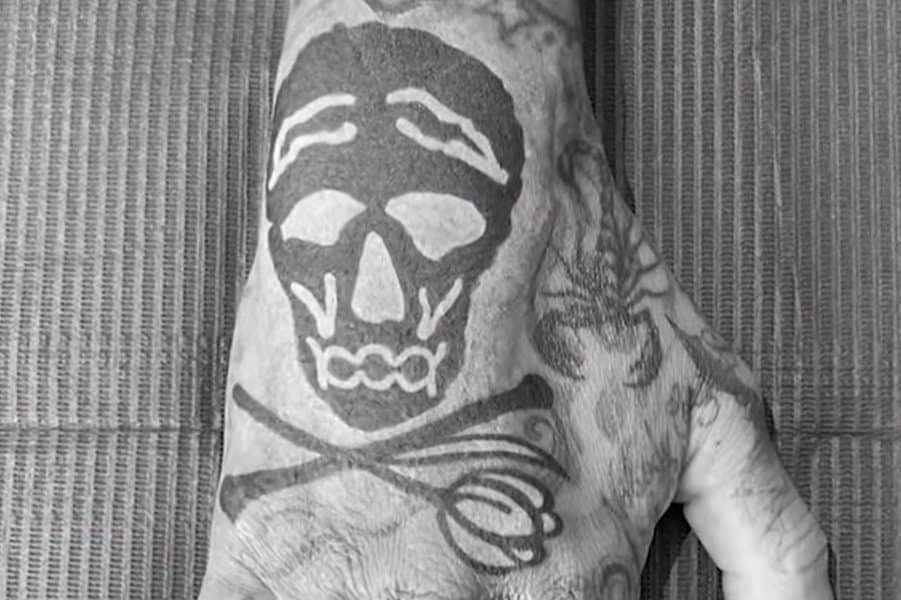
Travis Barker skull tattoo

Skulls and the number 13 appear in reports about Barker’s arms and torso. He has also been photographed with lucky objects and symbols across his right arm, including playing cards, dice, a dollar sign and a rabbit’s foot. Barker has described that arm as a kind of lucky collection, which makes the group more specific than a generic list of “rock-star tattoos.”

Some of the numbers and words in the collection refer to music, family or dates. Others are difficult to interpret without a direct explanation. The number 13 is widely associated with tattoo culture and has been important to Barker, but a catalogue should not assign a new meaning to every repeated number. Where the public record does not provide an explanation, the design and location are the useful facts.

“Hope,” “Chaos Often Breeds Life” and memorial tattoos

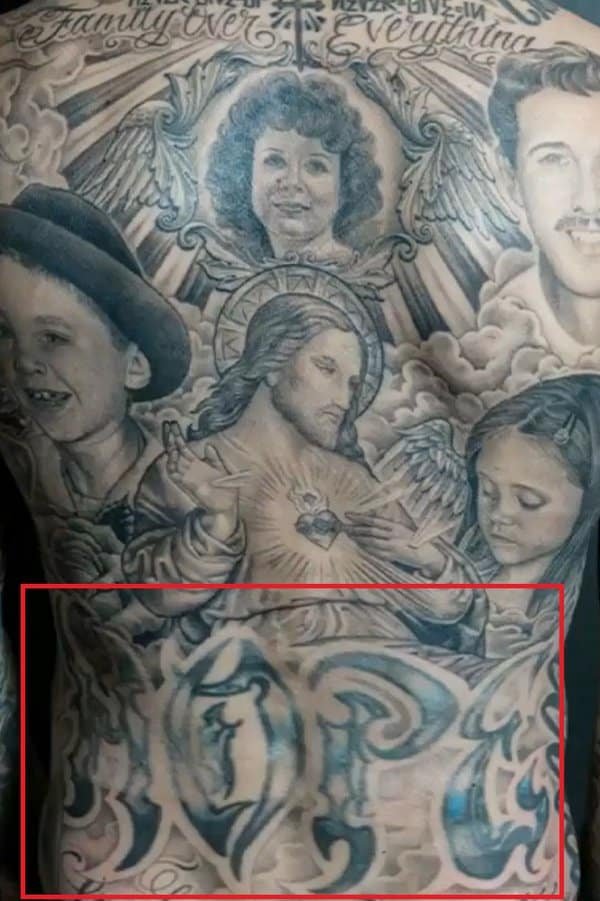
Travis Barker Hope tattoo across his lower back

The word “Hope” on Barker’s back has been linked with the Descendents song “Hope” and with the death of his mother. That is one of the stronger meaning claims in the available record because it has been discussed in accounts of his life and music. The neck phrase “Chaos Often Breeds Life, When Order Breeds Habit” is another identifiable piece of text. It has been connected with Box Car Racer and also appears in the broader story of Barker’s music career.

His tattoos also include tributes to people and animals who mattered to him. Reports have described a dog memorial and a tribute to Foo Fighters drummer Taylor Hawkins. These designs are best treated as individual memorials rather than evidence for a general theory about Barker’s entire collection. The article’s job is to name the tattoo and explain the documented connection, not to manufacture a meaning for every image.

How Barker’s tattoo collection has changed

Barker’s tattoo history has changed as new family, music and relationship milestones have been added. The collection also changes visually as tattoos age, overlap and appear beside newer work. His face tattoos became more extensive over time, while the family lettering and newer “FAMILY” design added a different emphasis to a body already covered with punk, religious and automotive references.

The clearest way to understand the collection is chronological and specific. Early music and punk references establish Barker’s identity as a drummer. Car and skate imagery connect the tattoos to his interests. Family names and memorials record important relationships. Later pieces add marriage and fatherhood to a collection that was already extensive. That sequence explains more than a single count ever could.

Frequently asked questions

What was Travis Barker’s first tattoo?

Accounts of Barker’s early life say he made his first tattoo himself by scratching a girlfriend’s name into his leg with a razor. The story is part of his explanation of how his interest in tattooing began, although later professional work makes the original mark difficult to identify in current photographs.

What does “Self Made” mean?

Barker has connected the finger lettering with the belief that he built his career through his own work. The phrase is one of the clearer examples of a tattoo whose meaning has been publicly explained.

Who tattooed Travis Barker?

Different artists have worked on Barker’s collection over many years. Modern coverage often identifies artists involved with particular pieces rather than one person responsible for everything. It is therefore safer to attach an artist credit to a specific tattoo or session than to claim a single artist created the whole collection.

Ed Sheeran’s Tattoos: The Stories Behind His Lion, Pingu and Ketchup Ink

Ed Sheeran’s tattoo collection is unusually easy to misread. Photographs show a large amount of colorful work, but the designs do not all have the same kind of evidence behind them. In his 2024 GQ Tattoo Tour, Sheeran explained several pieces himself. British GQ also interviewed Kevin Paul, the tattooist responsible for much of his work. Those sources make it possible to separate a confirmed story from a guess based only on a picture.

The lion chest tattoo marks Wembley

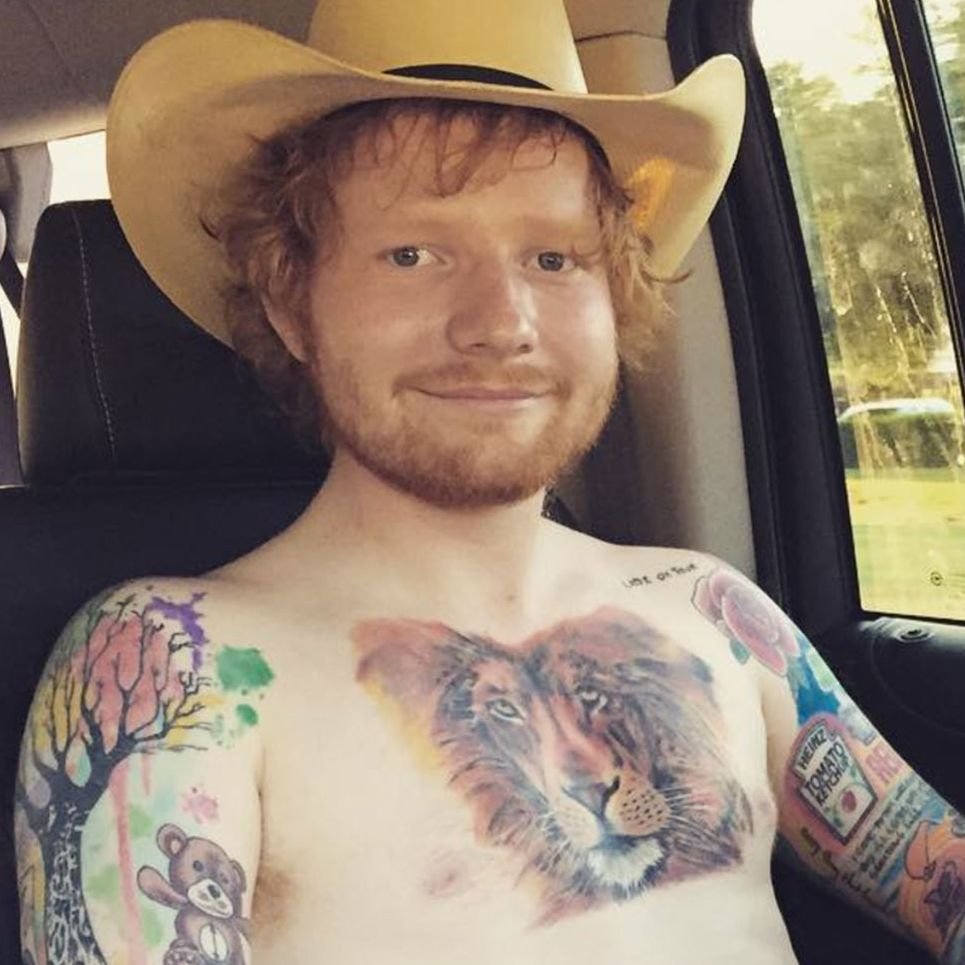
The most conspicuous piece is the large lion across Sheeran’s chest. Kevin Paul told British GQ that the design was conceived quickly and that Sheeran got it to celebrate selling out Wembley Stadium. Sheeran gave the same achievement a central place in his own account of the collection. He said that playing Wembley was the biggest achievement of his life, which explains why the tattoo is much more than a decorative animal design.

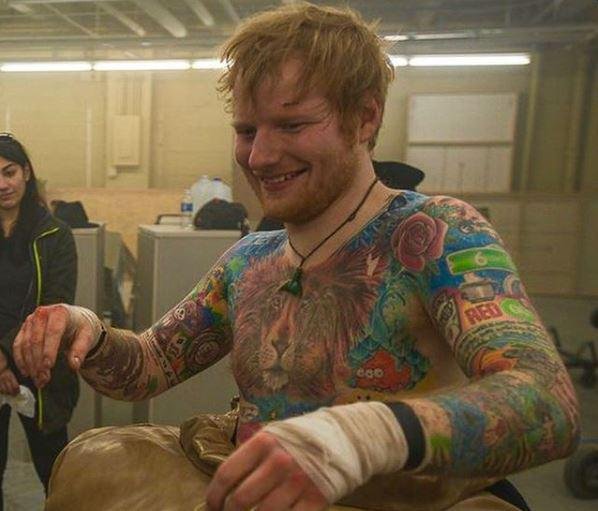
The lion also illustrates the scale of Sheeran’s later work. It dominates the centre of his chest, while the sleeves around it remain a crowded mix of smaller, often brightly colored images. The design is sometimes discussed online as if it represents a general idea of strength, but the documented explanation is more precise: it marks the Wembley milestone and the importance of English football imagery associated with the stadium.

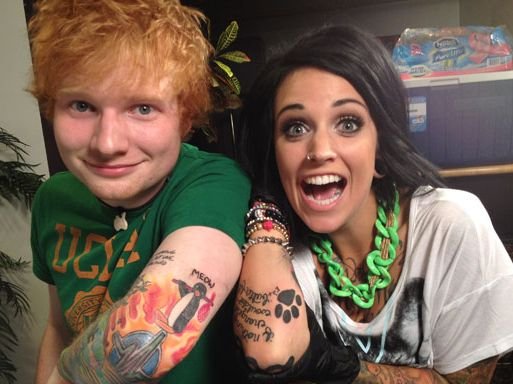
Ed Sheeran showing the colorful lion chest tattoo and surrounding sleeve tattoos

Heinz ketchup bottle on his arm

Sheeran has a Heinz Tomato Ketchup bottle tattoo on his arm. Ogilvy, describing the Edchup campaign, explicitly calls it a picture of a Heinz ketchup bottle on his arm. Kevin Paul told British GQ that the tattoo was done in the United States because Sheeran missed ketchup while he was there. That is a very different kind of celebrity tattoo story from an invented symbolic reading. The design began as a personal joke and food preference, then became the visual basis for a real Heinz collaboration.

The partnership turned the tattoo into a piece of pop-culture branding. Heinz created limited-edition bottles resembling the tattoo, and the campaign used Sheeran’s existing ink rather than commissioning a new logo for the promotion. The bottle is therefore both a visible forearm tattoo and an example of an image crossing from a person’s collection into a commercial campaign.

Ed Sheeran showing the Heinz ketchup bottle tattoo among his arm designs

The matching Pingu tattoo with Harry Styles

Sheeran’s Pingu tattoo sits on his upper left arm. Paul told British GQ that Sheeran and Harry Styles were talking about their favourite childhood cartoons after a night out, discovered they both liked Pingu and decided to get related tattoos. Sheeran’s mark is the character, while Styles had the word Pingu. In the GQ Tattoo Tour, Sheeran said Styles may have covered his version with an anchor.

The detail matters because the tattoos are often described as identical when they are better understood as a paired joke. One is a cartoon character and the other is lettering. Their connection is supported by the artist’s account and Sheeran’s later explanation, not by visual similarity alone.

Ed Sheeran showing the Pingu tattoo on his upper left arm

Small designs tied to music and friends

Several of Sheeran’s smaller tattoos record people, songs or stages of his career. His first tattoo was a small paw print. In the GQ interview he said he had drawn the paw on himself with permanent marker for years, then got it at a shop connected with Christina Perri when he was 18. The future collaboration between the two musicians was not the original reason, but it became part of the story of the first piece.

Ed Sheeran showing the first paw print tattoo

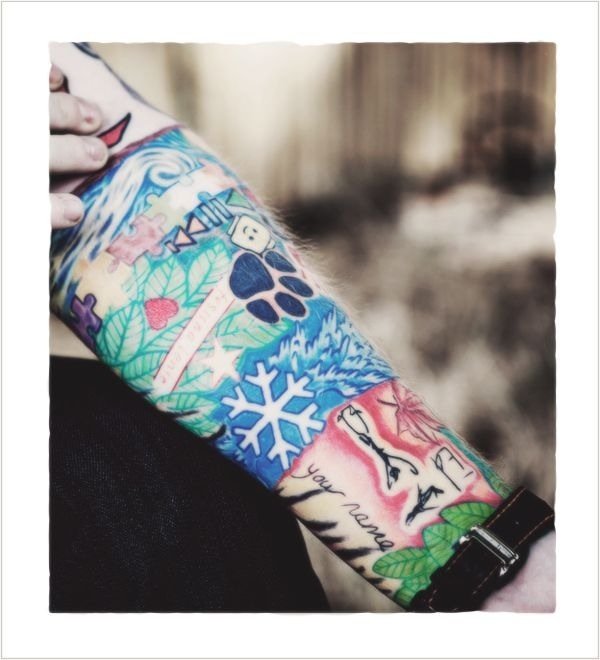
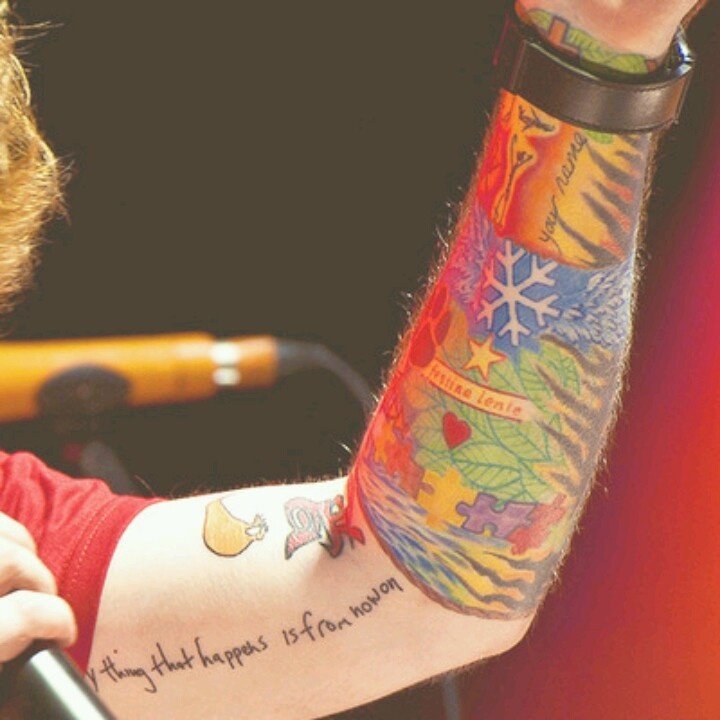
Sheeran also showed the importance of lettering. He had Gary Lightbody write the line “Everything that happens is from now on” from Bon Iver’s “re: Stacks,” then had it tattooed in Lightbody’s handwriting. A planned matching tattoo did not happen because Lightbody changed his mind. Sheeran’s account of the piece is specific about the source of the words and the handwriting, so there is no need to attach a broader meaning to it.

Ed Sheeran showing the Everything that happens is from now on lyric tattoo

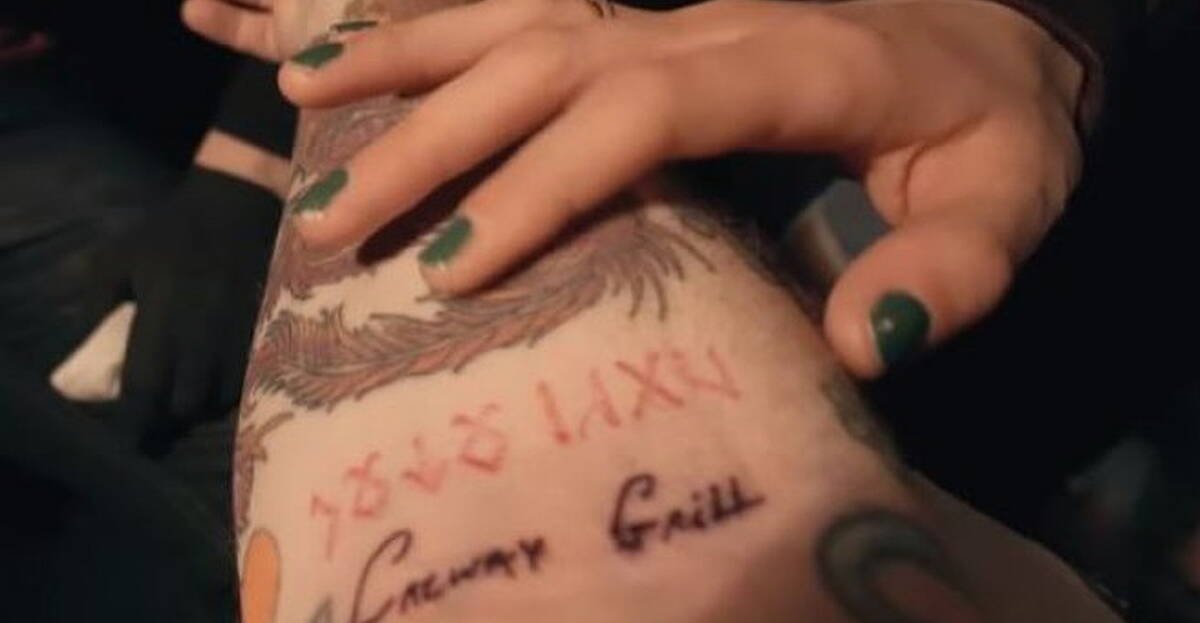
The arm collection includes “Prince,” which Paul connected with Sheeran’s love of The Fresh Prince of Bel-Air, and “Galway Grill,” the deliberately misspelled joke tattooed by Saoirse Ronan during the Galway Girl video period. Sheeran later confirmed in the GQ interview that the misspelling was planned. It was not an accidental mistake that he was forced to keep.

Ed Sheeran showing the Galway Grill tattoo

Children’s footprints on Ed Sheeran’s back

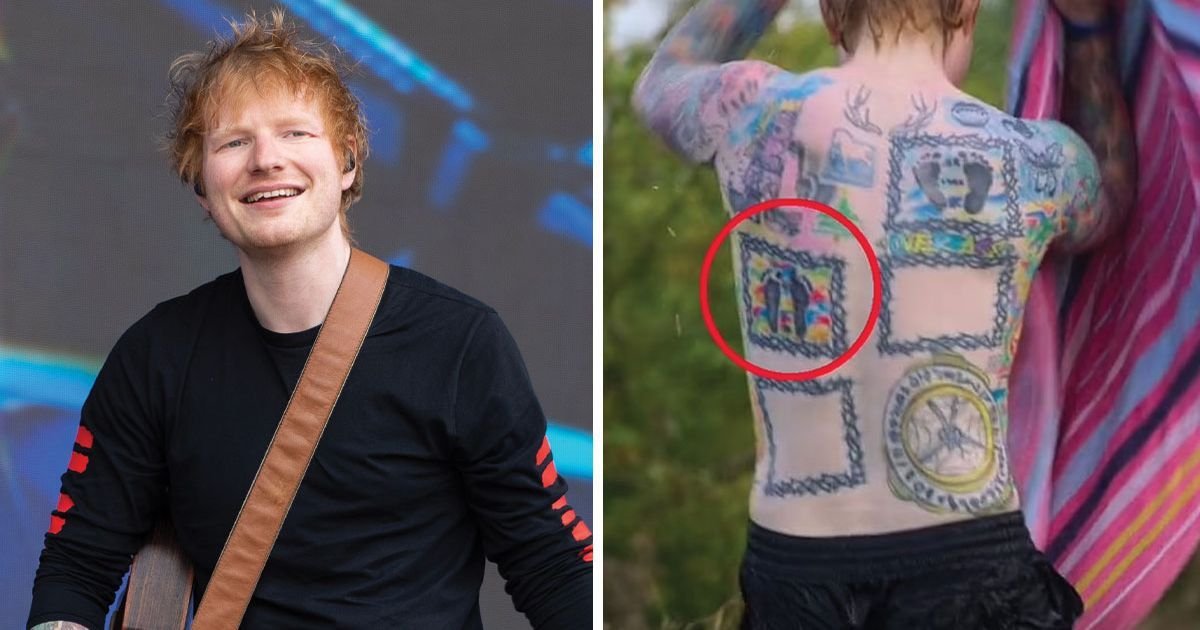
Sheeran has his children’s footprints on his back, arranged in small squares after they were born. The design is one of the clearest examples of family history in the collection because the image and the circumstances are both publicly described. It is also a reminder that the most personal tattoos are not necessarily the easiest to photograph in concert or portrait coverage.

Ed Sheeran showing his children's footprints tattoos on his back

The Matisse portrait and other personal references

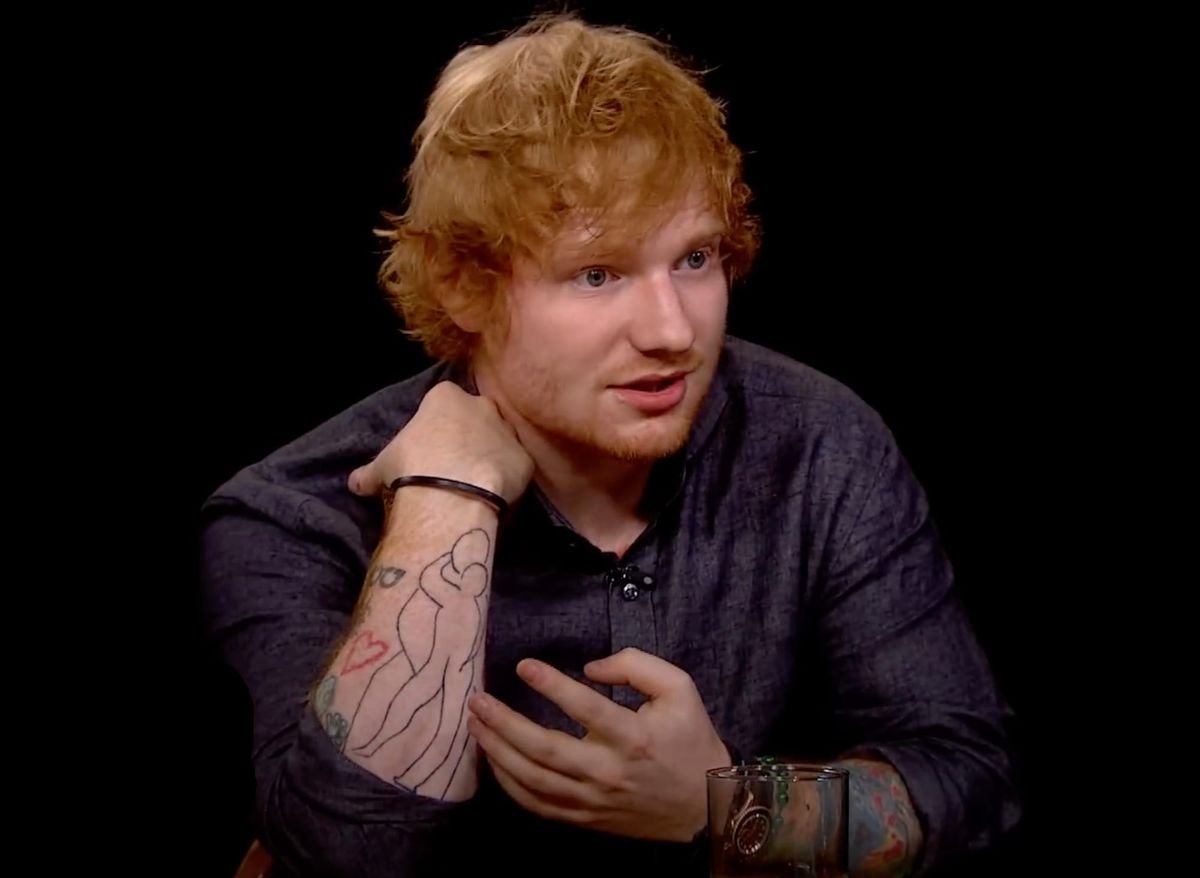
Kevin Paul identified Sheeran’s mother-and-child tattoo as a copy of a Henri Matisse line drawing. He said Sheeran chose it because the painting was his mother’s favourite and that Sheeran had bought her a copy after receiving his first paycheque. The design therefore combines an identifiable artwork with a documented family reason.

Other tattoos mark albums and travel. Sheeran described a tattoo connected with Taylor Swift’s Red after appearing on the album and later joining the Red Tour. The mathematics symbols around his wrist relate to the Plus, Multiply, Divide and Subtract plan for his records, with an equals symbol added later. He also mentioned getting the Heinz design in Pittsburgh and a koala in Australia while building a sleeve around significant places he visited.

Ed Sheeran showing the Matisse mother and child tattoo on his forearm

Reading the record: why the collection is difficult to count

Sheeran does not present the tattoos as a numbered catalogue. In the GQ Tattoo Tour he said he sees the collection as one tattoo and would not be able to count it. British GQ reported that he had well over 60 pieces in 2020, but that is a dated estimate rather than a permanent total. New work, cover-ups and tattoos hidden by clothing make a precise current count unreliable.

The public record is strongest for named designs and stories that Sheeran or Paul have explained: the Wembley lion, Heinz bottle, boxing gloves, Pingu, paw print, Galway Grill, Matisse portrait, children’s footprints and memorial lettering. A photograph can establish that another mark exists, but not its title, date or private meaning. Those limits are part of an accurate guide rather than a gap to fill with speculation.

Frequently asked questions

What is Ed Sheeran’s biggest tattoo?

The lion across his chest is his most prominent publicly discussed piece, and Sheeran connected it with selling out Wembley Stadium.

Who tattooed most of Ed Sheeran’s designs?

Kevin Paul has done much of Sheeran’s work, according to British GQ, but individual tattoos were also done by other people, including Saoirse Ronan’s planned Galway Grill joke.

Does Ed Sheeran have a matching tattoo with Harry Styles?

Yes. Their Pingu tattoos came from a shared conversation about the cartoon. Sheeran has the character and Styles had the word Pingu, although Styles may later have covered his.