
Lil Uzi Vert’s tattoos are often discussed alongside dramatic hair, piercings and jewelry, but the ink itself has its own history. The rapper’s face became a visible record of changing ideas, from the early word Faith to later symbols and full-forehead work. A careful guide also needs to separate tattoos from the pink diamond that was attached to the forehead in 2021. The diamond was jewelry and body modification, not a tattoo.
Dates matter because Uzi’s appearance changed quickly. A close-up from one year may show lettering that is covered, changed or hidden in a later photograph. The public record also mixes direct explanations with fan interpretations, so this guide keeps visible designs and documented context separate.
Faith was Lil Uzi Vert’s first face tattoo
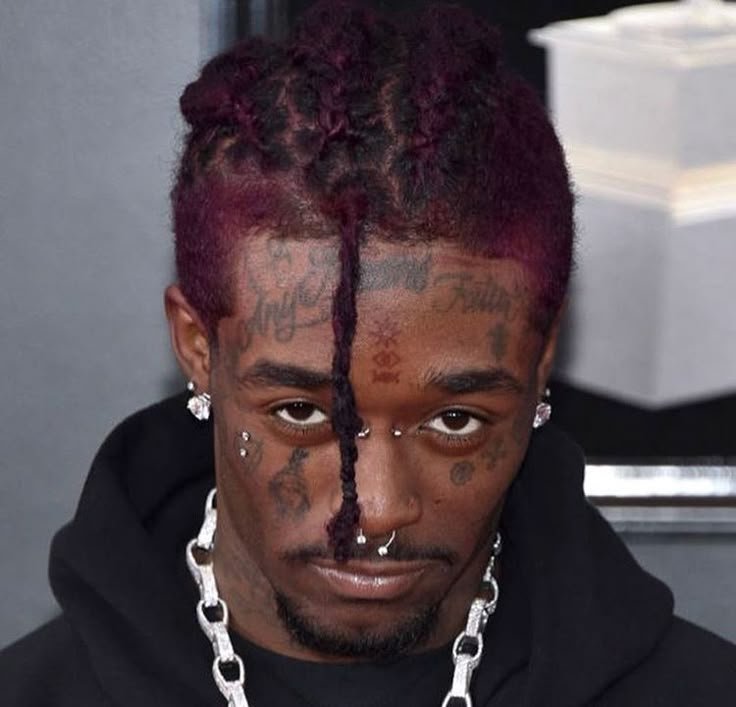
The Faith lettering is reported as Lil Uzi Vert’s first face tattoo. Biographical records connect the word with a period when Uzi wanted to take rap more seriously. It sits under the hairline and appears as cursive lettering in early photographs. That placement makes it a useful starting point for understanding the later facial work.
The reported meaning is more specific than a generic claim that the tattoo represents spirituality. The available record connects the word with Uzi’s career motivation. It does not establish every private reason behind the choice, and it does not mean that later symbols all have the same religious explanation.
The number sixteen belongs to a later visual phase
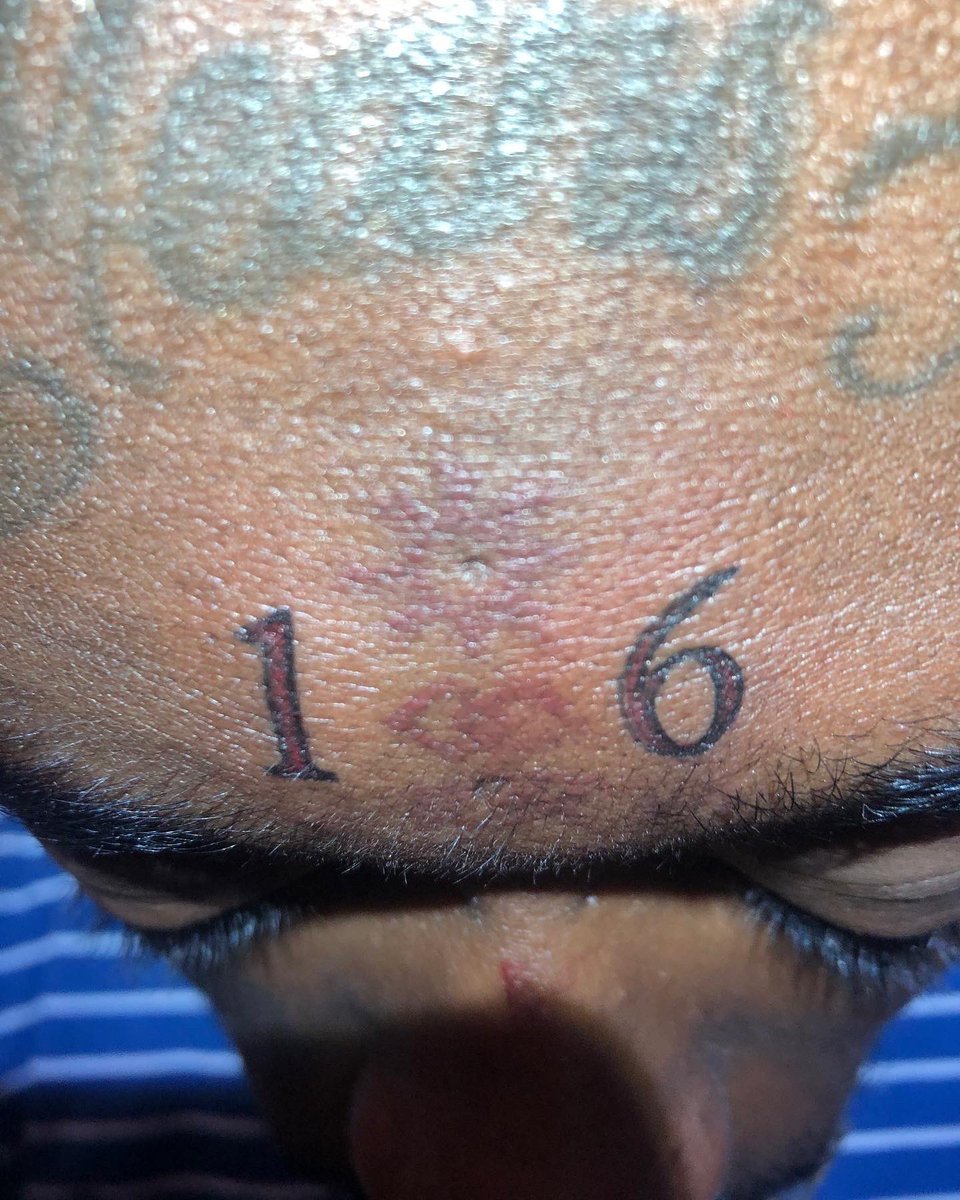
The number sixteen appears in close-up photographs from a later period. The number is positioned above the eyebrows and is visibly distinct from the earlier cursive lettering. The image record confirms the number and location, while the sources reviewed here do not establish a definitive personal explanation for why Uzi chose it.
A number can be especially easy to overinterpret. It may refer to a date, a private association or a creative image, but none of those possibilities should be presented as fact without a direct statement. The useful catalogue entry is therefore simple: a visible 16 on the forehead during the documented period.
Small facial symbols are easier to verify in close-up photographs
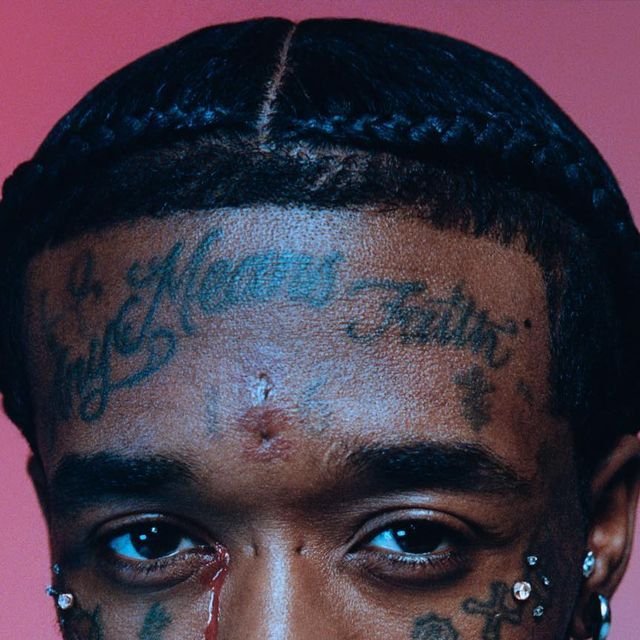
A facial symbol tattoo and other small symbols appear in close-up images of Lil Uzi Vert. The rose is visible in the source photograph, but the public material reviewed for this article does not provide a confirmed meaning or tattooist. It is better to describe the design than to attach a standard rose-tattoo interpretation to it.
Facial photographs also create identification problems. Makeup, shadows, piercings and hair can make a mark look different from one image to the next. A clear source photograph can support the existence and approximate position of a design, but it cannot automatically establish when it was made or whether a later cover-up changed it.
Further notes on the dated record
Frequently asked questions
The 2023 forehead mandala changed the outline of the collection.
In 2023, coverage from Inked and XXL described a new black-and-grey forehead mandala pattern. The reports connected the piece with Los Angeles artist Yatzil Elizalde and described the design as covering a substantial portion of the forehead. This is a later addition to the timeline, not a replacement explanation for the earlier Faith tattoo.
The mandala also demonstrates why current images matter. A photograph showing only the eyes or hairline may hide the extent of the design, while a front-facing close-up makes the geometry easier to examine. The artist attribution should remain limited to this reported forehead work rather than being applied to all of Uzi’s facial tattoos.
The pink diamond was not a tattoo.
Uzi’s famous pink diamond was attached to the forehead in 2021 and later removed after it was torn during a performance. GQ’s reporting focused on the risks and mechanics of the attachment, while later coverage reported Uzi’s plans to reinstall it. That timeline belongs in an article about the face because the jewelry changed how photographs were read, but it should not be added to the tattoo inventory.
The distinction is practical. A tattoo is ink beneath the skin; the diamond was a separate piece of jewelry or implant. Treating both as one design would blur the history and make the article less useful for readers who are specifically researching Lil Uzi Vert tattoos.
Frequently asked questions
The public record shows a progression from a first forehead word to additional symbols, numbered ink and later large-scale work. It does not provide a complete official list or a confirmed meaning for every mark. Images should therefore be dated where possible and tied to the design they actually show.
Faith has a reported career context, the 16 is a documented number with an open meaning, the rose is a visible face design without a confirmed explanation, and the mandala has a reported artist and date. Keeping those levels of evidence separate gives readers a more accurate picture than a list that assigns a story to every line.
Lil Uzi Vert’s tattoos remain part of a changing visual identity. The strongest guide will update the inventory when a clearer photograph or direct explanation appears and will continue to separate ink from jewelry, speculation from reporting and one era from another.
The timeline also explains why descriptions from different outlets can appear to conflict. One source may focus on the early hairline lettering, another on the later forehead coverage and another on jewelry that was present for only part of the public record. Those are not necessarily contradictory accounts. They can be snapshots of different stages, and a good inventory should preserve the date attached to each one.
Visual evidence should be handled with the same care. A close photograph can establish that a symbol or word was visible, while a report from an artist can establish who made a particular piece. Neither source automatically establishes an emotional meaning. Where Uzi has not explained a design, the most accurate description is the design, its location and the period in which it was photographed.
That approach also makes future updates easier because new photographs can be added without rewriting established facts.