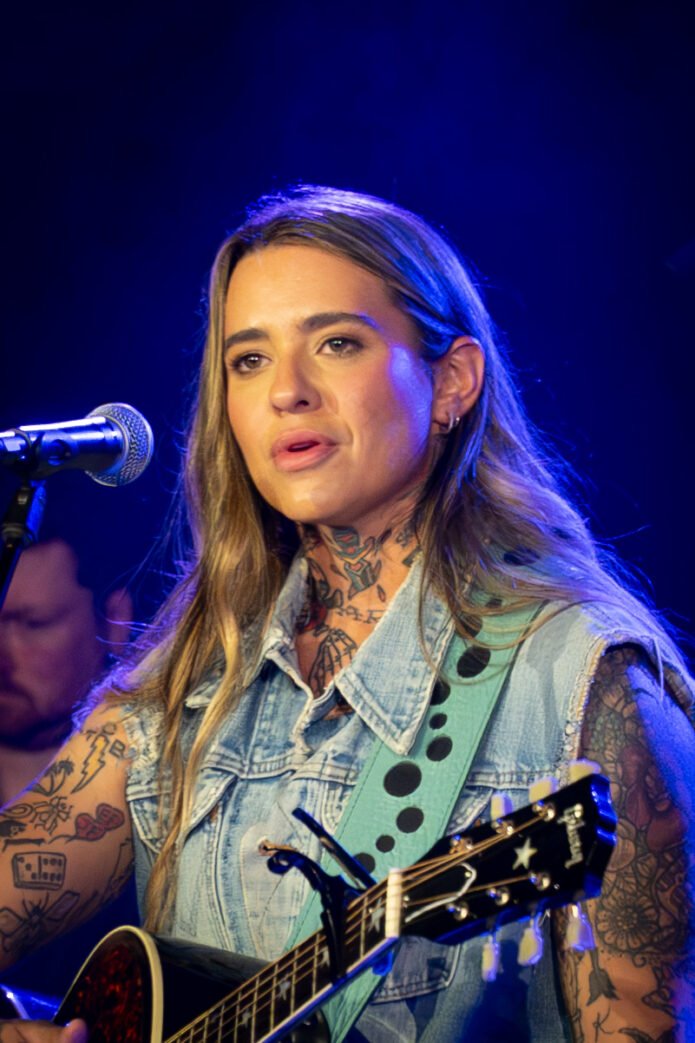
Morgan Wade’s tattoos are not a small set of isolated symbols. The country singer has described a collection that runs from her neck to her feet, built over years and mixed from family references, traditional flash, small jokes and pieces she simply enjoyed. That makes a neat official list impossible, but it does not make the documented tattoos unknowable. Interviews and filmed moments identify several designs clearly enough to discuss without inventing meanings for every mark.
The most useful distinction is between tattoos Wade has explained herself and details that other people have identified while talking about her collection. Her first tattoo, the initials of her four younger siblings, has a direct family explanation. The Morton Salt girl has a specific childhood memory behind it. By contrast, the K on her arm is known because Kyle Richards tattooed it during a television scene, while the exact meaning of many old-school pieces has not been published.
Photographs also need to be dated. Wade’s arms, neck and hands are densely tattooed, and a performance image may show a different part of the collection from a studio portrait. The record below focuses on designs that have a useful source, then keeps the larger visual field in perspective.
Morgan Wade’s four younger siblings’ initials
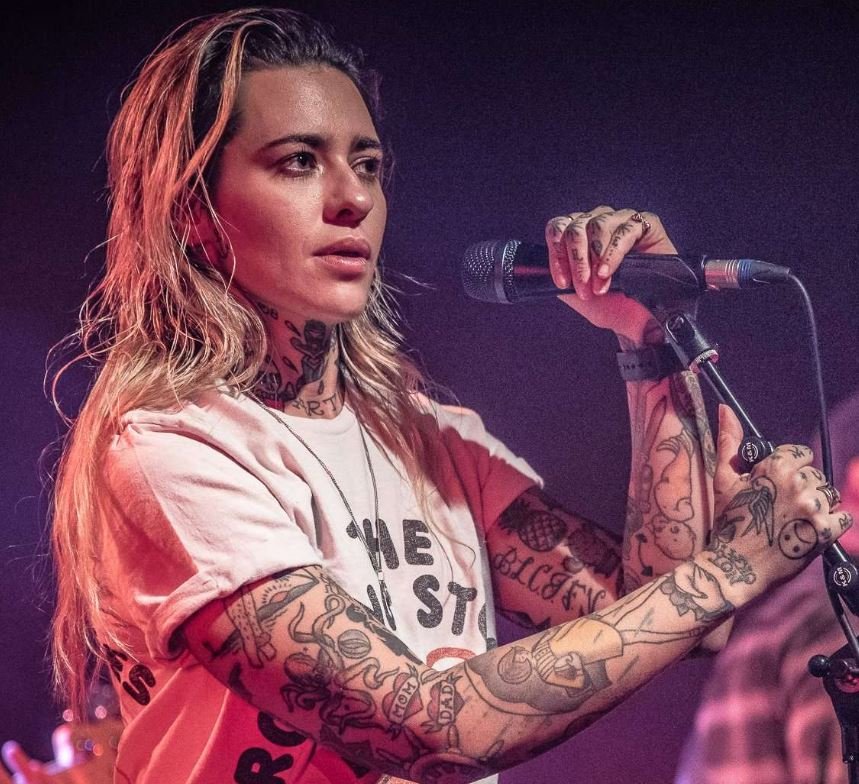
Wade told Inked that she got the initials of her four younger siblings on the inside of her arm as her first tattoo. She was in college, had very little money and accepted a friend’s suggestion that a tattoo would suit her. The detail matters because it gives the design a clear place in the timeline and a specific reason for its existence.
It is tempting to turn family initials into a larger statement about Wade’s entire collection, but the evidence supports a narrower conclusion. These letters are a family tattoo because Wade described them that way. The source does not establish that every later piece carries the same meaning, and photographs do not always make each letter legible.
The inside-arm placement also explains why the tattoo can disappear in concert photographs. Microphones, sleeves and crossed arms cover the area easily. A clear image of the arm is more useful than a distant stage shot, particularly when readers are trying to distinguish the first tattoo from the many designs added afterward.
The Morton Salt girl carries a childhood memory.
Wade told the same Inked interviewer that her favourite tattoo is the Morton Salt girl on top of her arm. She connected the design with her grandmother, who would put a can of salt on the table, and with the memory of tracing the figure as a child. That is unusually specific evidence for a celebrity tattoo: it identifies the design, its placement and the personal association in one account.
The story also shows why a visual description should not be replaced by a generic claim about nostalgia. The tattoo is not simply a symbol of family or childhood in the abstract. Wade named the advertising character and supplied the small household memory that makes the piece meaningful to her. The safest article language keeps those facts together rather than assigning a broader message she did not state.
In photographs, the upper-arm design sits among other traditional-looking work. It should be identified as the Morton Salt girl only when the figure is clear enough to separate it from neighboring ink. Older images may show a different level of shading or surrounding work, so the image date remains part of a careful inventory.
The K initial tattoo was made by Kyle Richards
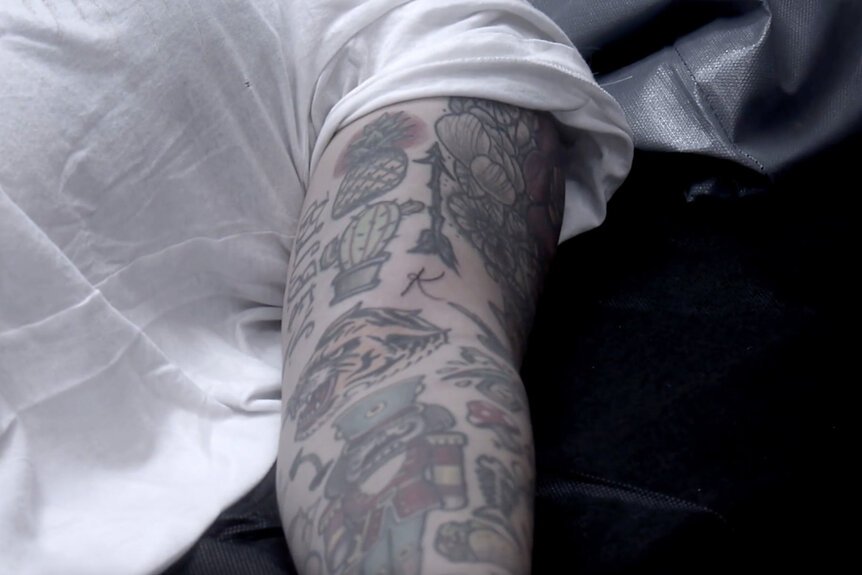
In 2023, Wade allowed Kyle Richards to tattoo her during a visit to a tattoo shop shown around The Real Housewives of Beverly Hills. The result was a cursive K on Wade’s arm. E! and Us Weekly both described the scene, including Wade’s joke that no one else could say they had been tattooed by Kyle Richards.
The circumstances are documented, but the meaning should be kept in proportion. The K is associated with Richards because Richards made it, yet the reports do not prove that it represents a romantic relationship or a private symbol beyond the friendship context discussed on the show. Bravo reporting also recorded explanations that treated the act as a spontaneous joke, which is why the tattoo belongs in the timeline without requiring a dramatic interpretation.
The K is also a reminder that Wade’s collection includes tattoos made in very different settings. Her siblings’ initials came from a youthful decision, while this mark came from a filmed social moment with a friend. Both are real entries, but their histories are not interchangeable.
Reading the record behind Wade’s collection
Wade told Inked that her collection stretches from her neck to her feet and includes old-school Sailor Jerry pieces, a fish bone and a French bulldog honoring her Frenchie, Chop. Those details establish a strong visual direction without pretending that the publication supplied a complete map of every tattoo.
The French bulldog has a named subject and a direct connection to Chop. The fish bone is identifiable as an object, but its personal meaning is not stated in the interview. The phrase old-school Sailor Jerry describes a style reference rather than proving that every traditional design was tattooed by Sailor Jerry or copied from one specific flash sheet. Those distinctions prevent a descriptive guide from becoming an attribution error.
During the K-tattoo report, Richards also referred to a trout and a roll of toilet paper among Wade’s many tattoos. They are useful catalogue clues, but the public reports do not consistently give their positions or meanings. They should therefore remain secondary entries, supported by the source but not inflated into invented stories.
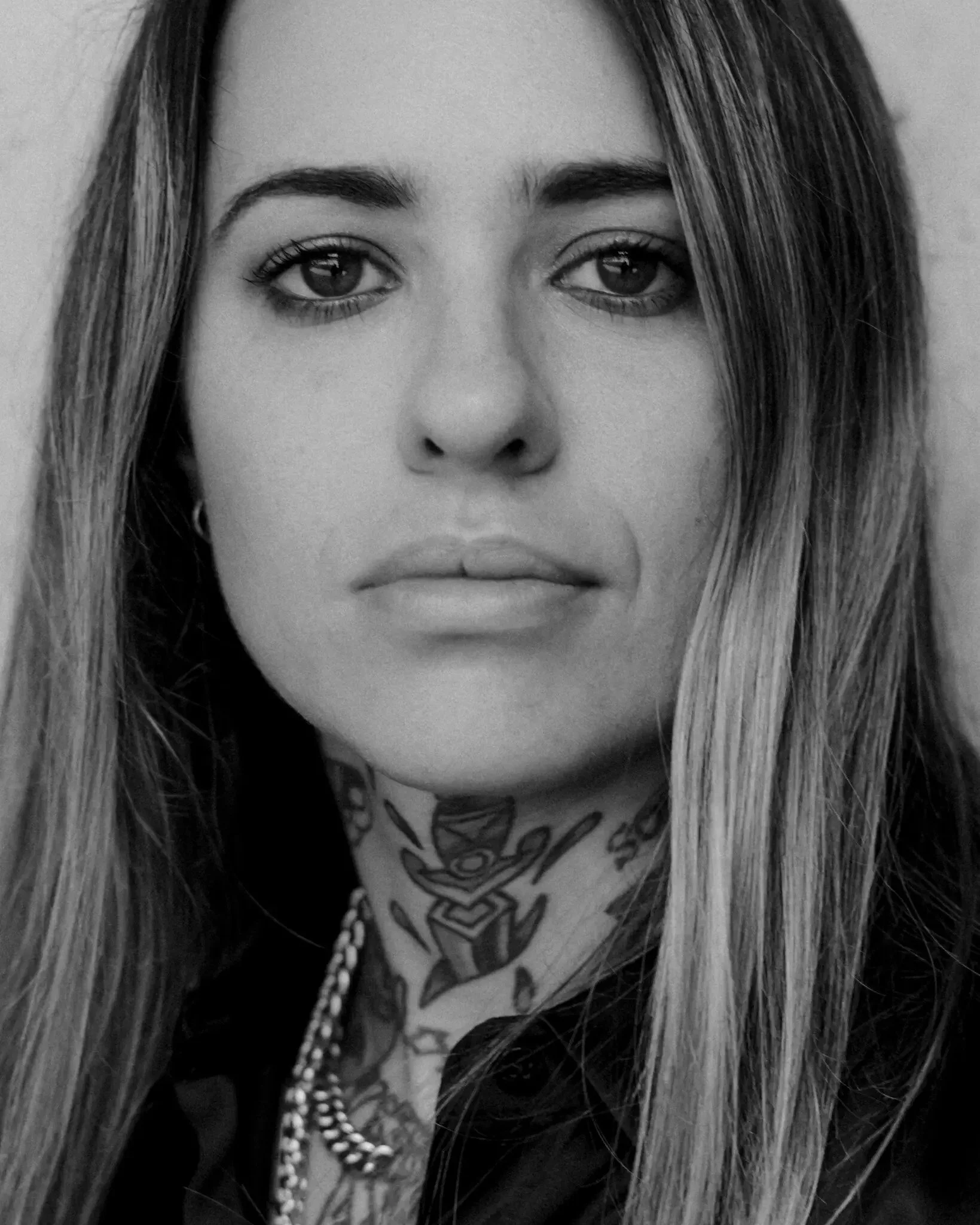
Photos of Wade’s neck, arms and hands show how closely the pieces sit together. A reader can see a coherent taste for bold outlines and compact imagery, but visual style is not the same as a confirmed biography for each mark. The best guide names what the source or image can support, then leaves the unknowns open.
What the available record can and cannot confirm.
Morgan Wade’s tattoo record is substantial, but it is not a catalogue published by Wade herself. The strongest confirmed anchors are the siblings’ initials, the Morton Salt girl, the K made by Kyle Richards, the French bulldog for Chop and the broader collection described in the Inked interview. The fish bone, trout, toilet-paper design and traditional pieces add useful visual context, even when no meaning has been reported.
That evidence hierarchy is important for readers comparing photographs. Start with the designs tied to a clear source, then use the image to understand how the surrounding pieces fit together. Do not assume that a small mark is a reference to a song, a relationship or a recovery milestone just because it appears beside a better documented tattoo.
Wade has also said that she has to be more careful with the space she has left. That comment captures the practical story of the collection: it grew through many separate decisions, and the remaining blank skin changes what can be added next. Her tattoos are best understood as a living archive of family, memories, friendships, pets and visual taste rather than as one code with a single key.
Future interviews or clearer photographs may identify more of the collection. Until then, the responsible account is the one that keeps the clearest designs specific and avoids assigning private meanings to the rest of the available evidence.