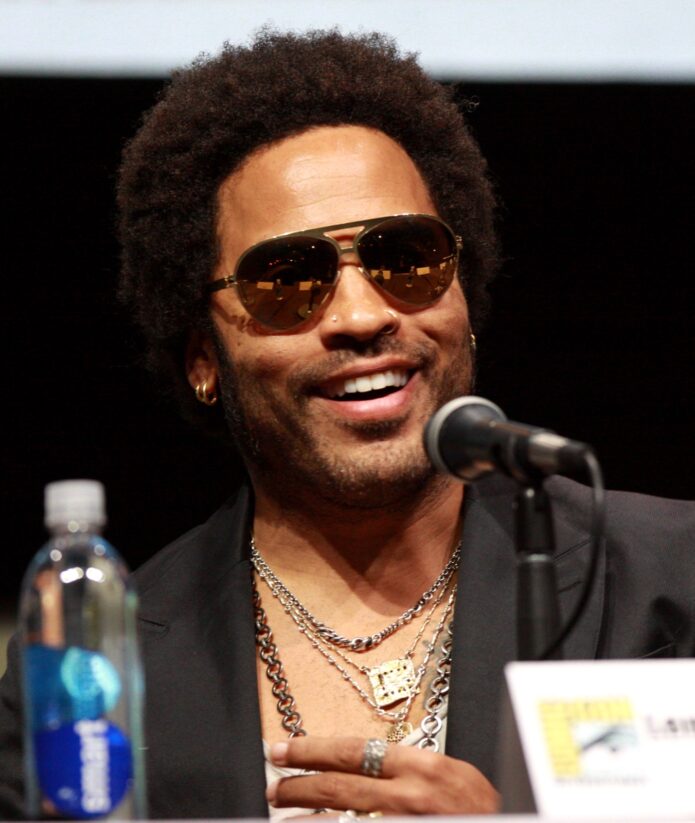
Lenny Kravitz’s tattoos are easy to recognise from a distance because several of them use broad shapes and readable lettering. The dragon across his upper body is the obvious visual anchor, but it is not the only design worth documenting. His collection also includes an arrow-like cross, words on his forearm, small hand and finger marks, and religious lettering on his back. The strongest guide separates what a photograph proves from what Kravitz has explained himself.
That distinction matters with a musician whose image is often discussed through style first. Close photographs can establish placement, shape and wording. They cannot automatically reveal when a design was made or what private memory sits behind it. The Robb Report interview is especially useful because Kravitz discussed the cross design in his own words, while the photo sources help locate the pieces that are difficult to see during a performance.
The dragon spreads from Kravitz’s chest into his left arm
The most prominent entry in Kravitz’s tattoo map is a large dragon that runs across the left side of his upper body. Published photo coverage shows the design moving from the chest toward the shoulder and upper arm rather than sitting as a small isolated emblem. The shape has the flowing body and curling movement associated with a Japanese-inspired dragon, although the guide should describe the visible design rather than assign a tattoo style more narrowly than the photograph allows.
The placement changes how the piece reads. A bare-shouldered portrait can show the head and body clearly, while a concert photograph may reveal only fragments around a vest or strap. The dragon therefore works as a composition that follows the anatomy. It is large enough to remain recognisable when part of it is hidden, but the full relationship between chest and arm needs a wider image.
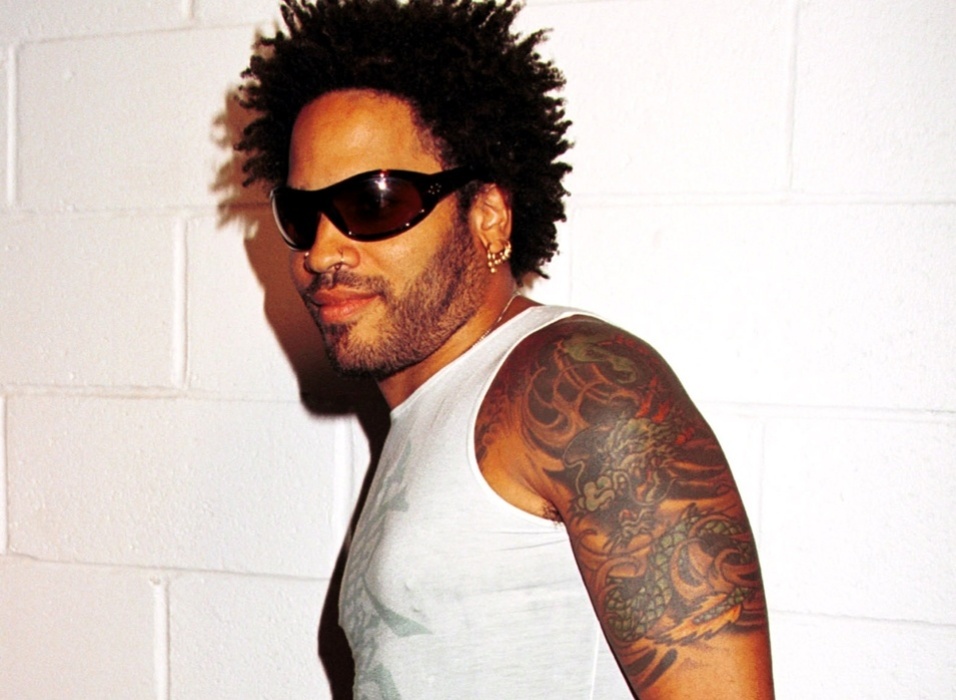
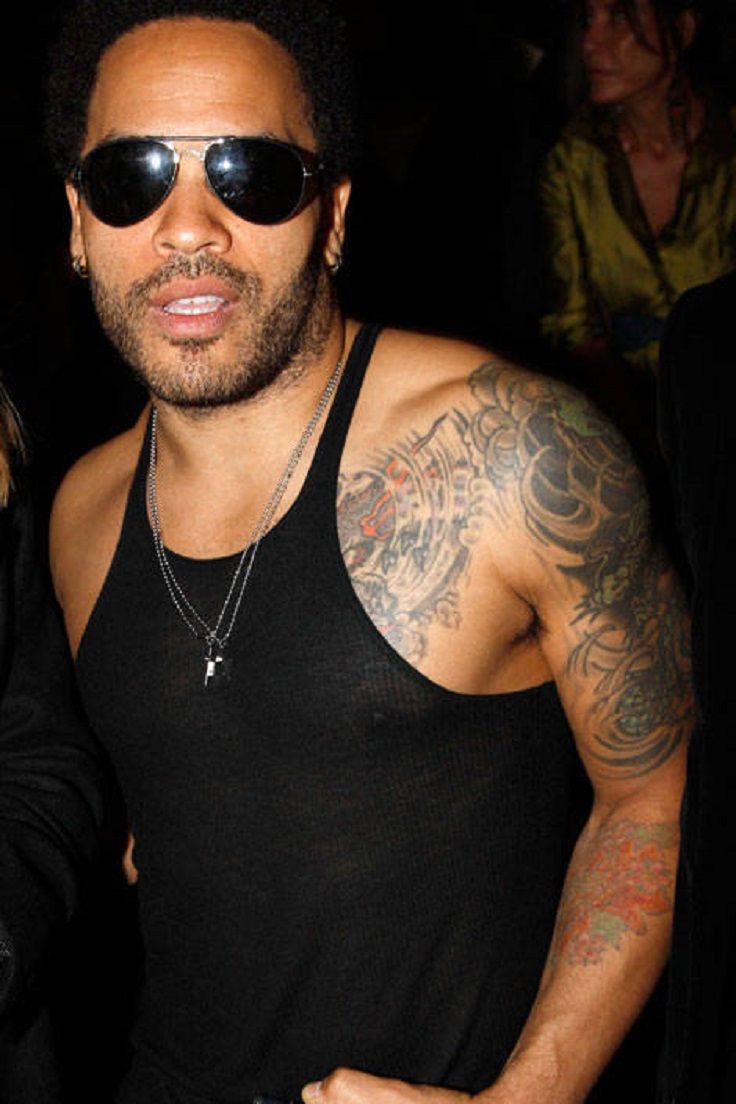
Secondary tattoo inventories also mention a second dragon motif near the chest, along with flowers on the left forearm. Those entries should be kept separate from the large arm piece because a repeated subject does not mean the photographs show one continuous tattoo. The useful fact is that dragon imagery appears more than once in Kravitz’s documented collection, while the exact chronology is less secure.
No reviewed interview supplies a complete private explanation for every line of the dragon. It is fair to discuss its scale, placement and visual language. It is not fair to turn the design into a confirmed statement about heritage, protection or spirituality without a source from Kravitz. The photograph is strong evidence for what is there; it is not a substitute for the owner’s explanation.
The arrow cross came from a drawing connected to faith
Kravitz has given the arrow cross more context than many of his other tattoos. In the Robb Report interview, he described drawing the design on a paper plate while he was working around the period of Are You Gonna Go My Way. He said he did not begin with a fully formed plan, but later connected the arrows with Christ consciousness moving in all directions.
That account makes the cross different from a symbol identified only by visual comparison. The shape can be seen in photographs, but the meaning comes from Kravitz’s own explanation. The design combines a central cross with directional points, so its geometry matters as much as its religious reference. It reads as an emblem designed to radiate rather than a plain cross copied from a standard template.
The source also shows why a tattoo guide should keep creative process and final interpretation together. Kravitz did not describe a long formal commission in the interview. He described an idea developing from a drawing, then gaining significance through his faith. That does not make the tattoo casual. It shows how a sketch can become a permanent symbol after the wearer understands what it means to him.
Photographs place the design among other work on the upper body, so it should not be presented as the single key to the whole collection. Kravitz has several kinds of tattoo language: large figurative work, plain words, small marks and religious imagery. The arrow cross is one well-supported chapter, not a complete biography of every tattoo he wears.
Free at Last is a clear forearm inscription
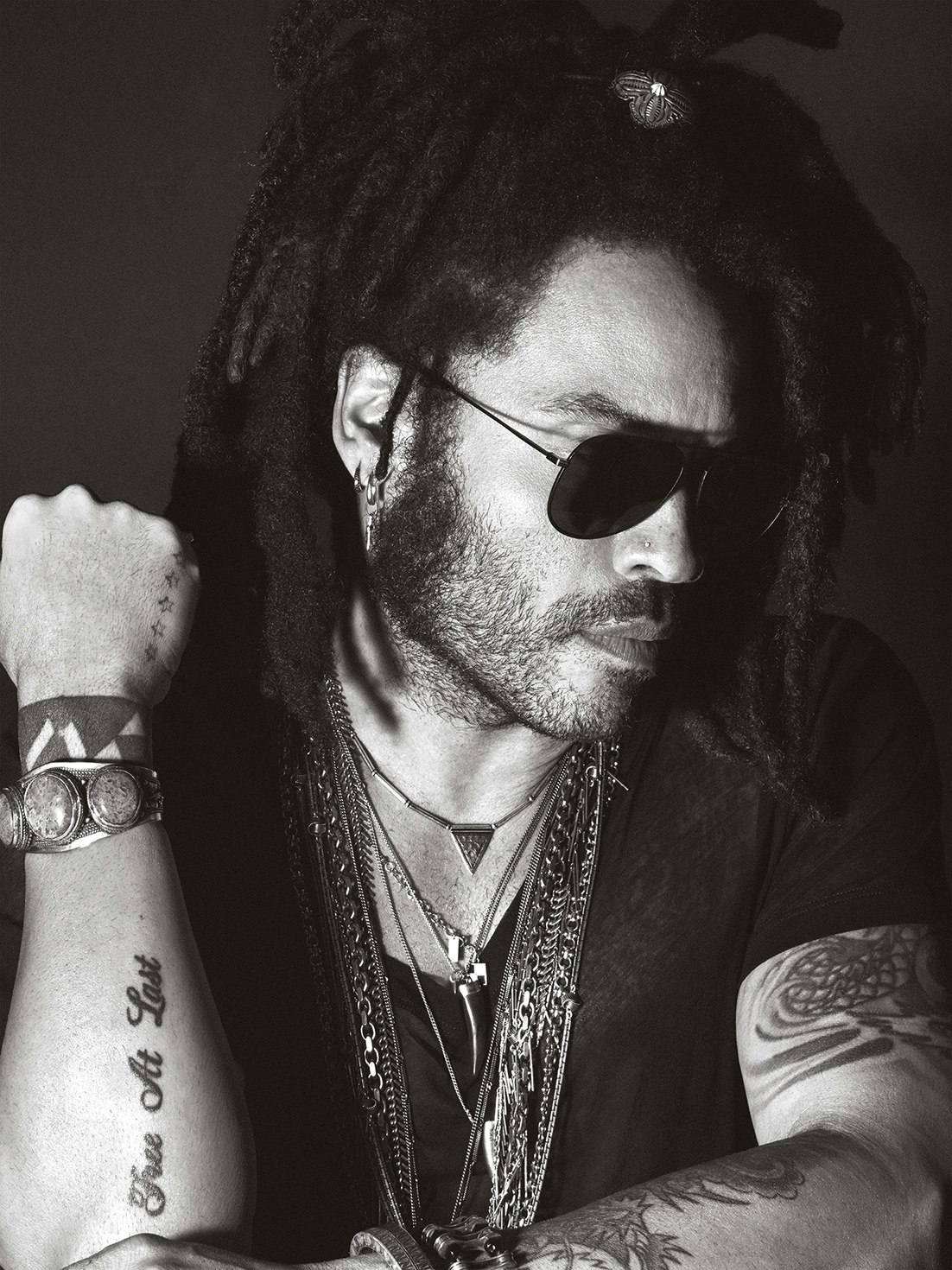
Free at Last is among the easiest pieces to read in a portrait where Kravitz’s forearm is visible. The words use a straightforward lettering treatment and sit in a location that often appears when he holds a microphone or rests an arm across his body. A campaign portrait can show the phrase more cleanly than a dark stage photograph, which is why the L’Officiel image is useful as a visual reference.
The wording carries an obvious emotional charge, but the reviewed sources do not provide a full account of the moment Kravitz chose it. The responsible description is therefore simple: the phrase is tattooed on the forearm and is repeatedly visible in published photography. Readers can discuss the words for themselves without the guide claiming a private event that has not been documented.
The phrase also sits within a broader pattern in Kravitz’s tattoo choices. He combines large images with words that can be read quickly. The lettering acts almost like a lyric or a sign, while the dragon requires a longer look because its body follows the shoulder and arm. Treating both pieces as identical would miss the contrast between text and figure.
Other reported designs include a Z on a finger, stars on the hands, a wrist band and flowers on the forearm. These smaller marks can be mentioned in an inventory, but a blurry group photograph should not be used to claim a precise shape that cannot be checked. The central guide remains the designs supported by the clearest images and direct comments.
Back lettering makes the religious thread more direct
Published tattoo inventories describe large lettering across Kravitz’s back that reads MY HEART BELONG TO JESUS CHRIST. Because back tattoos are difficult to see in ordinary interviews, this entry depends heavily on older shirtless photography and secondary image documentation. The wording itself is readable in the source material, but the timing and private circumstances are less firmly established.
The back piece sits comfortably beside the arrow cross when the evidence is kept precise. Both have an explicit Christian vocabulary, yet the guide should not claim that every other tattoo has a religious meaning. A cross can be interpreted from the wearer’s interview; a dragon remains a dragon unless Kravitz gives it a fuller explanation. That difference keeps the guide accurate without making it flat.
Kravitz’s tattoos are best understood through a mixture of image and testimony. The dragon shows how a large design can travel across the body. Free at Last shows the clarity of lettering. The arrow cross adds a documented idea about faith and direction. The back words make the religious language more visible, even though the photograph record is less consistent than it is for the forearm.
The collection is therefore not a puzzle with one answer. It is a set of designs made at different moments, documented unevenly and viewed through changing photographs. A useful guide names the tattoos readers can actually see, quotes the explanations that exist, and leaves unconfirmed details open rather than manufacturing certainty.