Musicians

Justin Bieber’s Tattoos: From the First Bird to His Lion and Wings

Justin Bieber’s tattoos are best understood as a record that grew in public. He has explained several early designs himself, while later photographs show a much larger chest, arm and torso composition. The useful distinction is between a tattoo Bieber has explained, a design that a reputable photograph clearly shows, and a meaning that has simply been repeated online.

The first bird started the collection

The first Justin Bieber tattoo was a small bird near his lower abdomen. In the GQ tattoo feature, Bieber connected it to a children’s book loved by his family, about a seagull that wanted to be more than a seagull. Complex also reported the same explanation. That makes the bird one of the rare pieces with both a clear origin in Bieber’s own account and a specific family reference.

The design is often described as a tiny first tattoo rather than a major visual centerpiece. That distinction matters because it shows how the collection began: with a small image carrying a story, before the dense arm and torso work that later made Bieber’s ink so recognizable.
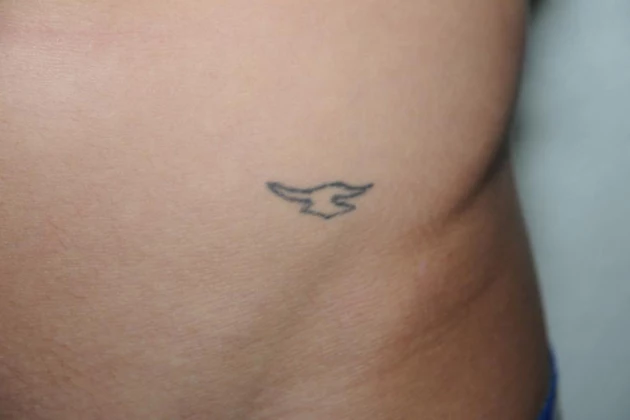
Justin Bieber showing the first bird tattoo near his lower abdomen

The owl anchors the forearm

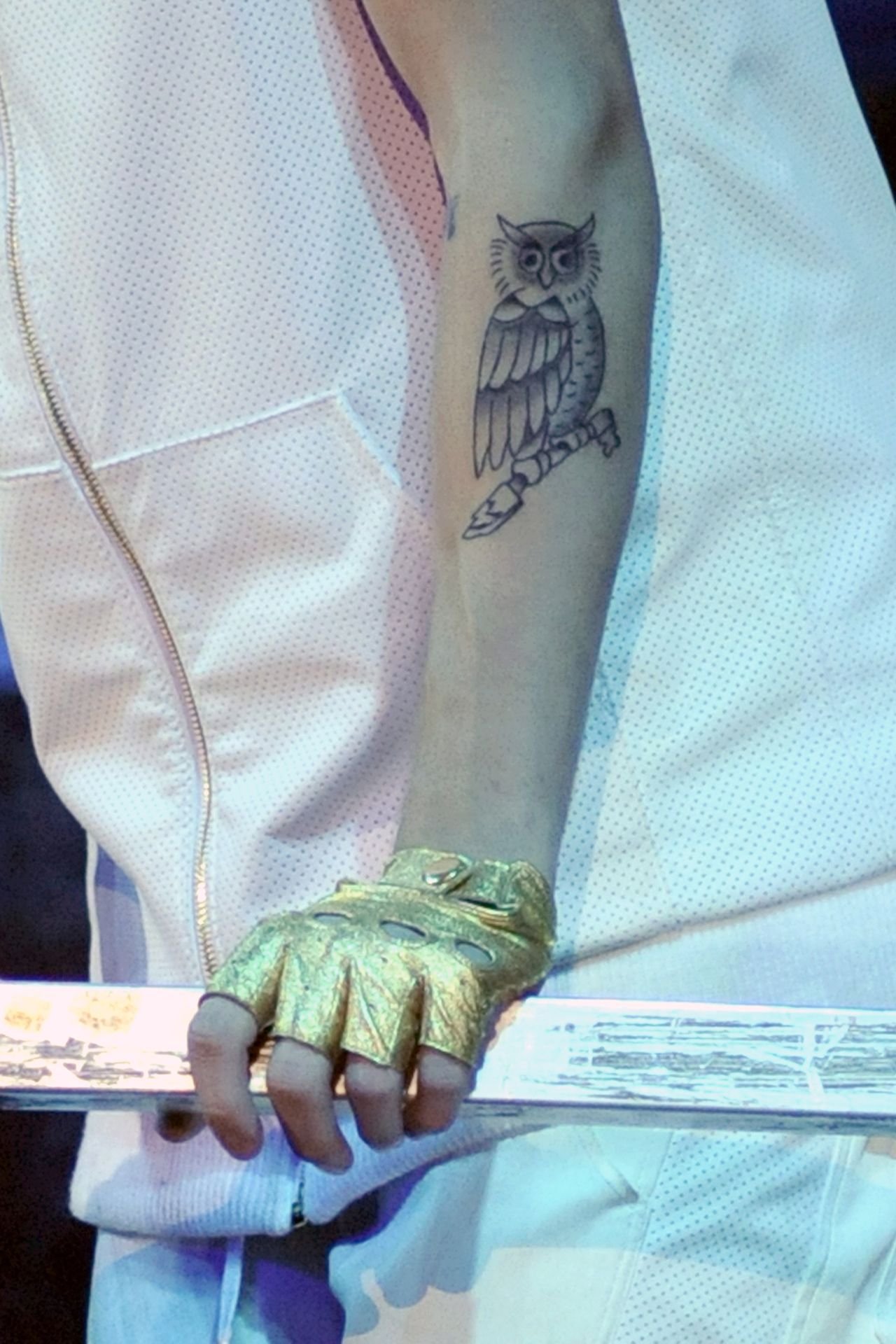
Justin Bieber showing the owl tattoo on his left forearm

An owl appears among Bieber’s forearm tattoos, and he described that design in GQ as signifying wisdom. The same interview and related coverage also discuss an eye associated with the idea of his mother watching over him. The two designs should not be collapsed into one symbol. They occupy the same broad visual area, but the reported explanations are different.

The owl is unusually straightforward because the meaning comes from Bieber’s own words. It is safer to keep the section focused on the owl rather than use a broad forearm photograph to claim that every nearby mark is equally clear.

Roman numerals across the chest mark his mother’s birthday

Roman numerals on Bieber’s chest represent his mother’s birthday, according to the GQ tattoo discussion. The design is a good example of why placement and meaning belong together. The numerals are not merely decorative old-style lettering; they encode a date connected to his family.

The tattoo sits within a chest that later gained larger animal and religious imagery. Older images can therefore look different from later portraits, not because the Roman numerals disappeared but because the surrounding composition became much denser. Any guide using one photograph should make clear which period it represents.
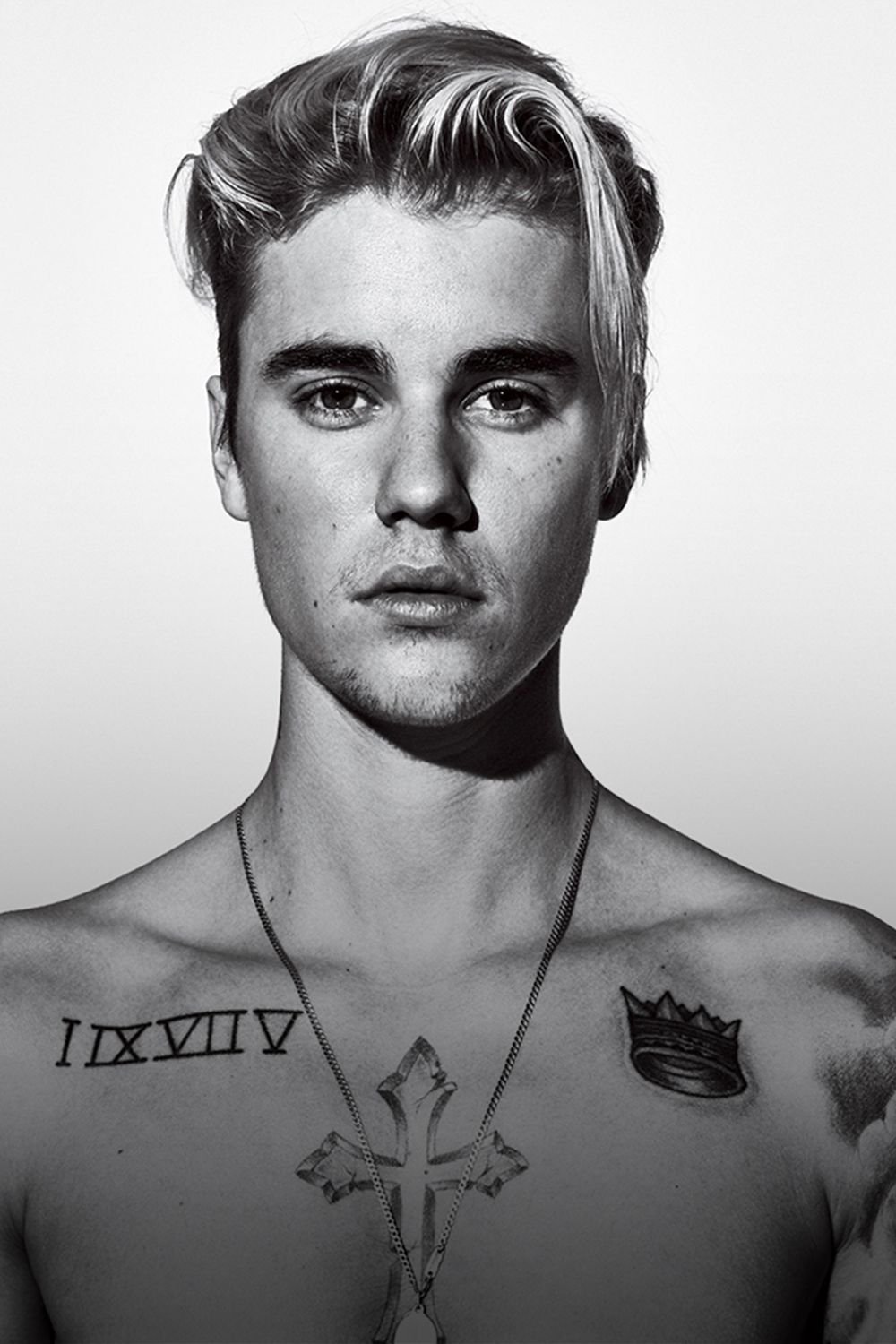
Justin Bieber showing Roman numerals and chest tattoos

The neck wings became a favorite piece

Complex reported that Bieber called the pair of wings across the back of his neck his favorite tattoo at the time of the GQ shoot. GQ described the wings as his most recent tattoo in its 2016 feature. The design gives the upper edge of the collection a clear focal point and connects with the bird imagery that appears elsewhere on his body.

The wings are a visual focal point rather than a design that needs an invented symbolic meaning. The useful facts are their placement, their paired shape and Bieber’s own description of them as a favorite.
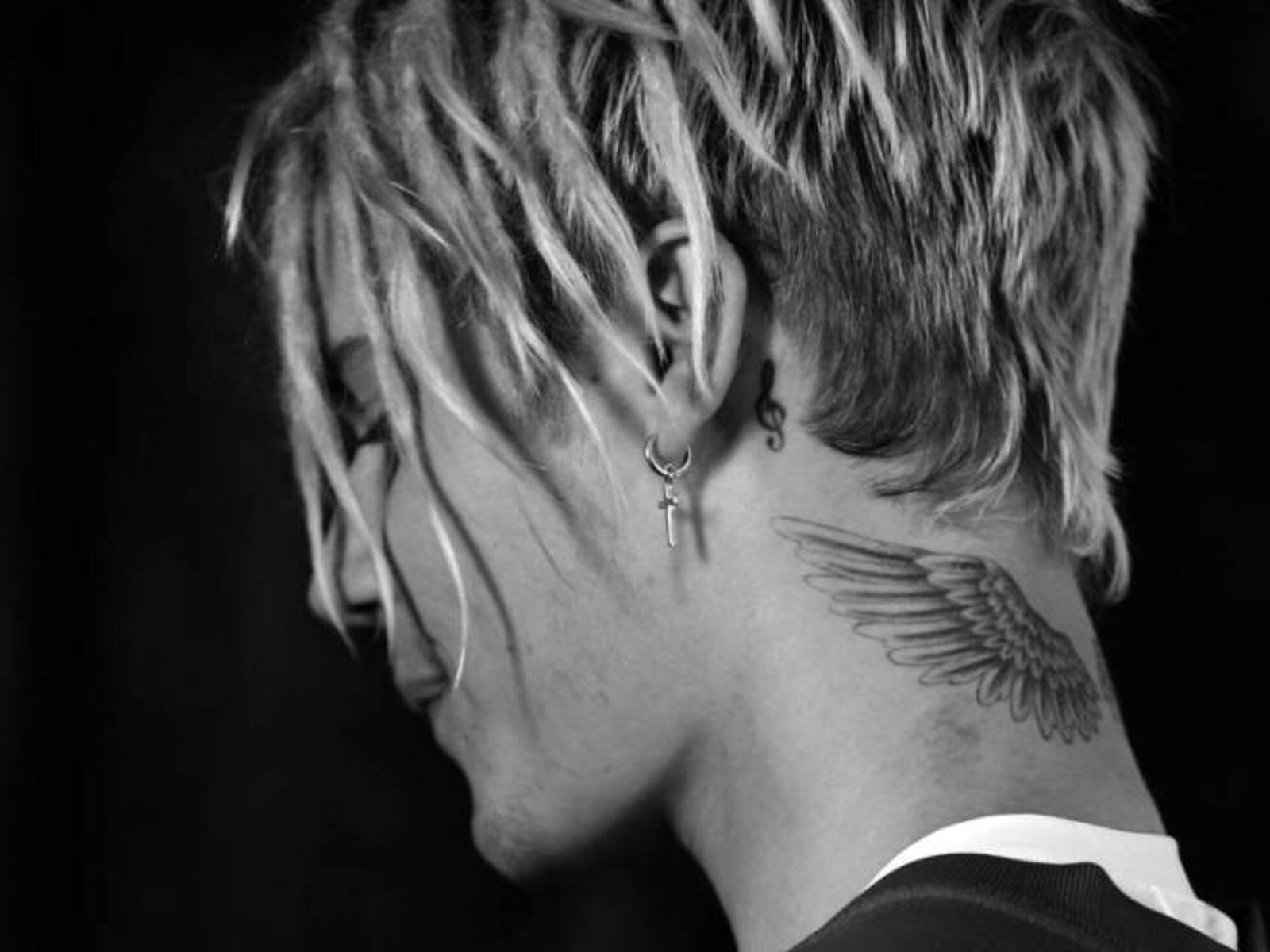
Justin Bieber showing the wings tattoo on the back of his neck

The lion, bear and Son of God lettering changed the torso
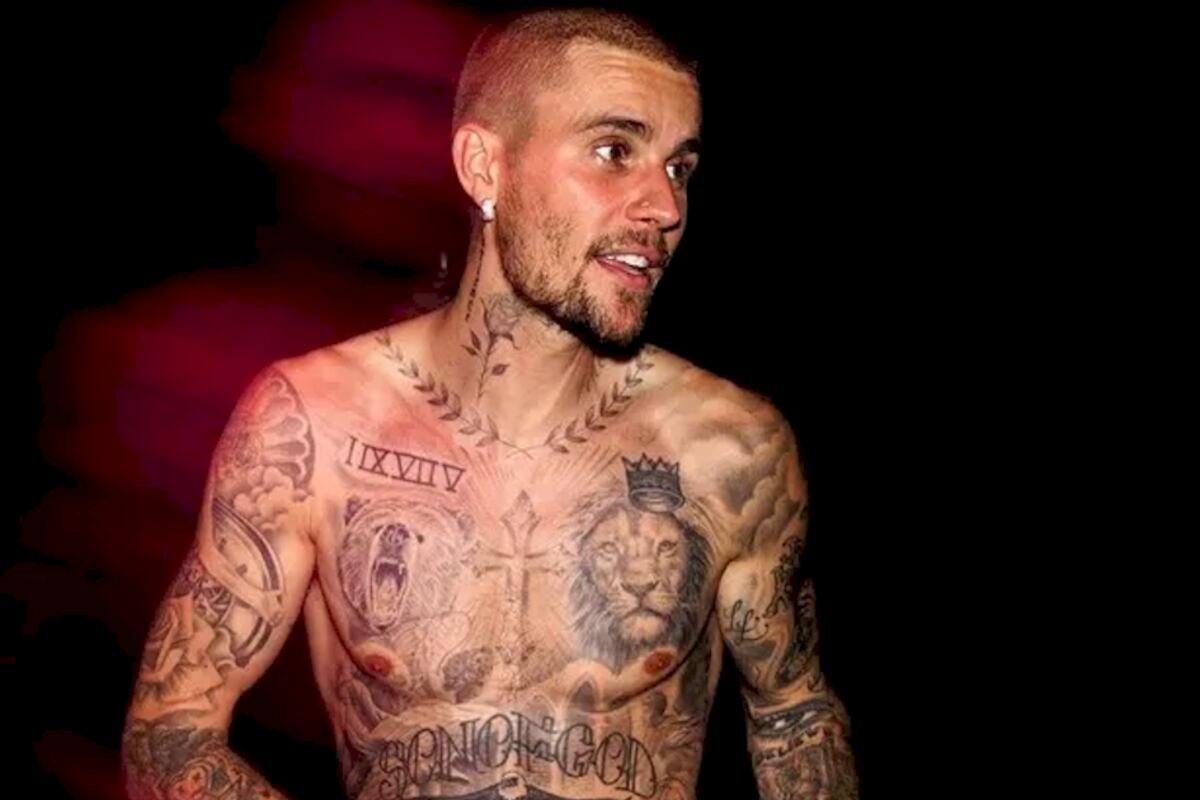
Justin Bieber showing the torso animals, lion and bear chest tattoos

By 2018, Vogue described Bieber’s body as carrying more than one hundred hours of tattoo work. The article specifically identified a roaring grizzly bear and a lion on the pectoral muscles, along with “Son of God” lettering above the abdomen. These designs form the most immediately recognizable part of the later torso composition.

Vogue’s account supports what can be seen and quotes Bieber’s enthusiasm for the overall work. It does not provide a private explanation for every animal. The lion and bear should therefore be presented as documented pieces, while the religious lettering can be named without claiming that every surrounding mark has the same meaning.

Reading the record without overclaiming

Bieber’s collection combines family references, symbols, religious imagery and large animals. He explained “LL” as a reminder to lift his head when it is low, while an X elsewhere was described as representing the unknown. Those smaller marks are useful context, but the accessible image record reviewed for this draft does not show them clearly enough to support a dedicated visual section. The same caution applies to two heavily discussed pieces: in 2016 he showed a small cross near the corner of his eye, and JonBoy gave a faith-related explanation for it, while Bieber also acknowledged a portrait associated with Selena Gomez that he had tried to shade over. The written record supports mentioning both episodes, but the accessible final images reviewed for this draft do not show either small design clearly enough to justify a dedicated visual H2. The strongest confirmed meanings are attached to the first bird, owl, Roman numerals, LL, X and the under-eye cross. The lion and bear are visually prominent, but the reviewed sources do not assign them a specific private story. That is not a weakness in the article; it is an accurate boundary.

The collection also changes with time. New work can surround older pieces, shading can alter a portrait and a crop can hide the smallest marks. A useful Justin Bieber tattoo guide therefore names the design, places it on the body, records the explanation when one exists and avoids treating every online caption as a statement from Bieber himself.

The chronology also helps explain why the photographs do not all show the same body. The first bird was deliberately placed where it would be discreet when Bieber was sixteen. The owl and the small motivational symbols belong to the earlier arm-focused record, while the Roman numerals remain readable inside later chest compositions. By the time the lion and bear were documented, the torso had become a much denser arrangement rather than a series of isolated flash-style designs. Treating each photograph as a dated view prevents a later image from being used as proof that an earlier tattoo had disappeared.

Frequently asked questions

What was Justin Bieber’s first tattoo?

It was a small bird near his lower abdomen, connected in his GQ explanation to a children’s book about a seagull wanting to be more than a seagull.

What do Justin Bieber’s Roman numerals mean?

He explained that the Roman numerals on his chest represent his mother’s birthday.

What does the cross under Justin Bieber’s eye mean?

The tattoo artist JonBoy said it represented Bieber’s journey in finding purpose with God.
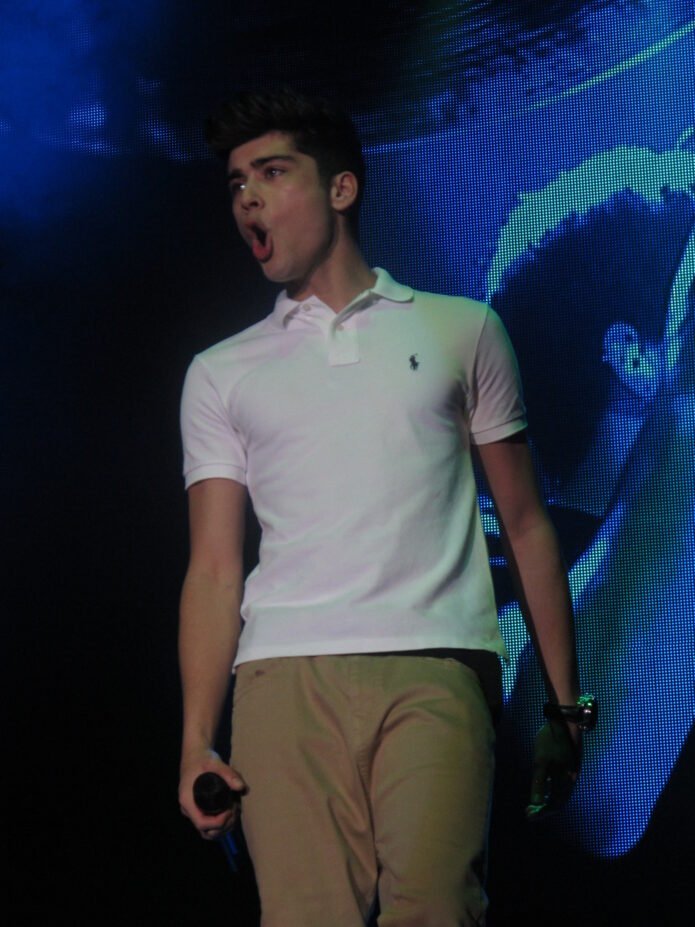
Zayn Malik’s Tattoos: The Designs Behind the Music

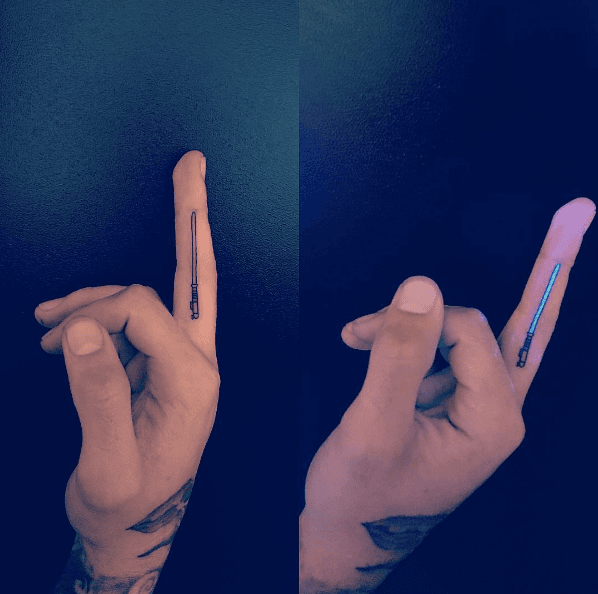
Zayn Malik’s tattoo record is easiest to understand as a series of specific designs rather than as a single fixed count. His collection changed quickly during the One Direction years and his solo career, while photographs often show only part of it. Some pieces have a clear subject or placement, such as the microphone on his forearm and the slim Star Wars lightsaber on his middle finger. Other entries come from specialist lists or photographs where the design is visible but the meaning is not confirmed. This guide keeps those categories separate.

The dates matter. Malik’s earliest public tattoos were small or strongly connected to family and music. Later additions became larger, more graphic and more difficult to catalogue, especially after he began covering his chest, arms and head. The sources used here support the designs and locations described below, but they do not support inventing a personal explanation for every mark.

The microphone tattoo anchors his early forearm work

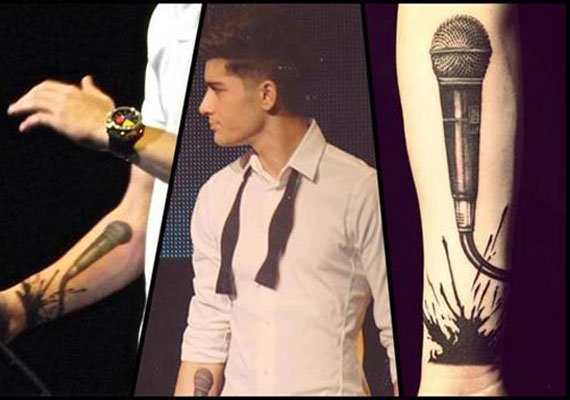
Zayn Malik microphone tattoo on his forearm

Malik’s microphone tattoo is one of the clearest links between his body art and his work as a singer. It sits on the inner forearm and was reported during the early One Direction period, when he was still talking publicly about wanting more tattoos. Photographs show a realistic microphone with dark shading and an ink-splash effect near the lower part of the design. The image is more useful than a generic performance photograph because the object itself can be examined.

The design does not need a complicated interpretation. A microphone is a direct musical reference, and contemporary coverage connected it with Malik’s ambitions and the way he was filling his arm. That is different from claiming that the tattoo represents one particular song or event. No reliable source reviewed here gives a longer official explanation, so the safe description is a music-related forearm piece with a clearly identifiable subject.

The comic-style ZAP! tattoo records a different side of the collection

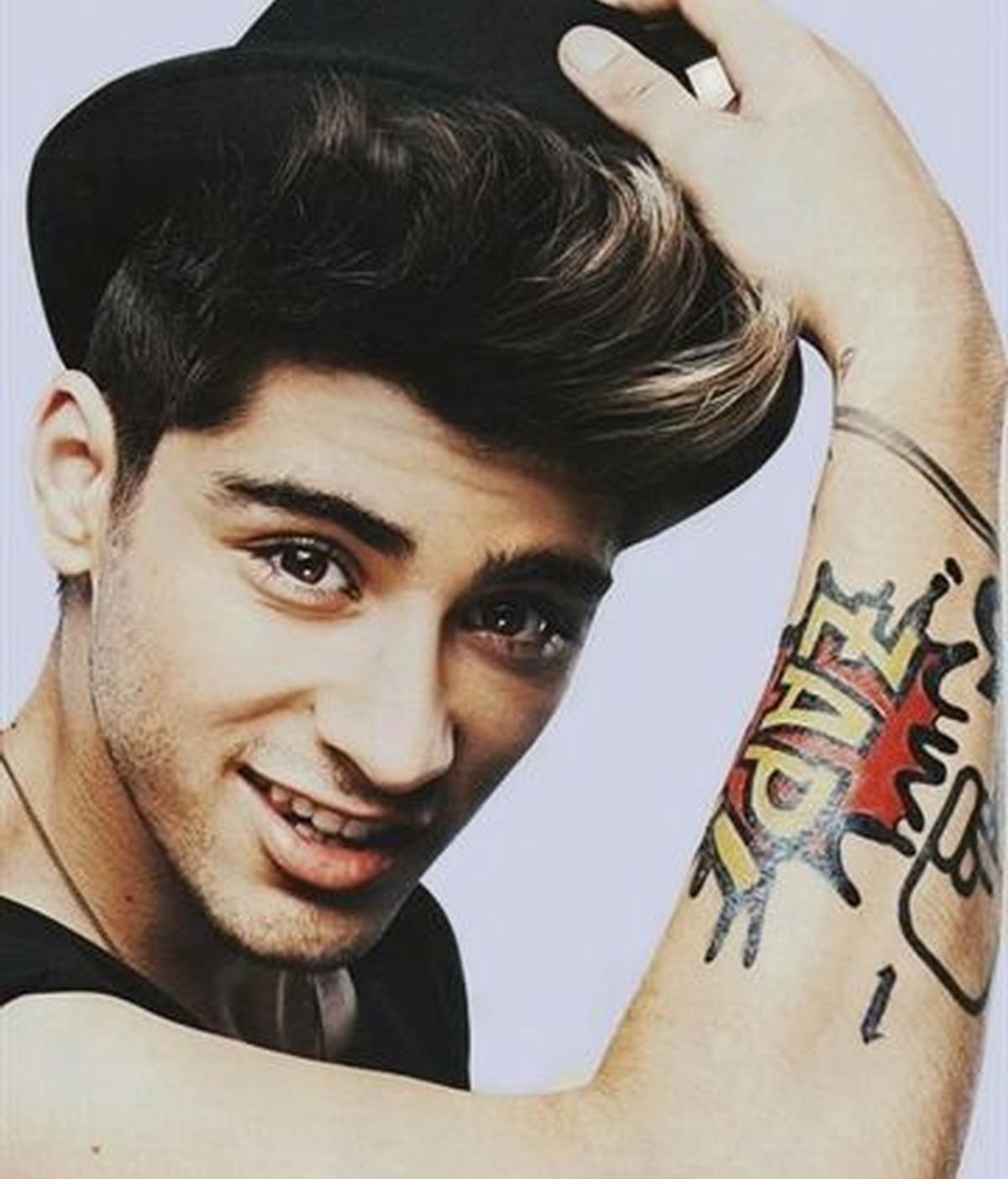
Zayn Malik ZAP! tattoo on his forearm

The bright ZAP! piece is visually unlike the surrounding forearm work. It uses comic-book lettering and a burst-like background on the forearm, giving the early collection a playful graphic element. Telecinco’s report treated it as a new addition and published a photograph in which the yellow lettering is easy to distinguish from the surrounding designs. The tattoo is sometimes listed beside numbers and initials associated with Malik’s early career, but those neighbouring marks should not automatically be treated as one design.

It is tempting to assign a large symbolic meaning to a comic word. The evidence does not support that. ZAP! may reflect Malik’s interest in comic imagery, and the style is consistent with the period’s colourful forearm work, but the sources reviewed do not record a statement from Malik explaining why he chose that word. The article therefore identifies what can be seen, gives the date context that is available, and leaves the personal meaning open.

Arabic Walter chest script and the ram skull show how the record changed

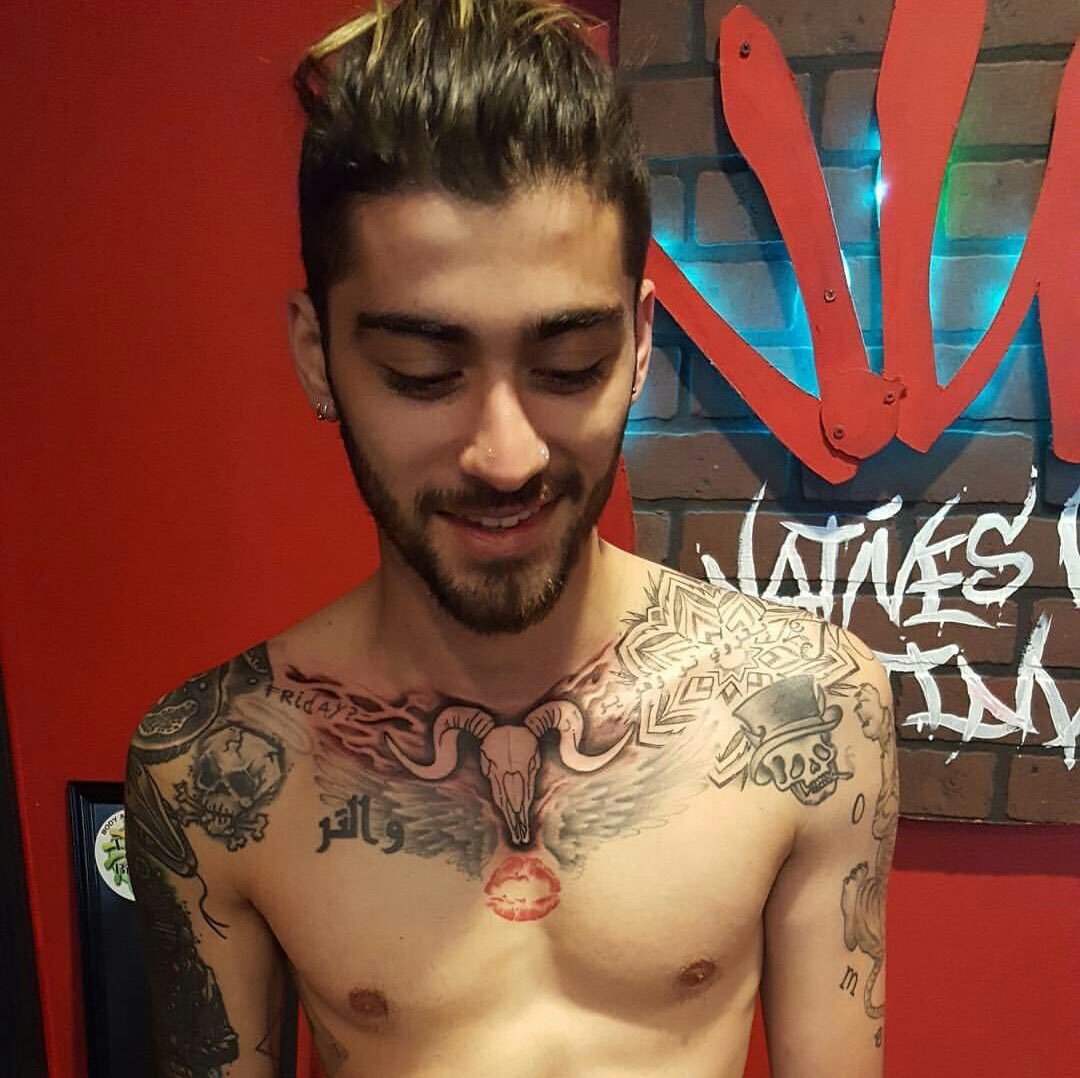
Zayn Malik Arabic Walter tattoo and ram skull chest tattoo

One of Malik’s earliest reported tattoos is Arabic script on the upper right side of his chest. Tattoo references translate the word as Walter and identify it as his maternal grandfather’s name. That family connection is repeated across several specialist lists, making it a stronger claim than a fan interpretation of an abstract symbol. The lettering is best described as a family-name tattoo. Transliteration and Arabic calligraphy can vary in presentation, so the original script should be shown rather than treated as an English slogan.

The same area later carried larger work. A ram skull with wings and additional lettering was shown in photographs from a tattoo-studio setting, and coverage dates a major chest addition to 2017. The available photograph establishes the visual presence of a large skull-and-wings composition, but it does not settle every meaning attributed to it online. It also demonstrates why a tattoo list can become outdated: a newer piece can sit beside, cover or visually dominate earlier script.

Malik’s chest photographs also include designs that have been linked by entertainment coverage to relationships and personal periods. Those links need careful wording. A portrait can show the design, while a tabloid caption may speculate about its meaning. This guide treats the Arabic family name and the ram skull as documented visual entries, but does not turn unconfirmed relationship theories into facts.

The UV lightsaber is his most distinctive small tattoo

Zayn Malik UV lightsaber tattoo on his middle finger

In July 2016, tattoo artist JonBoy revealed a slim lightsaber on the inside of Malik’s middle finger. TIME, GQ, E! and Teen Vogue all describe the design as a Star Wars reference, and the artist’s post identified UV ink. Under ordinary light the tattoo is discreet; under ultraviolet light the blade glows blue. That technical detail is part of what makes the piece unusual, not a reason to overstate it as a permanent neon effect in everyday photographs.

The placement also explains why the tattoo became so widely reported. Malik displayed the finger in the photograph, making the scale and location clear. The design is small, but its subject is specific and its creator is documented. JonBoy’s involvement is supported by the contemporary reports, while the commonly repeated phrase about the Force comes from the artist’s caption rather than a quoted statement from Malik about his personal beliefs.

The lightsaber fits a wider pattern in Malik’s collection: a recognisable cultural reference can sit beside family lettering, musical imagery and abstract symbols without sharing one explanation. It is more accurate to describe this as a Star Wars-inspired UV finger tattoo than to claim it reveals a complete theory of his personality.

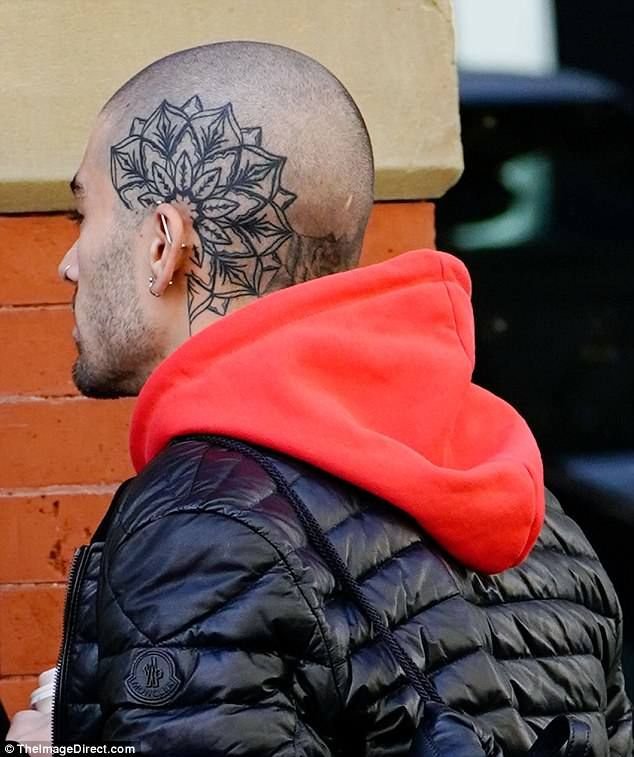
The mandala head tattoo moved the collection beyond the usual placements

Zayn Malik mandala head tattoo on the side of his shaved head

In 2018, photographs showed Malik with a large mandala-style design on the side of his shaved head. Tattoo references connect the work with artist Janice Danger, and the image makes the location clear: the pattern spreads across the scalp above and behind the ear rather than sitting on a conventional arm or torso panel. The floral and geometric lines are substantial enough to be treated as a major design in their own right.

Head tattoos are also difficult to date from photographs because hair length changes their visibility. A shaved head can reveal a pattern that disappears beneath longer hair, while an older photograph may make the piece look smaller than it is. The safest record is therefore the design, location and reported date, followed by the limitation that current visibility can change. The sources reviewed do not give a confirmed personal meaning for the mandala, so the article does not invent one.

Reading the record without overcounting

Across the record, the strongest evidence comes from dated photographs, direct artist posts and contemporary reporting. Different years reveal different parts of Malik’s body, so no single source provides a perfectly reliable total. Meanings are stated only where a source directly reports them, while uncertain interpretations remain labelled as uncertain.

Readers should also separate permanent tattoos from temporary artwork, album imagery and designs that were reported before later additions changed the view. A source that says a design was visible in 2012 is not proof that the same design looks identical today. Where meaning comes directly from a source, it is identified. Where a meaning is only repeated by fan pages, it remains unconfirmed.

Frequently asked questions

Who tattooed the lightsaber?

Contemporary coverage identifies New York tattoo artist JonBoy as the artist associated with the UV lightsaber on Malik’s middle finger.

What does the Arabic chest tattoo say?

Specialist tattoo references identify the Arabic script as Walter, the name of Malik’s maternal grandfather. The article keeps that attribution separate from designs whose meanings are not documented.

Does every listed design still look the same?

No. Malik’s collection changed over time, and photographs vary in angle, lighting, hair length and the amount of skin visible.

Lil Uzi Vert’s Tattoos: Faith, Face Ink and the Changing Forehead

Lil Uzi Vert’s tattoos are often discussed alongside dramatic hair, piercings and jewelry, but the ink itself has its own history. The rapper’s face became a visible record of changing ideas, from the early word Faith to later symbols and full-forehead work. A careful guide also needs to separate tattoos from the pink diamond that was attached to the forehead in 2021. The diamond was jewelry and body modification, not a tattoo.

Dates matter because Uzi’s appearance changed quickly. A close-up from one year may show lettering that is covered, changed or hidden in a later photograph. The public record also mixes direct explanations with fan interpretations, so this guide keeps visible designs and documented context separate.

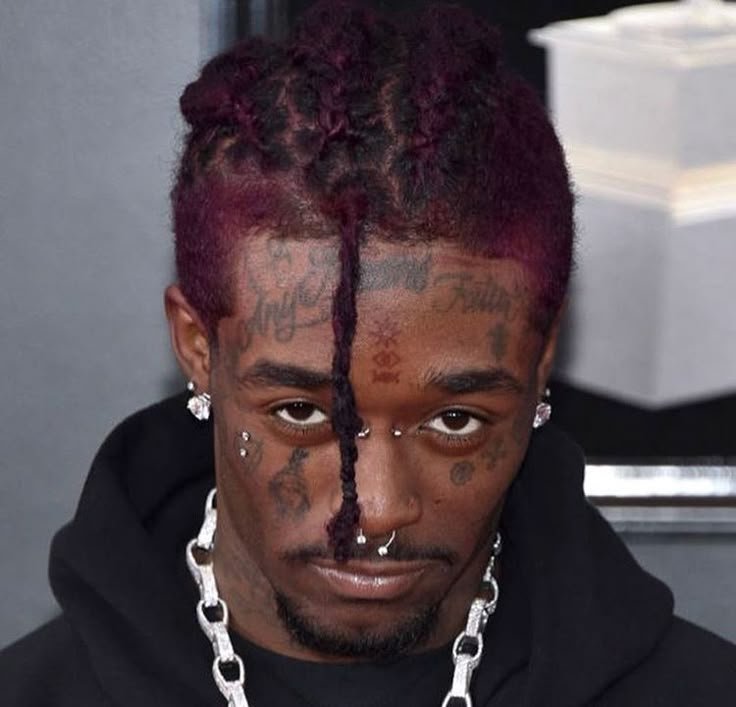
Faith was Lil Uzi Vert’s first face tattoo

Lil Uzi Vert Faith lettering and facial symbols

The Faith lettering is reported as Lil Uzi Vert’s first face tattoo. Biographical records connect the word with a period when Uzi wanted to take rap more seriously. It sits under the hairline and appears as cursive lettering in early photographs. That placement makes it a useful starting point for understanding the later facial work.

The reported meaning is more specific than a generic claim that the tattoo represents spirituality. The available record connects the word with Uzi’s career motivation. It does not establish every private reason behind the choice, and it does not mean that later symbols all have the same religious explanation.

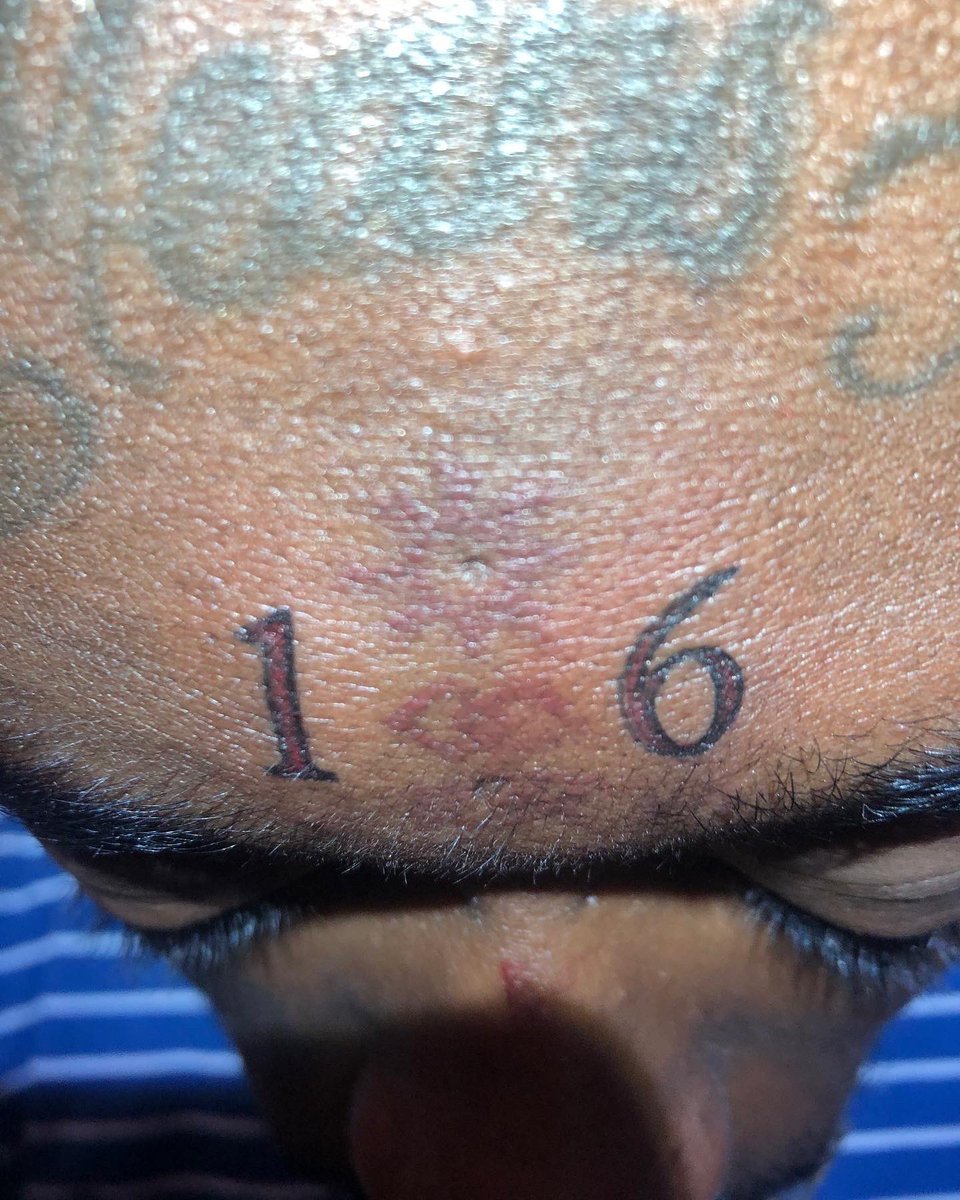
The number sixteen belongs to a later visual phase

Lil Uzi Vert number sixteen forehead ink

The number sixteen appears in close-up photographs from a later period. The number is positioned above the eyebrows and is visibly distinct from the earlier cursive lettering. The image record confirms the number and location, while the sources reviewed here do not establish a definitive personal explanation for why Uzi chose it.
A number can be especially easy to overinterpret. It may refer to a date, a private association or a creative image, but none of those possibilities should be presented as fact without a direct statement. The useful catalogue entry is therefore simple: a visible 16 on the forehead during the documented period.
Small facial symbols are easier to verify in close-up photographs

Lil Uzi Vert facial symbol tattoo

A facial symbol tattoo and other small symbols appear in close-up images of Lil Uzi Vert. The rose is visible in the source photograph, but the public material reviewed for this article does not provide a confirmed meaning or tattooist. It is better to describe the design than to attach a standard rose-tattoo interpretation to it.
Facial photographs also create identification problems. Makeup, shadows, piercings and hair can make a mark look different from one image to the next. A clear source photograph can support the existence and approximate position of a design, but it cannot automatically establish when it was made or whether a later cover-up changed it.

Further notes on the dated record

Frequently asked questions

The 2023 forehead mandala changed the outline of the collection.

In 2023, coverage from Inked and XXL described a new black-and-grey forehead mandala pattern. The reports connected the piece with Los Angeles artist Yatzil Elizalde and described the design as covering a substantial portion of the forehead. This is a later addition to the timeline, not a replacement explanation for the earlier Faith tattoo.

The mandala also demonstrates why current images matter. A photograph showing only the eyes or hairline may hide the extent of the design, while a front-facing close-up makes the geometry easier to examine. The artist attribution should remain limited to this reported forehead work rather than being applied to all of Uzi’s facial tattoos.

The pink diamond was not a tattoo.

Uzi’s famous pink diamond was attached to the forehead in 2021 and later removed after it was torn during a performance. GQ’s reporting focused on the risks and mechanics of the attachment, while later coverage reported Uzi’s plans to reinstall it. That timeline belongs in an article about the face because the jewelry changed how photographs were read, but it should not be added to the tattoo inventory.

The distinction is practical. A tattoo is ink beneath the skin; the diamond was a separate piece of jewelry or implant. Treating both as one design would blur the history and make the article less useful for readers who are specifically researching Lil Uzi Vert tattoos.

Frequently asked questions

The public record shows a progression from a first forehead word to additional symbols, numbered ink and later large-scale work. It does not provide a complete official list or a confirmed meaning for every mark. Images should therefore be dated where possible and tied to the design they actually show.

Faith has a reported career context, the 16 is a documented number with an open meaning, the rose is a visible face design without a confirmed explanation, and the mandala has a reported artist and date. Keeping those levels of evidence separate gives readers a more accurate picture than a list that assigns a story to every line.

Lil Uzi Vert’s tattoos remain part of a changing visual identity. The strongest guide will update the inventory when a clearer photograph or direct explanation appears and will continue to separate ink from jewelry, speculation from reporting and one era from another.

The timeline also explains why descriptions from different outlets can appear to conflict. One source may focus on the early hairline lettering, another on the later forehead coverage and another on jewelry that was present for only part of the public record. Those are not necessarily contradictory accounts. They can be snapshots of different stages, and a good inventory should preserve the date attached to each one.

Visual evidence should be handled with the same care. A close photograph can establish that a symbol or word was visible, while a report from an artist can establish who made a particular piece. Neither source automatically establishes an emotional meaning. Where Uzi has not explained a design, the most accurate description is the design, its location and the period in which it was photographed.

That approach also makes future updates easier because new photographs can be added without rewriting established facts.

Miranda Lambert’s Tattoos: Winged Pistols, an Arrow and a Paw-Heart

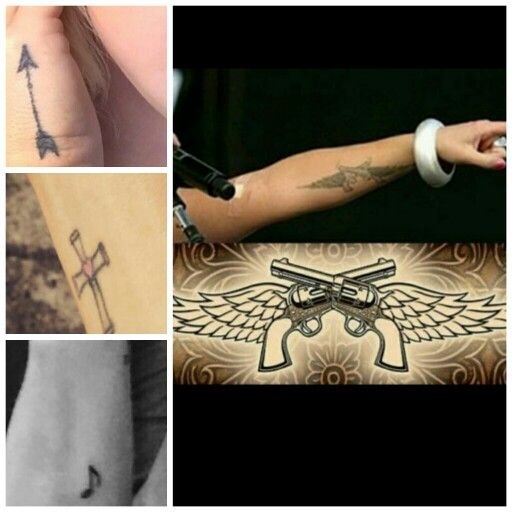
Miranda Lambert’s tattoos are small in number compared with the large sleeves worn by many musicians, but each documented design has a clear place in her life and career. Her ink includes a paw print for animal welfare, an arrow connected with guitarist Scotty Wray, and a pair of winged pistols that celebrate her first gold record. Reading those pieces together is more useful than treating them as a random list of decorations.

Lambert has discussed the stories behind several tattoos in interviews, while close photographs make the placement and designs easier to check. The sources do not establish a complete official inventory of every mark she may have added over time, so this guide separates directly reported meanings from details that are simply visible in photographs.

The winged pistols mark Lambert’s first gold record

Miranda Lambert showing the winged pistol tattoo on her forearm

The most distinctive design in Lambert’s tattoo record is the pair of pistols with wings on her forearm. The guns are drawn in black ink and surrounded by feathered wings, giving the piece a mixture of country-western imagery and a playful angel reference. The design was created by her friend Amie Sikes at Junk Gypsies.

Lambert has explained that the tattoo commemorates her first gold record. That context makes the pistols more than a generic music symbol. The weapons fit the visual language of country music and her public image, while the wings connect the design to the phrase “angel and little pistol” used when describing the persona Sikes captured.

The placement is useful when comparing photographs. The tattoo sits on the forearm, where it can be seen when Lambert wears sleeveless clothing or raises her arm onstage. A distant concert photograph may show only the outline, but a closer image reveals the separate wing and pistol elements. The tattoo is therefore best described as a specific forearm composition rather than as a vague gun tattoo.

The arrow remembers guitarist Scotty Wray

Miranda Lambert showing the paw-heart tattoo on her foot

Lambert’s arrow tattoo has a different kind of history. She has connected it with Scotty Wray, the guitarist who worked with her and later died. The arrow is a simple design, but its meaning comes from the person and period attached to it rather than from an elaborate picture.

The public record does not require the arrow to be interpreted as a general sign of moving forward. That reading is common in tattoo culture, yet Lambert’s own reported connection to Wray is the stronger evidence. A careful description keeps the design, location and tribute together without expanding the meaning beyond what has been reported.

Photographs place the arrow among the small pieces on Lambert’s arm and hand. The exact angle can make the lines appear longer or shorter, especially when her hand is turned. That is why a dated close photograph is more useful than a stylized tattoo list. It shows the direction of the arrow while avoiding a false claim about changes in the design.

The arrow also shows how Lambert’s tattoos function as reminders of working relationships. Her collection is not built around one uniform style. Some pieces are colorful, some are minimal, and some use recognizable music or western imagery. The common thread is that the designs are attached to specific memories.

A paw print connects the ink to MuttNation

Miranda Lambert showing a colorful heart tattoo on her forearm

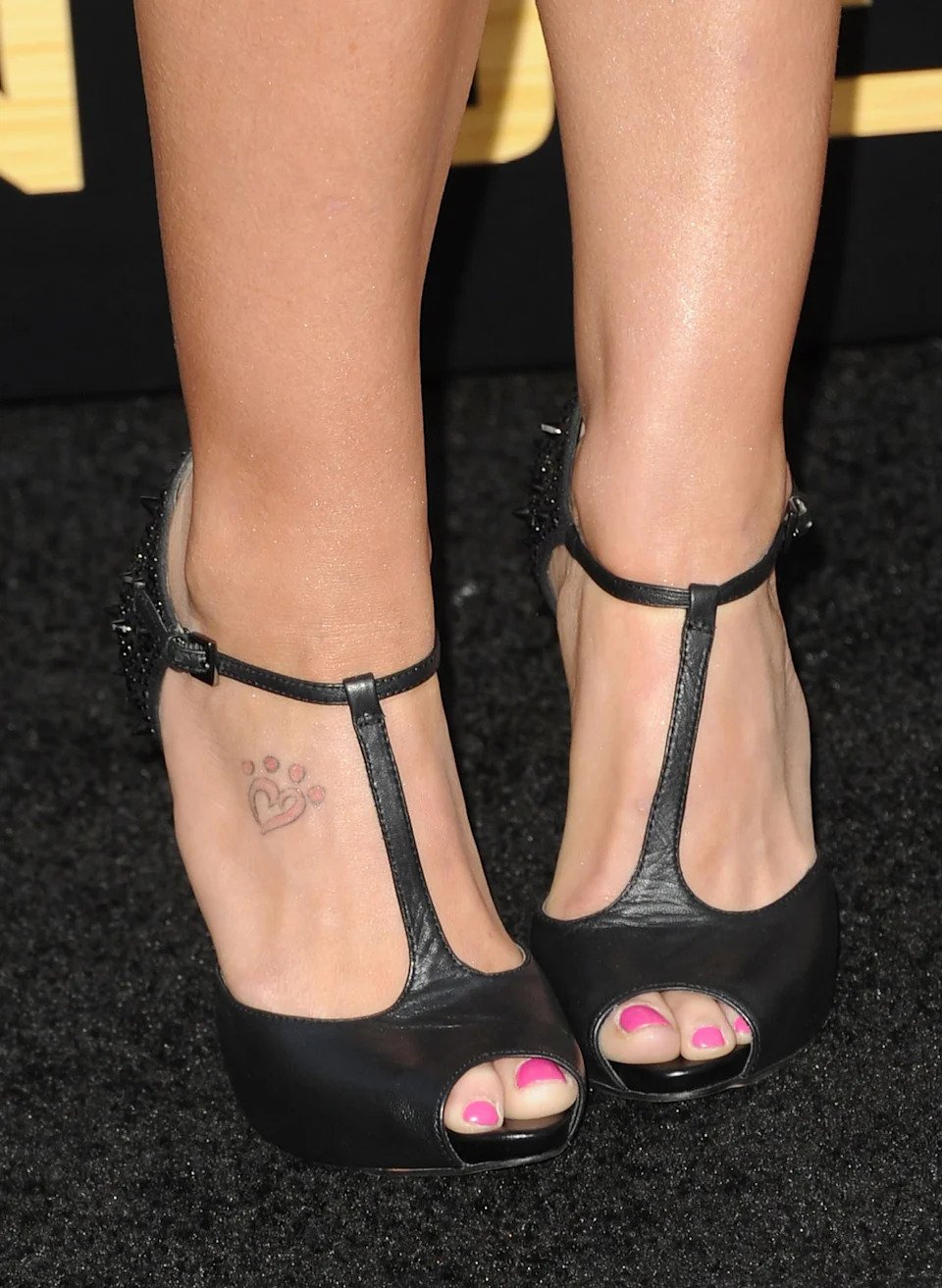
Lambert’s paw-heart tattoo is associated with her love of animals and the MuttNation Foundation, the rescue organization she founded with her mother. The small design is placed on the foot and uses a heart shape with paw-print details. It is easy to miss in ordinary event photographs because shoes and sandals often cover the area.

Lambert has described getting the foot tattoo around 2011, before her marriage to Blake Shelton, and has spoken about its connection with her rescue work. The timing and the foundation link are the useful facts. The design should not be treated as evidence that every animal-related project is represented by a separate tattoo.

The foot placement gives the piece a different visual role from the forearm tattoos. It can be shown clearly in a close-up, but a full-body photograph usually cannot prove its exact shape. Readers comparing images should look for the heart and paw pads rather than relying on a caption that merely says Lambert has a foot tattoo.

The design also fits the practical identity of MuttNation. Lambert’s tattoos often connect a private affection with a public project, but the source record still matters. The paw print is documented as a symbol connected with dogs and rescue work; finer claims about every line or color should remain cautious when the photograph is small.

Other small tattoos add family, faith and music references

Lambert’s reported collection includes additional small designs, including lettering and music-related marks. These pieces are less consistently documented than the winged pistols, arrow and paw-heart, so they should be handled as secondary inventory entries. A tattoo list can mention a visible mark without pretending that its meaning has been confirmed.

That distinction matters because celebrity tattoo galleries often repeat one another. A phrase from an old article can be copied into newer lists even after the design has faded, changed or been photographed from a poor angle. The most reliable approach is to match a description to a clear image and identify whether the meaning came from Lambert or from an outside interpretation.

Color is another useful part of the record. The winged pistols and other forearm imagery can appear different under stage lighting, while the paw-heart is usually seen in close photographs of the foot. Those are photographic differences, not necessarily evidence of new tattoos. Dating the image is the simplest way to keep the timeline coherent.

Lambert’s tattoos form a compact record of animals, music, friendship and career milestones. The winged pistols represent the first gold record. The arrow is tied to Scotty Wray. The paw-heart reflects her rescue work and affection for dogs. The strongest guide identifies each design, shows where it sits, records the meaning Lambert has actually given it and leaves unsupported details open.

These documented anchors give readers a clear way to compare Lambert photographs while keeping reported meaning separate from visual guesswork.

The Tattoos Miley Cyrus Has Collected Over the Years

Miley Cyrus’s tattoo collection is a dated mix of music references, family tributes, small symbols and fine-line lettering. The clearest public explanations belong to a handful of designs: a Pixies lyric on her upper arm, the number 1961 on her hand, a matching chest tattoo with Wayne Coyne, and the planetary tattoo that she initially called Jupiter. Other pieces are visible but have no confirmed meaning.

The Pixies lyric on Miley Cyrus’s upper arm

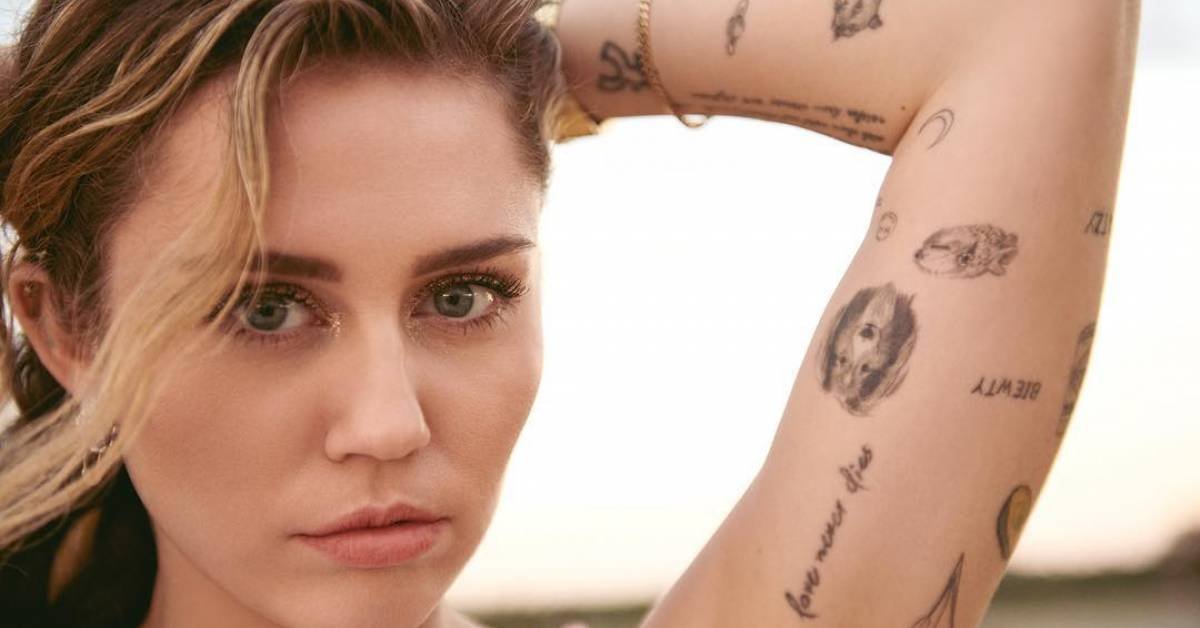
In 2019, coverage of Cyrus’s new tattoos identified a four-line lyric on her bicep: “my head was feeling scared, but my heart was feeling free.” The words come from the Pixies song “The Thing.” Allure reported that tattoo artist Winter Stone created the piece. The wording and artist connection are supported by contemporary reporting; a more specific private interpretation is not.

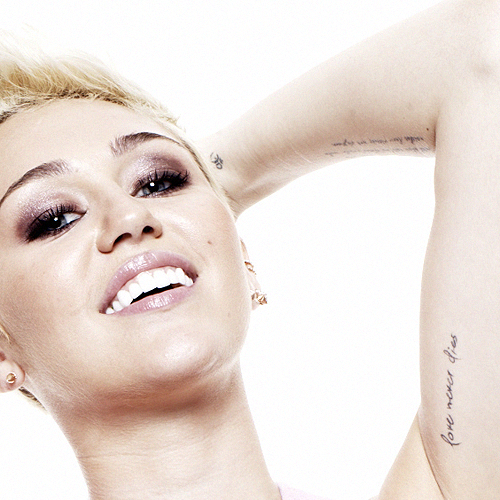
Miley Cyrus showing the Love Never Dies arm tattoo

The lettering is small and sits high on the arm, which is why the design can disappear in wider photographs. Its connection to the Pixies is the useful fact. It is not necessary to turn the lyric into a claim about one particular relationship or event when Cyrus has not publicly supplied that explanation.

What does Miley Cyrus’s 1961 hand tattoo mean?

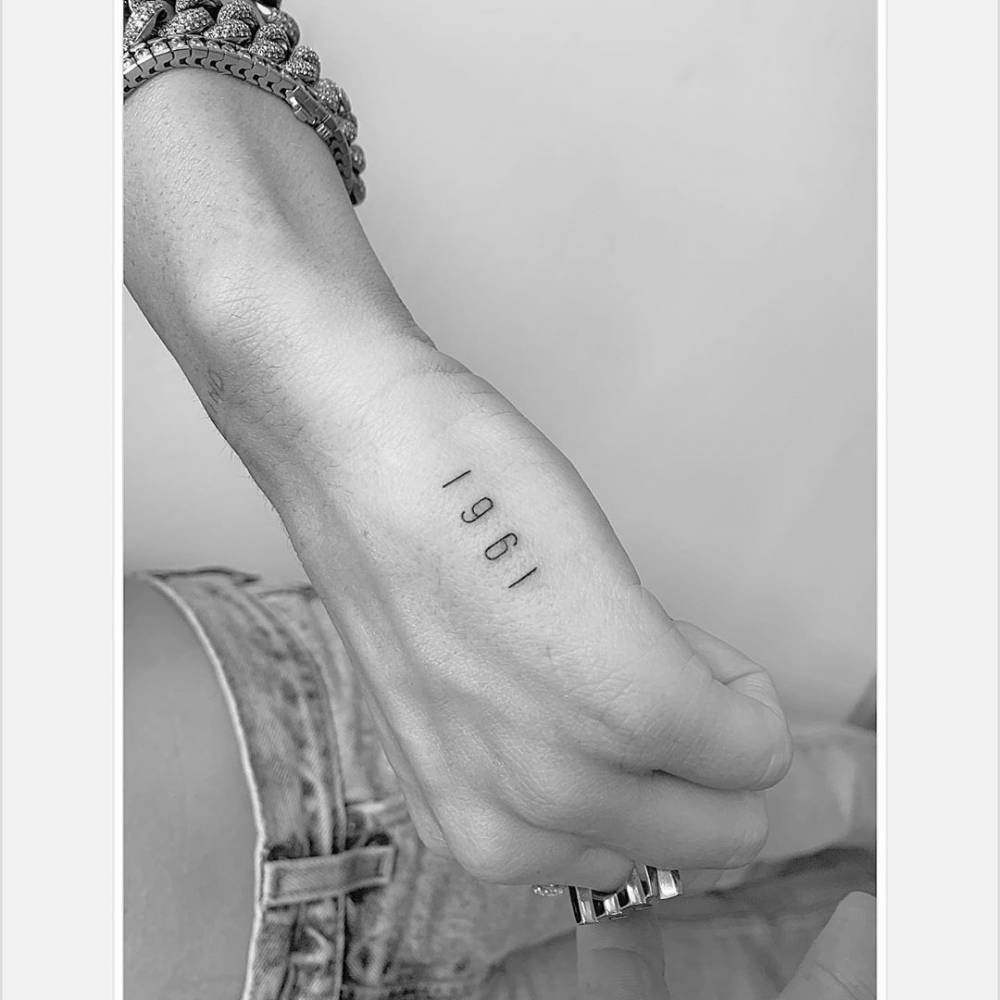
The number 1961 was reported as a tribute to Billy Ray Cyrus’s 58th birthday around the 2019 MTV Video Music Awards. Allure connected the date with the family occasion and identified Winter Stone as the artist behind the two tattoos Cyrus debuted at that time. The number’s placement on her left hand is well documented, while the article does not establish whether it carries any second meaning.

Miley Cyrus showing the 1961 hand tattoo

Hand tattoos are easy to misread because rings, poses and lighting can hide individual digits. The safest description is therefore the date and its reported family connection, not a broader theory about every number or symbol on Cyrus’s hands.

The matching chest tattoo with Wayne Coyne

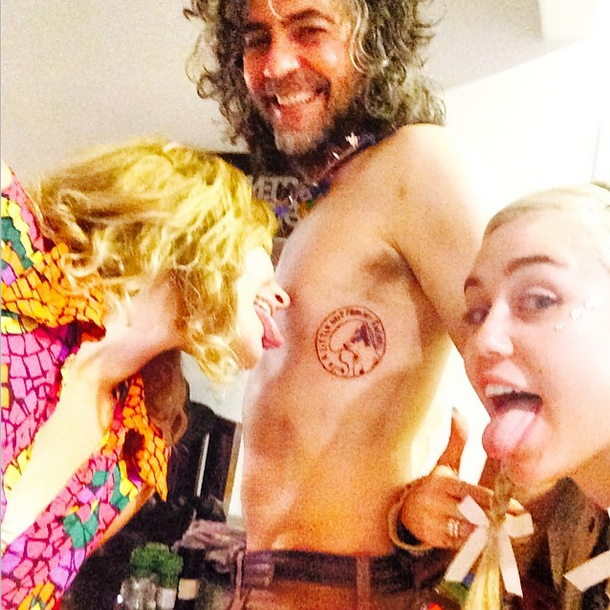
Miley Cyrus and Wayne Coyne matching chest tattoo

In July 2014, the Los Angeles Times reported that Cyrus and Flaming Lips frontman Wayne Coyne got matching chest tattoos at a Los Angeles house party. Coyne posted photographs of the process. The report described the design as Cyrus’s deceased dog howling the name of the Flaming Lips album With a Little Help From My Fwends. The shared tattoo connects the image to their friendship and collaboration, but the contemporary report did not identify the tattooist or document every detail of the finished line work.

Wayne Coyne later discussed getting matching tattoos with Cyrus in interviews, including a small triangle design. Those comments support the broader fact that the pair and their friends exchanged matching work, but they do not prove that every small mark visible in later photographs belongs to the same event.

“Love Never Dies” and Cyrus’s music-related ink

The “Love Never Dies” lettering is visible high in the armpit and upper-arm area. The phrase was reported during the Bangerz-era period when Cyrus was closely associated with the Flaming Lips. Another nearby music-related design was “Love Yer Brain,” a reference to the Flaming Lips song and album title. US Weekly reported that Cyrus worked with New York tattoo artist Bang Bang for the piece.

Miley Cyrus showing the Love Never Dies armpit tattoo

The close view matters here because the lettering is easy to miss in a standard performance photograph. The image identifies the body area and the words, but it does not establish a single private meaning beyond the documented musical connection.

The planetary tattoo she called Jupiter

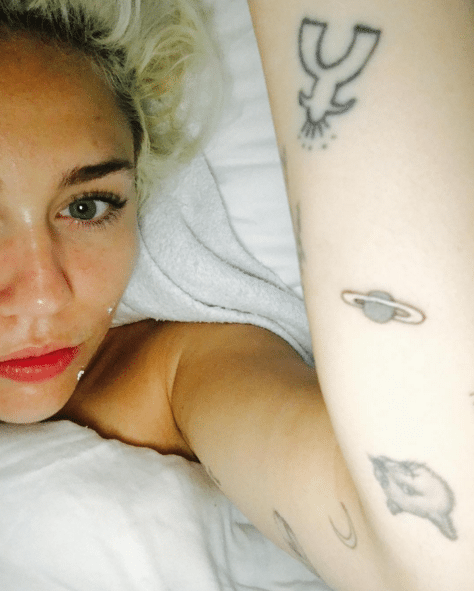
In April 2016, TIME reported on a ringed planet tattoo on Cyrus’s left arm. Cyrus initially captioned the image “#lilbbjupiter,” but the visible rings led people to identify the design as Saturn. The episode is best recorded as a public correction: the tattoo is a ringed planet, and contemporary reporting described the dispute over whether it should be called Jupiter or Saturn.

Miley Cyrus showing the planetary arm tattoo

The tattoo’s appearance can be described with confidence. Its deeper personal symbolism cannot. A ringed planet may invite interpretation, but neither the photograph nor the correction proves why Cyrus chose the design.

Other documented tattoos and placements

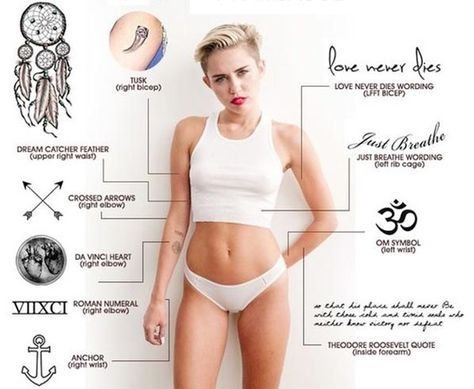
Later tattoo summaries and fashion coverage identify additional designs across Cyrus’s arms, ribs, hands, feet and shoulders. These include small symbols, script, a dreamcatcher, the Visconti of Milan coat of arms, a heart, animal references and phrases connected with music or relationships. The public record is uneven, so these entries should be treated as an inventory of reported or observed designs rather than a complete official list.

Miley Cyrus tattoo placement guide showing arm, wrist and rib tattoos

Artist attribution also varies by tattoo. Vogue has connected Cyrus with Keith “Bang Bang” McCurdy, while Allure identified Winter Stone for the 2019 lyric and 1961 pieces. The existence of several documented artists is more accurate than assigning the entire collection to one person.

How Miley Cyrus’s tattoo collection has changed

The collection grew rapidly during the 2010s, when small symbols and fine lettering appeared alongside larger pictorial designs. Dated photographs show why a current count is difficult: tattoos can be hidden by clothing, softened by age, altered, or simply absent from a particular pose. A later photograph should not automatically be treated as proof that an older design was removed.

In 2025, LOS40 reported that Cyrus said she had more than 74 tattoos and regretted about 80 percent of them. That is a statement about her relationship with the collection, not a definitive catalog. It also does not establish that every visible design has been removed or changed.

Which Miley Cyrus tattoo meanings are confirmed?

The strongest documented links are the Pixies lyric, the 1961 family tribute, the matching chest tattoo connected with her deceased dog, and the Flaming Lips references. The planetary tattoo is confirmed visually, while the Jupiter and Saturn wording comes from the public caption and subsequent reporting.

Many other designs remain observed rather than explained. A heart, animal, date or symbol may have personal significance, but visibility alone cannot establish its meaning. Where Cyrus, an artist or a reliable contemporary report has not supplied an explanation, the accurate answer is unknown.

Frequently asked questions

Who tattooed Miley Cyrus?

Different sources connect different pieces with different artists. Winter Stone was identified for the 2019 lyric and 1961 tattoos, and Vogue has reported that Keith “Bang Bang” McCurdy tattooed Cyrus. Neither source supports crediting one artist with the entire collection.

Does Miley Cyrus have a Saturn tattoo?

She has a ringed planetary tattoo on her left arm that was widely described as Saturn after she initially captioned it Jupiter. The design and the caption correction are documented; its private meaning is not.

How many tattoos does Miley Cyrus have?

There is no permanent official catalog. Cyrus was reported in 2025 as referring to more than 74 tattoos, but the number changes with additions, cover-ups and different ways of counting small pieces.

Liam Payne’s Tattoos Keep Family, Band and Memory Close to the Skin

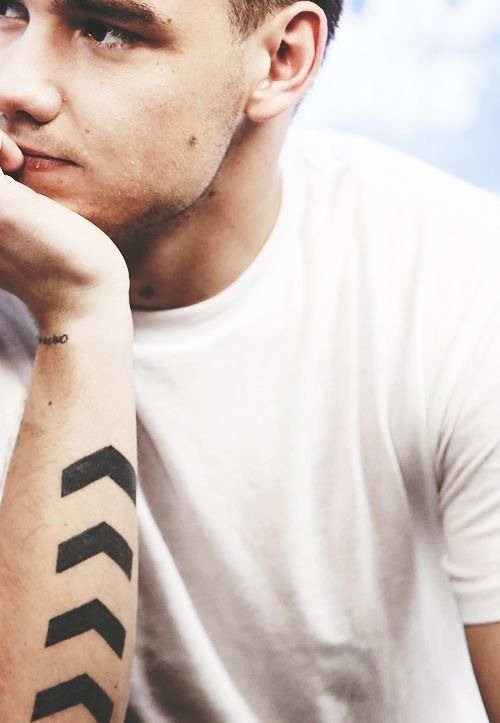
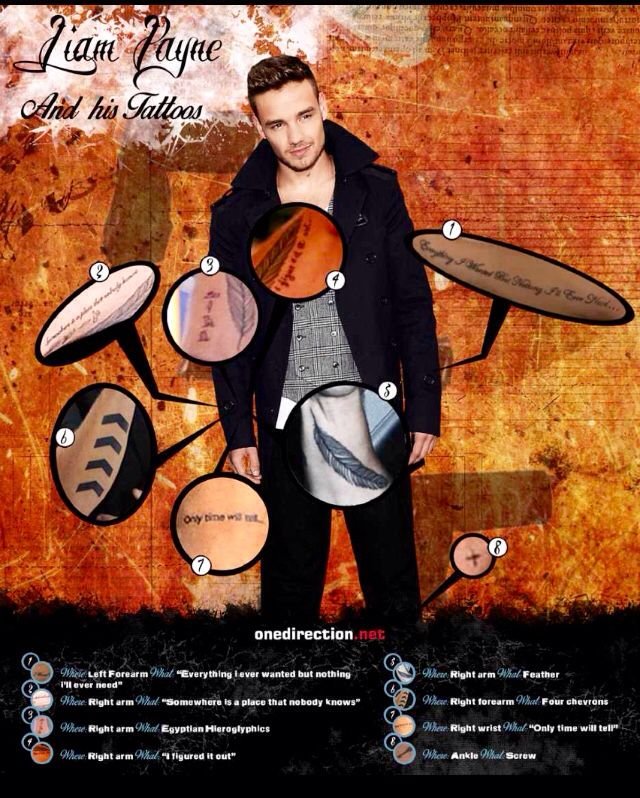
Liam Payne’s tattoos are spread across a visual map of arrows, words, symbols and small objects. The best-known design is the group of four chevrons on his forearm, which he has connected with the four other members of One Direction. Around that piece are longer lines of script, a feather, Egyptian hieroglyphics and the phrase Only time will tell. The collection is varied, but the strongest entries are easy to locate because Payne and the photographs supply useful detail.

The GQ Tattoo Tour is the most valuable source for the designs Payne discusses himself. Published tattoo catalogues then fill in the pieces that appear in older photographs. They should not be treated as equally strong evidence: a close image can establish lettering and placement, while Payne’s explanation is needed before a writer assigns a private meaning.

Four arrows keep One Direction on Payne’s forearm

Payne’s four-arrow tattoo is the clearest example of a design whose meaning has been stated directly. The arrows sit together on the forearm and have been described as references to the four other One Direction members. The design is simple enough to read in a stage photograph, but the grouping matters: these are not four unrelated chevrons placed near one another.

The arrows also suit Payne’s career at the time they became familiar. The band was built around five members, and the tattoo turns that number into a compact black-ink motif. The shape is directional without being elaborate, which lets it work as a band reference while remaining visually clean on the arm.

Published photographs show that the arrows can look heavier or thinner depending on lighting and camera distance. A close view gives the reader the best sense of the linework, while a stage image establishes how the design sits when Payne performs. Both forms of evidence are useful, but neither should be used to claim that every other mark on the forearm belongs to the same tattoo.

The design is also a reminder that a small tattoo can carry a very specific group reference. Payne did not need portraits or names to identify the band. Four repeated shapes were enough, and his explanation supplies the relationship behind them.

Long script lettering gives the forearm a private register

Liam Payne showing script lettering on his forearm

One of the longer pieces associated with Payne reads Everything I ever wanted but nothing I’ll ever need. Published tattoo guides place the script on his left forearm. The sentence is visually different from the short arrows because it runs as a line of handwriting rather than a compact emblem.

Quoted wording should be reproduced carefully. The source photographs make the letters readable, but they do not automatically explain whether the line came from a song, a conversation or a private moment. Keeping the text literal is more useful than attaching an invented origin to it. The phrase has emotional weight on its own.

The forearm location makes the tattoo visible when Payne wears short sleeves or holds a microphone. It can also disappear when his arm turns, which is why older photographs sometimes show only a partial line. A good tattoo guide should keep the placement beside the transcription so readers understand why different images appear to show different lengths.

The lettering sits within a wider collection that includes symbols and smaller words. It is tempting to use one meaning for the entire arm, but the sources do not support that shortcut. The arrows have a reported band connection; the long script is best presented as wording with an unconfirmed private origin.

Hieroglyphics and a feather add smaller visual chapters

Liam Payne tattoo guide showing hieroglyphics and feather

Older tattoo callout images identify Egyptian hieroglyphics on Payne’s right arm and a feather elsewhere in the collection. The visual guide also lists Only time will tell on the wrist, along with a screw and other small designs. These entries are more dependent on close photography than on first-person explanation, so the wording should stay descriptive.

Hieroglyphic imagery needs particular care. A photograph can show that Payne wears a group of Egyptian-looking characters, but a writer should not translate them without a trustworthy source. The shape, location and visual treatment are safe to record. A definite sentence-level meaning is not.

The feather provides a different kind of image. Its outline is familiar, but the published callout helps separate it from the surrounding arm work. It should be treated as its own tattoo rather than as decoration attached to the script or arrows. The same principle applies to Only time will tell: the phrase is a separate wrist entry, not an explanation for every design above it.

These smaller pieces make the collection feel less like one planned sleeve and more like a set of additions made across different stages of Payne’s life. The exact chronology is not equally clear for every design. That is why a location-led inventory is more reliable than a confident timeline built from scattered photographs.

What Payne’s tattoo record can establish

The documented collection supports several firm descriptions. Payne has four arrows linked to his One Direction bandmates. He has long script on the forearm, hieroglyphic-style imagery on the arm, a feather and additional wording at the wrist. The GQ interview gives the strongest personal context for the arrows and other pieces he discusses directly.

The sources do not support a complete official count or a private explanation for every mark. Some tattoos may have changed, faded or been photographed from angles that hide part of the design. A careful guide therefore separates direct comments from visual evidence and keeps uncertain translations out of the finished article.

That approach makes Payne’s tattoos more interesting, not less. The arrows show a clear band connection. The script carries a sentence that readers can inspect. The hieroglyphics and feather add shape and texture without requiring the article to assign meanings that Payne has not made public. Each design can stand beside the image and evidence that justify including it.

The visual record also shows why separate sections matter. The arrows, script, hieroglyphics and feather are not interchangeable images. Each has a different shape and a different level of documented context. Showing the right close-up beside the right passage helps readers compare the work without mistaking a nearby mark for part of another design. It also leaves room for future interviews or clearer photographs to add information without forcing an older description to carry more certainty than it can support.

Joe Jonas's Tattoos Turn Cartoons, Music and Memory into Linework

Joe Jonas’s tattoos sit at an unusual intersection of pop culture, music history and private memory. Some of his best-known pieces are deliberately playful: SpongeBob SquarePants, Mario, Chuckie Finster and other cartoon characters appear as black outline work on his upper thigh. Elsewhere, a Freddie Mercury portrait links his collection to a musical hero, while an African symbol was reported as a reference to an experience that changed him. The designs do not need one grand explanation to belong in the same guide.

Photographs are especially important because several of the pieces are hidden by ordinary clothing. The thigh tattoos surfaced in a short video and older music footage rather than constant red-carpet portraits. That means dates and exact placement should stay beside the source that establishes them. The guide can describe what is visible while leaving private meaning alone when Jonas has not explained it.

Cartoon characters cover Joe Jonas’s upper thigh

Joe Jonas showing SpongeBob Mario and cartoon thigh tattoos

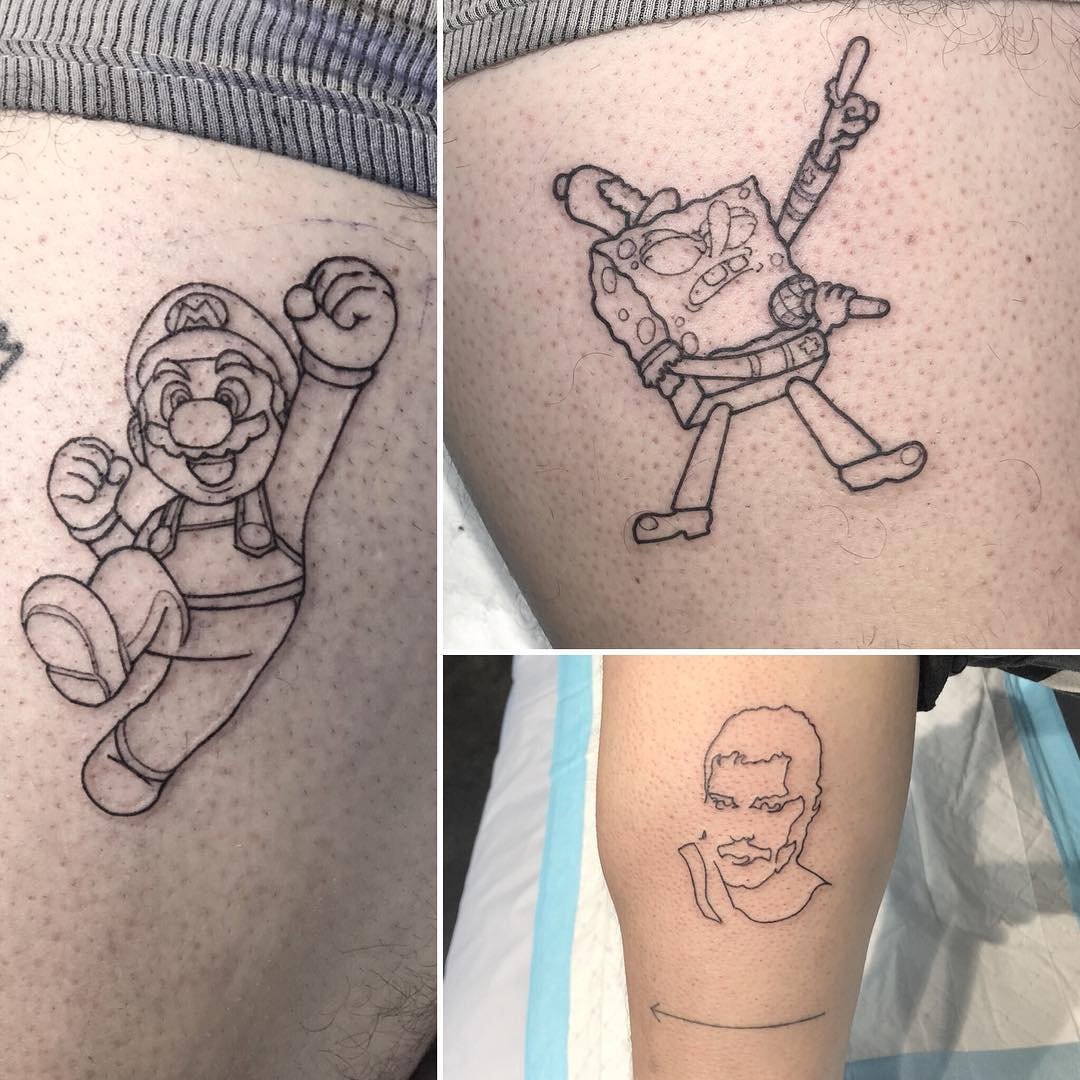
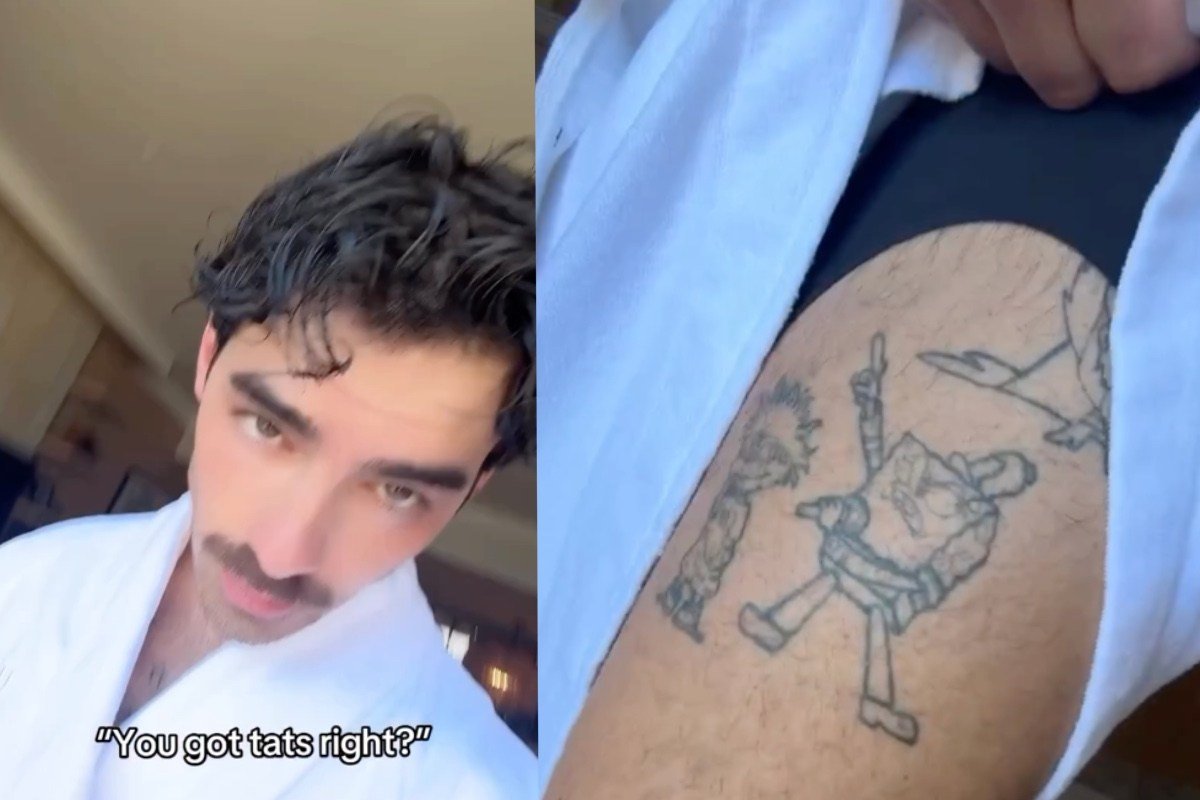
The most surprising part of Jonas’s tattoo map is the group of black outline cartoon characters on his upper thigh. Recent coverage identifies SpongeBob SquarePants, Chuckie Finster from Rugrats and Mojo Jojo from The Powerpuff Girls. Other reports add Mario, Dexter and Max Goof from later sessions. They read as a deliberately mixed group rather than one single scene.

Artist Lauren Winzer is associated with the 2018 session that produced several of the designs. The thin black lines keep the characters recognisable without heavy colour or dense shading. That choice matters because the tattoos are built from familiar silhouettes and facial expressions. The viewer does not need a large block of black ink to identify SpongeBob’s shape or Mario’s cap.

Jonas revealed the work in a playful video while wearing a robe, which explains why the tattoos stayed out of everyday press photographs. Their hidden placement also changes how people talk about them. They are not stage branding in the way a forearm word would be. They are pieces Jonas can keep covered until he wants to show them, giving the reveal an element of deliberate humour.

The safest interpretation is nostalgia. The sources document childhood characters and the artist’s involvement, but they do not establish a separate autobiography for every figure. SpongeBob does not need an invented symbolic meaning to be a good tattoo subject. The design works because Jonas chose a recognisable character and placed it beside other references from the same broad cultural world.

Freddie Mercury gives the collection a musical tribute

Joe Jonas's Freddie Mercury line-art tattoo

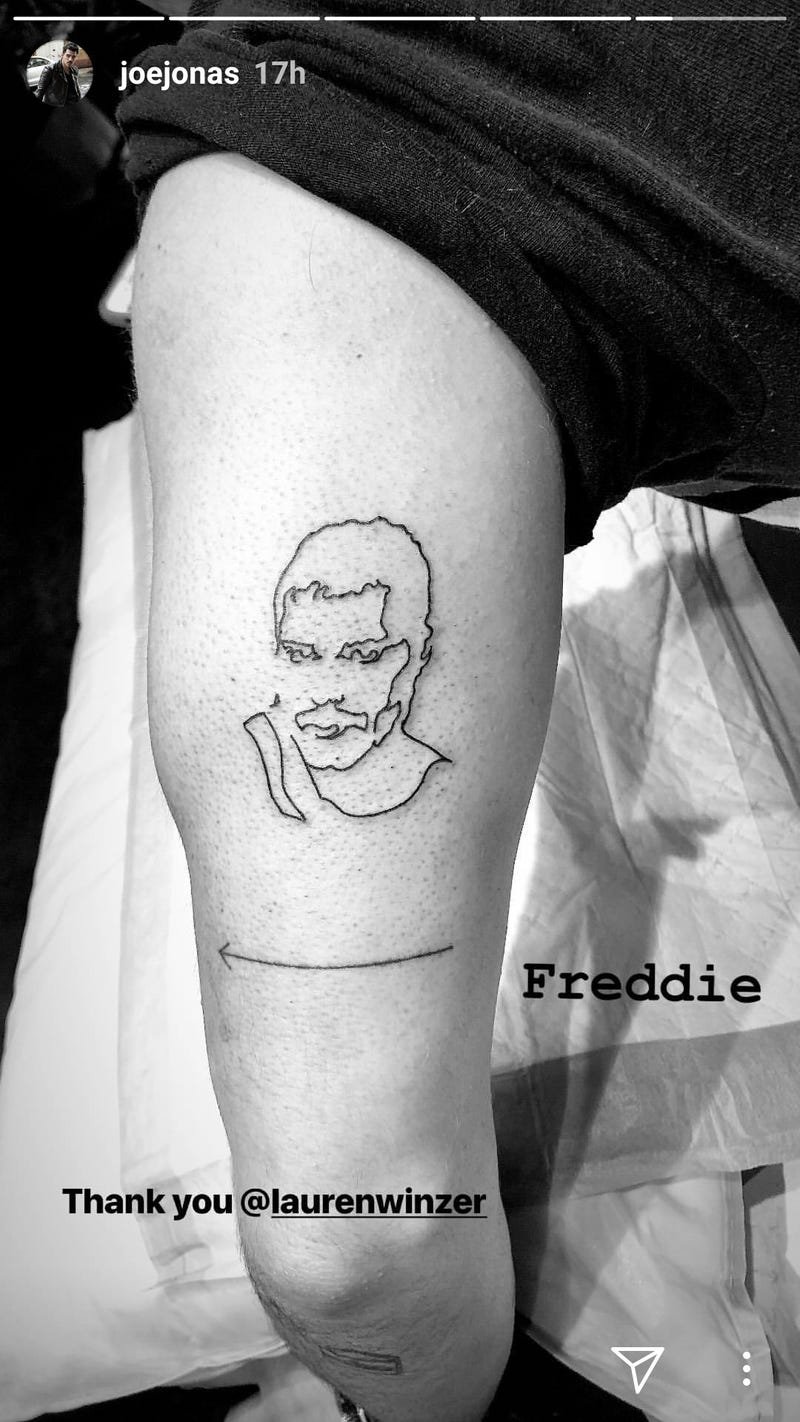
Joe Jonas also has a line-art portrait of Freddie Mercury, the Queen frontman. Business Insider published a monochrome image of the fresh design and identified the portrait through Jonas’s social post and artist tag. The piece is much more directly connected to music than the cartoon group, but the linework keeps it visually consistent with the thinner character tattoos.

A portrait tattoo depends on small decisions: the outline of the face, the hair, the posture and the details that make a famous person recognisable. A simple black drawing can therefore carry more visual responsibility than a generic symbol. The published image is useful because it lets readers see the portrait as a specific likeness rather than accepting a caption that merely names Freddie Mercury.

The tattoo also shows that Jonas’s collection is not limited to jokes. The cartoons bring a playful tone, while Mercury represents a performer whose voice and stage presence have influenced generations of musicians. The contrast is part of the appeal. A tattoo collection can hold a childhood character and a rock icon without either one cancelling out the other.

The available report establishes the subject and the placement shown in the photograph. It does not provide a long statement from Jonas about the private reason he selected that image. The tribute is therefore safe to describe as a Freddie Mercury portrait, while the article avoids claiming a specific song, concert or personal encounter that the source does not mention.

An African symbol was linked to help and cooperation

Joe Jonas showing his forearm symbol tattoo

Earlier coverage described an African Adinkra symbol on Jonas’s lower right forearm. The report glossed its meaning as help me, help you and connected the choice to Jonas’s experience visiting Africa. That gives this tattoo a clearer explanation than many of the character pieces, although the guide should preserve the wording as a reported interpretation rather than treat a short entertainment segment as a complete account of the trip.

The symbol is visually different from the cartoon outlines. It is compact, geometric and designed to carry meaning through a recognised form rather than a literal character. Its location on the forearm makes it easier to show in interviews, but photographs can still flatten the lines if the arm is turned away from the camera.

The reported message of cooperation also fits the way the tattoo was presented. Jonas was not described as choosing a random decorative mark. The source connected it with a place and an experience that affected him. That is enough context for a concise explanation. It is not a reason to assign the same meaning to every other tattoo on his body.

Seen beside the later cartoon group and Freddie Mercury portrait, the forearm symbol expands the range of Jonas’s choices. His tattoos can be funny, commemorative or culturally referential. The common feature is not a single style. It is the willingness to use a small image to carry a reference that matters to him, whether that reference comes from television, music or travel.

Earlier linework fills out the map

Secondary guides describe additional linework and symbols across Jonas’s arms and body. Those entries are useful as leads, but they should be separated from the tattoos that have the clearest recent photographs. A tattoo inventory becomes unreliable when a blurry image is used to assign a precise character or when a report repeats an old caption without checking whether the design was later covered.

The documented pieces already show a clear pattern. The upper thigh carries a private collection of cartoon references. The Freddie Mercury portrait records a musical influence. The Adinkra symbol is tied to a reported message of mutual help. Together they make a stronger article than an inflated inventory filled with uncertain shapes.

Jonas’s tattoos are therefore best read through their contrasts. The cartoon work is playful and easy to recognise. The Mercury portrait asks for closer inspection. The forearm symbol depends on cultural context supplied by the source. Keeping each design beside the image and evidence that support it lets the guide stay specific without pretending to know more than Jonas has made public.

Maluma’s Tattoos: Magia, Family Elephants and the Lion on His Chest

Maluma’s tattoos form a visual record of family, music and the symbols he has chosen to carry through different stages of his career. The collection includes album lettering, animal imagery, a neck dove and designs connected with his parents and sister. Unlike many celebrity tattoo lists, several of the most useful details come from interviews in which Maluma or a profile explains the design.

The public record is still not a complete official map. Photographs show more ink than any single article can identify, and some pieces have changed as new work was added. The strongest guide therefore separates literal observation from confirmed meaning. It also keeps dates and body locations attached to the designs rather than treating every visible shape as a timeless part of one fixed sleeve.

Maluma has spoken about the way tattoos connect his biography with his music. That does not mean every mark is an autobiography, but it does explain why the album name, family initials and family animals are more securely interpreted than smaller designs visible only in a distant photograph.

Magia marks the beginning of his musical story

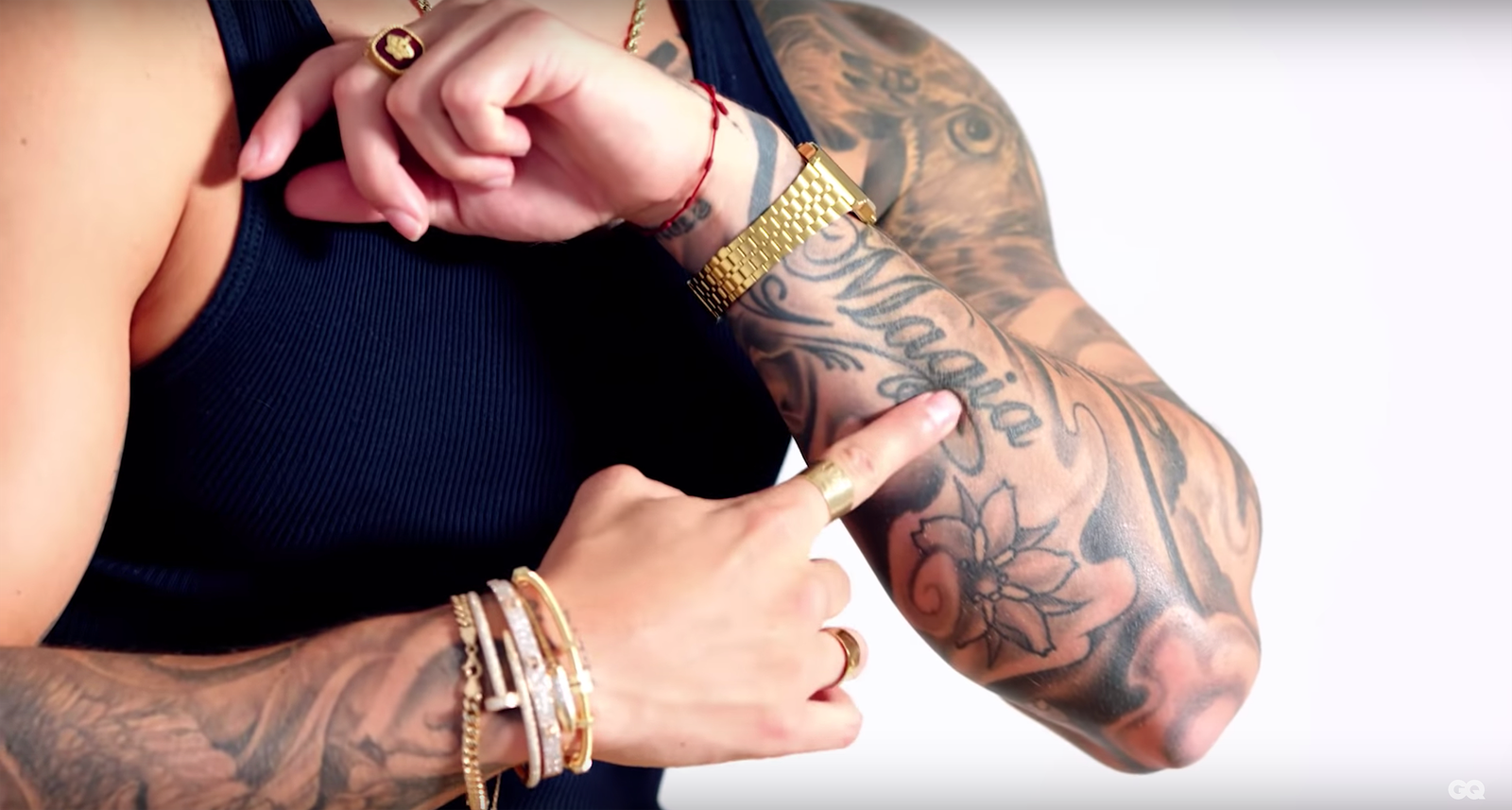
Maluma showing the Magia tattoo on his forearm

The word Magia is tattooed on Maluma’s left forearm and refers to his first album. Inked and GQ España both connect the lettering with the record and the early part of his musical career. It is one of the easiest designs to identify because the literal word is readable and the reason is tied to a named release rather than a fan theory.

The placement also matters. The forearm is regularly visible in photographs and has become part of a broader sleeve, so older images may show the lettering before later surrounding work was added. A current photograph should not be used to imply that every adjacent flower or line was present when the album tattoo was made. The reliable claim is narrower: Maluma used the forearm to mark Magia.

This design also shows why a tattoo guide benefits from music history. The word is not only decorative script. It identifies a specific period and a specific project, while leaving the style of the surrounding sleeve open for separate description.

The elephant group represents family

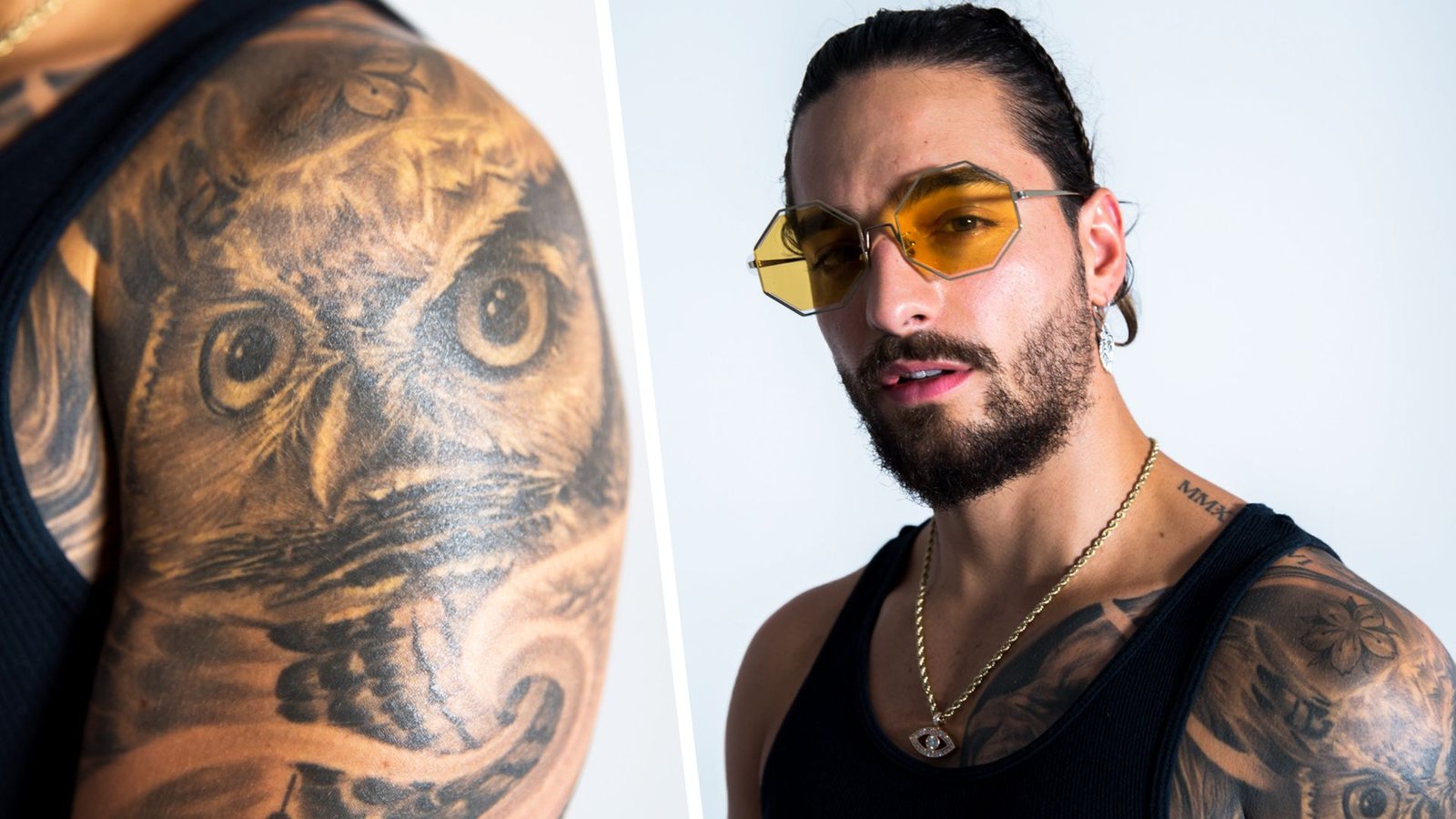
Maluma showing the owl tattoo on his arm

Inked describes four elephants on Maluma’s right forearm, with human-like shadows reflected in water. The design is connected with his family. That is more specific than saying the piece represents strength or loyalty in general, because the reporting identifies both the visual structure and the people-centered meaning.

The elephants should be treated as one documented group, not as four unrelated animal tattoos. The reflected forms are part of the composition and explain why a cropped forearm image can be misleading. When only the top of the animals is visible, a reader may miss the water and the shadows that give the design its family reference.

As with the album lettering, the image record does not establish every technical detail. It does establish the forearm location, the number of elephants reported by the source and the family connection. Any claim about a separate private story for each animal would go beyond the evidence available here.

The chest lion is one of his most recognisable pieces

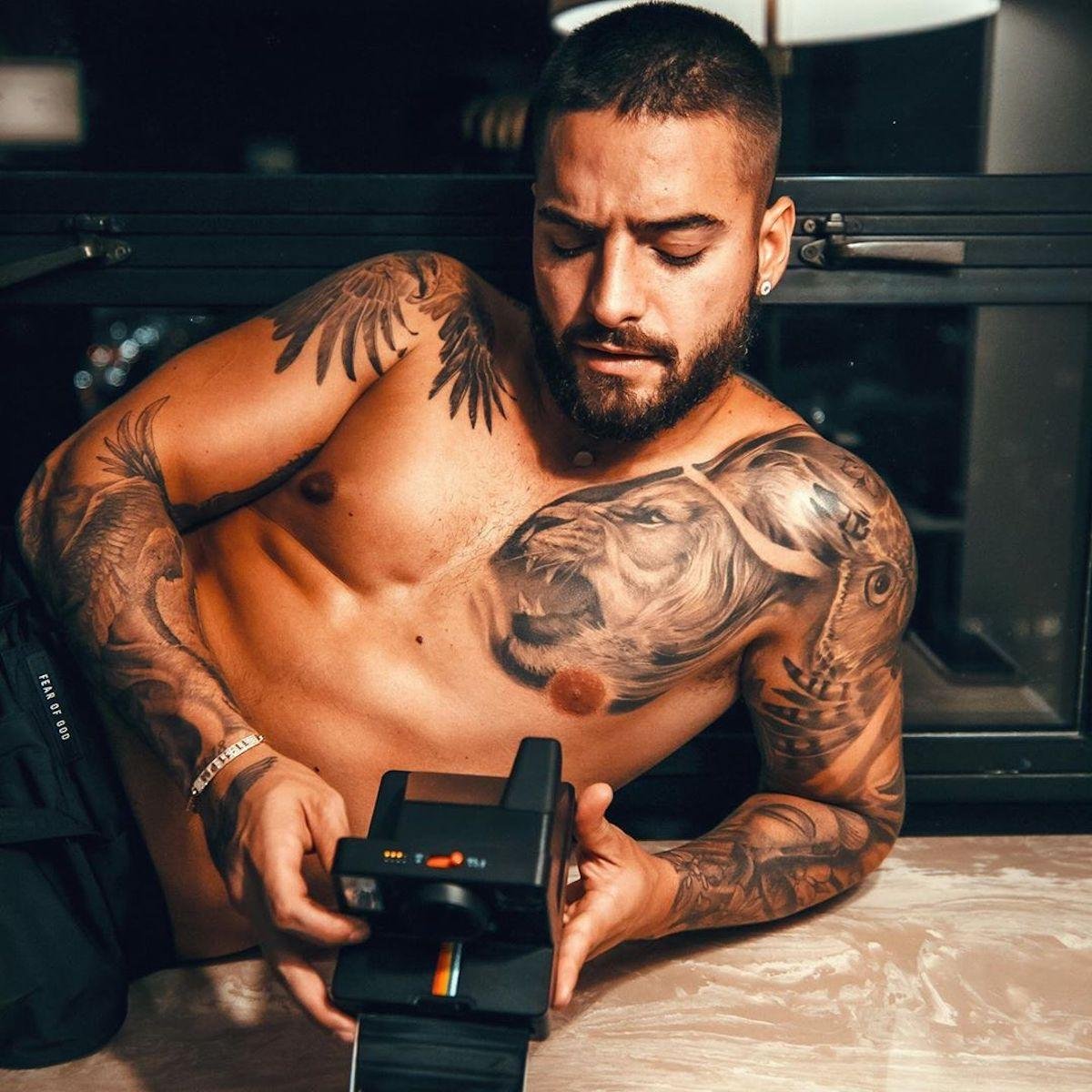
Maluma showing the lion tattoo on his chest

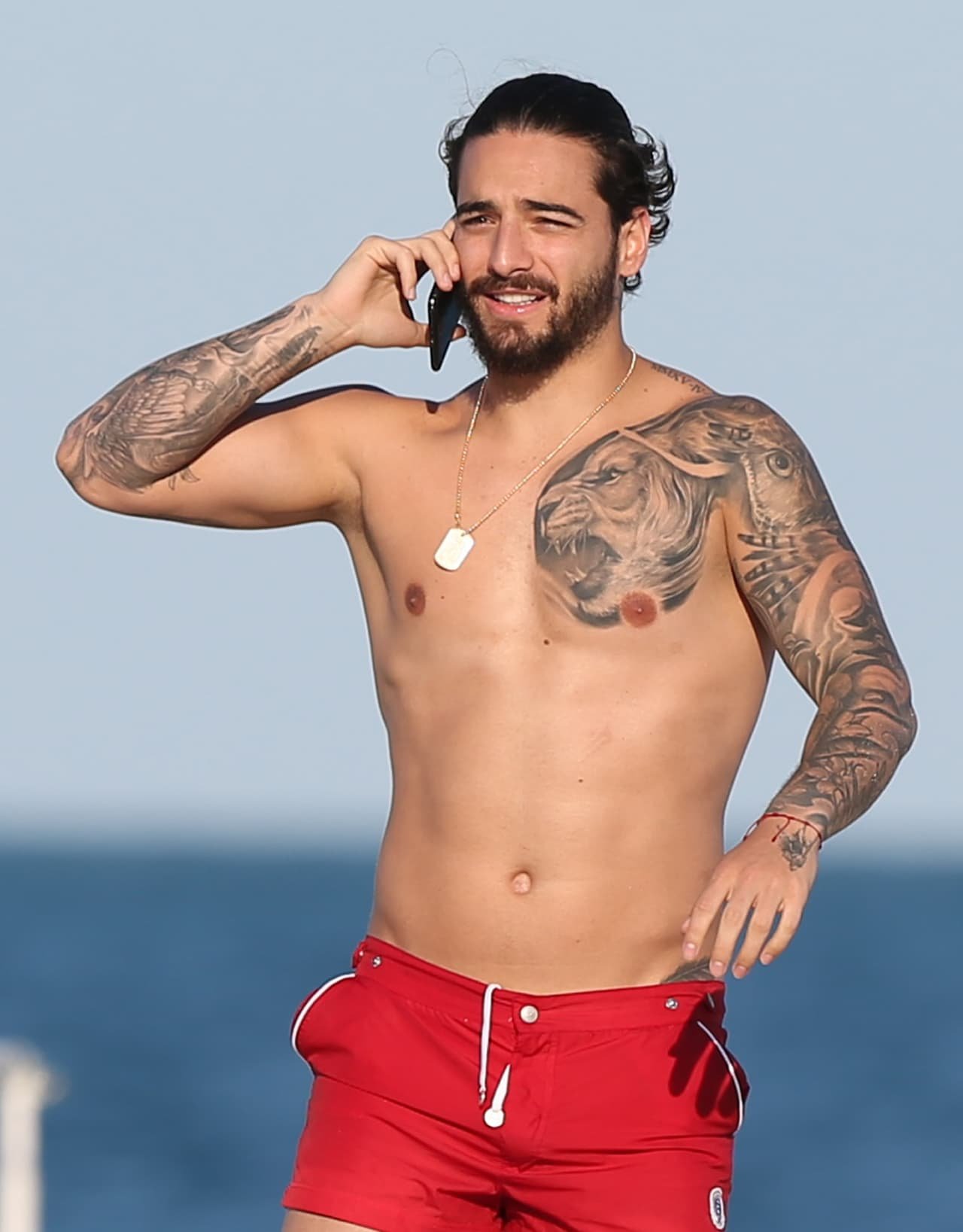
A lion on Maluma’s upper left chest is repeatedly highlighted in coverage of his tattoos. Inked describes it as one of his favourite pieces, while related reporting connects the image with strength during a difficult period. The design is visually prominent because it occupies the chest rather than appearing as a small mark inside the sleeve.

The lion is often photographed with other chest and shoulder work, which makes context important. A portrait can show the animal clearly while hiding the edges of the larger arrangement. The safest description is therefore a chest lion with a reported strength association, not a claim that every nearby line belongs to one single tattoo.

Maluma’s tattoo tour footage also demonstrates the difference between seeing a design and knowing its full history. A close image can establish the animal, its placement and its style. It cannot automatically establish the date, the full artist credit or a private event unless those details are supplied by a source.

The owl, dove and family-initial tattoos fill out the record

Maluma showing additional family-related tattoos on his arm

Other identifiable pieces add different layers to the collection. GQ’s tattoo tour highlights a large owl on the arm, while Inked identifies a dove on the neck and connects it with peace. These are useful entries because the design and general placement are reported, even though the available accounts do not provide a complete chronology for every addition.

Maluma’s first tattoo was made when he was young and spells out his stage name through the initials of his mother, father and sister. Inked places that early family-initial tattoo on the left leg. It belongs to a different part of the timeline from the later album and animal work, so it should not be folded into the arm sleeve simply because photographs of the leg are less common.

The collection also includes Roman numerals and smaller lettering visible in tattoo-tour footage. Those marks should be dated to the image being used and described literally when the meaning is not confirmed. A readable numeral is evidence of a numeral, not proof of an undisclosed personal event.

Reading the collection as a timeline

Maluma’s best-documented tattoos move from family initials to music lettering, family animals and symbolic pieces on the chest, arm and neck. The account is strongest where a source names the design and gives its reason. It becomes less certain when a photograph shows a small mark without a direct explanation.

That boundary does not make the collection less interesting. It makes the guide easier to update. A future interview may add an artist, date or meaning, while a clearer photograph may distinguish a new piece from older work. Until then, the useful inventory is the one that keeps the Magia lettering, elephant group, lion, owl and dove tied to the evidence that actually supports them.

Readers comparing images should look at the body area first, then the date and the source. Forearm lettering, chest animals and neck symbols can appear together in a single portrait, but they are separate entries with separate histories. That organisation gives a more accurate picture than a long list that assigns a story to every visible line.

Dave Grohl's Tattoos Trace His Route Through Punk, Metal and Friendship

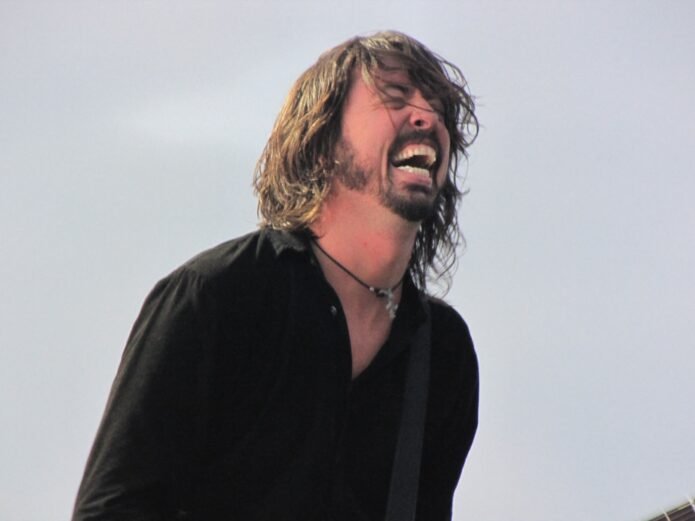
Dave Grohl’s tattoos are tied closely to the music that shaped him. The earliest stories involve punk bands, teenage decisions and designs made with far less ceremony than a modern studio appointment. Later pieces carry the names and symbols of musicians he admired, including the Ace of Spades tattoo he got after Lemmy Kilmister died. The collection is easier to understand when its designs are placed in time rather than treated as one finished sleeve.

Grohl has spoken about several tattoos in interviews, which gives this subject unusually strong first-person evidence. He has described making the Black Flag tattoo himself and has explained the connection between an arm symbol and John Bonham. Photographs then help confirm the placement and appearance, especially for the later Motörhead tribute.

The Black Flag tattoo began as a teenage act of devotion

Dave Grohl Black Flag and early forearm tattoo work

Grohl’s Black Flag tattoo is one of the clearest examples of music fandom becoming permanent. In archived interviews, he has described tattooing the band’s bars on himself when he was young. Different retellings vary on the exact age, but the consistent point is that the tattoo came from his teenage commitment to the band and was not a polished piece commissioned after he became famous.

The design itself is economical: the familiar bars are instantly recognisable because the symbol is built from repetition rather than shading. That simplicity suits the story. Grohl did not need an elaborate portrait to mark the influence. A compact graphic could carry the band name for anyone who knew the logo, while remaining legible on the arm.

Later photographs show the tattoo among other black-ink work, which can make its edges harder to isolate. A wide image establishes the arm as a larger field, but a closer crop is better for the bars themselves. The guide should not claim that every nearby mark belongs to the same period. The documented story concerns Black Flag; the surrounding tattoos developed across different years.

The self-made origin also explains why the tattoo is discussed differently from the Ace of Spades tribute. The Black Flag piece belongs to adolescence and musical discovery. It records the intensity of hearing a band and wanting its mark on the body immediately. That does not make it a joke or a mistake. Grohl has continued to discuss it as part of his history.

The Ace of Spades marks Grohl’s friendship with Lemmy

Dave Grohl showing the Ace of Spades tribute tattoo

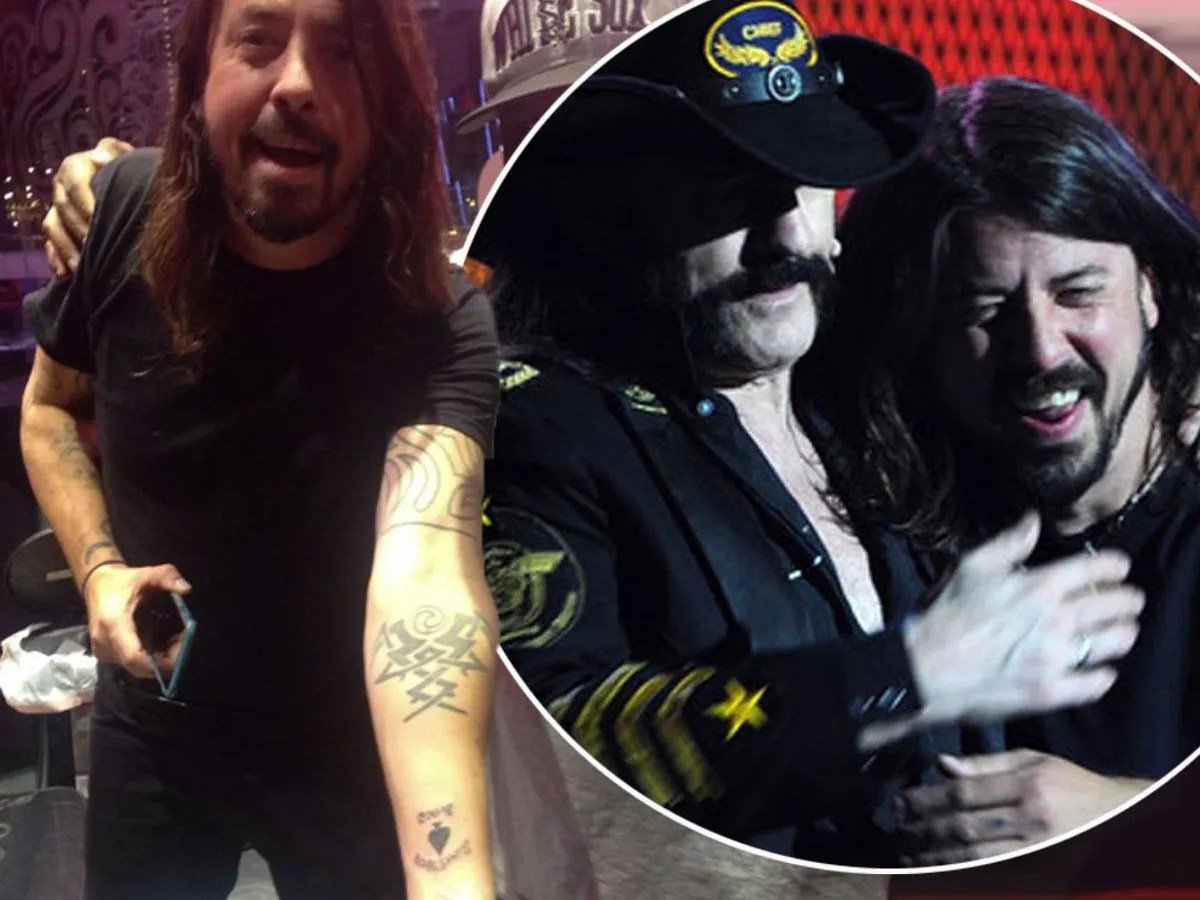
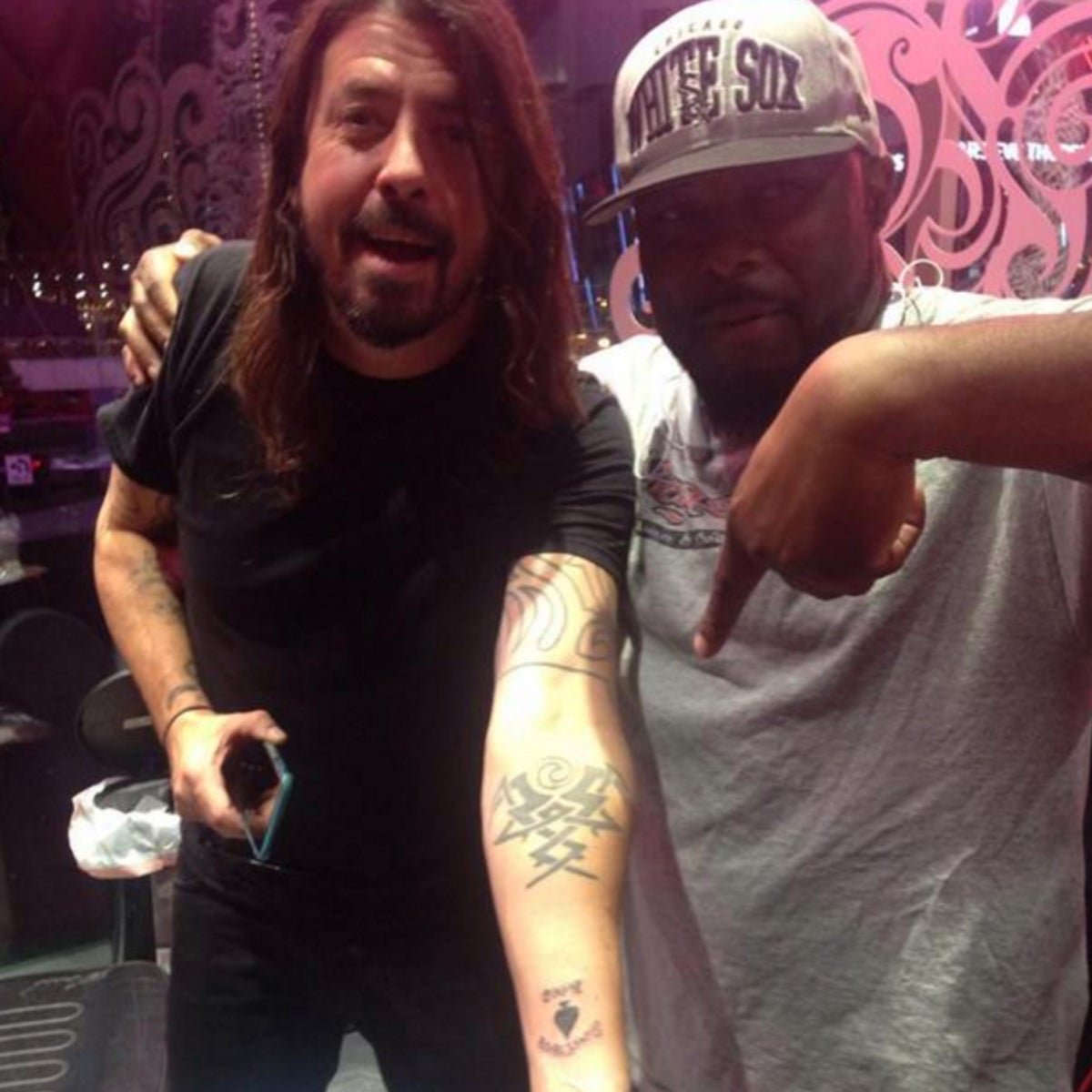
Grohl’s Ace of Spades tattoo is the most clearly documented tribute in the collection. After Lemmy Kilmister died in 2015, photographs circulated showing Grohl’s forearm with the Motörhead logo. Time and The Independent both connected the tattoo to his friendship with Lemmy and to the influence Motörhead had on him.

The design is immediately readable because it reproduces the distinctive Ace of Spades emblem rather than using a vague reference to the band. The spade, lettering and heavy black treatment make the source easy to identify. It is a useful example of how a tattoo can work as both an image and a proper musical name.

The timing gives the piece its emotional context. Grohl and Lemmy had performed and worked around the same rock community, so the tattoo was not a distant fan gesture. It was a tribute to a person he knew. The published accounts do not require the guide to invent a private ritual around the appointment. The visible design and the reported connection are enough.

The forearm placement also makes the tattoo practical to show in photographs. Grohl can extend his arm toward a camera or raise it onstage, allowing the symbol to be seen without a full shirtless portrait. That visibility helped the image circulate quickly after Lemmy’s death, while the tattoo remains a simple piece rather than a crowded memorial mural.

John Bonham’s symbol connects Grohl to another drummer

In the Mojo interview archived by FooArchive, Grohl discussed a symbol associated with John Bonham. The design is often described as runic or stylised, and the important documented point is its connection to the Led Zeppelin drummer. It belongs to the part of Grohl’s tattoo history that honours musicians who influenced his own approach to rhythm and performance.

Bonham’s place in Grohl’s story is obvious from his long-standing admiration for Led Zeppelin, but the tattoo still deserves careful wording. The interview supports the association and the design’s place on Grohl’s body. It does not support turning every line around it into a separate Bonham reference. A tattoo guide should keep the named symbol distinct from the other arm work visible in the same photograph.

The visual contrast with Black Flag is useful. Black Flag is a stark logo tied to a teenage punk identity. The Bonham symbol is more cryptic and depends on the viewer knowing the person it honours. One piece announces a band through its logo; the other uses a mark whose meaning comes from musical memory and the owner’s explanation.

Because the symbol is less familiar than the Ace of Spades, image selection matters. A distant concert photograph can show that Grohl has ink on his arm without allowing a reader to inspect the design. The guide should use a close or well-lit source image when making the claim, then describe only the features that remain visible after compression.

The early pentagram story belongs to Grohl’s teenage years

Another archived interview recounts a pentagram tattoo from Grohl’s youth. The story is useful because it shows that his early tattoo decisions were experimental and connected to the music culture around him. It should be kept separate from the Black Flag account: both are teenage stories, but the sources describe different designs.

A pentagram is easy for writers to overload with assumptions. Its appearance does not automatically establish a belief system, ritual practice or fixed identity. Grohl’s interview supplies the context of an early tattoo, while the guide should resist adding a meaning he did not state. That restraint is especially important when a symbol has many possible interpretations outside the wearer’s own life.

Together, the early tattoos show a musician building a visual vocabulary before fame made every mark a subject of scrutiny. The Black Flag bars are direct and graphic. The pentagram is more ambiguous to a modern reader. The common thread is not one secret message but a willingness to let music and subculture shape permanent choices.

Grohl’s tattoo history is therefore best read as a route through influences: punk devotion, metal friendship, drummer admiration and teenage experimentation. The photographs show the ink; the interviews explain the connections. Keeping those two forms of evidence beside each other produces a fuller account than a generic list of symbols.

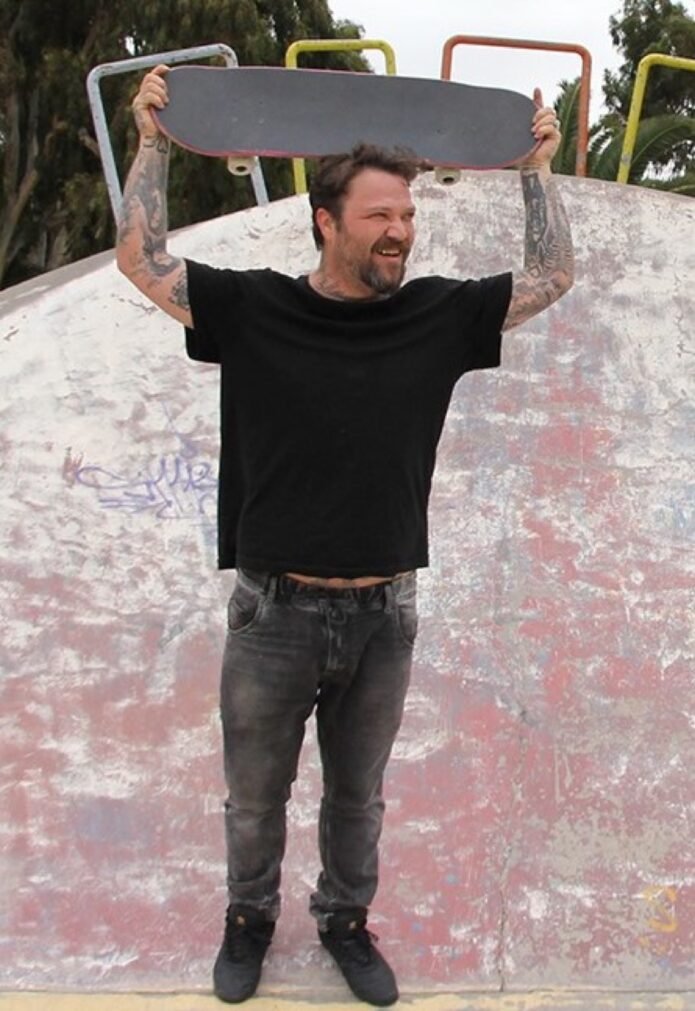
Bam Margera’s Tattoos Mix Heartagrams, Book Worm and Family Ink

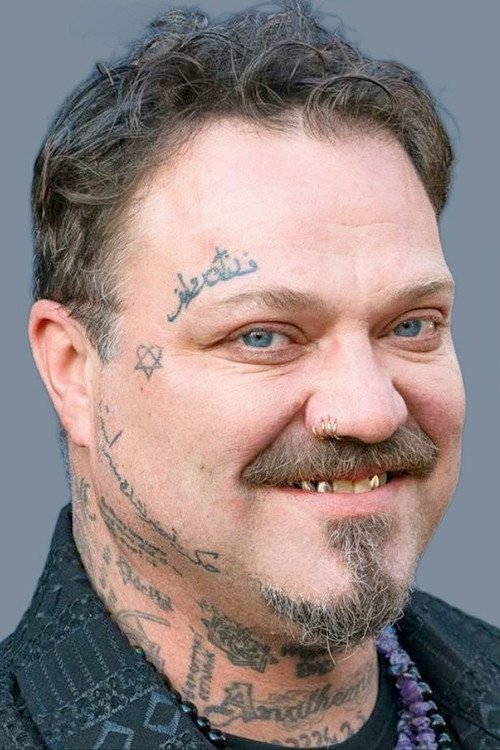
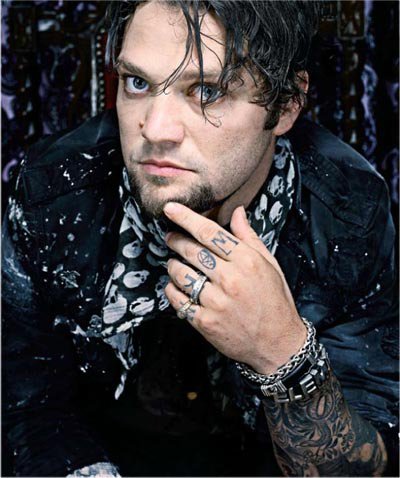
Bam Margera’s tattoos belong to the same unruly visual world as his skate videos and television work, but the collection has more structure than the old photographs suggest. His ink includes the Heartagram linked with HIM, the words Book Worm spread across his fingers, and visible neck lettering that became part of his recognisable appearance. The public inventory is broad, while the quality of the explanations varies from design to design.

A careful guide has to separate a named tattoo from a guessed meaning. Body Art Guru and The Vanishing Tattoo provide useful descriptions of locations and designs, while public portraits show how the pieces sit on Margera’s body. The Heartagram has a clear music connection. The finger lettering is easy to transcribe. Some smaller marks are visible without a reliable statement from Margera, so they are described rather than interpreted.

The Heartagram connects Bam Margera to HIM’s visual world

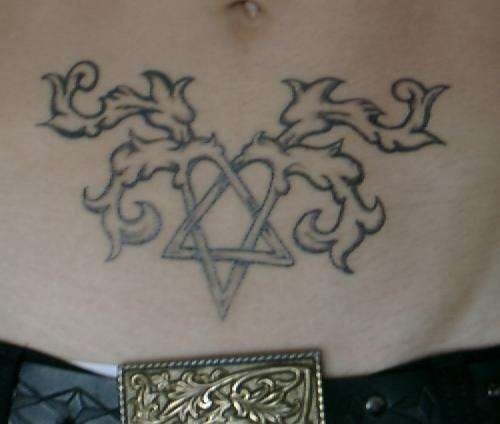
The best-known piece in Margera’s tattoo record is the Heartagram, a symbol that combines a heart and a pentagram. It is associated with HIM and became closely linked with Margera through his friendship with Ville Valo and the band’s presence in his work. Public tattoo references place the design on the lower abdomen, where the black symbol and surrounding ornamental lines can be seen clearly in the available image.

The symbol is more specific than a generic heart or star. It belongs to a particular musical culture, and Margera’s connection to HIM gives the design a plausible personal context. The published tattoo descriptions identify the association, but readers should still avoid turning the symbol into a complete biography. A tattoo can signal admiration without revealing every detail of a friendship or a period in someone’s life.

Bam Margera's Heartagram tattoo

The placement also matters. The lower abdomen is not usually visible in a red-carpet photograph or a skateboarding event image, which is why tattoo archives and older personal photographs are useful here. A close image shows the scale of the design and the ornamental framing. It also makes clear that a generic Heartagram drawing is not automatically proof of Margera’s exact tattoo. The attached reference is used because it shows the tattoo form associated with him, not because every Heartagram in circulation belongs to him.

Margera’s broader public image helped make the design memorable, but the tattoo should be discussed as a specific piece rather than a costume accessory. The design has its own visual history, and the music connection gives it a stronger documented identity than many of the smaller marks in the collection.

Book Worm turns Margera’s fingers into a piece of lettering

The words Book Worm are spread across Margera’s fingers, with the letters on one hand spelling BOOK and the letters on the other spelling WORM. Body Art Guru’s inventory notes that the Os contain small heart shapes, a detail that is easy to miss in a distant photograph. The finger placement makes the tattoo readable when his hands are held together, but individual letters can disappear when he is moving or holding a skateboard.

This is a good example of why tattoo-specific images are important. A full-body portrait may establish that Margera has hand tattoos, yet it may not reveal the lettering. A close crop shows the letters, the heart details and the relationship between the two hands. It also keeps the article from assigning the phrase to a different mark on his knuckles or fingers.

Bam Margera showing Book Worm finger lettering

The wording itself is playful and fits the visual language associated with Margera’s public work, but the reviewed sources do not establish one formal explanation for why he chose it. The phrase can be documented without claiming that it refers to a particular book, person or event. The little hearts inside the Os are equally worth describing because they are visible design choices, not speculation about his private life.

Finger tattoos also age and photograph differently from larger pieces. Hands are constantly moving, and the skin can make small lines look heavier or softer depending on the image. That is why older lists should be compared with close photography rather than copied as permanent official counts. The inventory records the design as described by the source, while leaving room for later changes or cover-ups.

Anathema gives the neck a darker word mark

The front of Margera’s neck carries the word Anathema, with additional lettering or symbols reported nearby. It is one of the marks that helped define his early public appearance because the neck is visible in interviews, portraits and skate footage. The word has a strong visual presence, but a dictionary definition is not the same thing as Margera’s personal explanation.

Close portraits show why the neck tattoo is easier to recognise than to interpret. The letters are visible against the skin, while the smaller adjoining marks can be obscured by angle, hair or clothing. A responsible guide identifies the main word and describes the location without assigning a private story that the reviewed sources do not confirm.

Bam Margera showing Anathema neck lettering

The tattoo also sits beside a wider collection of symbols, portraits and hand designs. Readers may see a photograph and assume that every nearby mark belongs to the same idea. The image should instead be treated as a location reference for Anathema. Other tattoos can be recorded in separate entries when a source names them, but they should not be folded into one invented theme.

Margera’s tattoo record is strongest when the design and placement are clear. The Heartagram has a documented music connection. Book Worm has a precise letter arrangement. Anathema is a visible word on the neck. Those three entries are enough to show the range of the collection without pretending that every old image can answer every question about it.

Why the larger inventory needs careful wording

Margera has been photographed with many additional designs, including portraits, symbols, script and family-related pieces. Some tattoo lists attach meanings to those designs, but the evidence is not equally strong for all of them. A guide should keep direct statements, source descriptions and visual observations in separate lanes.

That method also makes the article more useful to readers comparing old and new photographs. Tattoos can be added, covered or changed, and public figures are rarely photographed from every angle. The most dependable entries are the ones with a clear design, a clear location and a source that explains why the item belongs in the inventory.