
Conor McGregor’s tattoos are concentrated across the chest, stomach, arms and wrists. The most photographed pieces are the crowned gorilla on his chest, the tiger on his stomach and the lettering that frames it. Those tattoos have been visible throughout his UFC career, although individual additions appeared at different times.
The crowned gorilla on his chest
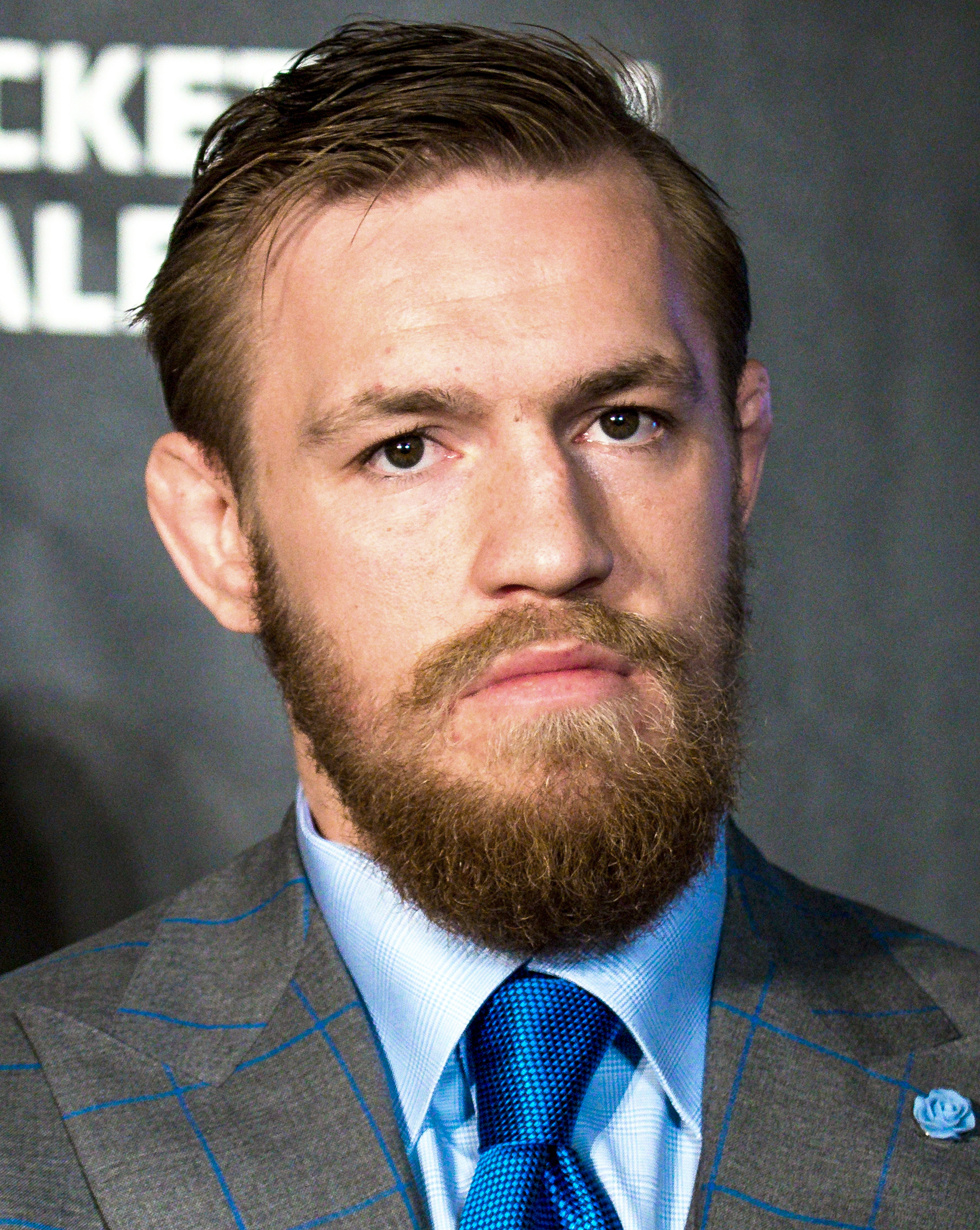
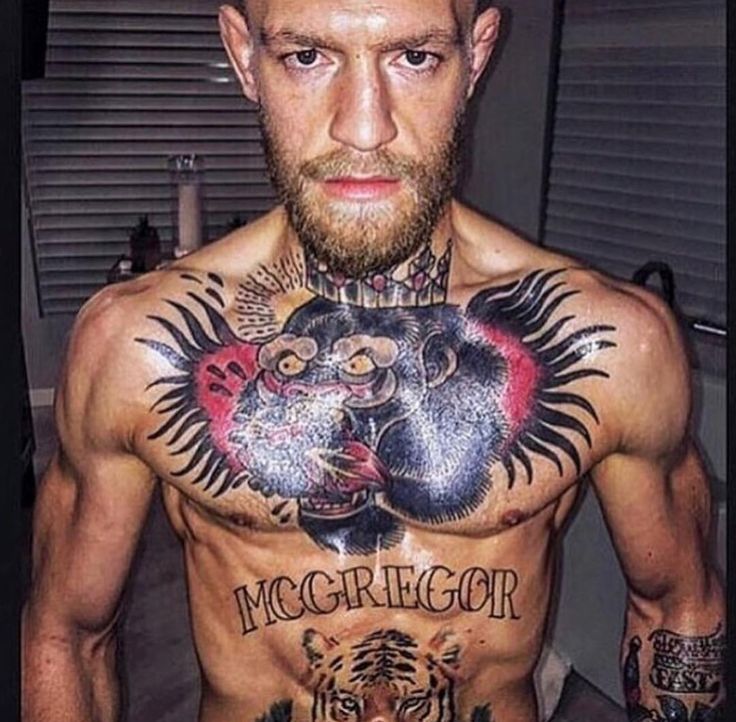
The large chest piece shows a gorilla wearing a crown and holding or eating a bloody human heart. McGregor discussed the tattoo on UFC programming and described the design in deliberately direct terms. The image is one of the clearest examples of a tattoo whose appearance is well documented while its full private meaning is less certain.
Esquire described the gorilla as a major part of his chest and placed it in the centre of his upper body. The design is large enough to be visible in training, weigh-in and interview photographs. It sits above the lettering and tiger on the stomach, giving the front of the torso a connected layout.
The tiger on his stomach
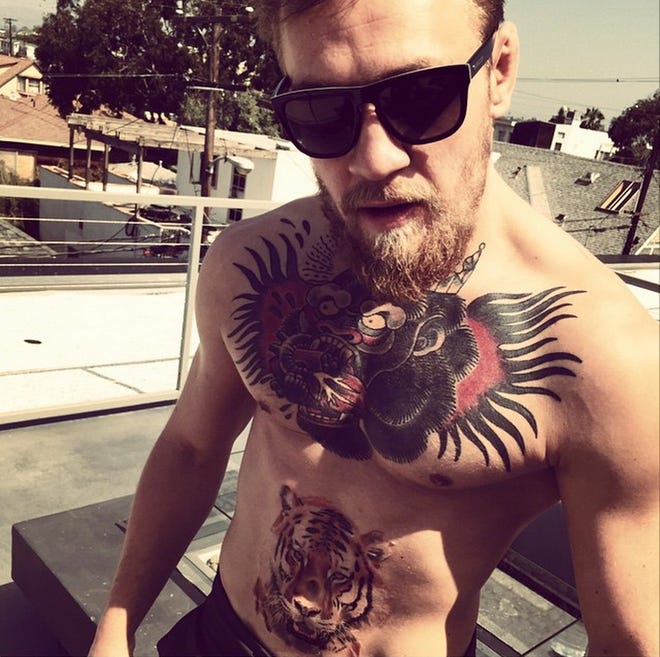
McGregor added a tiger to his stomach in 2015, before his fight with José Aldo. UFC reported that the image was placed on the lower torso and that the words “McGregor” and “Notorious” were arranged around it. MMA Fighting also reported the addition during the period leading to UFC 189.
The tiger is positioned between the two pieces of lettering rather than sitting alone on the abdomen. That placement is why photographs can make the design look like one large torso panel. The existence and position of the tiger are well documented. Online explanations about what the animal supposedly represents are less reliable and are not treated here as confirmed statements from McGregor.
McGregor and Notorious lettering
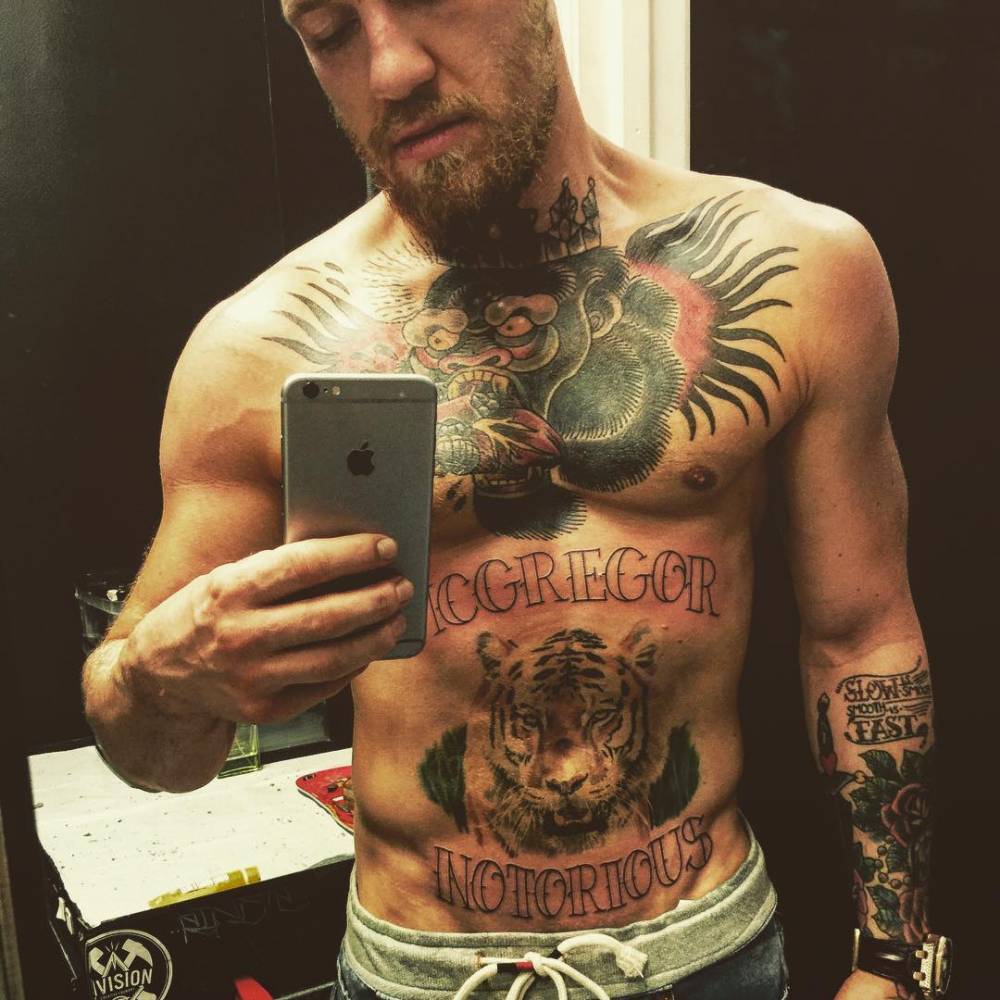
The word “McGregor” appears across the upper part of the stomach area, while “Notorious” is placed below the tiger. The lettering uses the public name associated with his fighting career. UFC’s report on the 2015 addition is a useful source because it records the tattoo as part of a new post rather than relying on an undated photograph.
The lettering also helps date photographs. Images from before the tiger was added show a different stomach layout. Later fight-week photographs show the tiger, the two words and the chest gorilla together.
Wrist and forearm tattoos
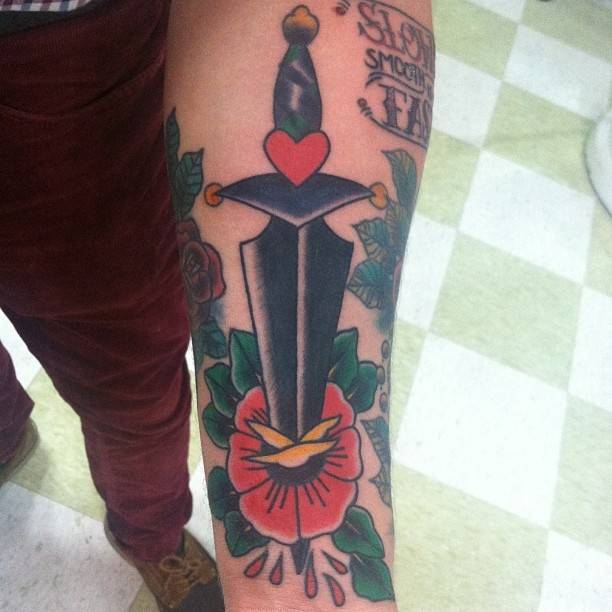
McGregor has smaller work on his wrists and forearms. Esquire described a mustached man in a top hat on the left wrist and the phrase “slow is smooth, smooth is fast.” The phrase is visible in photographs and is often listed among his most recognisable smaller tattoos. It can be described as lettering without claiming that it explains his whole approach to fighting.
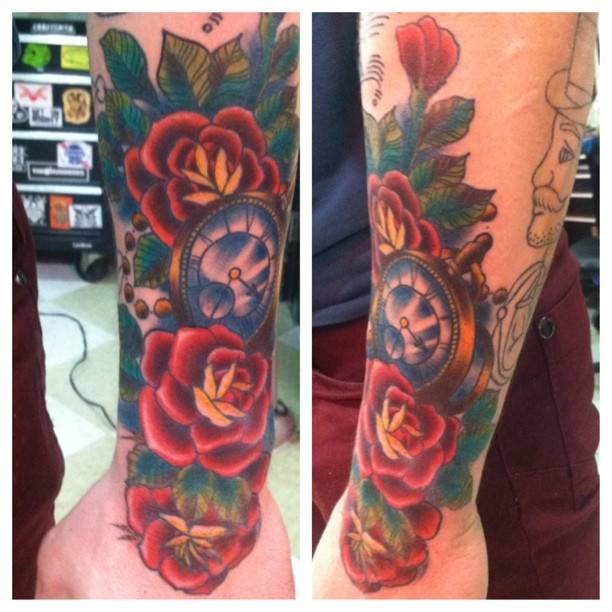
Other arm photographs show a rose, a clock and additional lettering. These pieces are harder to date than the tiger because they are not always visible in the same frame. Their presence can be observed in close images, but the sources reviewed do not establish a complete sequence for every small addition.
Artists and studios
The tiger was reported in connection with Sideshow Tattoo in California, with Pin identified in the UFC’s report from 2015. That gives the stomach tattoo a specific studio lead. It should not be used to claim that Pin created McGregor’s whole collection.
MMA Fighting interviewed artist Steve Butcher about a McGregor-related chest tattoo and described a twelve-hour process at FY Ink in Toronto. Butcher said the work was not his usual style and commented on the quality of McGregor’s existing tattoos. This is useful evidence for the artist and studio history, but it does not prove that Butcher created every visible piece on McGregor.
How the collection changed
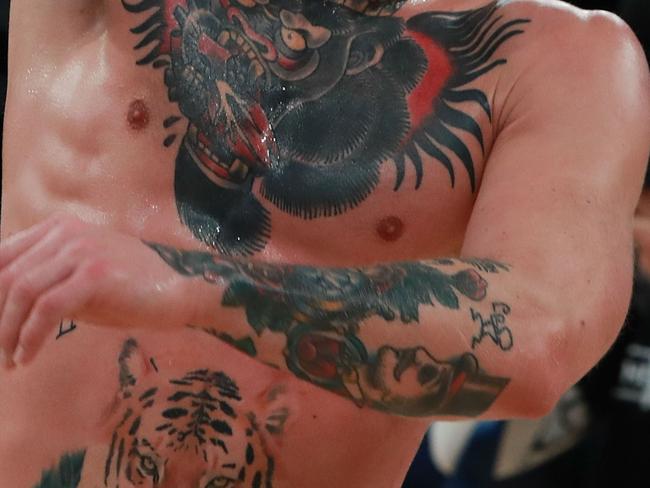
McGregor’s tattoo record developed alongside his public fighting career. The chest gorilla was already a defining feature in early profile coverage. The tiger and torso lettering appeared later, creating a much larger front-of-body composition. Smaller wrist and forearm pieces are visible in interviews and training images, but clothing and camera angle often conceal them.
A dated approach matters because the collection is not a fixed diagram. A photograph from before 2015 cannot show the tiger that UFC reported before the Aldo fight. A later image may show additional arm work or a different level of visibility. Reports that give a precise current count should therefore be treated as counts from a particular period.
What is confirmed and what is not
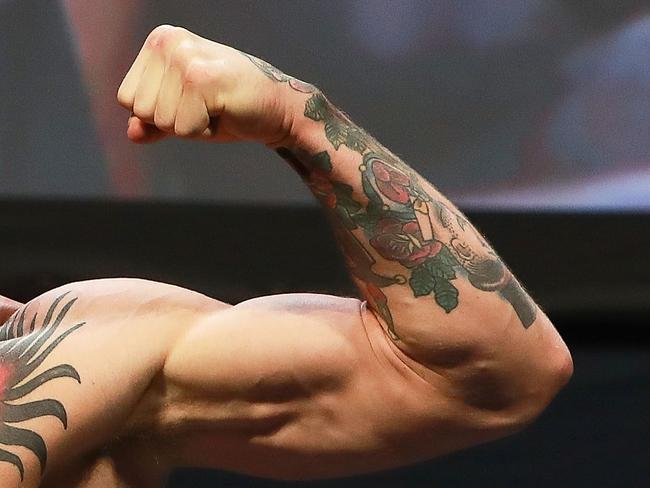
The strongest record covers the chest gorilla, the stomach tiger, the McGregor and Notorious lettering, the wrist phrase and the reported artists connected with particular pieces. The existence of other small designs is visible in photographs, but their meanings and dates are not always public.
There is no need to invent a symbolism for the animals or to assign every tattoo to one artist. A useful guide can describe the design, location, date or period, and source. Where the public record is silent, the correct answer is that the meaning remains unconfirmed.
Frequently asked questions
Who tattooed the tiger?
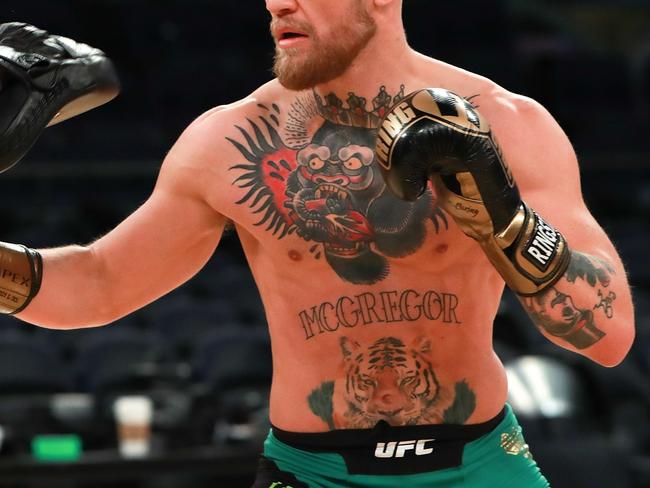
UFC connected the 2015 stomach tattoo with Sideshow Tattoo and identified Pin in the accompanying post.
What is McGregor’s largest tattoo?
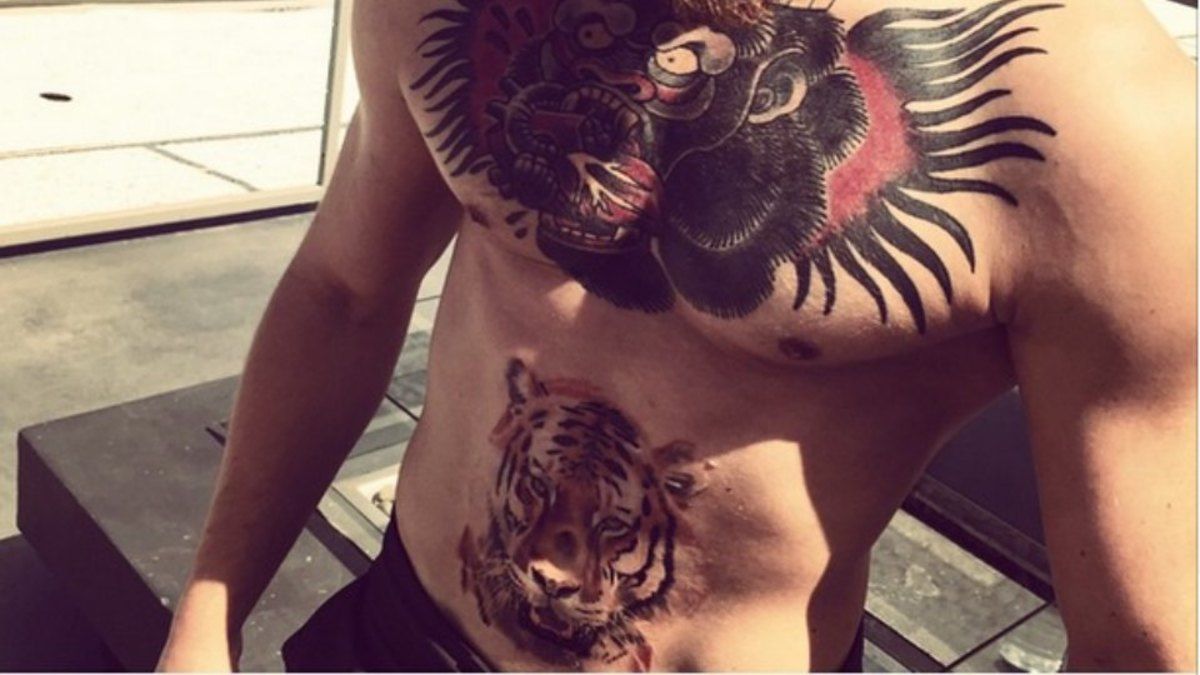
The crowned gorilla on his chest is one of his largest and most visible pieces.
Does he have tattoos on his arms?
Yes. Photographs show lettering, a wrist phrase, a rose, a clock and other smaller work on his arms and wrists.
Additional documented details
UFC coverage places the tiger addition in the period before the José Aldo fight, which makes it possible to separate the earlier chest work from the later stomach design. The UFC article also records the words placed around the tiger rather than treating the entire front of the body as one undated tattoo.
The wrist phrase has a separate history from the torso pieces. Esquire described it in an interview context alongside the small figure in a top hat. That source supports the location and wording. It does not establish that the phrase explains the gorilla or tiger.
Artist reporting also needs to be kept specific. Pin and Sideshow Tattoo are connected with the stomach tattoo in UFC material. Steve Butcher discussed a different chest-related process with MMA Fighting and identified FY Ink in Toronto. Those records show that more than one artist or studio may be involved, and neither source supports assigning the whole collection to one tattooist.
Photographs from weigh-ins and training sessions show that the front torso is the best documented part of the collection. The back, sides and legs are less consistently visible, so claims about those areas require clearer dated evidence. This guide includes the smaller arm and wrist work because it is described by a source, but leaves private meanings unknown where no statement exists.