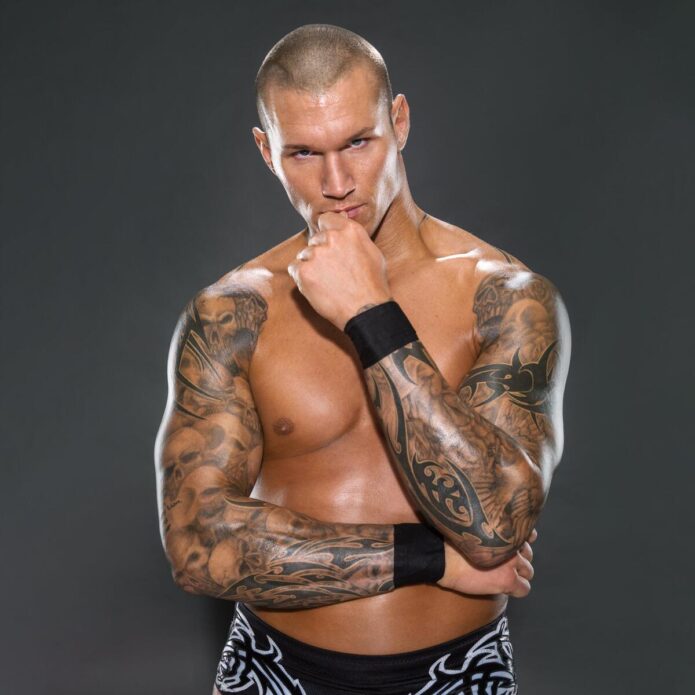
Randy Orton’s tattoos make more sense as a record of revisions than as a single finished design. He has described getting his first pieces when he was young, later deciding that some of the early work did not represent him anymore. During time away from wrestling, he put roughly 40 to 50 hours into the sleeves that became his most recognisable look: dark tribal structure, skulls, roses and lettering built around family and personal history.
The collection is often described as one large sleeve, but the photographs show several layers. The back and shoulders carry an older tribal composition, while the arms contain newer work that covers or connects earlier tattoos. Orton has explained some of the decisions himself. Other details are visible in photographs but do not have a confirmed private meaning, so they are kept separate here.
The tribal design across Orton’s back and shoulders
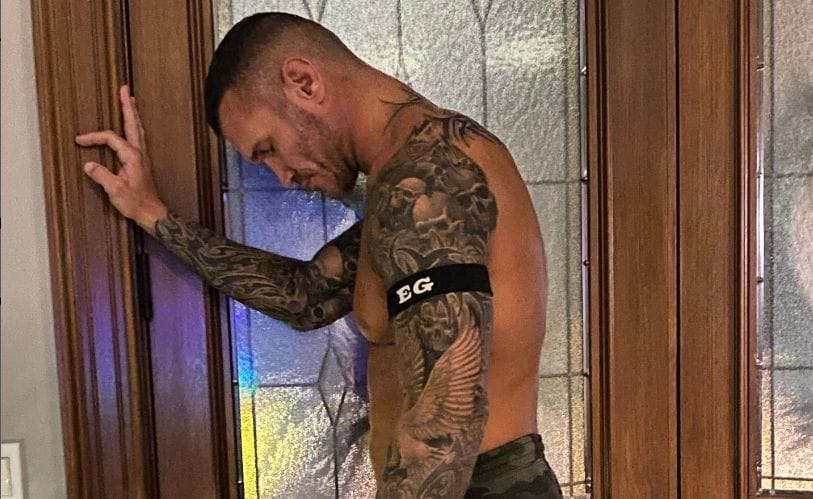
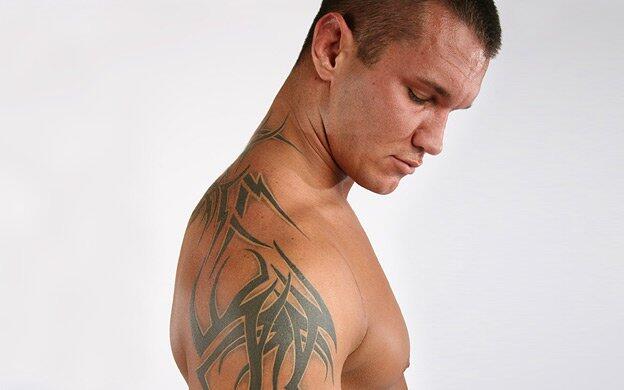
The broad tribal design that coils across Orton’s back, shoulders and neck is one of the first things people recognise. Its heavy black shapes follow the body rather than sitting inside a small panel. The lines wrap over the shoulder blades and rise toward the neck, which gives the piece movement when he turns or lifts his arms in the ring.
Orton has been candid that some of his early tribal work had no deep story behind it. He was young, wanted tattoos and later became dissatisfied with parts of what he had chosen. That admission is important because it prevents every black shape from being assigned a symbolic meaning after the fact. The design can be discussed as a strong visual structure without claiming it represents a particular belief.
The sleeves replaced and connected older work
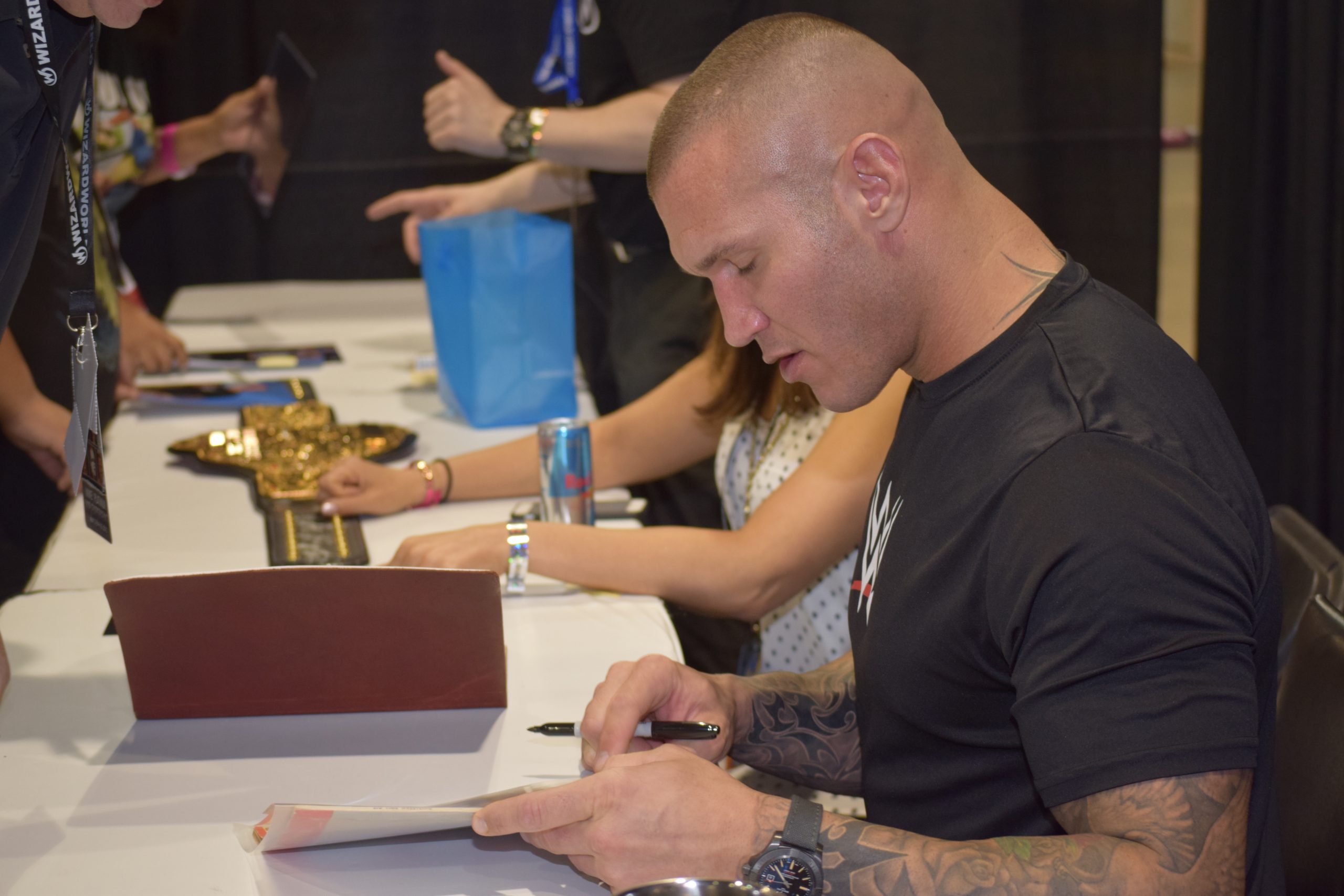
Orton has said that a serious injury kept him away from the road long enough to let extensive tattoo work heal. He used that time to build the sleeves he had wanted for years. The result was not simply a new image applied to blank skin. New tribal sections were added around earlier work, filling gaps and covering designs he no longer wanted visible.
One of the older pieces was associated with the United States Marine Corps. After receiving a bad-conduct discharge, Orton explained that he covered the tattoo rather than continuing to display it unchanged. The cover-up is part of the collection’s history, but the original design should not be treated as if it remains fully visible in current photographs.
This is why dated images matter. A photograph from before the sleeve was completed can show an exposed section of skin or an earlier emblem, while a later image shows skulls, shading and connecting blackwork over the same area. The change is not a contradiction; it is the tattoo’s timeline.
Skulls and the Bible verse create the darker arm language
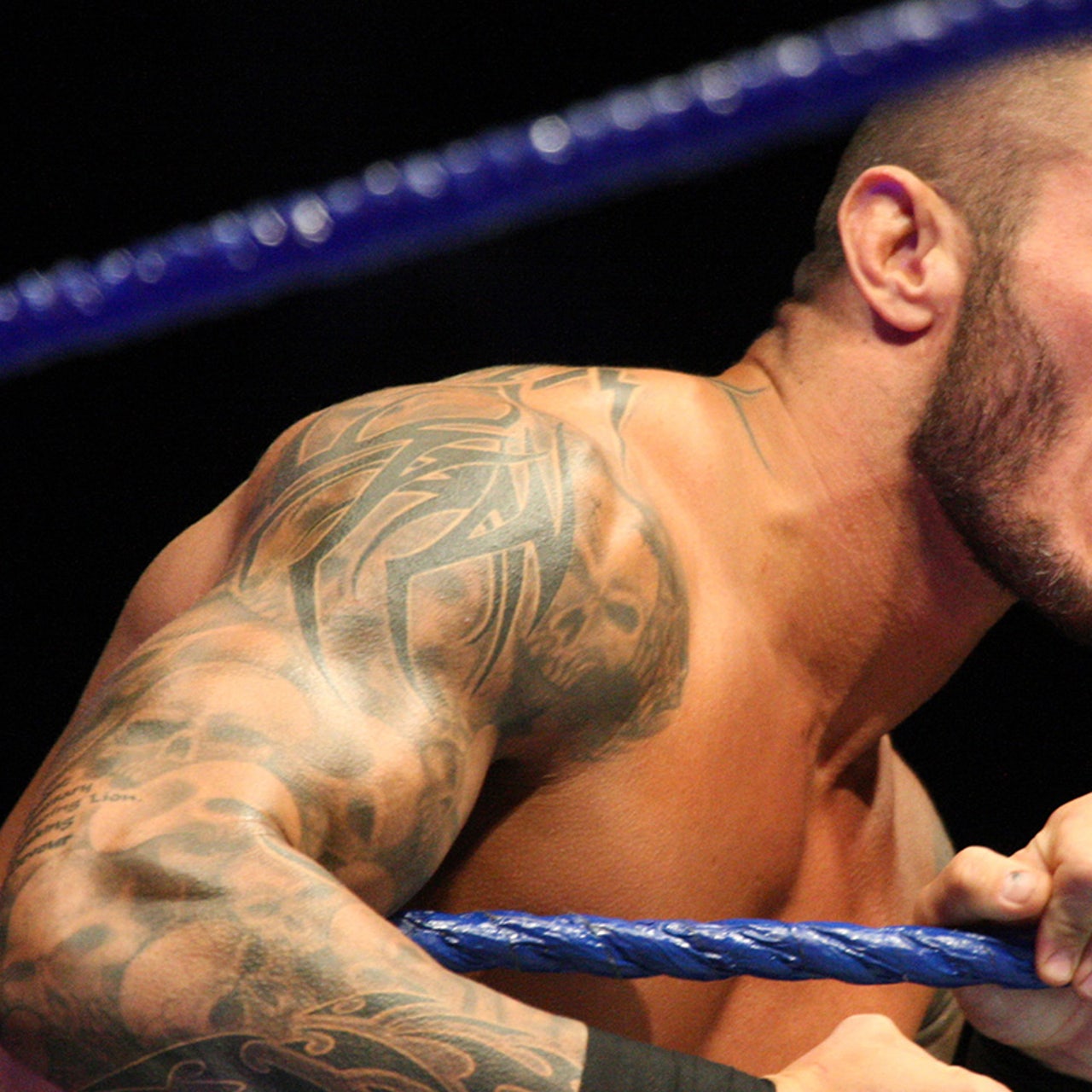
Skulls appear throughout the arm work, surrounded by dense black shading and ornamental forms. They are visually easy to identify, but Orton has not publicly assigned a separate meaning to every skull. They work as part of the sleeve’s darker vocabulary, helping connect the gaps between older tribal lines and later additions.
The Bible verse on the back of the right arm is more specific. It is commonly identified as “Be sober, be vigilant, because your adversary the devil, as a roaring lion, walketh about seeking whom he may devour.” That wording is associated with 1 Peter 5:8. The long text is harder to read in a moving-ring photograph, but close images show that the lettering is a deliberate part of the sleeve rather than random script.
Keeping the verse separate from the skulls is useful. The verse supplies language and a religious reference; the skulls supply imagery and rhythm. A photograph may show them together, but that does not prove that Orton intended one single message for every element.
The coloured rose is a family tribute
Among the black and grey work, a small coloured rose stands out. Orton has identified it as a tribute to his daughter Alanna Marie. The colour gives the flower a different visual weight from the surrounding skulls and tribal patterns, and the personal explanation gives readers something stronger than a generic claim that roses always mean love.
The rose also shows how the sleeves combine private and public information. The design is visible to anyone watching him perform, but its specific connection to his daughter comes from what Orton has said. Without that explanation, it would be easy to describe only the colour and shape and miss why this particular flower matters inside the larger composition.
Names, dates and the small hand tattoo
Family references appear in the wider collection through names and dates, although photographs do not always make every line legible. Some inventories also identify a small “Kim” tattoo with a heart on the middle finger of his left hand, connected to his wife Kim. It is a much smaller and more intimate mark than the sleeves, and its visibility changes with gloves, hand position and the quality of the photograph.
It is better to describe those details as reported family tattoos than to invent an official count. Orton’s collection has grown in stages, and some elements have been covered, extended or visually absorbed into larger work. A list made from one event photograph will always be incomplete.
How the collection changed during his wrestling career
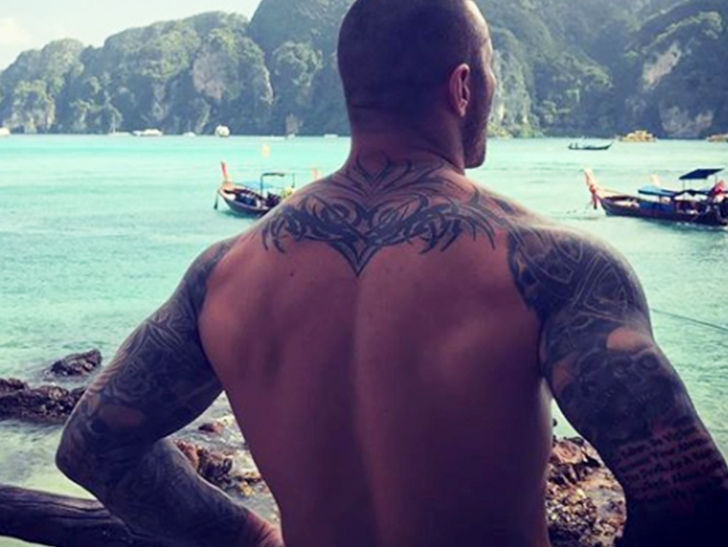
Orton’s tattoo history follows the rhythm of his career. Early tribal pieces appeared before the large sleeves were finished. The major arm sessions came during time away from the road, when he could sit for long appointments and allow the skin to recover. Later photographs show a more connected body of work, with fewer obvious gaps between symbols, script and shading.
The design is also shaped by performance. Wrestling gear exposes the arms, shoulders and upper back, so the tattoos became part of Orton’s entrance silhouette. Bright arena lighting can flatten the shading, while close backstage photographs reveal details that disappear from a television wide shot. Neither view is a complete catalogue by itself.
What the public record can establish about Randy Orton’s tattoos
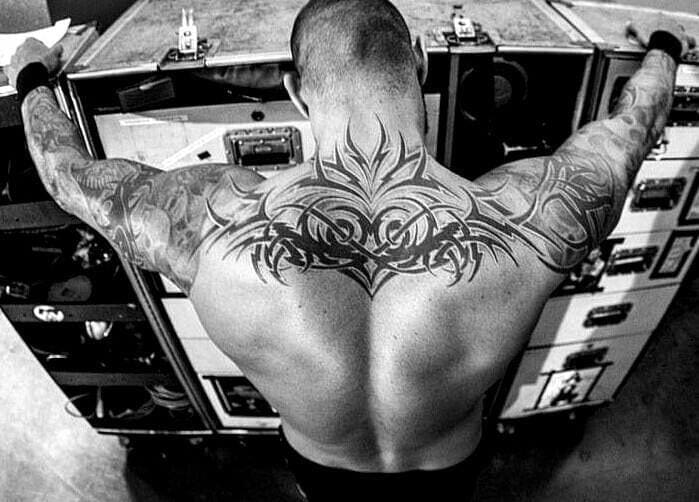
The strongest record supports a tribal back-and-shoulder design, extensive sleeves containing skulls and script, a Bible verse, a coloured rose associated with Alanna Marie, and smaller family-related marks. Orton has also explained that some early work was covered or reworked because he no longer liked it. The exact meaning of every skull, line and filler shape is not publicly established.
That uncertainty does not make the collection less interesting. It shows how a tattooed body changes with age, work, family and regret. Orton’s sleeves are not just a finished visual identity; they are a series of decisions, including decisions to revise earlier ones.
One thought on “Randy Orton’s Tattoos: From Tribal Work to the RKO”