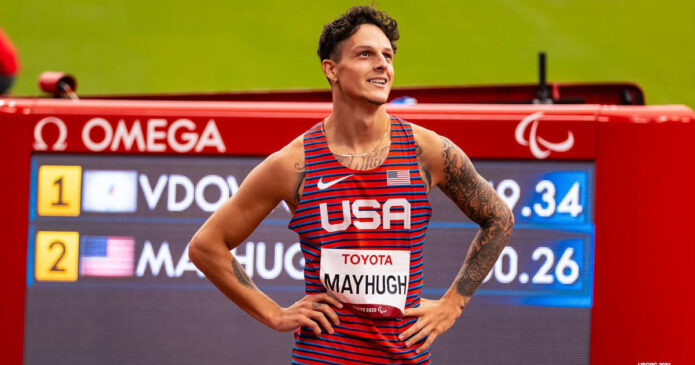
Nick Mayhugh’s tattoos are easy to notice, but the interesting part is how closely they follow his life. His arms carry large, confident pieces. His hands and wrists hold smaller details that only really make sense when he explains them. There are marks tied to football, reminders of the people who supported him, and a few tattoos that look forward to the next chapter instead of simply recording the last one.
Mayhugh has spoken openly about getting his first tattoo at 17, with his mother signing the consent form. Since then, the collection has grown alongside a career that moved from para football to sprinting, from early uncertainty to Paralympic gold medals and world records. The ink doesn’t sit apart from that story. It’s part of the way he keeps track of where he has been and what he still wants to do.
The Team USA tattoo tour gives us a useful look at the pieces he has actually explained. There are also plenty of details visible in portraits and race photos that he hasn’t fully captioned. This guide sticks with the documented meanings and describes the visible work without pretending every line has a secret explanation. That honesty makes the collection feel more personal, not less complete.
His first tattoo came with his mother’s permission
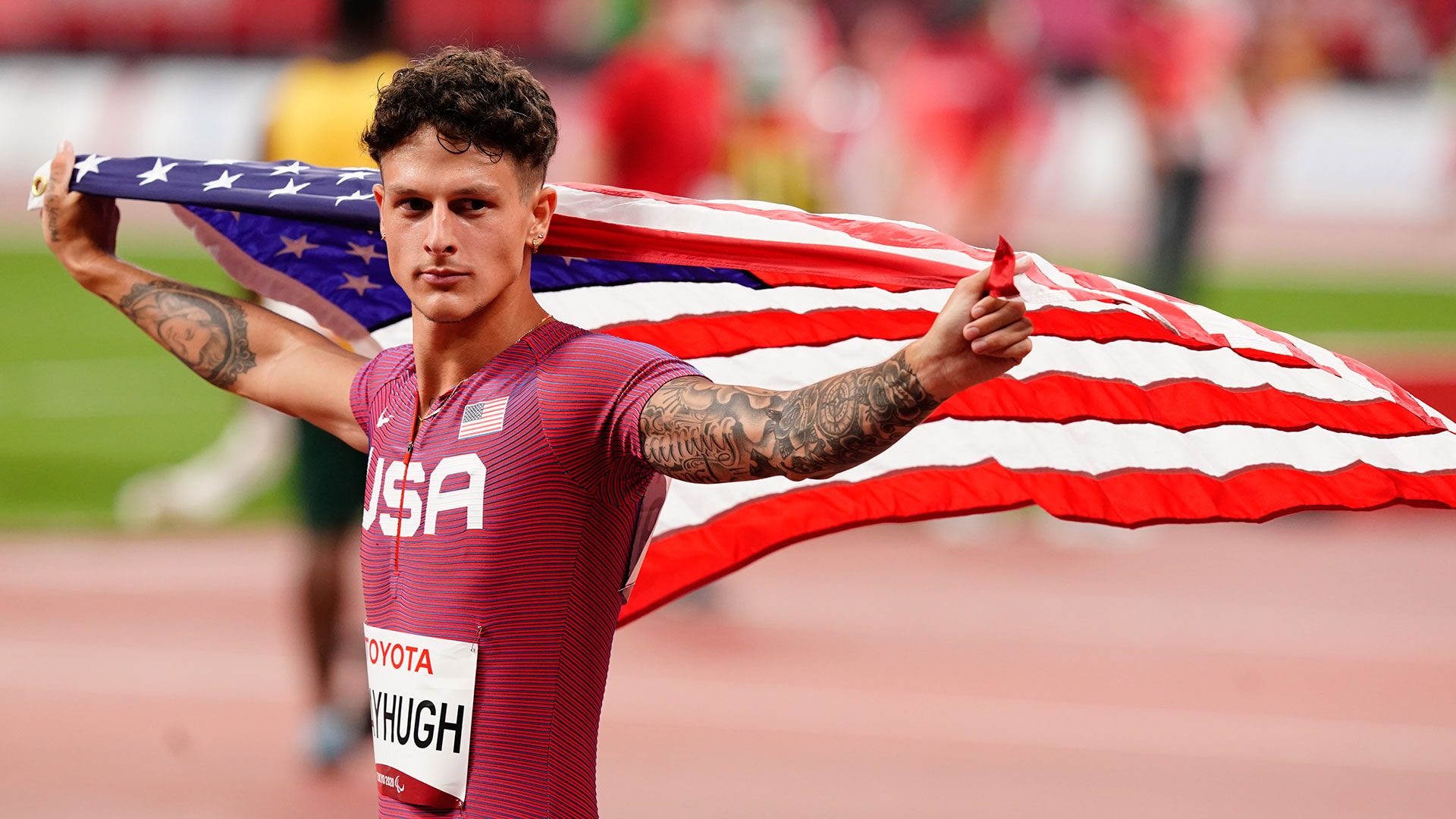
Mayhugh has said he got his first tattoo when he was 17. The detail that sticks out is that his mother signed the consent form. That small bit of family involvement gives the beginning of the collection a different feel from the usual story about sneaking into a shop or getting ink on a dare.
It also gives the later tattoos a starting point. At 17, Mayhugh was not yet the athlete people know from the Paralympic track. He was a young person making his first permanent decision about what he wanted to carry on his skin. The exact design of that first piece is not the part he has talked about most publicly, so it is better not to fill the gap with a guess.
What we can say is that the first tattoo started a habit of using ink as a marker. Later pieces connect to sport, family, personal goals and the people who influenced him. The collection grew as his life got bigger, rather than appearing all at once as a finished image.
That makes his tattoos feel grounded. There is no need to invent a grand explanation for every piece. A first tattoo can simply be the first step, and the meaning can become clearer when you look at everything that came after it. Mayhugh’s collection is a timeline before it is a style statement.
Ronaldinho gave his football years a permanent place
One of the clearest documented references in Mayhugh’s tattoo story is a Ronaldinho tattoo. Before sprinting became his main stage, Mayhugh played para football, and Ronaldinho was one of the players he looked up to. The tattoo keeps that football connection visible even as his career has moved in another direction.
It works as more than a sports-fan tribute. Football was part of Mayhugh’s athletic identity before he switched his focus to track and field. That earlier chapter helped shape the competitor he became, so the tattoo feels like a nod to the route rather than a detour he wants to erase.
In photographs, the Ronaldinho reference sits among a much larger mix of work across the arms. The surrounding tattoos make the image feel less like a standalone portrait and more like one panel in a developing sleeve. The football tattoo is a reminder that his story did not begin on the starting line.
There is also something very Mayhugh-like about keeping that influence close. He is quick, now, to talk about sprint times and medals, but the tattoo points back to the athlete he was before those achievements. It keeps an earlier version of him in the frame.
His hands bring butterflies, script and floral work into view
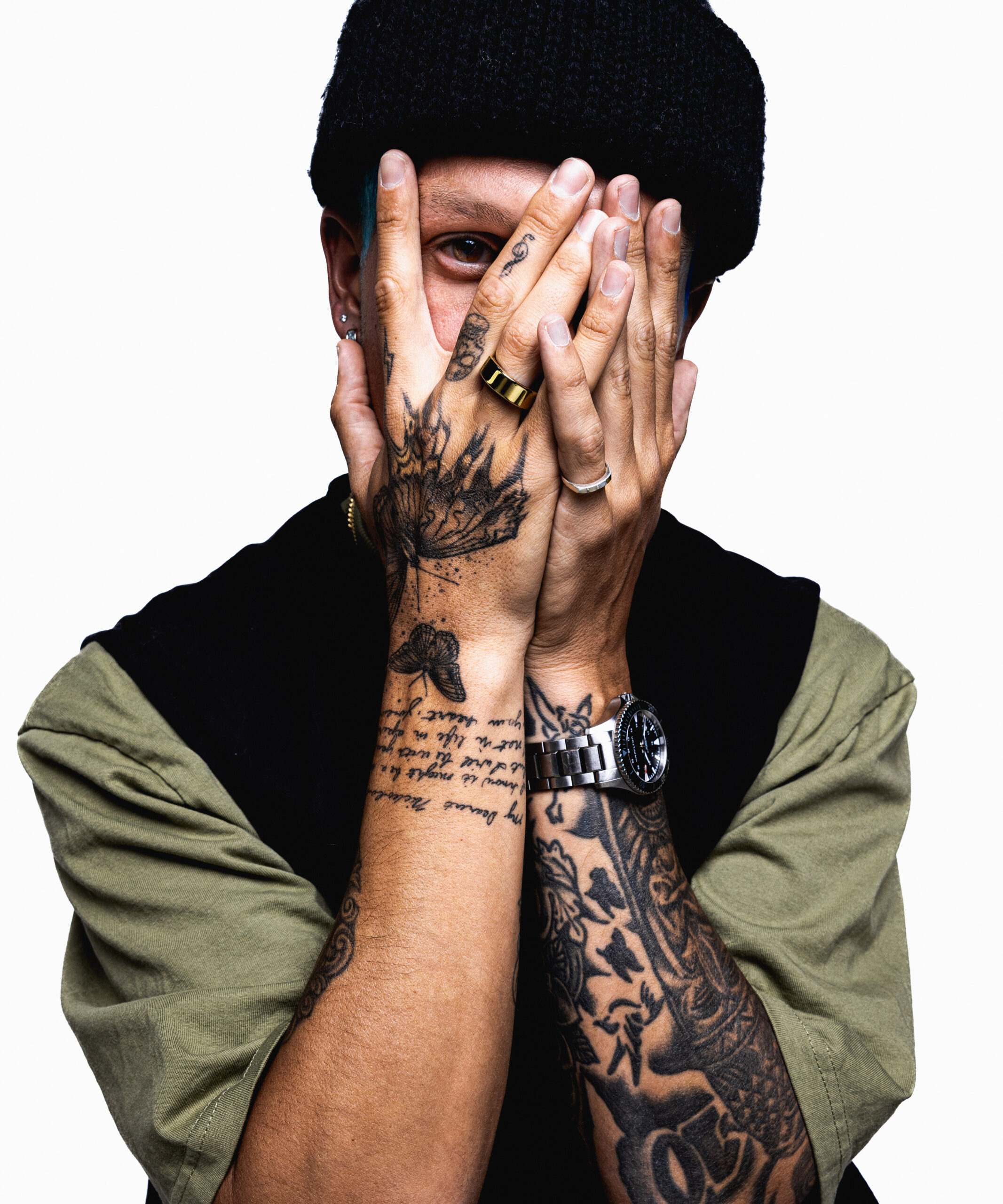
The most striking image from Mayhugh’s tattoo tour is a close portrait with his hands covering much of his face. It turns the hands into the subject. Across the fingers, wrists and backs of the hands, you can see script, butterfly imagery, floral shapes and dense black linework.
The photograph is useful because it shows how much of the collection sits in places that cannot really be hidden. Hand tattoos change the way a person is read. They appear when someone gestures, ties a shoe, holds a relay baton or simply puts a hand to their face. For Mayhugh, the ink becomes part of his everyday movement.
Not every small design has a public explanation, and the Team USA material does not claim that it does. Some of the lettering is visible but too small to read confidently in a photograph. The butterflies and floral motifs are clear enough to describe, though their individual meanings should be left to Mayhugh if he ever chooses to spell them out.
That mix of legible and private detail suits the larger collection. Some tattoos carry an obvious reference; others work more like personal texture. The hands photograph makes that balance hard to miss. They are visually busy, but not in a way that feels random. The designs overlap like a scrapbook that has been added to over time.
The placement matters, too. Arms can disappear under a shirt. Hands come forward with the rest of the person. Mayhugh’s hand tattoos make self-expression part of the gesture itself.
Tally marks and future spaces connect the ink to competition
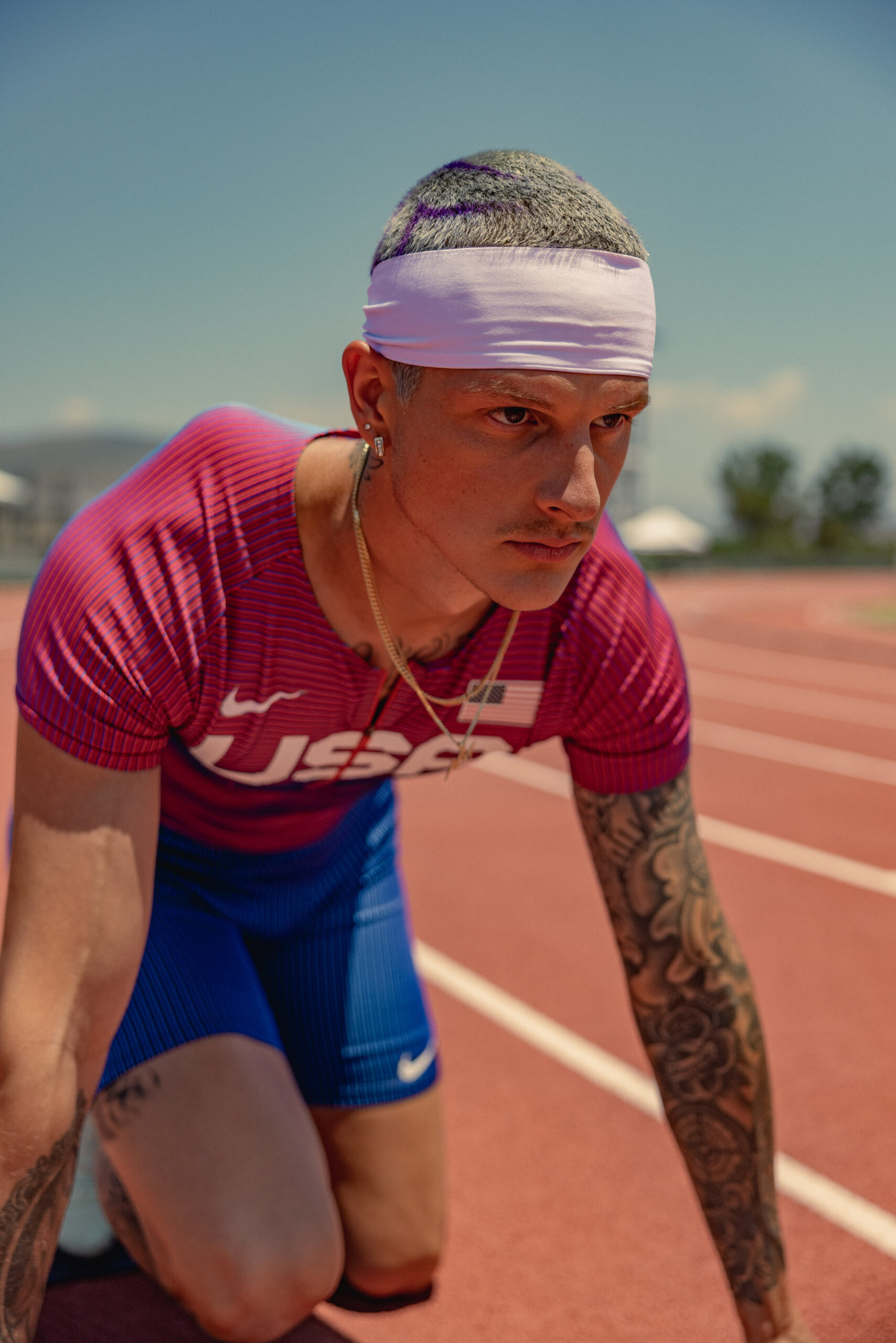
One of the most direct athletic references appears in the tally marks on Mayhugh’s wrist. In the tattoo tour imagery, the marks sit above a larger floral design, with a line of text about saving spaces for Paris and Los Angeles. The idea is simple: the wrist keeps room for milestones that have not happened yet.
That is a different kind of sports tattoo from a date or medal graphic. It is unfinished by design. The marks can grow as the career moves forward, and the blank space is part of the message. He has left room for future achievements instead of treating the collection as closed.
Mayhugh’s career makes that idea feel especially pointed. He won three gold medals at Tokyo 2020 and later faced the complicated reality of changing classifications, new events and new goals. A tattoo that looks ahead can hold all of that uncertainty. It says the next result still matters, even after the biggest wins have already happened.
The tally marks also fit the practical rhythm of an athlete’s life. Training is measured in repetitions, races, seasons and small improvements. A set of lines on the wrist turns that kind of counting into a visual habit. It is not flashy, but it is easy to understand once the context is there.
Placed beside the larger arm work, the wrist detail gives the sleeve a quieter note. The most hopeful tattoo in the collection may be the one that deliberately leaves itself unfinished.
The arm work is built from layers rather than one single theme
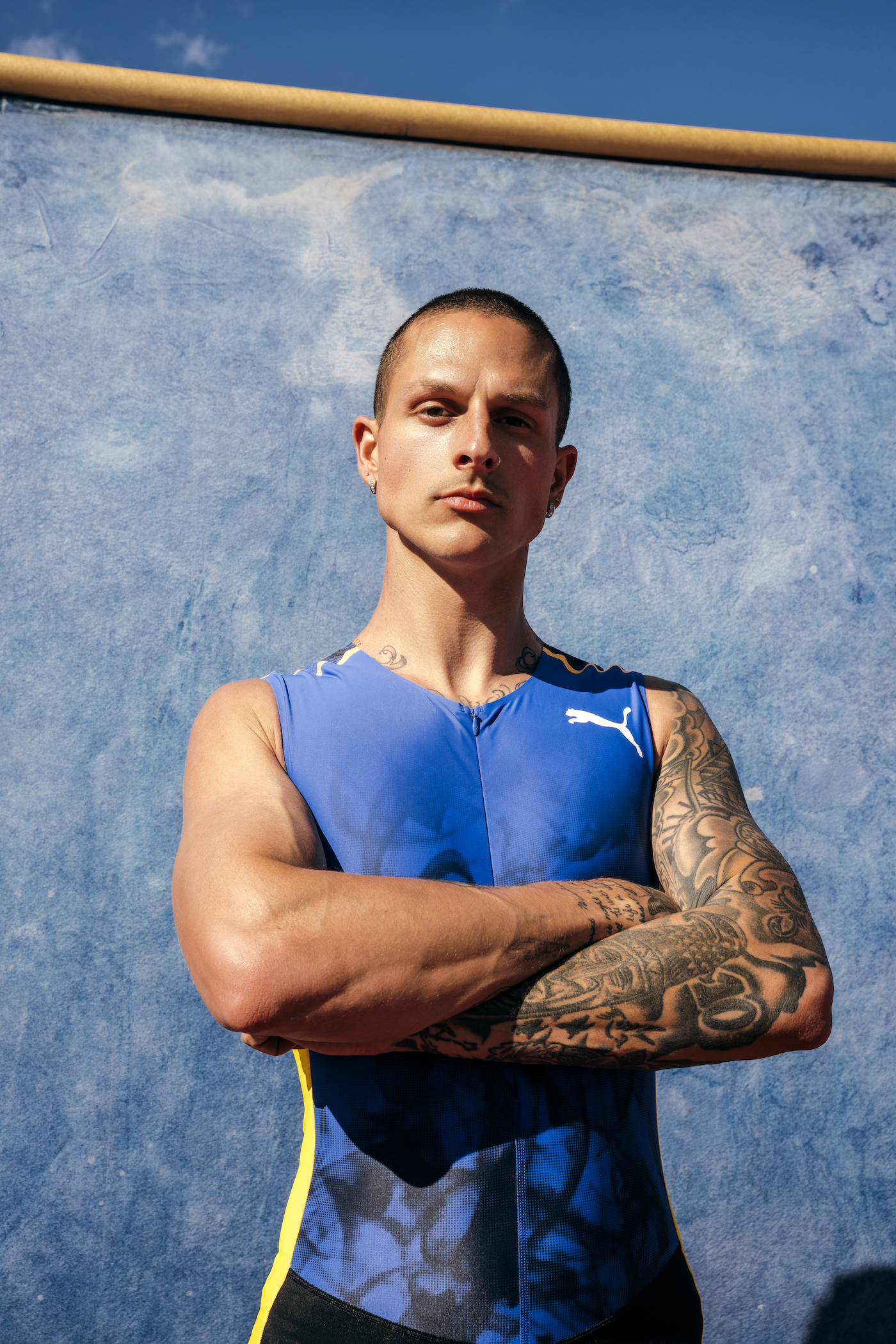
Mayhugh’s larger arm tattoos are where the collection starts to look like a full visual system. Portraits show heavy black-and-grey work running from the shoulders down the arms, with lettering, flowers, faces and ornamental shapes sitting close together. The designs are not all explained individually, but the overall effect is clear: this is a collection that has been built in layers.
That matters because his tattoos do not look like one giant piece designed in a single afternoon. They feel assembled through different stages of life. The football reference, the hand work, the wrist marks and the athletic reminders sit beside one another without being forced into a single logo or pattern.
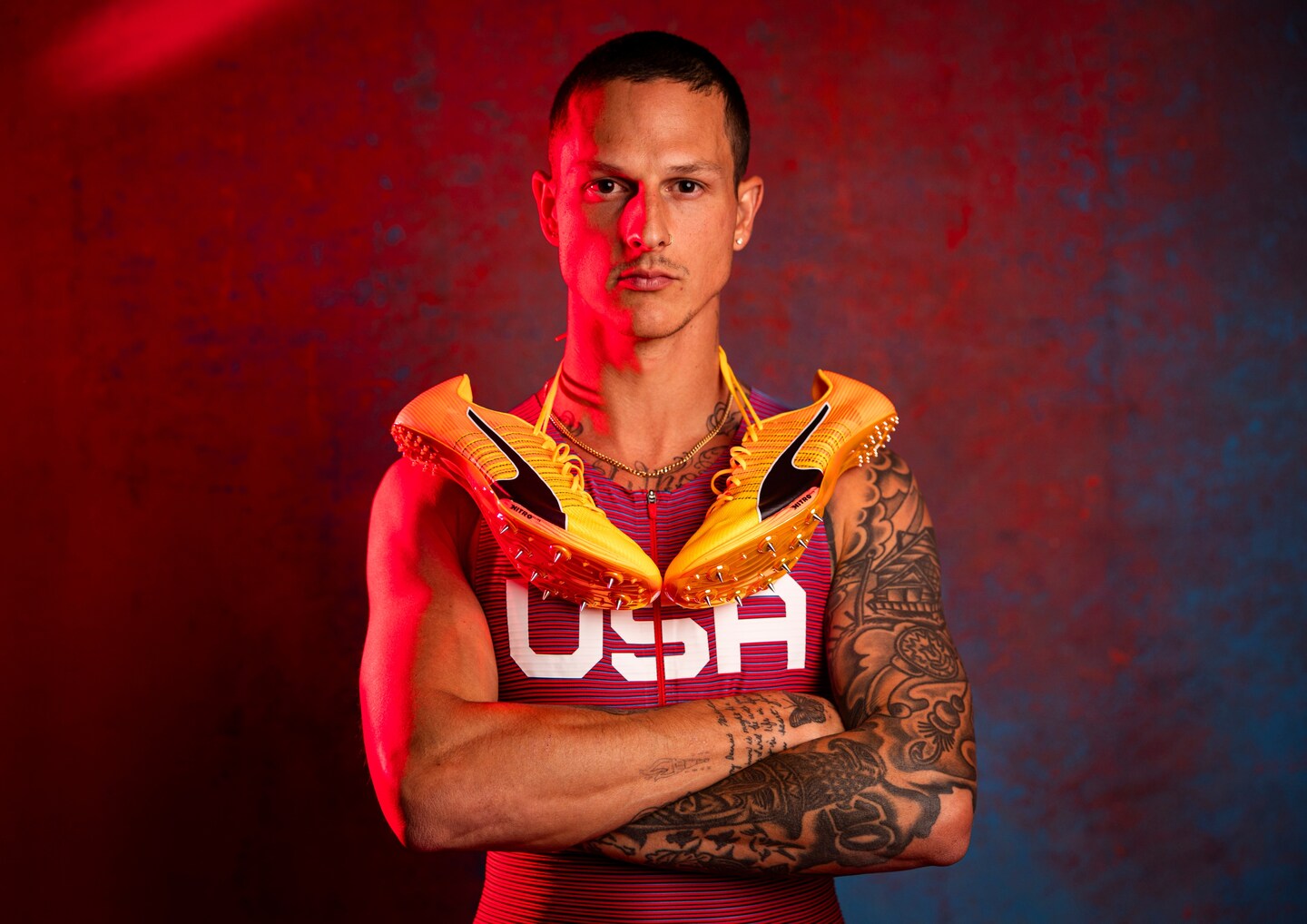
The Puma portrait is especially good for seeing the scale of the work. The shoulder and upper arm carry dense shading, while the forearm lettering and smaller marks keep the surface from becoming one flat block. There is movement in the sleeve because the shapes do not all speak at the same volume.
It is also worth separating what is visible from what is confirmed. We can describe the arm as a sleeve of black-and-grey imagery, but we should not attach a meaning to every animal, flower or shape just because it looks symbolic. Mayhugh has explained some anchors in the collection. The rest can remain part of the visual language.
That restraint keeps the article honest and gives the documented stories more room. The tattoos do not need a made-up explanation to be worth looking at.
How the tattoos fit the bigger picture
Put together, Mayhugh’s tattoos tell a story about movement. He moved from football to track. He moved from being a teenager asking his mother for permission to an adult athlete making space for future Games. He carries heroes, goals and small daily reminders across the same hands and arms that power his races.
There is a nice tension between the permanence of tattoo ink and the constant change in sport. Records disappear from the headlines. Classifications change. Training plans get rewritten. A tattoo stays where it was placed, but its meaning can stretch as the athlete grows into a new version of himself.
The clearest thread is not one design; it is the habit of marking progress. The Ronaldinho tribute remembers an earlier influence. The tally marks count what has happened and leave room for what might happen next. The hand tattoos bring the private visual language into every ordinary gesture.
That is why Mayhugh’s collection feels more thoughtful than a quick list of motifs. The ink is visible, but the stories are not all meant to be consumed at a glance. Some are public references. Some are family memories. Some are simply pieces he liked enough to keep. There is room for all three kinds of tattoo on the same body.
Watch Nick Mayhugh explain his tattoos
Mayhugh’s Team USA tattoo tour is the best place to hear him explain the pieces in his own voice.