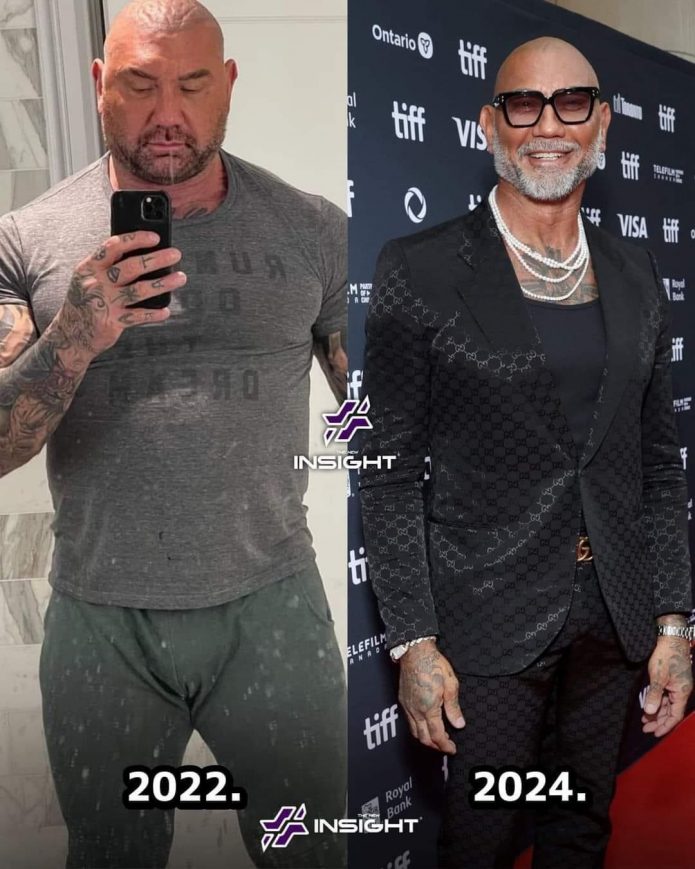
Dave Bautista’s tattoos are less a neat set of symbols than a body of work that kept changing with him. In GQ’s tattoo tour, he says the pieces connect across his body, and jokes that there are “like three” tattoos. That loose count makes sense: old work has been reworked, some designs sit beside later additions, and several pieces are easier to understand through the stories he tells than through a catalogue of symbols.
One connected collection, built over decades
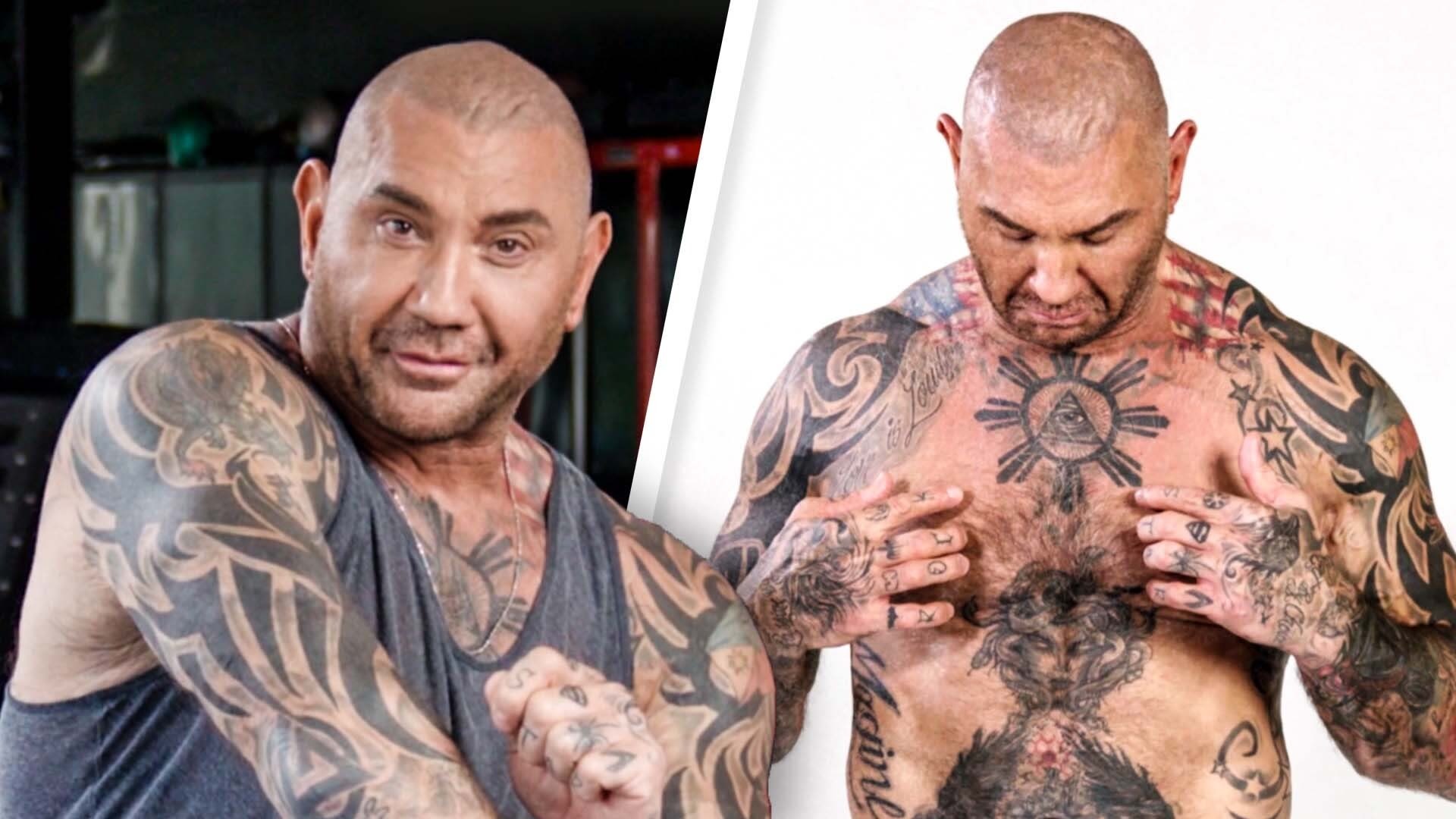
The broad view is useful because Bautista’s ink does not read as one uniform sleeve. His chest, arms, hands, legs and back carry different kinds of work: family and heritage references, pop-culture images, memorial portraits, and pieces he later chose to cover. He says the back took close to 50 hours and was retouched after years of wrestling had affected it. That is a practical detail, not a clue to some hidden meaning. The safest guide to his tattoos starts with what can be seen, then keeps personal explanations tied to the pieces he has actually discussed.
GQ’s conversation is the strongest source for his own account. It also makes clear that not every design has a neatly documented explanation. Where Bautista has not supplied one, a photograph can identify placement and appearance, but it cannot tell us what a symbol means to him.
His Filipino and Greek heritage across the chest and arm
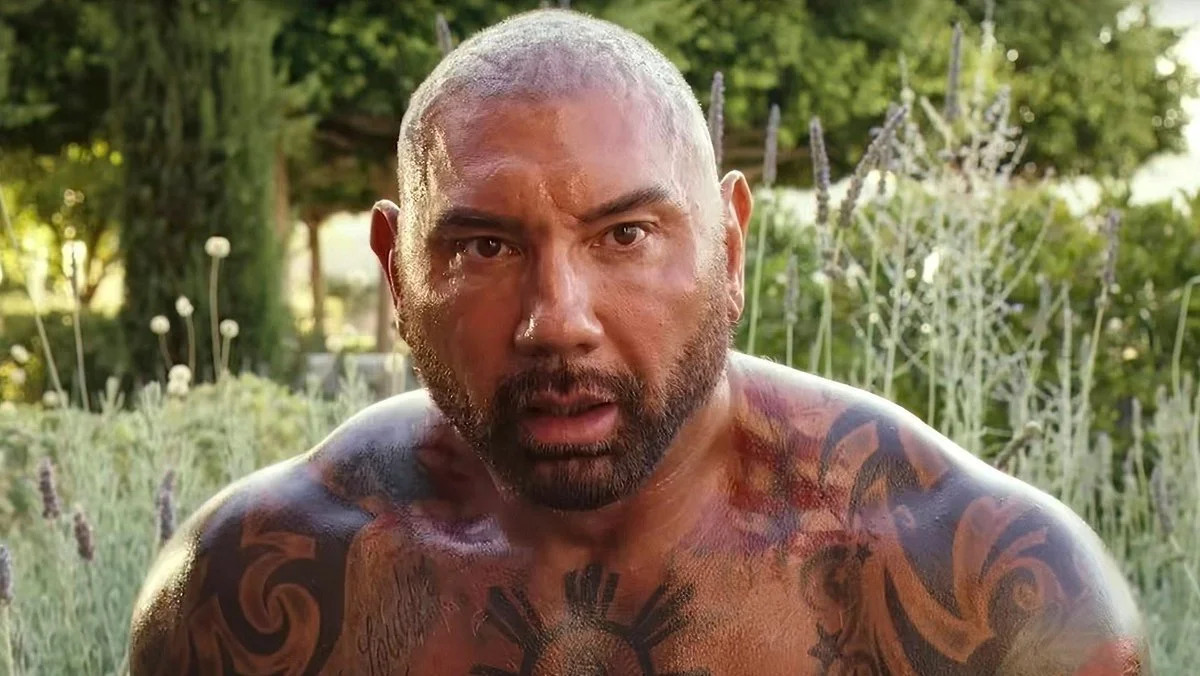
Bautista has spoken about his Greek mother and Filipino father, and his tattoos include references to both sides of his family. The visible group includes the flags of Greece and the Philippines on his upper arm, with a Filipino sun and stars nearby. On his chest, a sun surrounds the Eye of Providence. These are identifiable images and placements, not permission to assign a single broad meaning to every line of the composition.
In an interview about the designs, Bautista described the heritage pieces as a way of carrying his background with him. The placement matters: they sit among a larger collection, rather than appearing as a stand-alone flag display. A photograph can show the composition; his interview supplies the family context. That distinction keeps the description specific without turning a visible national symbol into an invented biography.
The old tattoo he covered after a friend’s anti-gay remarks
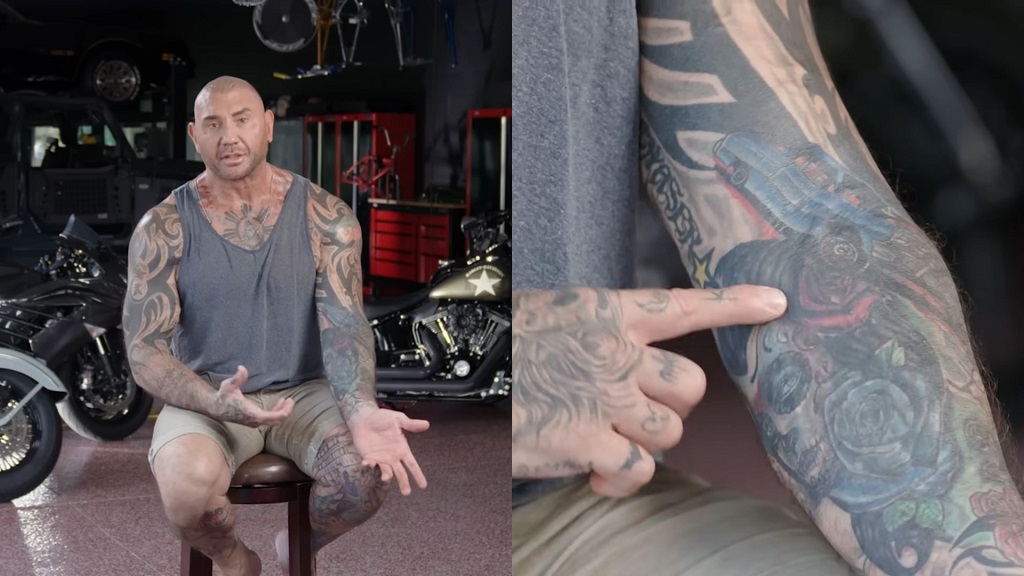
One of Bautista’s clearest tattoo stories is about removal and replacement. He says he covered a team logo after a friend made anti-gay comments. In the GQ tour, he does not name the person, and the account does not require readers to guess. The important point is the choice he describes: he no longer wanted that mark on his body after hearing the remarks.
The cover-up is part of the collection’s history, not just a before-and-after detail. Bautista has also talked about older tattoos being reworked over time. In this case, the source establishes why he wanted the logo gone; the image helps show the area he discusses. It would be inaccurate to identify the former friend or assign the logo to a named teammate without a reliable source.
Old-school imagery on his arms and hands
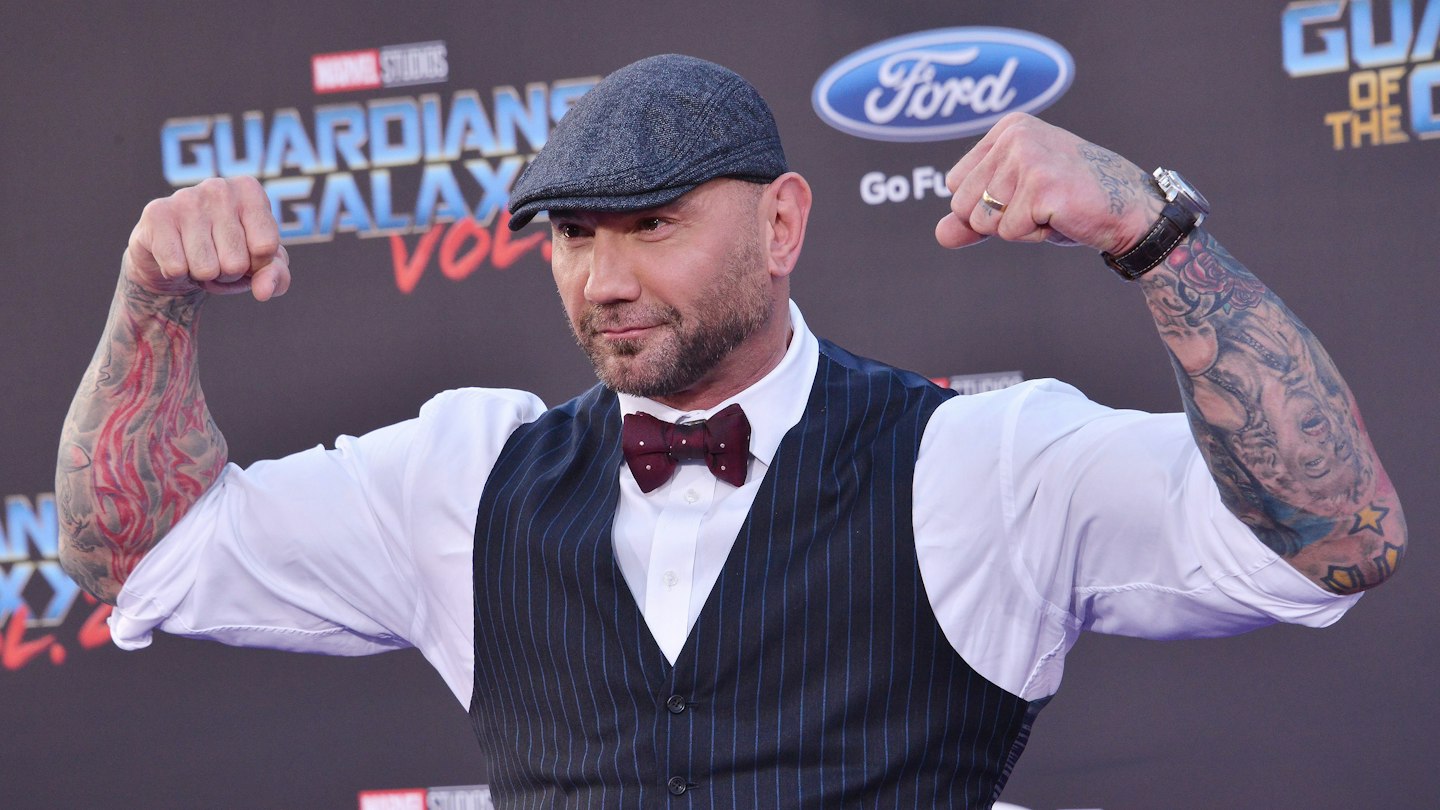
His arms bring together designs that do not all belong to the same style or moment. Bautista points out a raven on his left hand, explaining that the result was less menacing than he had pictured. That small, candid observation says more than a generic claim that every tattoo represents strength. GQ also shows and discusses a Gracie Fighter mark on his elbow that was initially placed backward, lightened, and tattooed again. He recalls the swelling afterward, a detail that makes the story memorable without turning the mishap into lore.
There are also tattoos connected to entertainment and music. Bautista has discussed the Wu-Tang Clan and RZA, along with logos tied to films and franchises he has worked on, including Avengers, Guardians of the Galaxy and Spectre. The designs sit within a much larger mix of pictures, lettering and symbols. A wide event photo shows the overall coverage, but finer details are best checked against his own close-up tour rather than guessed from a distant image.
His feet carry pin-up tattoos, which he describes as painful to sit through. He also talks about an unfinished Japanese fortress design behind his knee, another placement he found especially difficult. The tour documents those choices and the experience of getting them; it does not establish a broad cultural explanation for every motif.
The Winnie-the-Pooh tattoo on his leg
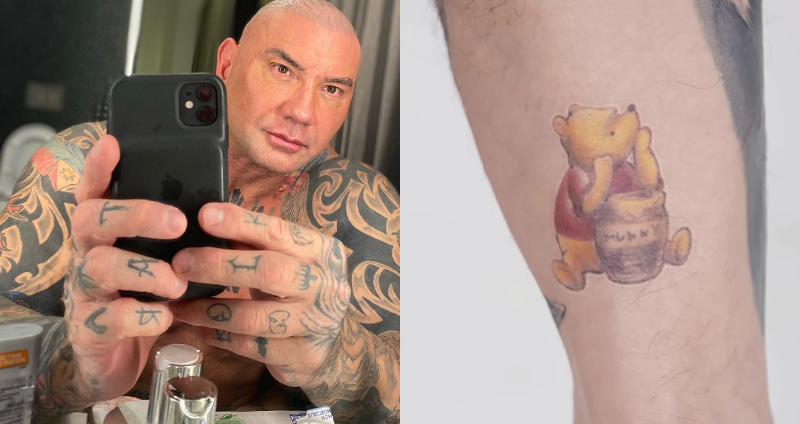
This is one of the collection’s more playful turns. Bautista says he got a Winnie-the-Pooh tattoo after his young co-star Chloe Coleman was disappointed to learn he did not have one. The detail makes the design unusually easy to place in context: it began as a response to a child’s enthusiasm, not as a supposedly profound symbol.
The tattoo sits on the back of his leg. Its contrast with the darker, more serious-looking pieces elsewhere is part of what makes it stand out. Bautista has said he enjoys how unexpected it is. The photograph shows the character clearly enough to identify the subject; the interview explains the story behind the decision.
Cillian Murphy’s Tommy Shelby on his thigh
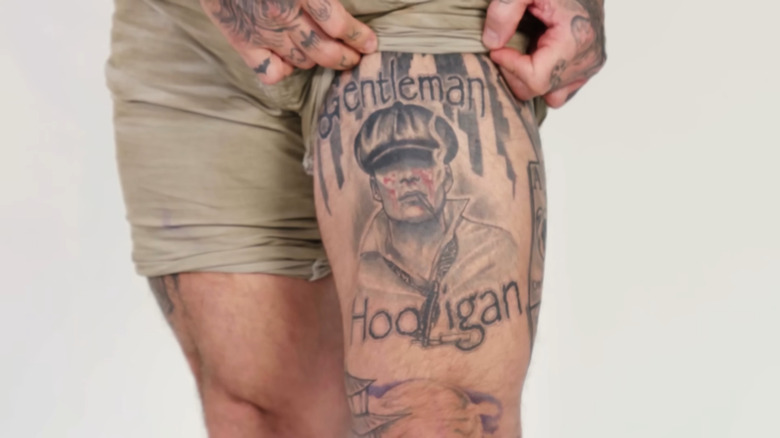
Bautista also has a portrait of Cillian Murphy as Tommy Shelby from Peaky Blinders on his thigh. The lettering reads “Gentleman Hooligan.” This is a straightforward example of a tattoo tied to a screen character and performer he admires. The portrait and words are visible in the photograph; beyond that, it is better not to invent a private explanation he has not given.
The thigh placement makes this one easy to miss in ordinary red-carpet photographs. It is a large, detailed piece, quite different from the small marks on his hand or the flags on his arm. Together, the images show why a single “signature style” description does not do the collection justice.
Dog portraits he calls his favorite tattoos
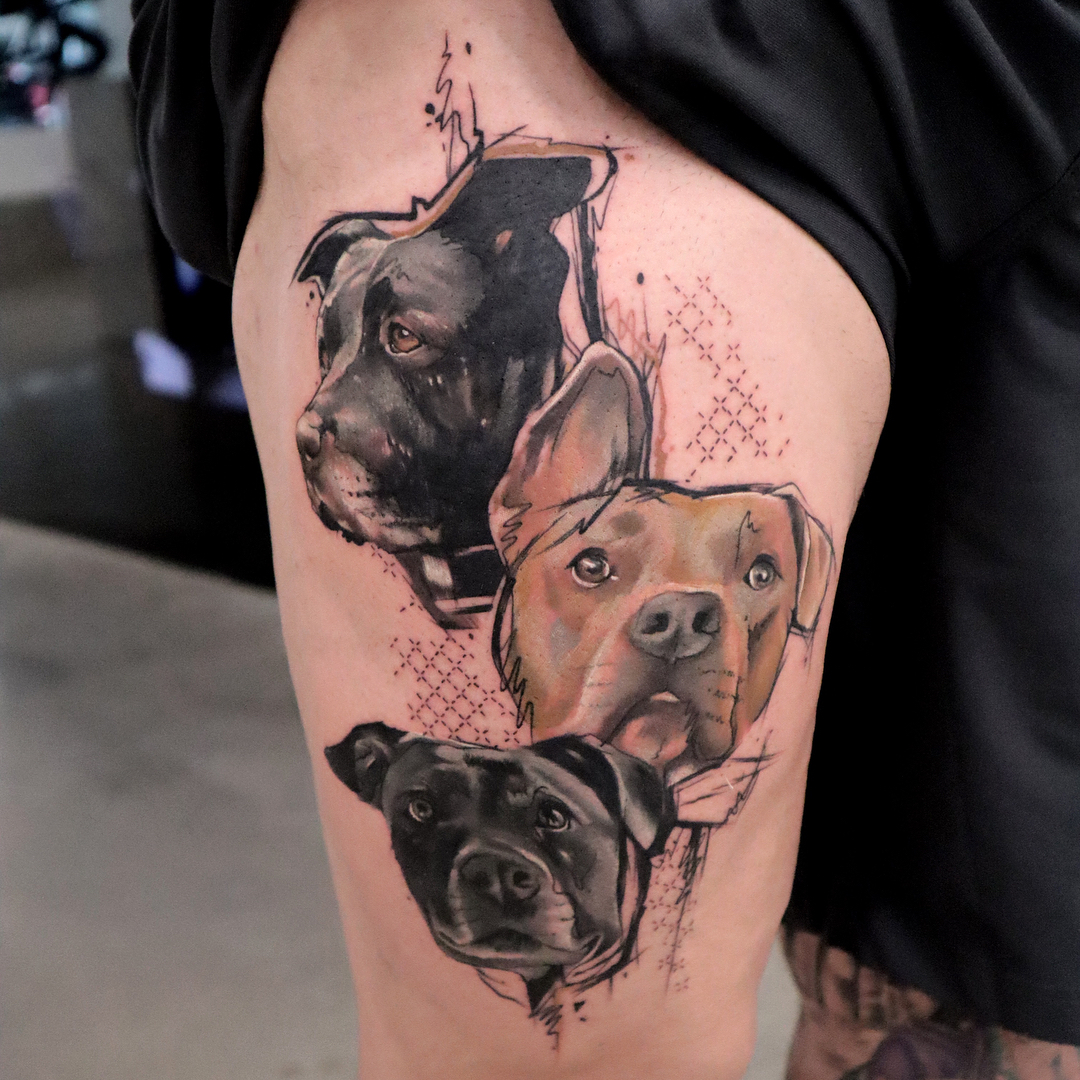
GQ’s tattoo tour includes portraits of Bautista’s three older dogs, which he calls his favorite tattoos. He describes the portraits as a way to keep his dogs close. That is a meaning he has stated himself, so it can be reported directly rather than inferred from the images.
Family appears in other ways too. Bautista has described getting a tattoo with his grandmother Helen during the “Glorious” video, letting her choose the lettering. He also has a tribute to his friend Noah, whom he describes as a close friend, painter and community activist who died. These stories carry more weight than an outsider’s symbolic reading, because they come from Bautista himself.
His first tattoo, at 18, was a heart with the words “Heart of stone.” He later covered it with the roots of a cherry-blossom tree. The back piece was reworked over the years, and Bautista says it took many hours. As with the team-logo cover-up, the story is about change: a tattoo can record a moment and later be altered when the person wearing it wants something different.
What his tattoo tour reveals about living with the ink
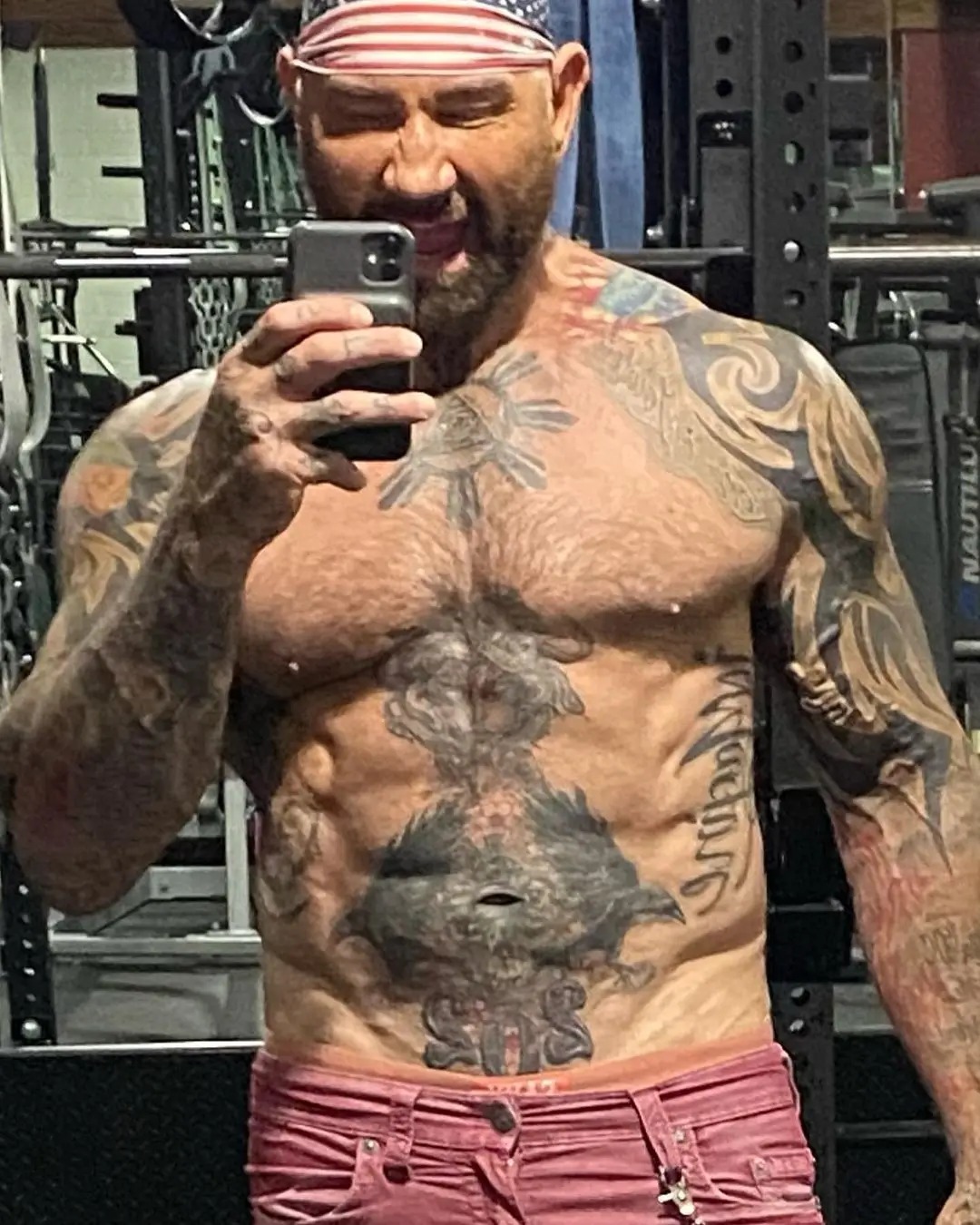
Bautista’s tour is unusually candid about the body as a working canvas. Wrestling affected the large back tattoo, so it needed retouching. He describes painful sessions on his feet and behind his knee, and the elbow piece that had to be corrected. There is also the older heart tattoo, later covered by a cherry-blossom tree, and the team logo he decided to replace after a friend’s anti-gay remarks.
Those accounts are more useful than treating every tattoo as permanent evidence of one fixed identity. Designs change, get covered, or remain unfinished. Bautista’s own descriptions show that his collection includes choices he still enjoys and choices he later wanted to revise.
How to read Bautista’s tattoo collection
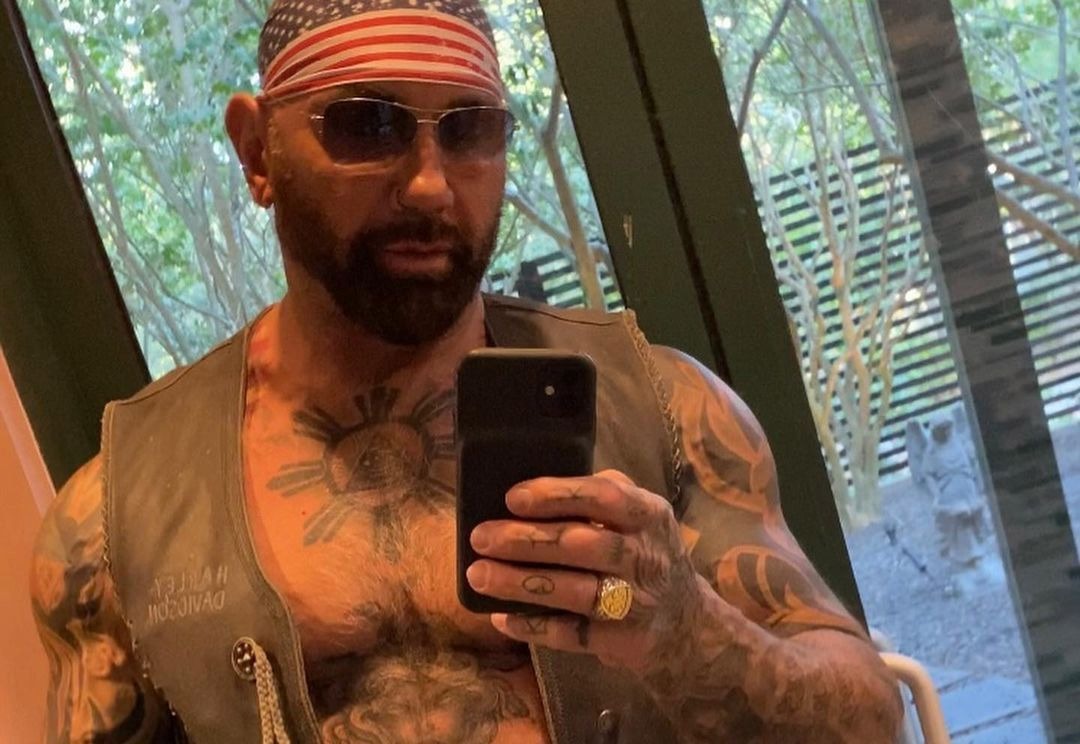
The most grounded reading is also the simplest. Some tattoos have clear stories because Bautista has explained them: the heritage flags, the Pooh piece, his dogs, Helen, Noah, and the cover-up after the anti-gay remarks. Other designs are visible, but their meaning is not fully documented in the interviews available here.
That boundary keeps the article honest. A close photograph can help identify a raven, a portrait, a logo or a placement. It cannot establish why Bautista chose it. His collection spans family, friendship, pop culture, old work and later revisions, and it keeps changing. The best account sticks to those specifics rather than dressing every image up with a symbolic meaning.