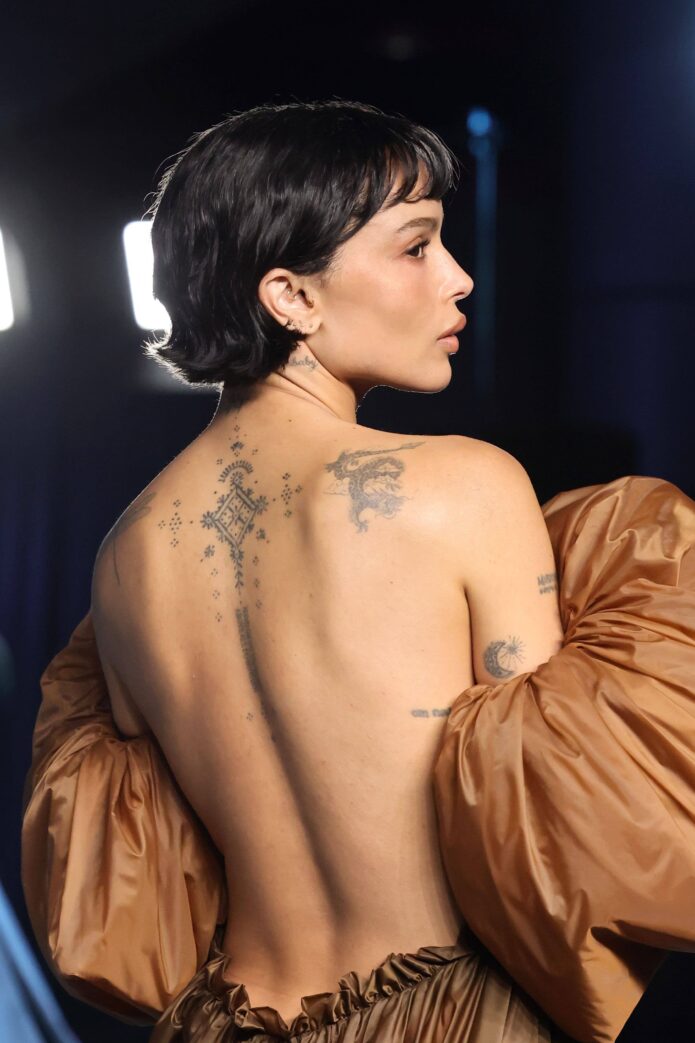
Zoë Kravitz’s tattoos are easy to underestimate because most of them are small. They appear as a dragonfly near the shoulder, fine marks along the back, tiny symbols on the arms and brief pieces of lettering at the neck or wrist. The designs reward close photographs. A distant red-carpet frame can show that she has ink without revealing what the ink actually is.
Published photo guides and Kravitz’s interviews give the collection a useful shape, but they do not explain every mark. Allure has discussed a favourite tattoo, while Cosmopolitan has assembled photographs and artist information for many others. The most accurate approach is to name a design when the image or source does so and leave uncertain meanings alone.
The dragonfly gives the shoulder its clearest focal point
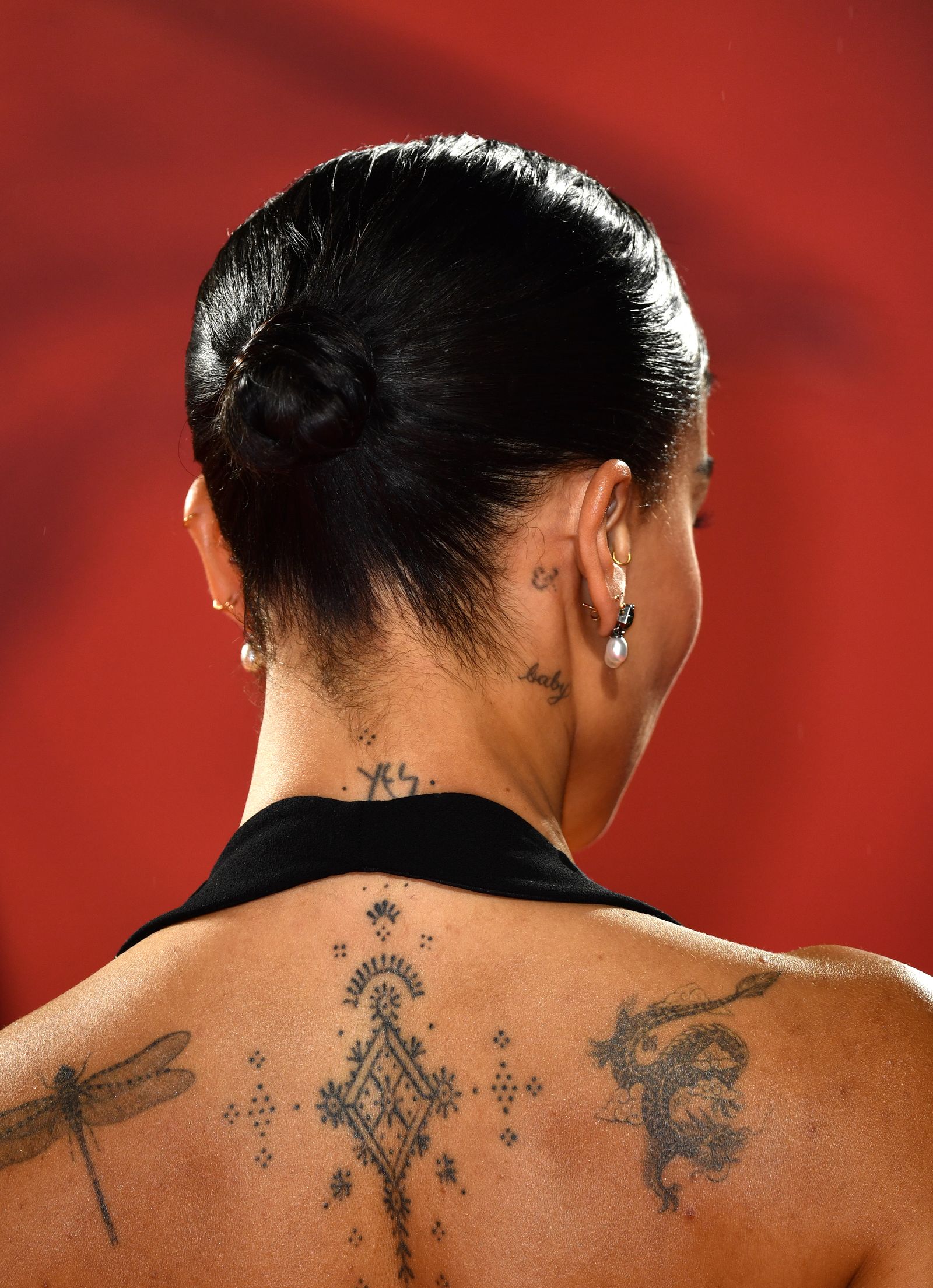
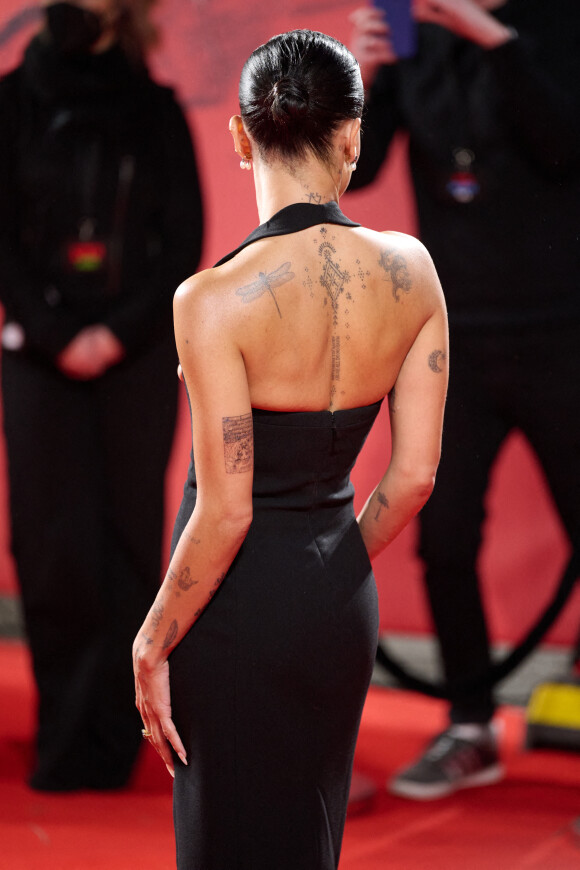
Recent red-carpet coverage identifies a dragonfly on Kravitz’s shoulder. The insect is small, but its wings create a crisp outline that remains readable when the surrounding tattoos soften in a compressed photograph. It sits above the larger field of the back and works as a single recognisable shape rather than a patch of anonymous linework.
The placement also explains why the dragonfly appears and disappears in different images. A halter gown can expose the shoulder blade, while a straight-on portrait can hide it behind fabric or hair. That is a photographic problem, not evidence that the design was newly added each time. The reliable description is a dragonfly in the shoulder area, documented in close event images.
Writers often attach a universal meaning to insects. That would be too certain here. The image establishes the subject and location; the available coverage does not establish one private explanation from Kravitz. The piece is interesting because of its scale, placement and fine linework before any symbolic reading is added.
Fine markings run down the back and spine
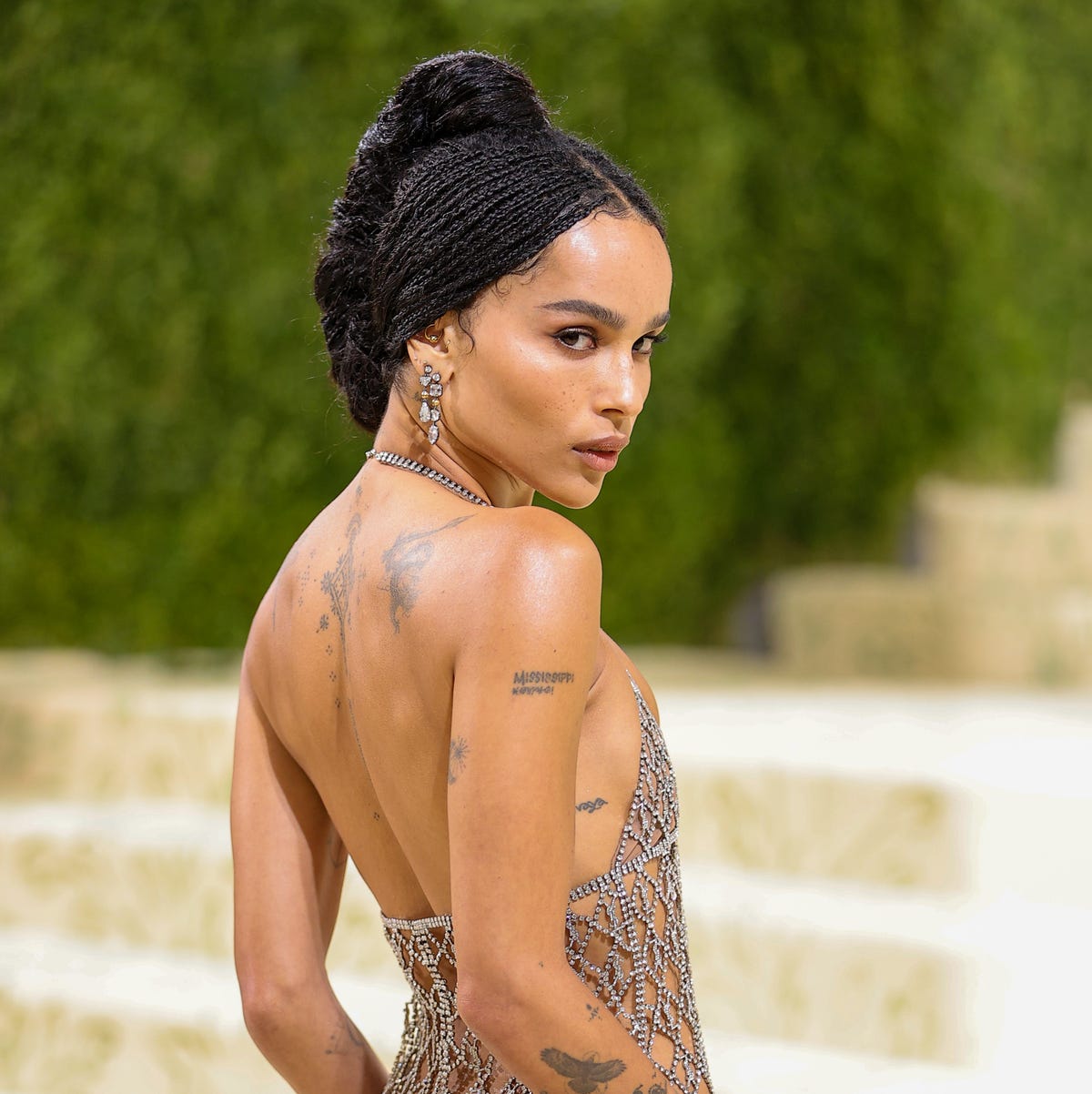
Backless red-carpet photographs reveal several small marks along Kravitz’s upper back and spine. Some are script-like and others are tiny symbols. They form a loose vertical rhythm rather than one large mural, leaving areas of skin visible between the designs. That spacing is part of the look: the tattoos are placed like punctuation across the back.
A wide photograph is helpful for establishing the route from shoulder toward spine, but it cannot always resolve each character. The safest inventory therefore keeps the group together when the image is not sharp enough for a literal transcription. It is better to call a mark small lettering than to guess at a word from a blurred crop.
The back pieces also show how Kravitz’s tattoos work with clothing. A bare-back gown turns them into part of the silhouette, while a shirt makes the same designs private again. They are not arranged as a conventional sleeve and do not need to be described using sleeve terminology. Their appeal comes from the small scale and deliberate spacing.
A moon and star bring a simple celestial motif to the arm
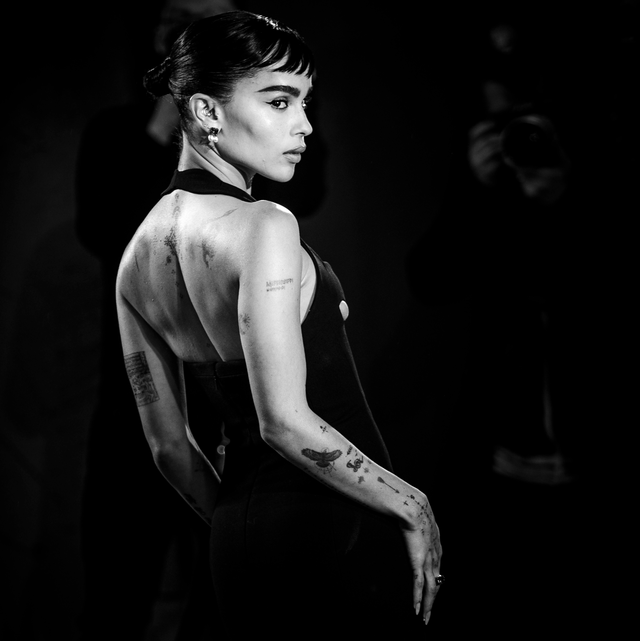
Photo guides identify a moon and star among Kravitz’s arm tattoos. The motif is visually direct: one curved lunar shape sits beside a small star, creating a compact pair that can be read without magnification when the arm is turned toward the camera. It is the kind of design that can be lost among jewellery, hair and stage lighting, so a clean close view matters.
The arm placement gives the pair a different kind of visibility from the spine marks. Kravitz can reveal it in a sleeveless outfit without showing her whole back. It can appear in a portrait, a street photograph or a film-related event, which makes it useful for tracking the collection across years.
Nothing in the image requires an elaborate explanation. A moon and star can be a favourite visual idea, a private reference or simply a design she liked. The published evidence identifies the motif. It does not turn the motif into a confirmed account of belief or biography.
Short words such as baby and yes make the lettering personal in scale
Parade’s 2025 coverage described additional visible wording, including baby at the neck, yes near the nape and Mississippi along an arm. Lettering is especially easy to misread in event photography because a shoulder angle can remove a first letter or make a short word look like a line.
Those words are best treated as separate placements rather than one sentence. The available photographs show that Kravitz has small lettering in different areas, but they do not prove that the pieces were planned as a single phrase. Keeping the locations separate also makes the guide easier to check against future images.
Letter tattoos invite speculation because readers naturally want to know why a word was chosen. In this case the visual record is stronger than the private explanation. The words and placements can be reported; a personal meaning should be attributed only when Kravitz or a named source has provided it.
Why the small scale changes how Kravitz’s tattoos should be photographed
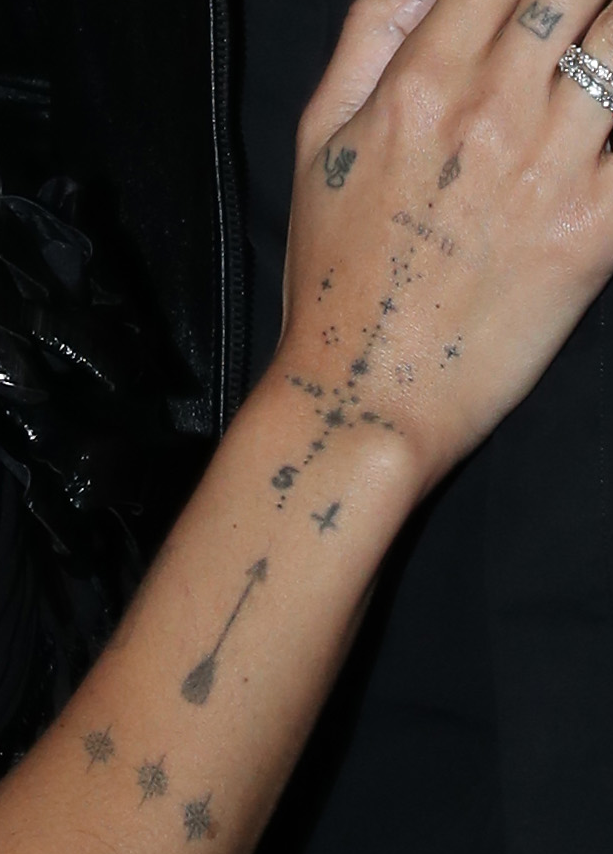
A tattoo guide for Kravitz needs better image discipline than a general celebrity gallery. Her designs are not large blocks that remain visible at any size. The photograph needs enough resolution to show the dragonfly’s wings, the spine marks and the moon-and-star pairing as tattoos rather than skin texture.
Lighting matters too. Red-carpet flash can flatten fine lines, while a soft portrait can make them easier to isolate. A dress may reveal the shoulder but hide the lower back. The best article uses separate photographs for separate targets instead of repeating one full-length event image beside every heading.
This is also why the article avoids counting every dot as a confirmed design. Kravitz is widely photographed, but a large image library does not guarantee a complete inventory. The useful list is the one that names what can be identified and marks the rest as uncertain.
The collection is clearer when image and evidence stay together
Zoë Kravitz’s tattoos do not need a single grand theory. The dragonfly provides a focal shape, the spine markings create a quiet vertical line, the moon and star add a compact arm motif, and the short words give the collection flashes of readable text. Each group has a different visual problem and needs a photograph that solves it.
That combination makes the collection feel curated without pretending every design has a published explanation. Kravitz has spoken about tattooing as part of how she decorates her body, and her small-scale choices are consistent with that approach. The evidence is strongest when the description remains close to the visible mark.
The result is a practical portrait of her ink: fine, dispersed and often revealed by clothes that leave one shoulder or the back open. Future photographs may add dates or clarify small symbols, but the current record already supports a careful guide. Show the actual tattoo beside its section, name only what the source can support, and let the quiet designs remain quiet where the evidence ends.
3 thoughts on “Zoë Kravitz keeps her tattoos small, deliberate and easy to miss”