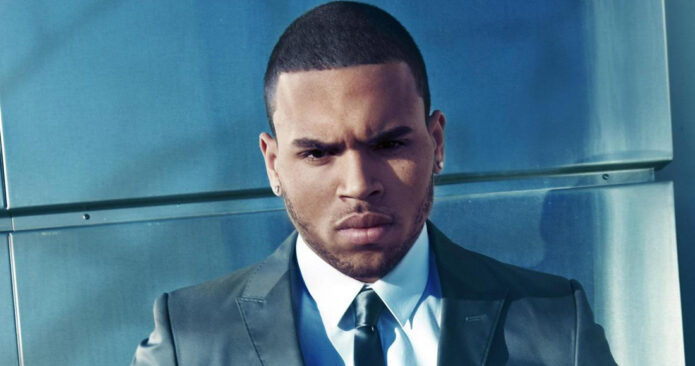
Chris Brown says he was 13 when he got his first tattoo: Jesus with musical notes, a design he connected to the belief that singing was a gift from God. He told the story in an interview with Music Times, drawing on his Urban Ink conversation. It was a compact idea for someone who would eventually cover almost every visible area: faith and music, two things that have stayed close to the center of his life.
No reliable final count exists. Brown has added new work, covered old designs and revealed the collection in stages. Some stories come from his interviews or from the artists who tattooed him; other details are only what a clear photograph lets us identify. The distinction matters.
Arm, hand, and chest ink is where the collection reads like a diary
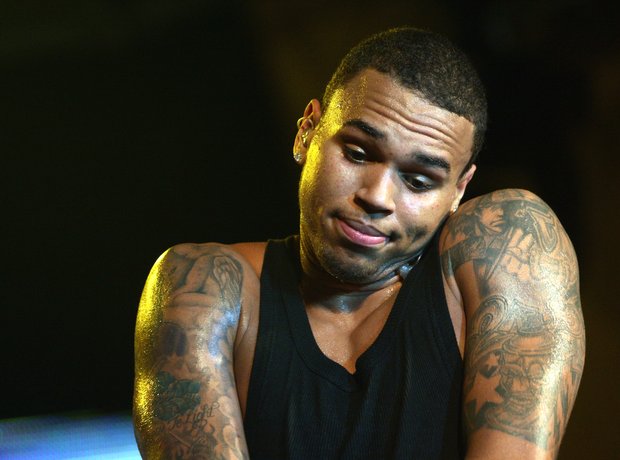
The arm coverage is a mix of portraits, lettering, stars, and more playful pieces rather than one uninterrupted sleeve design. BET’s tattoo gallery records Brown describing two ninja figures and the words “Darkness to Light” as a reference to moving away from the wrong crowd and choosing his own direction. That explanation gives the phrase more weight than a generic claim that the sleeve is about “transformation.” The photo gives a sense of how packed the sleeve is. Brown’s interview is the source for what the phrase meant to him.
Other small marks are easy to lose in wide shots. BET notes black-and-white stars on his arms and wrist, along with a colorful sleeve. A separate tattoo list identifies the name Joyce on his inner wrist, referring to his mother. Brown has also described a hand design as a Virginia tribute: two “ups” and two “downs”, a spray can connected to his graffiti years, and a “B” for Brown. These are details Brown explained himself, not symbolism added later by a fan list. BET’s gallery preserves Brown’s descriptions of the arm, wrist, and hand pieces.
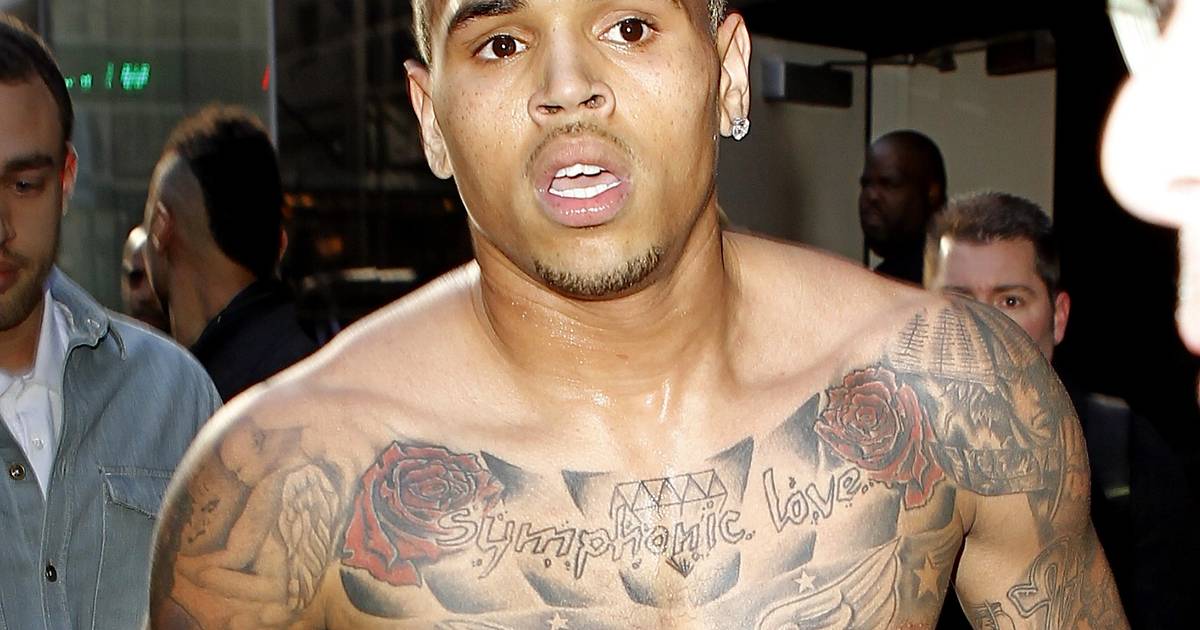
The chest is more composed. BET’s 2013 gallery identifies the words “Symphonic Love” across his chest, with winged imagery and roses framing the lettering. The phrase also became the name of Brown’s children’s charity. It sits where a viewer reads the text first, then follows the wings and floral work outward. Together, the lettering, flowers and wings make one sweeping chest composition.
His upper body is layered. Pieces overlap, and newer tattoos can partly cover old ones, so a photo from one year is never a complete map of what is there now. Brown’s first Jesus-and-music design belongs to the same faith-and-music thread, but his own explanation is the evidence for its meaning. Its position and precise appearance should not be inferred from a distant performance photograph.
The neck artwork changed, then became a public argument
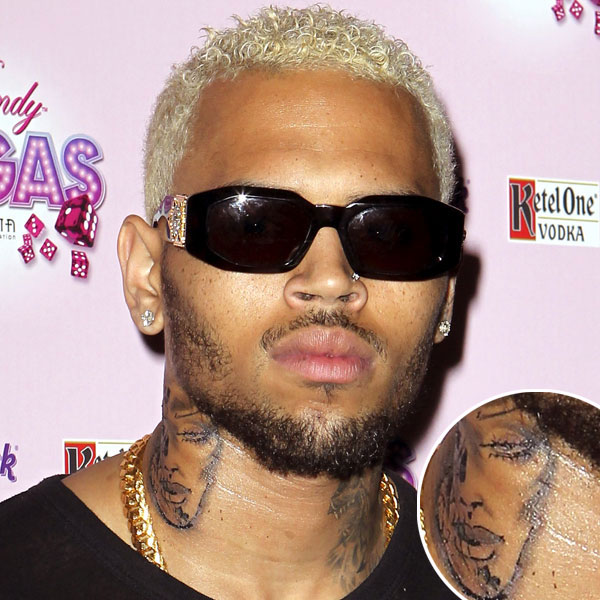
In 2012, a new face on Brown’s neck drew immediate attention. Some viewers thought the shaded design resembled Rihanna after she had been injured in 2009. The resemblance and the timing became the story, but they do not establish what the image depicts.
Brown’s representative described it as a sugar skull associated with Día de los Muertos and a cosmetics design he had seen. Tattoo artist Peter Koskela also rejected the idea that he had tattooed a battered woman or Rihanna. E! News reported the artist’s explanation and the representative’s statement; The Guardian later described why the image had provoked such a strong reaction. Both belong in the record: Brown’s representative and Koskela called it a sugar skull, while the resemblance people saw explains the backlash. A photograph can show the design, not settle the intention.
The neck has changed since then. A lion was reported as a later neck addition, and stars behind the ear appear in tattoo galleries. Brown’s evolving coverage means an older close-up should be dated rather than presented as a complete current view.
King Rico’s head piece pairs a bull with a woman’s face
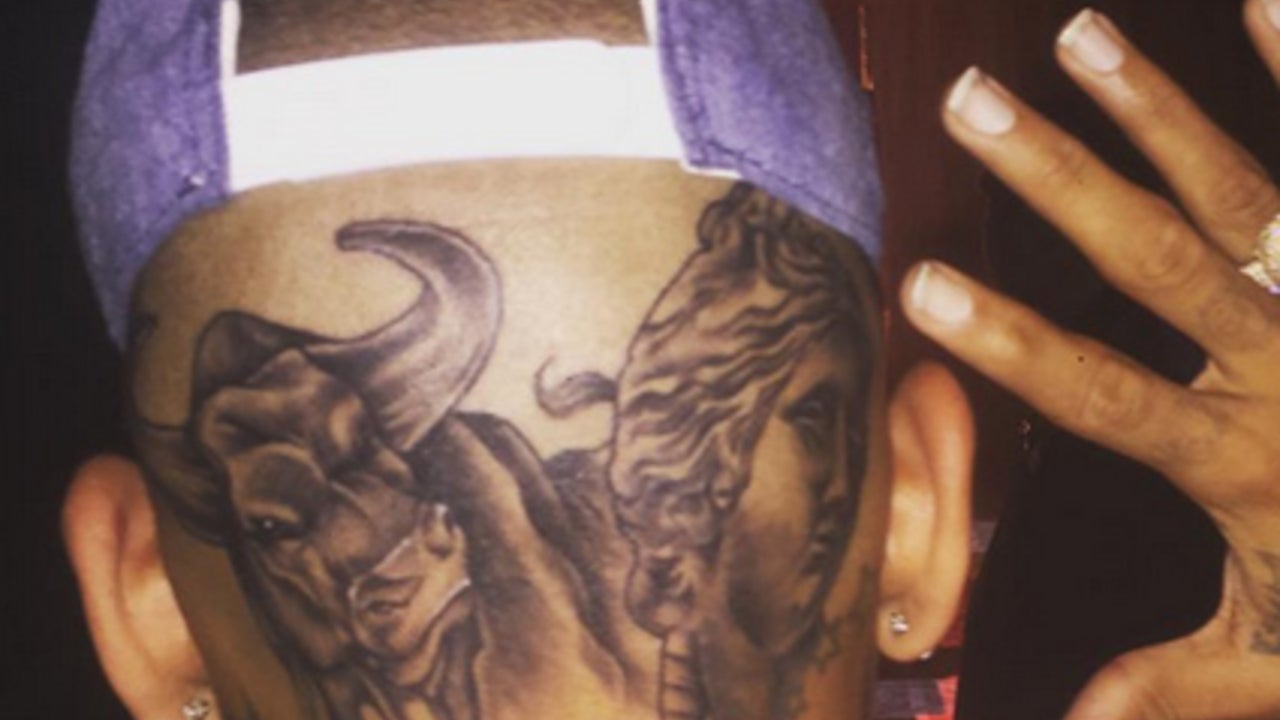
In August 2015, Brown showed a large black-and-gray piece across the shaved back and side of his head. Entertainment Tonight identified a bull and a woman’s face and named Bronx tattoo artist King Rico. The design extends into star work behind the ear, so the area reads as a connected composition rather than a single isolated stamp.
The bull and face are clear in the published image; the meaning needs more care. Brown’s post around the reveal linked the bull to his Taurus sign and the woman’s face to Venus, but the image itself cannot tell a reader why he chose those subjects. It is safest to keep the reported explanation attached to Brown’s own post instead of adding broad claims about protection, romance, or spirituality that the sources do not establish.
The woman’s face can be confused with the 2012 neck piece, but these are separate tattoos, made three years apart by different artists: the 2012 neck work was attributed to Koskela, while the 2015 head piece was credited to King Rico.
Royalty’s portrait on his back is different from the later name tattoos
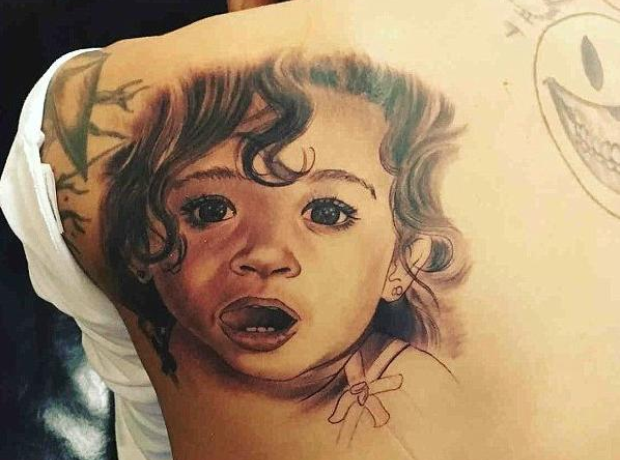
In June 2016, Brown shared a work-in-progress portrait of his daughter Royalty across his back. Inked reported that Fred Tattoo began the portrait, and The Source placed the session in Copenhagen and identified the artist as Fred of Exotic Tattoo Murcia. Brown’s own caption said the piece was not finished yet, an important detail when comparing the first reveal with later photographs.
This is a portrait, not the same tattoo as the large “ROYALTY” lettering added to a shin years later. The back piece turns a photograph of a child into a large black-and-gray image; the leg work uses a name and illustrated designs. Both are family tattoos, but they are separate projects, done at different times by different artists.
Royalty and Aeko’s names take up both shins
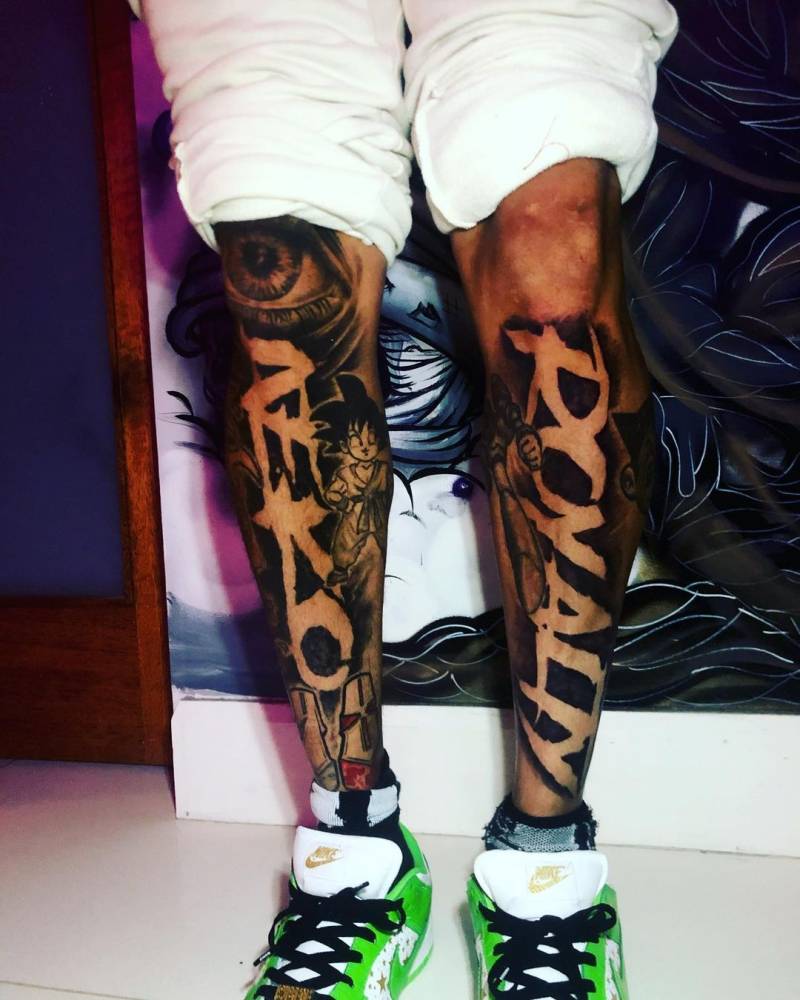
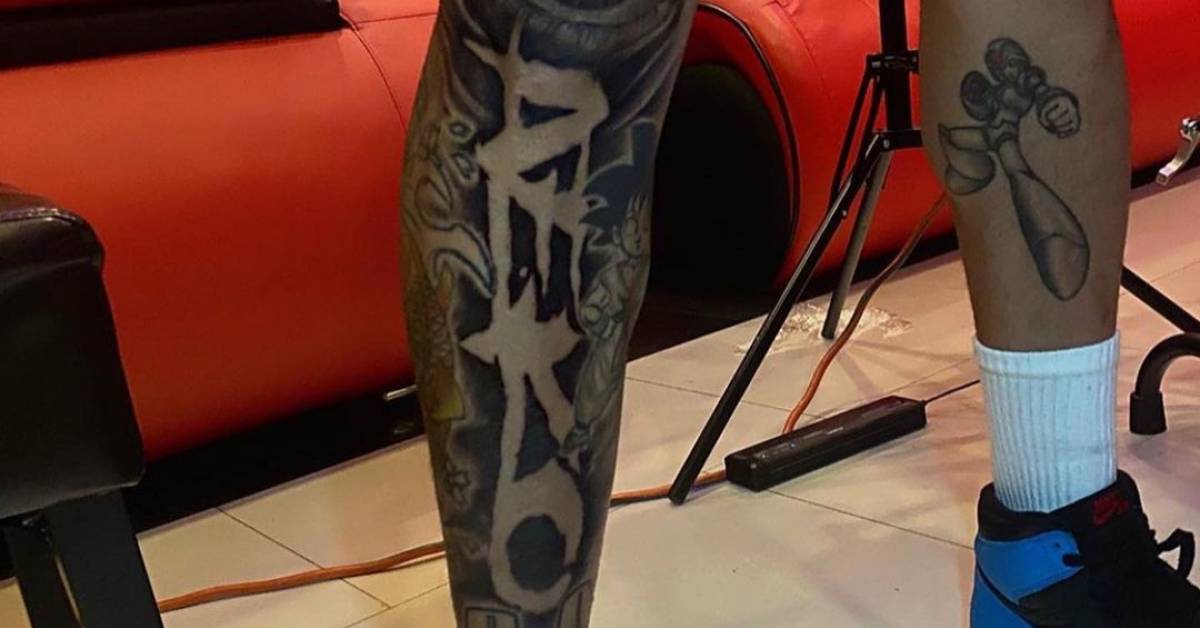
In March 2021, Brown showed large designs running down both shins: Royalty on one leg and Aeko on the other. He captioned the reveal “My world on my legs”. Complex reported that tattoo artist Ganga made the pieces and noted that Ganga had also worked on Brown’s Air Jordan face tattoo.
The names are only part of the designs. Tattoo-filter photographs show the Royalty lettering alongside an illustrated character and the Aeko lettering paired with a large eye and anime-style figure. Those neighboring images connect the family names to Brown’s interest in animated characters without requiring a made-up symbolic explanation for each drawing. Both legs need to be seen to understand the paired layout; a single crop of one shin is not a complete picture of the set.
Brown introduced the two legs together, though that does not make them a final inventory. He can add to them, just as he has elsewhere.
The Air Jordan on his face is an unmistakable design choice
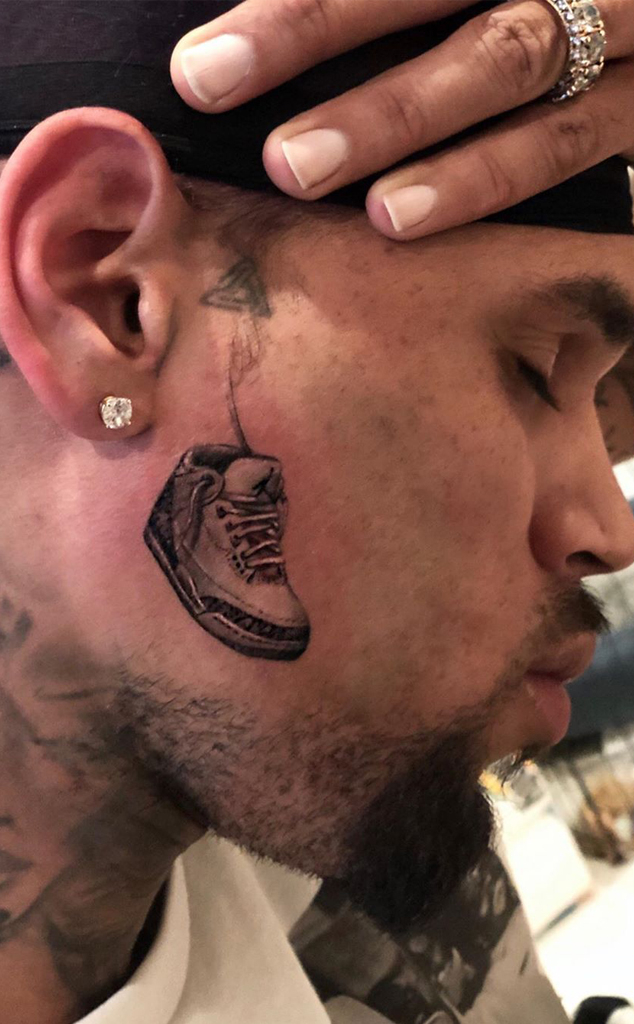
In February 2020, Brown added an Air Jordan 3 sneaker to the right side of his face, below a small Black Pyramid logo. Artist Joaquin “Ganga” Lopez shared the work; the report also connects Lopez with Brown’s earlier Darth Vader tattoo on his stomach. The Lift FM’s report, carrying E! News material, records the shoe design and the artist’s credit.
The face placement makes this one of Brown’s most recognizable pieces, but it should not be confused with the small logo above it or the much larger head and neck work. Those are separate designs, and each has a different source trail. The Jordan reference is unusually easy to verify because the artist identified the shoe and shared a close photograph.
Brown’s collection is huge, but the record of what each piece means is not. The most dependable clues are his own comments, artists’ accounts and dated reveals. Where none exists, the design should be described without inventing a private story for it.