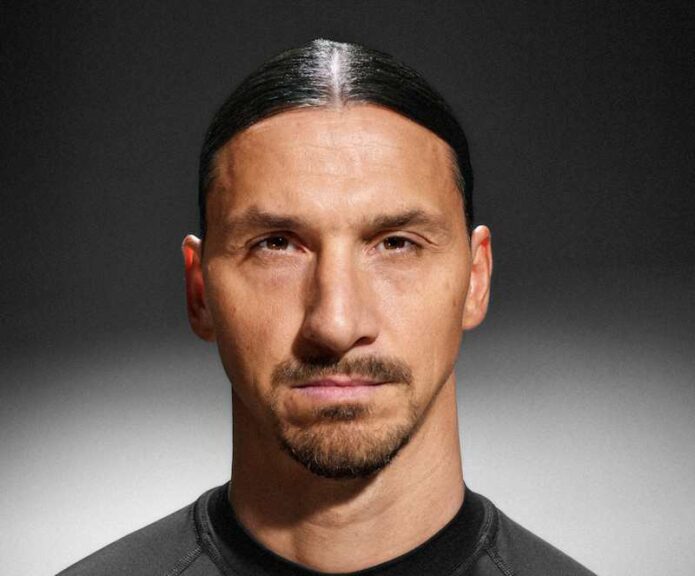
Zlatan Ibrahimovic’s tattoos are unusually easy to divide into separate chapters. Some belong to family: names, dates and Arabic lettering placed on the arms. Some are larger visual statements, including the lion on his back and the words on his ribs. One famous group was temporary rather than permanent, created to publicise the World Food Programme’s hunger campaign. Treating every photograph as one fixed tattoo map would blur those differences.
The strongest account combines interview material with dated sports coverage. A picture can establish that a lion, phrase or group of names is visible. A press conference or direct quote can explain why a design appeared. The temporary campaign is a particularly useful reminder that visible ink is not always permanent ink.
The lion dominates Ibrahimovic’s back
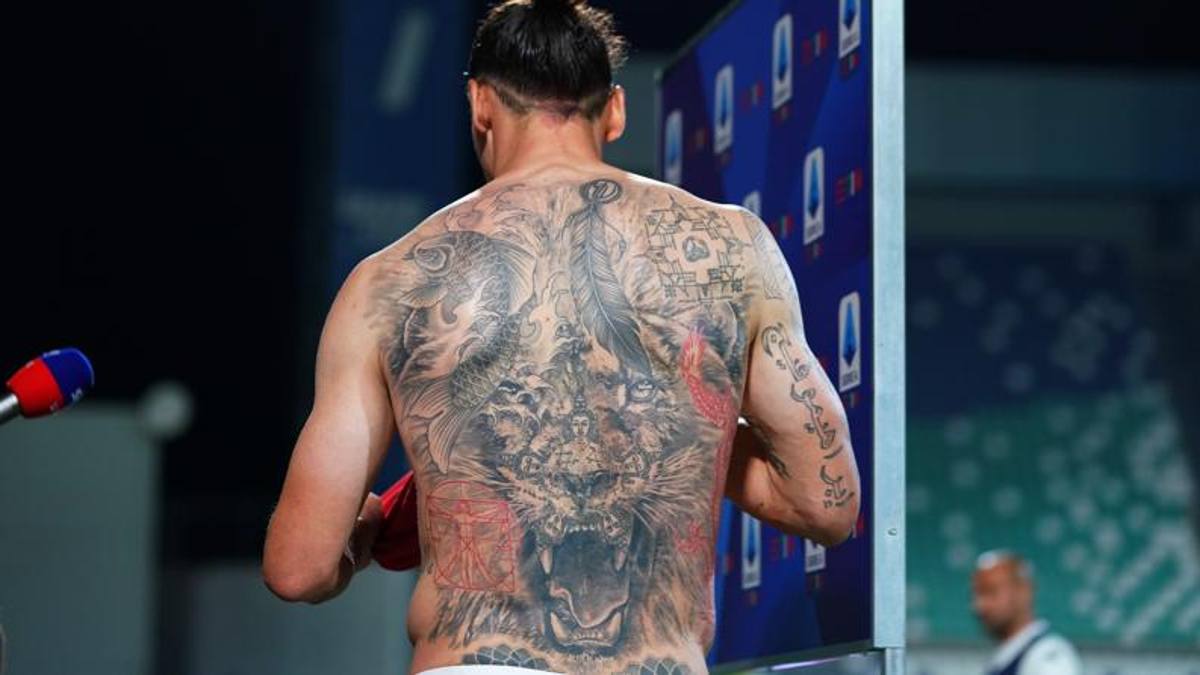
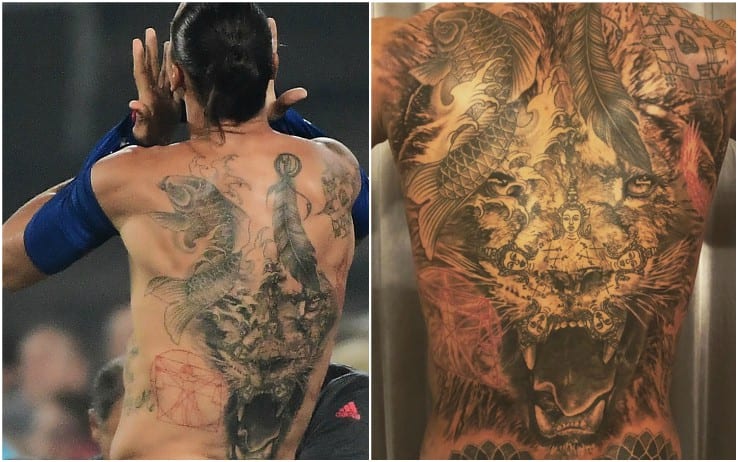
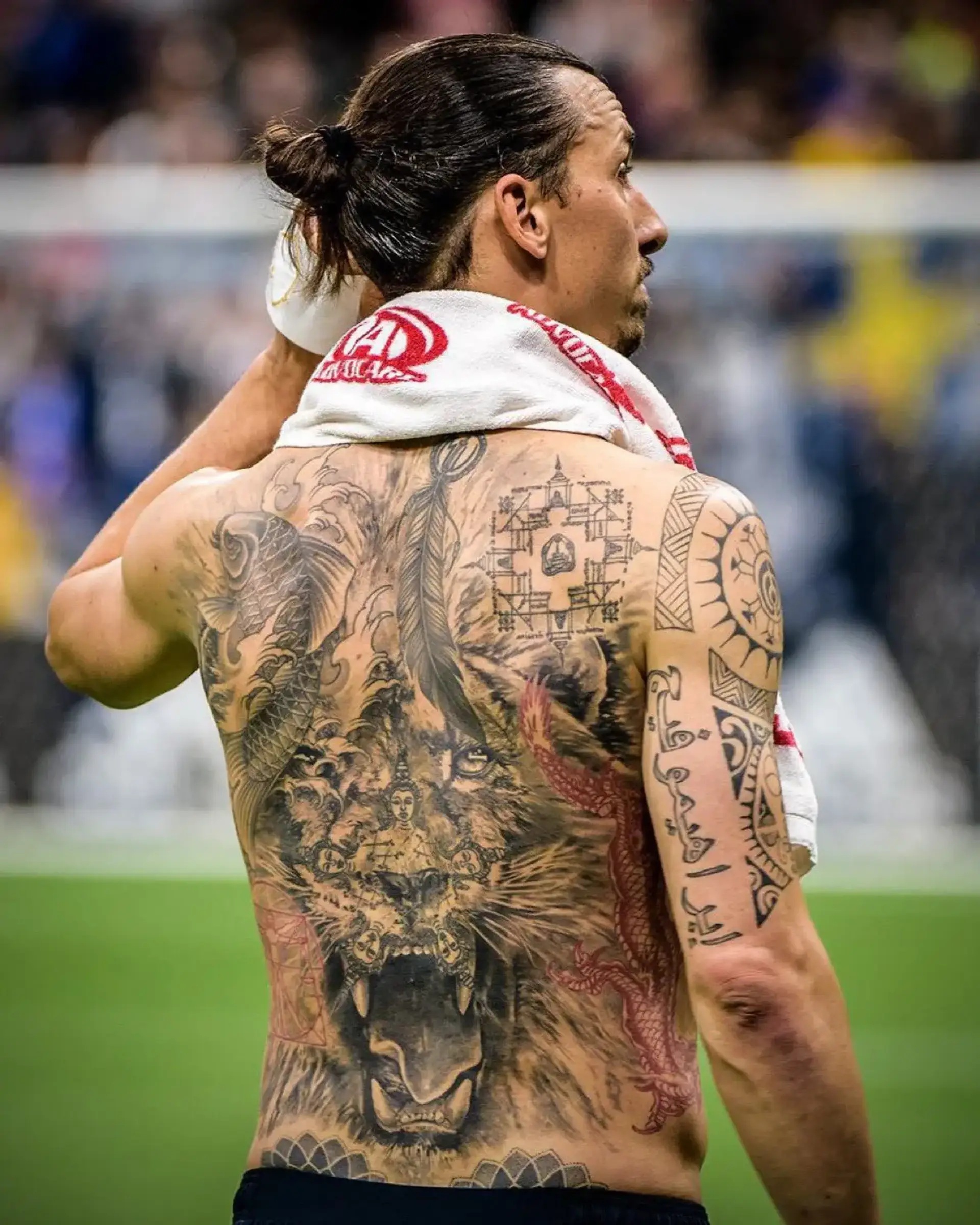
The lion is the most recognisable large design in Ibrahimovic’s collection. Sports reporting has connected it with his recovery after a serious knee injury and with the idea that a lion does not recover like a human. Vanity Fair Italia later described the back piece as a large composition that incorporates earlier designs. The image should be read as a back tattoo with its own scale, not as a small emblem enlarged by a crop.
A lion invites symbolic interpretation, but the safest meaning is the one supported by the reporting around Ibrahimovic’s recovery. That does not prove that every line in the back piece represents a separate event. Wide photographs can show the animal and surrounding work without making every smaller mark identifiable. The back tattoo therefore deserves a clear full view, while uncertain details stay outside the inventory.
Family names and dates sit beside the arm lettering
Published tattoo inventories identify Ibrahimovic’s surname in Arabic on the back of his right arm and the names of his sons, Vincent and Maximilian, on the arm. Other dates and family references have also been reported on the hand and arm. These designs are more specific than a generic claim that he has family tattoos because the reporting names the people and the locations.
Arabic lettering should be handled carefully in a visual guide. A photograph can show the direction and placement of the script, but translation requires a reliable source. The family names are easier to identify when a source gives the names directly. The guide should not expand that list with every date visible in a soft photograph unless the date and its subject are documented independently.
The rib phrase Only God can judge me
The phrase Only God can judge me has been associated with Ibrahimovic’s ribcage since the mid-2000s. Aftonbladet’s later report on laser removal identified the wording and connected the original tattoo with a visit to East Street Tattoo in Stockholm before a Sweden match. That gives the phrase a date and a studio lead, while the removal report shows that the tattoo’s status changed.
This is why a tattoo guide needs time markers. A photograph from the period when the phrase was visible is not evidence that the lettering remains unchanged today. The quote also should not be treated as a complete explanation of Ibrahimovic’s beliefs. It is a documented phrase, a reported location and a later removal story. Those facts are enough.
The temporary names campaign was different from his permanent ink
In 2015 Ibrahimovic revealed dozens of names written across his body during a campaign for the World Food Programme. The names represented people affected by hunger, and he used a football match and the shirtless reveal to direct attention toward the campaign. CulturePSG’s account of the press conference makes the charitable purpose clear.
Those names should never be mixed into a permanent count of Ibrahimovic’s tattoos. They were temporary campaign markings, even though photographs made them look like a dramatic new collection. The distinction also explains why one event image can show far more lettering than later photographs. It was a message designed for public attention, not necessarily a new chapter in his personal tattoo history.
What can be confirmed about the wider collection
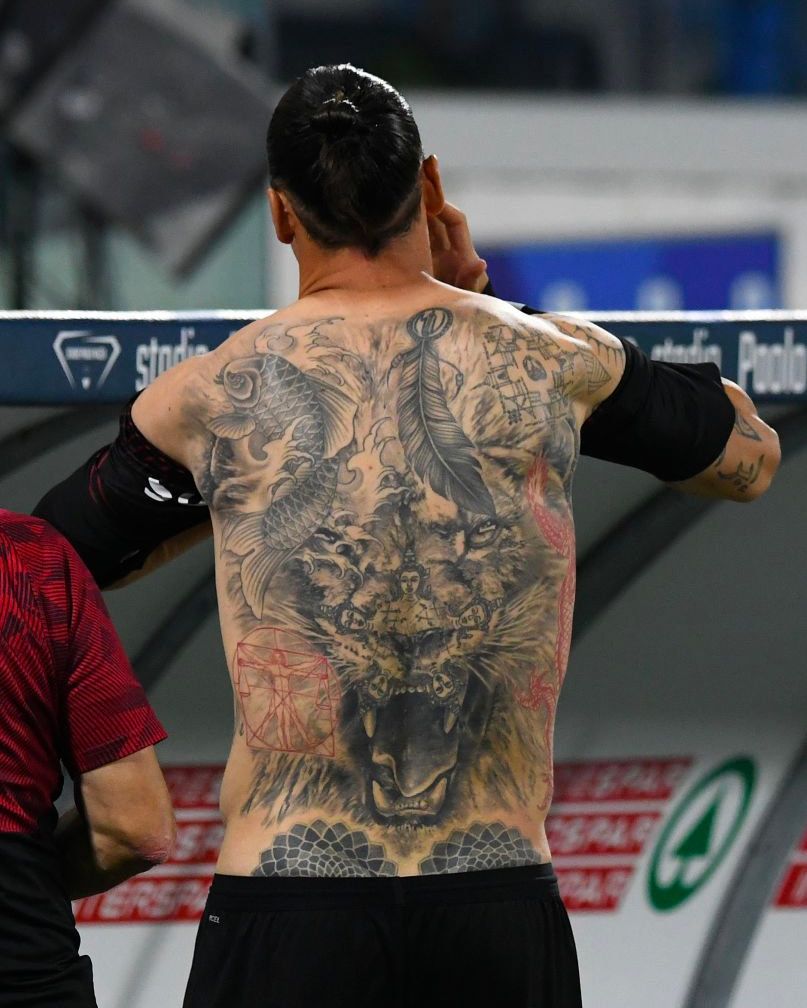
Other published inventories mention a koi fish, a feather, Polynesian-inspired work, playing-card symbols and additional torso designs. These should be tied to close images and reputable reporting rather than treated as a complete official checklist. The lion, family names, Arabic surname and rib phrase have the clearest place in the sourced record. The campaign names are documented as temporary.
The useful conclusion is not a fixed number. It is a method: separate permanent pieces from temporary publicity ink, separate direct explanations from visual observations and date every claim that depends on a particular photograph. Ibrahimovic’s tattoos are a changing record of family, football, recovery and public causes. The record becomes clearer when those categories remain separate.
The arm designs need to remain distinct from the large back composition. A surname in Arabic, a child’s name and a date may sit close together, but they are not one single image. The same is true of the rib phrase, which belongs to a different period and later became the subject of removal coverage. A reader comparing photographs learns more by following those locations separately than by counting every visible patch of ink in one shirtless frame.
The temporary campaign deserves the same care. Ibrahimovic used his body to draw attention to people facing hunger, but the names were not a permanent autobiography written across his torso. Their public purpose was the point. Once the campaign ended, later images returned to the permanent lion, family lettering and earlier symbols. Dates and context therefore belong beside every image.
Some meanings remain reported rather than directly explained by Ibrahimovic. A published list may repeat a translation or symbolic reading for years, but repetition does not strengthen the claim. The best entries identify the design, state the location, name the source and mark the boundary between what can be seen and what is inferred.
The visual record also changes with Ibrahimovic’s career. A football photograph can reveal the back while hiding the ribs, and a press conference can show temporary writing that never appears again. The safest captions therefore identify the period and the target instead of presenting one image as a complete current inventory. That approach protects the family pieces, the lion and the campaign markings from being merged into one misleading count.
2 thoughts on “Zlatan Ibrahimovic’s Tattoos: Names, Symbols and the Lion on His Back”