
Pete Davidson’s tattoos were never a tidy collection. They mixed jokes, pop culture, lettering, relationship references and designs made quickly enough to become part of the story. For years, photographs showed a dense patchwork across his chest, arms, hands and neck. More recently, the collection has been changing through laser removal, so a guide needs dates as much as design names.
Davidson has also explained some of the choices himself. Fresh Air recorded his story about getting a Game of Thrones tattoo while watching the show, while later interviews and reporting covered the reasons he began removing much of the ink. The safest inventory separates what he has said from what a photograph merely appears to show.
The shark became the most recognisable piece on his chest
The shark is useful to describe as a cover-up as well as an image. Its open mouth and heavy outline dominate the chest, so it changes how the older ink underneath is read. In photographs, the red mouth attracts the eye first, while the surrounding black-and-grey work creates a crowded frame around it. That is why the shark often becomes the headline image for the collection even though it is only one piece among many.
Its placement also tells readers something practical about Davidson’s tattoo history. A large chest design can hide an earlier phrase without making the earlier decision disappear from the record. The visible shark is the current surface; the earlier tattoo explains why the area looks deliberately dense. Those are two different facts and should not be collapsed into a claim that the shark carried the same meaning as the covered lettering.
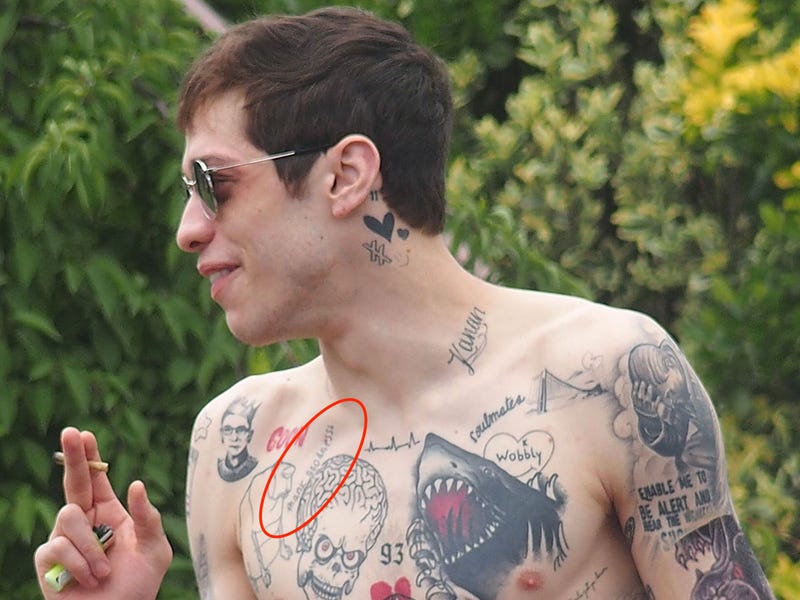
A large shark is one of the clearest visual anchors in photographs of Davidson’s heavily tattooed years. It sits across the chest and appears in images alongside smaller illustrations, lettering and symbols. Coverage has also connected the shark to a cover-up story, making it more than a random animal design in the middle of a crowded torso.
The piece is visually blunt in a way that suits Davidson’s earlier approach to tattooing. The outline is easy to read, the mouth gives it energy, and the body occupies enough space to be visible even in a wide photograph. That scale matters because small marks disappear when the image is compressed for a news story or a television appearance.
It is still wrong to use the shark as a shortcut for every other tattoo. It is one identifiable design among many. The surrounding marks developed at different times and do not automatically share its story. A good guide gives the shark its own image and then moves on to the lettering and pop-culture pieces.
SHAOLIN and GOON show how much lettering filled the map
SHAOLIN sits lower on the torso and reads differently from the shorter GOON lettering higher on the chest. The first word stretches across a broader area, while GOON works as a compact, emphatic label. In a straight-on photograph the two pieces can look like one band of text, but their scale and position are separate. Naming both makes the tattoo inventory more useful than calling the area general chest lettering.
The nearby numbers, script and small drawings add texture without automatically having a documented explanation. Some marks have been linked to family, friends or entertainment, but a soft photograph cannot settle every attribution. The reliable description is the visible wording and placement, followed by the context Davidson has actually discussed.
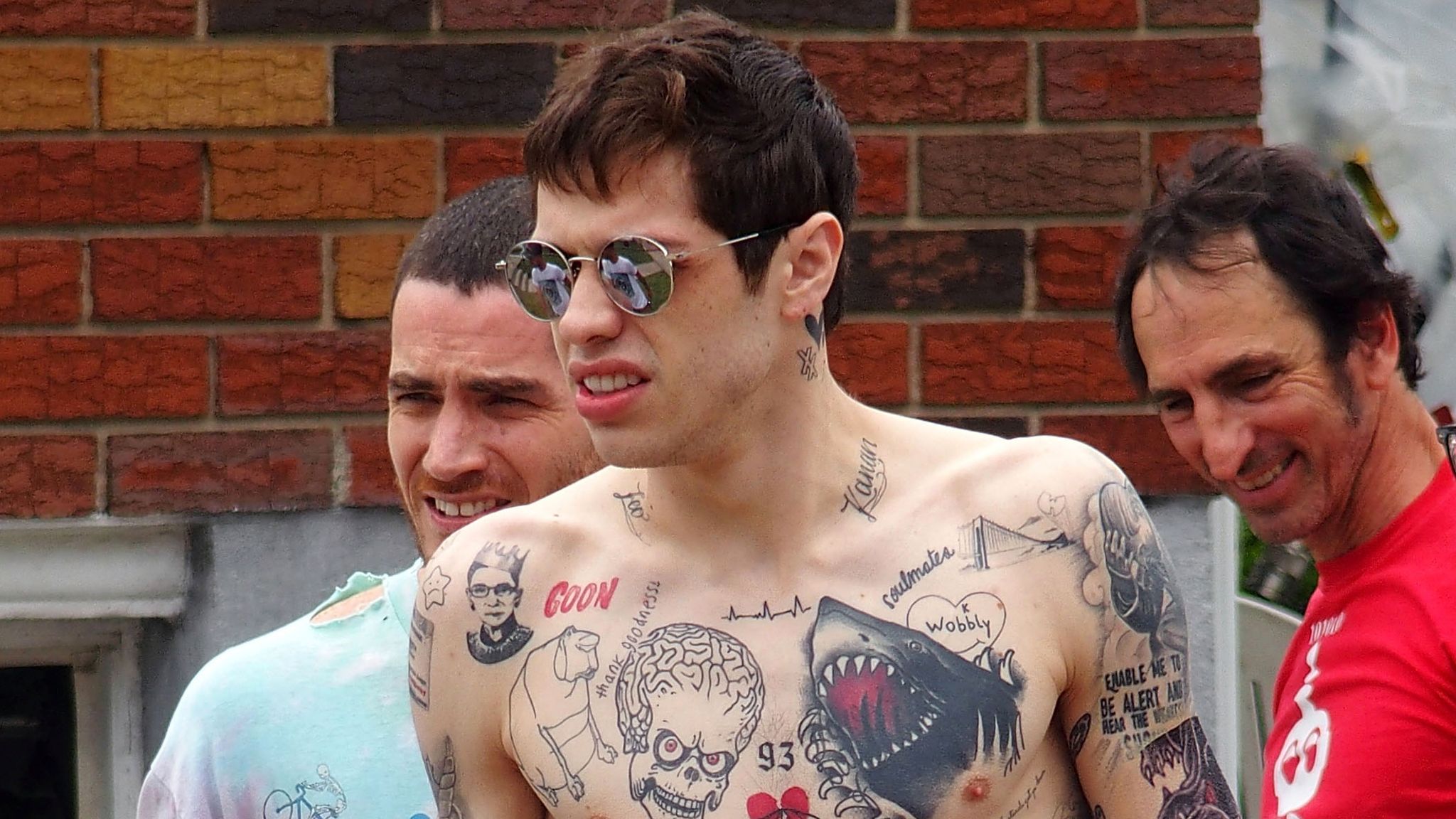
Photographic guides show bold words such as SHAOLIN and GOON across Davidson’s torso. The lettering is not filler around the shark. It is part of the visual language of the collection, where plain words sit beside cartoons, skulls and small personal symbols.
The advantage of lettering is that readers can identify it without a specialist interpretation. The guide can name the word, describe its location and show the photograph. It does not need to claim that every phrase is a permanent motto. Some tattoos were jokes, some were made impulsively, and some were later covered or removed.
That temporary quality changes the way older photographs should be read. An image from 2020 may show a word clearly, while a later appearance may show fading, cover-up work or bare skin. Both are useful records of the collection at different points. A careful guide makes the date visible rather than presenting an old torso photograph as a current inventory.
Pop-culture tattoos came from the way Davidson watched and joked
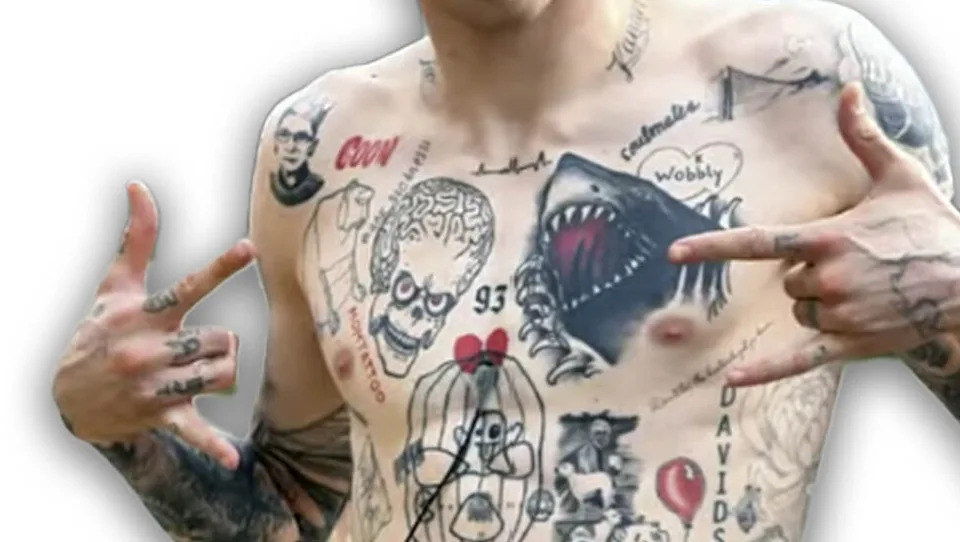
Davidson’s pop-culture pieces are strongest when the subject can be identified directly. A character, film reference or comedy-related image can be listed as a design without turning it into a grand statement about his personality. The appeal is often the joke itself. That tone matters because his collection includes small visual punchlines alongside larger memorial and relationship pieces.
Photographs also show how these designs compete for space. A cartoon or emblem may sit beside lettering, a skull or a line drawing, making the torso read like a sketchbook rather than a single sleeve. The useful detail is therefore the individual motif, its approximate body area and whether it remained visible in the photograph being used.
In a Fresh Air interview, Davidson described getting a Game of Thrones tattoo while watching the show. The story is revealing because it turns the design into a decision made in the moment, not the result of a long formal concept process. It belongs with the pop-culture side of his tattoo history, which also included references to films and television.
That anecdote does not justify guessing which other marks were made during a particular episode or evening. It supports one specific story. The rest should be identified through photographs and named reporting. This is an important distinction with a collection as large as Davidson’s: the more designs a person has, the easier it becomes for a writer to attach an unverified origin to one of them.
The visual appeal of these pieces comes from their mix. A television reference can sit next to a skull, a word or a crude cartoon without needing to match a single style. The body becomes an archive of things Davidson found funny, memorable or worth carrying for a while.
Relationship tribute tattoos changed as the relationships changed
Relationship tattoos deserve their own section because several of Davidson’s most reported pieces were later covered, altered or removed. A matching symbol can be accurately described as part of a relationship period without being presented as a current unchanged tattoo. That distinction protects the timeline and explains why older photographs may show more lettering than newer images.
The later changes are not a footnote. They are part of the visual record: cover-ups make some designs harder to identify, while fading and laser work can leave partial outlines that resemble new tattoos. When the evidence is uncertain, the article can name the reported tribute and then describe the visible condition rather than guessing what lies beneath it.
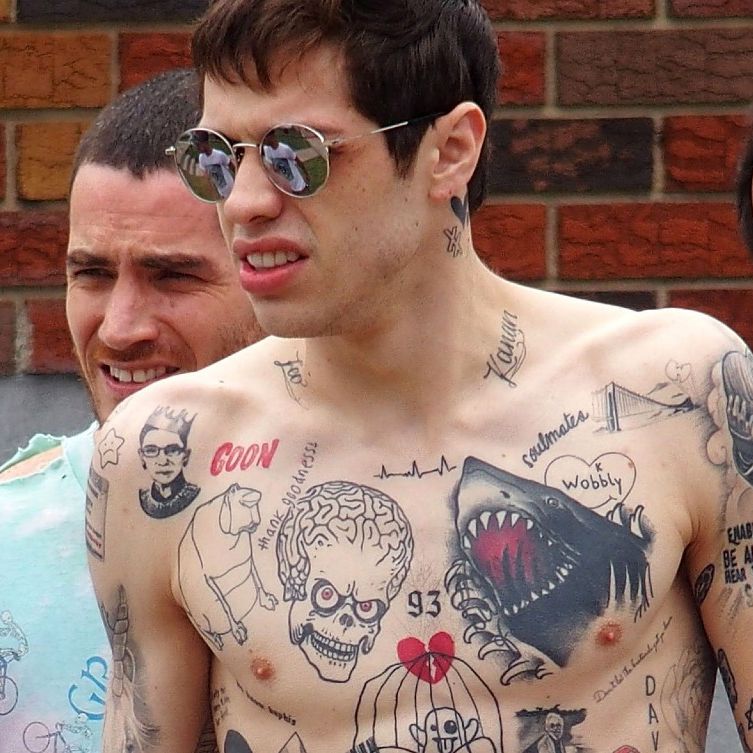
Reports about Davidson’s past relationships have also documented tattoos and marks connected with partners. Some references appeared as initials, phrases or designs associated with a shared joke. Coverage of the Kim Kardashian period discussed the word Jasmine, the phrase My girl is a lawyer and a branding mark that was described differently from an ordinary tattoo.
The wording matters. A branded mark is not the same as a tattoo, even if it appears on skin. Likewise, a tattoo made during a relationship is not proof that the wearer intended a permanent promise. Davidson’s later removal process shows how quickly the emotional context of an image can change.
The most responsible approach is to name the design only when a source does and to avoid treating the relationship as the tattoo’s entire meaning. The image can show placement and lettering. The interview can supply context. Neither gives a writer permission to turn a public romance into a private psychological diagnosis.
Removal is now part of the tattoo story
Removal changes the meaning of a photograph without erasing its value. A chest image from the heavily tattooed period documents designs that may no longer look the same, while a later photograph records the effort to clear space. Davidson has spoken about the pain, cost and length of the laser process, so the removal timeline belongs beside the tattoo inventory rather than in a separate celebrity-news aside.
For readers comparing images, lighting and camera distance matter. Faded black ink can disappear against skin in one frame and become visible in another, and a cover-up can read as a solid shape when viewed from across a room. The strongest guide therefore keeps the shark, lettering, pop-culture marks and relationship tributes tied to dated visual evidence, while clearly labelling anything that is reported rather than plainly visible.
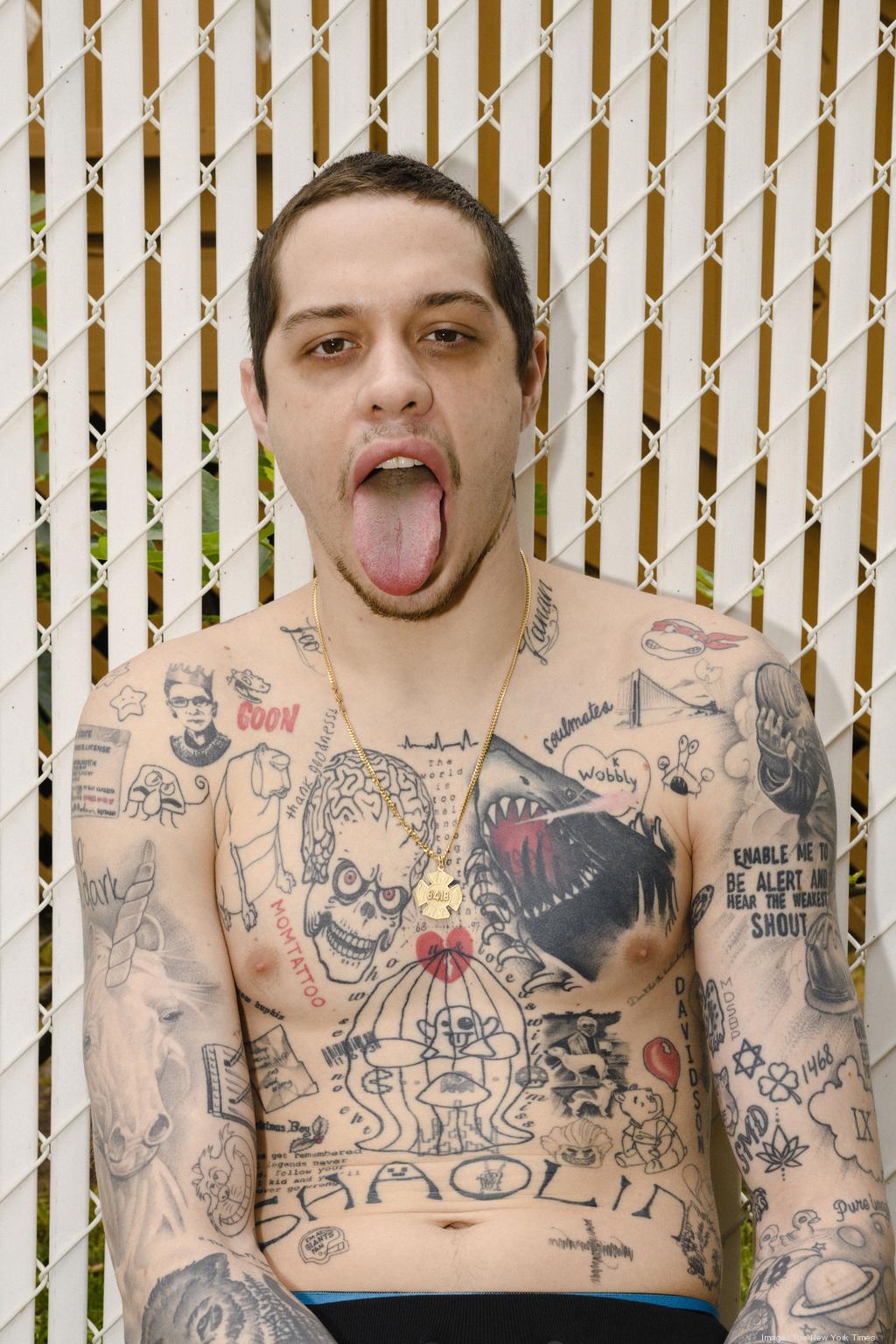
Davidson began removing many of his tattoos in 2020, and later reporting described the process as lengthy, expensive and physically unpleasant. El Pais reported his explanation that the ink had become a reminder of an earlier period of his life. Other coverage described the number of sessions required and the fact that some designs would remain longer than others.
That means a current guide cannot simply copy a famous old tattoo list. The shark may remain visible in one appearance while lettering has faded in another. Hands, neck and arms may show the process earlier or more clearly than the torso. Readers should be told when a photograph comes from the dense-ink period and when it documents removal.
Davidson’s tattoo history is therefore not a fixed catalogue. It is a record of choices, jokes, attachments and revisions. The useful details are the designs that can be named, the stories he has actually told and the visible changes across dated images. Everything else should be left as uncertainty rather than dressed up as certainty.