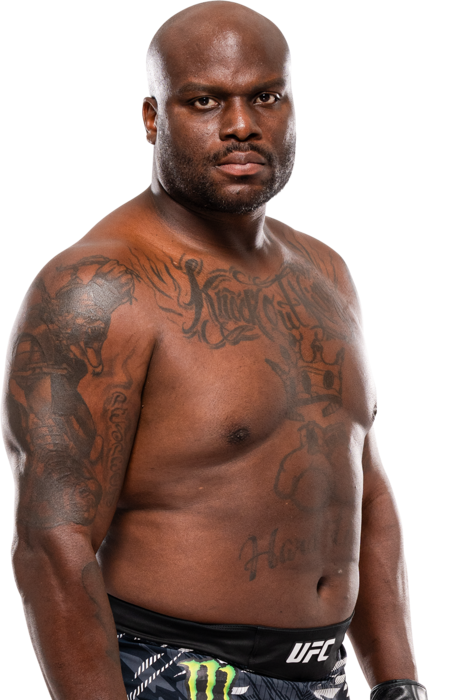
Derrick Lewis does not have the kind of tattoo collection that needs a dramatic sales pitch. He talks about it pretty plainly: some pieces came from prison, some were cover-ups, and one came from being drunk in Las Vegas. The UFC heavyweight’s ink is tied to Houston, family, faith, fighting and the hard years he had to get through before becoming a professional athlete.
In his GQ Tattoo Tour, Lewis jokes around, but the stories are clear. He was born in New Orleans and grew up in Houston, so the city is all over the collection. He has gorillas inspired by his Silverback gym, a Houston Texans tattoo, religious lettering, a crown and boxing gloves, and a few blunt phrases about the way he tries to live. There are also old designs he covered up because his life changed.
This is a grounded look at Derrick Lewis Knockout King and chest tattoos, using the pieces he actually explained rather than guessing at every mark in a weigh-in photograph.
The Houston Texans piece marks the place he calls home
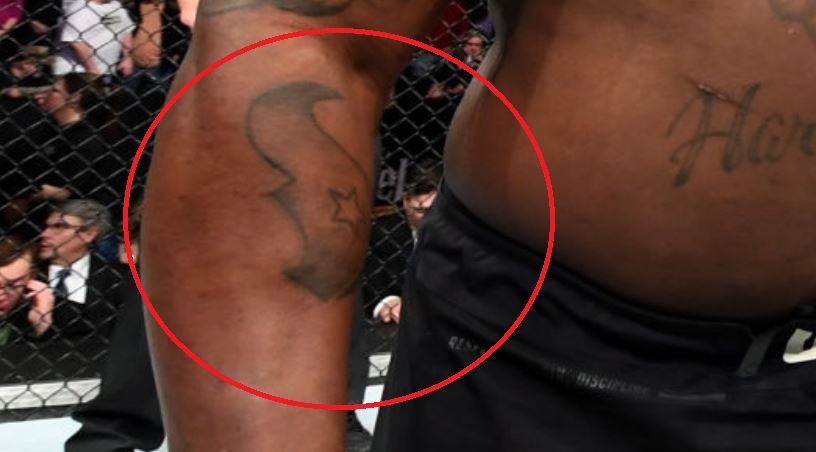
Lewis’s most recent tattoo in the GQ interview was a Houston Texans design. He was born in New Orleans, but he has lived in Houston since 1998 and talks about loving everything connected to the city. The piece is less about a sports logo for its own sake and more about the place that became home after he moved there.
That Houston connection shows up in the way Lewis talks about his life outside fighting, too. During Hurricane Harvey, he used his lifted truck to help people through the flooding. The tattoo sits inside that bigger story of local pride. It is a simple way of saying where he belongs, especially for a fighter whose public identity is closely tied to Houston crowds and the city’s support.
Two gorillas replaced the first tattoo he got for his mother
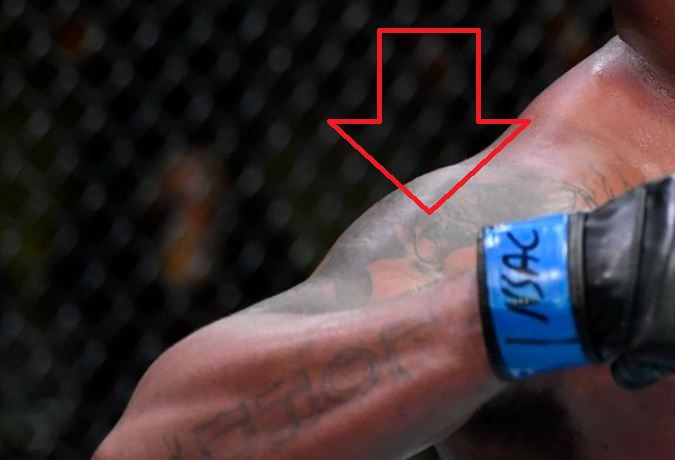
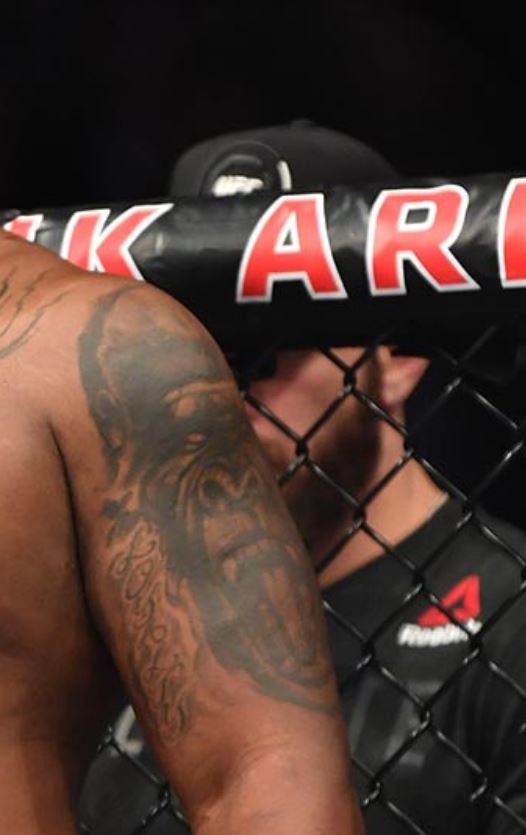
Lewis says his first tattoo was a cross for his mother on his arm. He later covered it and added gorillas on both sides of his body. The change was not random. He trains at a gym called Silverback, gorillas are one of his favorite animals, and he has built a fighting persona around the way they move and strike.
He even connects the gorilla imagery to the way he pounds his chest and slams the ground. That makes the pieces feel like a direct extension of his fighting style, not just tough-looking animals chosen from a flash book. The cover-up also gives the tattoo a timeline: the original cross belongs to a younger version of Lewis, while the gorillas represent the fighter he became.
Lewis also said that most of his tattoos were done in prison, which explains why several designs have a rougher, more personal quality. He described using improvised equipment, including electricity from an exit sign and an ink pen. That detail is unusual, but it is part of the history behind the collection and should not be smoothed away.
Respect and loyalty are written into the collection
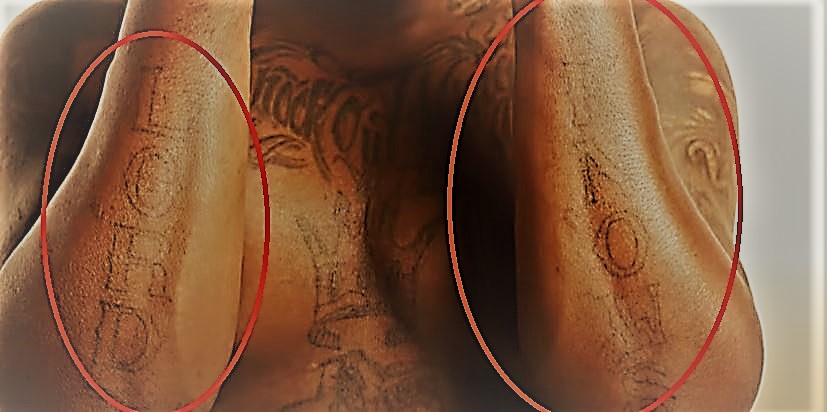
One of Lewis’s tattoos says respect and loyalty. He explained that those are values he tries to live by: he wants people to treat him with respect, and he sees himself as loyal. It is a straightforward phrase, but that fits his way of explaining tattoos. He does not spend ten minutes turning every word into a mystery. If a phrase matters to him, he puts it on his skin.
That idea also helps tie together some of the other pieces. The gorillas connect to his gym and fighting identity, the Houston design connects to home, and the words connect to how he wants to deal with people. The collection is not perfectly matched, but the themes overlap in a pretty natural way.
The owl is a cover-up of his old Black Beast tattoo
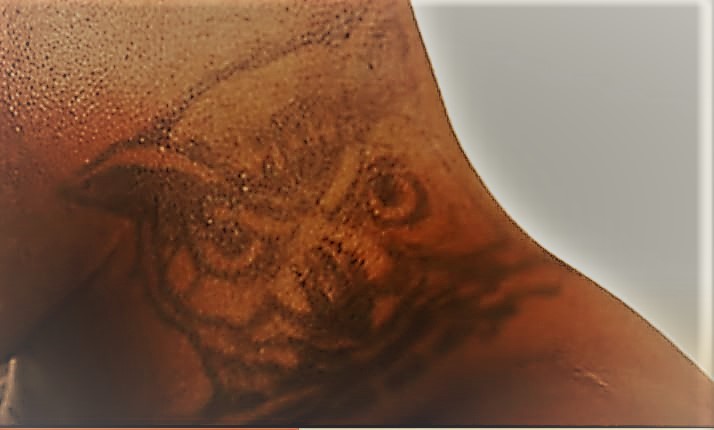
Lewis used to have Black Beast tattooed on his neck, a reference to the nickname that followed him through MMA. He later covered it with an owl. His explanation was that he sees himself as wiser than he was before. It is a small but telling change. Instead of treating the old nickname as something permanent, he updated the area to reflect a different stage of his life.
The owl is also a good example of how cover-ups can become part of a tattoo’s story. The original lettering is gone from view, but the reason for replacing it remains. Lewis is not pretending he has always made the same choices. He has changed, and the ink shows that change in a very literal way.
Respect, loyalty and Lord Knows are the phrases he lives by
Another piece says Lord knows. Lewis describes it as religious, then adds a joke about what he might do with his hands. That balance is very much his style: serious words, delivered with a grin. The tattoo gives the collection a faith element without making the whole thing feel solemn.
His hands are also part of the practical side of his story. Lewis is a heavyweight who has made his name by punching people very hard, so hand tattoos naturally become part of the way fans read his image. He is not claiming that the ink makes him dangerous. It is more that the designs sit right where his work happens.
Knockout King, boxing gloves and hard times
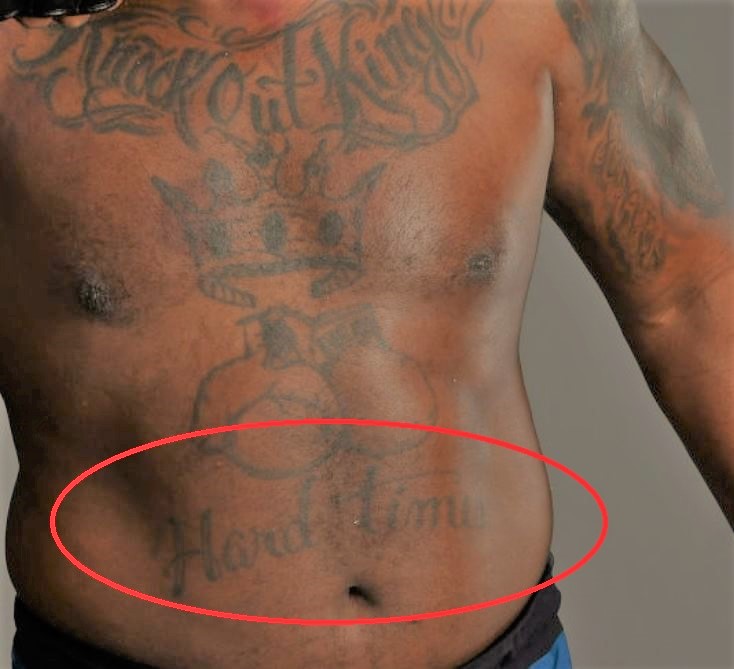
Lewis has a crown, boxing gloves and the words Knockout King. He also has hard times written into the same general fighting-and-survival theme. The crown is a confident image, but the phrase about hard times gives it some context. Lewis sees the tattoo as a reminder of what he came through before his UFC career finally gave him a different kind of life.
He began training MMA after getting out of prison in 2008 and had his first amateur fight in 2009. That timeline matters when looking at these tattoos. The pieces are not just generic boxing flash. They sit at the point where street fighting, prison, training and professional competition all meet. The crown and gloves are the most obvious symbols, while the words provide the personal part.
The small symbols fill in his family and faith references
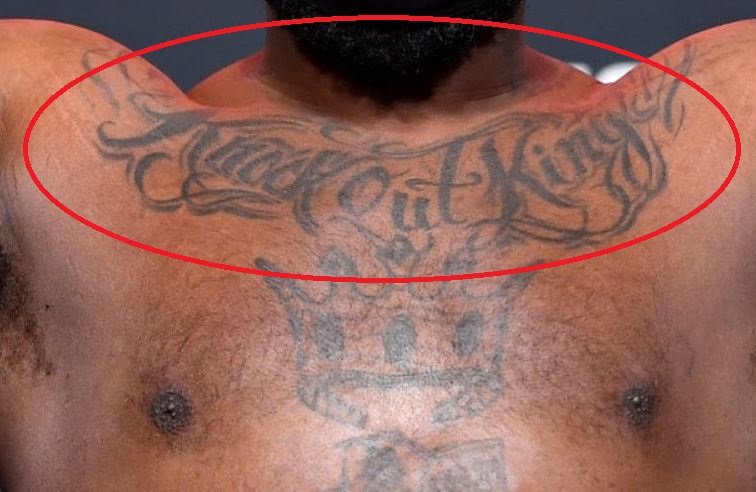
Photographs show more script and smaller symbols across Lewis’s arms and torso, but he has not explained every single mark publicly. The documented pieces include the religious lettering, the Houston Texans design, the gorillas, the owl, the crown, gloves, Knockout King and hard times. That is enough to understand the main shape of the collection without inventing a meaning for every blurry line in a weigh-in photo.
He has also talked about the possibility of getting his wife’s name, although he had not done it when the GQ video was filmed. They had been together for 11 years and married for two at that point. He joked that he might put her name under his foot. That comment says a lot about his attitude toward future ink: he is open to it, but he is not rushing to cover every empty patch of skin.
Why the tattoos fit Derrick Lewis better than a perfect sleeve would
Lewis’s ink is a mix of cover-ups, rough prison work, sports pride and symbols that point back to his family or career. It does not look like one artist designed the whole body in a single session, and that is exactly why it feels believable. The tattoos have accumulated as his life moved through different places and different versions of himself.
The rough edges are part of the story. A tattoo made with improvised tools in prison carries a different history from a professional piece added after a UFC win. A gorilla beside an old cover-up tells you something different from a Houston Texans design. Put together, they make a visual timeline rather than a matching fashion statement.
There is also a bit of humor in the way Lewis talks about the collection. He warns people not to get their first tattoo drunk in Las Vegas, jokes about his wife’s name, and still seems happy to explain the pieces he kept. He is not pretending every decision was perfect. He is saying the tattoos belong to him, including the cover-ups and the strange origin stories.
That makes the collection useful inspiration for anyone interested in meaningful fighter tattoos. The strongest ideas are not necessarily the biggest ones. They are the pieces linked to home, family, faith, loyalty, work and the hard parts of getting where you want to be.
What stands out most is how often Lewis ties a tattoo back to action. The gorillas point to the gym and the way he fights, the Houston mark points to the city he chose as home, and the crown and gloves point to the career he built after a rough earlier chapter. Even the owl is about moving forward and seeing himself differently. That is a much more useful way to read his ink than simply counting how many designs are visible.
His tattoos also show how a fighter can keep room for change. Lewis has covered parts of the old work, left other pieces visible, and talked openly about the designs he might add later. That matters because the collection is not frozen in one moment. The Houston piece arrived after years in the city, the owl replaced a nickname he no longer wanted to wear, and the gorillas connect the old prison ink to the gym and career that came after it. Even the jokes are useful: they keep the article from turning a rough, complicated history into a polished highlight reel.
Watch Derrick Lewis explain his ink
GQ’s Tattoo Tour is the clearest place to hear Lewis explain the gorillas, the owl, the Houston tattoo and the pieces he got in prison.