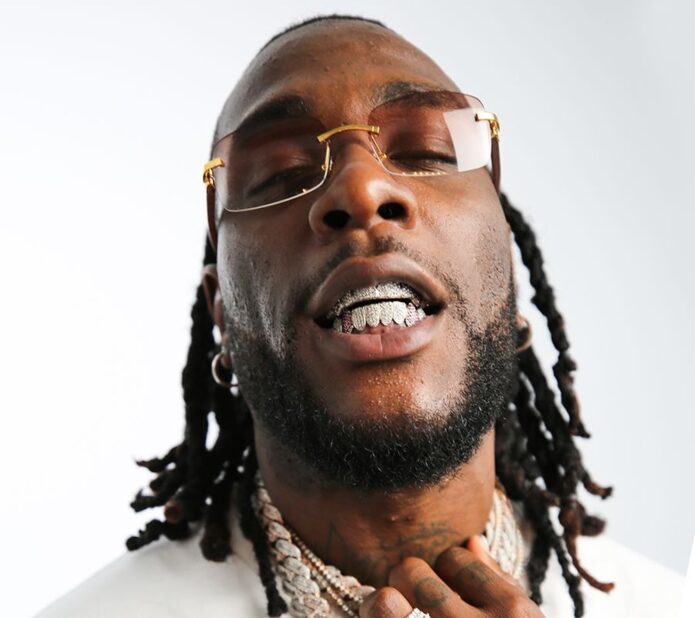
Burna Boy’s tattoos are a mix of faith, family, music and Nigerian identity. He has lettering on his hands, portraits on his arms, names worked into a graffiti-style wall and symbols that point back to home. The useful thing about his GQ Tattoo Tour is that Burna explains many of the designs himself. That gives the collection a lot more shape than a simple list of what can be seen in a concert photo.
Psalm 38 and the Rock Star hand tattoo show Burna Boy’s early ideas
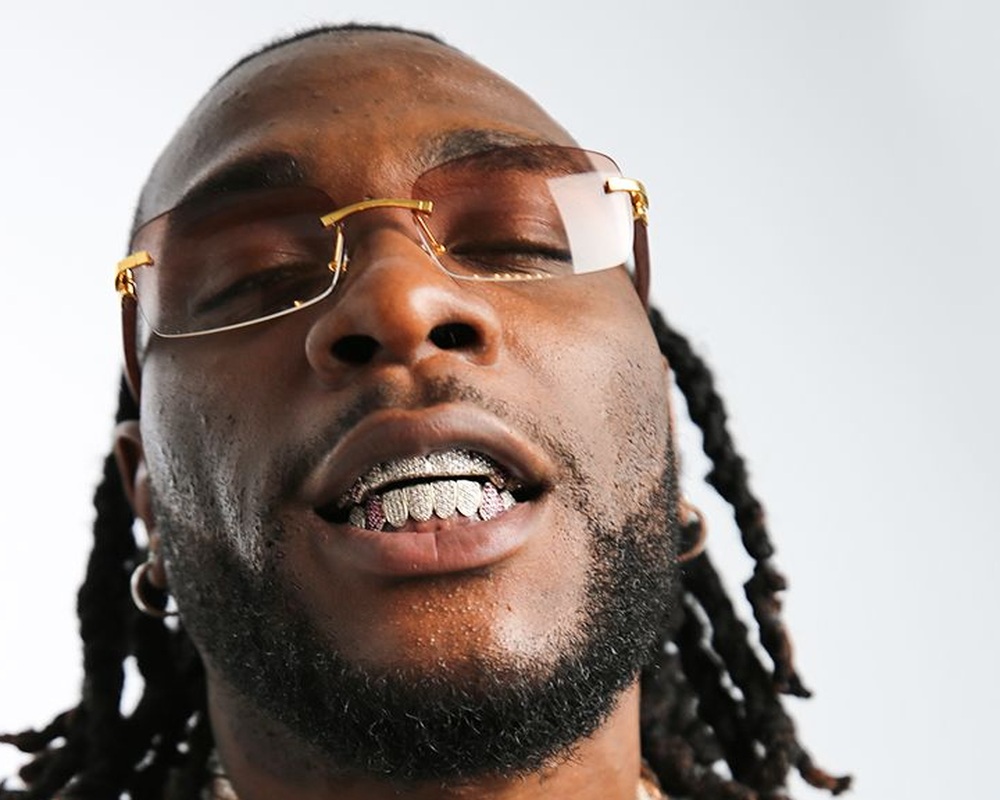
Burna starts his tattoo tour with Psalm 38. He says the passage came from a dark place and that the words felt like a song he could have written himself. That explanation is unusually direct. The tattoo is not being presented as a random Bible reference or a decorative piece of lettering. It belongs to a particular period and carries the memory of how he felt then.
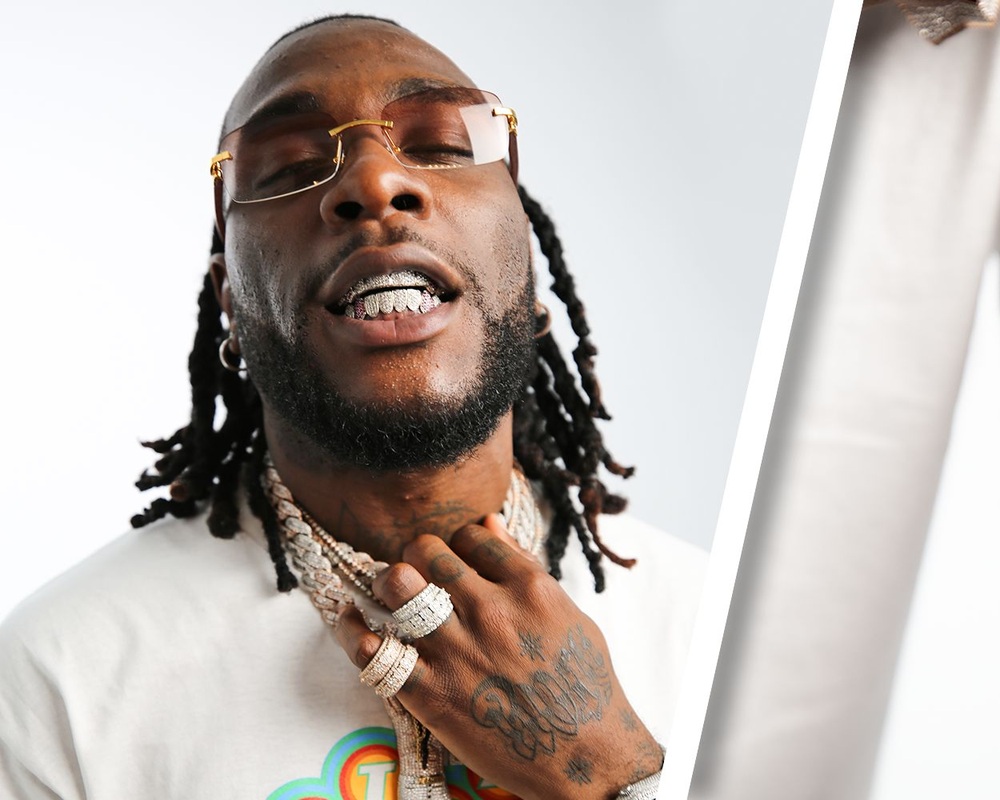
He then shows the hand tattoo that reads “Rock Star.” The clever part is the way the lettering changes when he turns his hand. From one angle it reads “rock,” from another it reads “star,” and together the two views make the full phrase. That makes the design work as both a readable label and a small piece of movement.
Another finger tattoo says “God’s love.” Burna describes that as the fuel of the earth. Again, the useful information comes from what he says rather than a guess based on the words alone. The hand pieces are small, but they are placed where they can be seen during performances, interviews and photographs.
These early tattoos also show the difference between a design and its timing. Psalm 38 carries a specific emotional memory, while Rock Star is closer to a public description of the artist he was becoming. The two ideas sit next to each other without needing to be forced into one story.
Family names turn the wall tattoo into a personal map
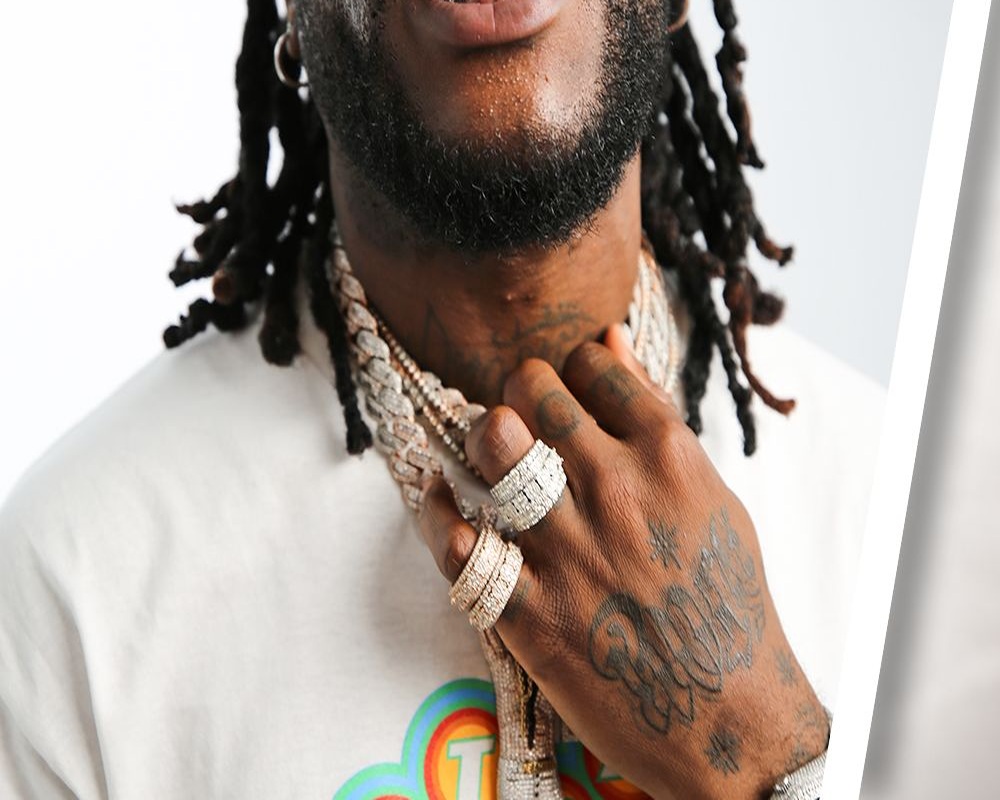
One of Burna Boy’s larger pieces is built like a wall. He describes it as brickwork with the word “family” worked into the surface, along with the names of family members scattered through the design. It reads less like a single picture and more like a collection of names that he carries with him.
The wall matters because the letters are not arranged like a neat list. The names are spread around the brick shapes, so the tattoo has a rough, layered look. A photograph can show the overall idea, but close detail is needed to separate one name from another. That is why this section needs a hand and upper-body image rather than a generic portrait.
Burna also describes a bleeding heart that still shines. His explanation is that something can look bright while still carrying pain. The contrast is simple and memorable: the shine does not cancel out the bleeding. The image gives the collection an emotional piece without turning it into a vague statement about suffering.
There is a balance between the personal names and the graphic surface. The brick wall gives the area structure, while the names make it private. It feels more like a family noticeboard than a polished emblem. That roughness suits the way Burna talks about the tattoo, as something filled with people rather than one perfect symbol.
Fela Kuti tattoos and ariwo ju sit at the centre of Burna Boy’s musical tribute
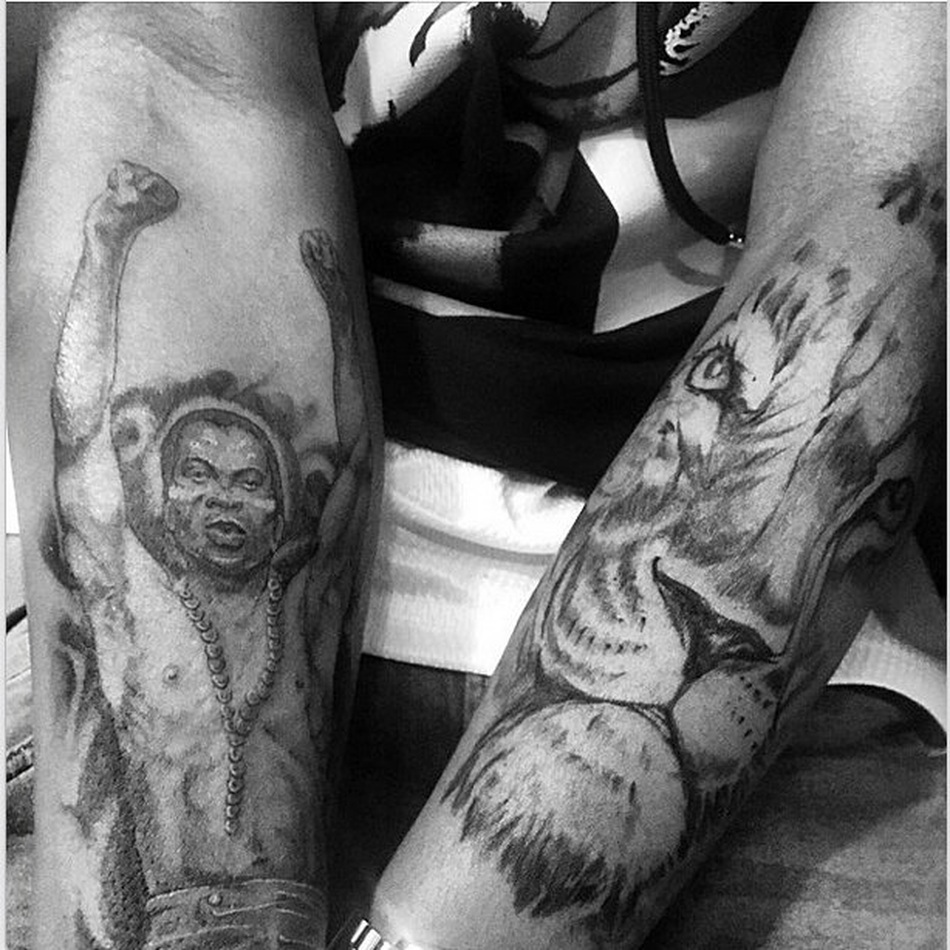
The Fela Kuti portrait is one of the clearest statements in Burna Boy’s collection. He calls Fela his hero and says he was the best musician who ever lived. The portrait is therefore not just a famous face placed on the arm. It records a musical influence that Burna has spoken about repeatedly.
Under the portrait is the phrase “ariwo ju.” Burna explains that it was a nickname Fela and Maganda used for each other. That small line makes the tribute more specific. The portrait identifies the person, while the words connect the piece with a phrase from Fela’s own world.
The arm photograph also shows why people can misread tattoo coverage when they only see a stage image. A sleeve or forearm may be partly hidden by a shirt, jewellery or a microphone. A close crop reveals the portrait and nearby work, while a wider photograph helps explain how the image sits on the arm.
Burna’s admiration for Fela is also part of the wider story of his music. The tattoo does not prove that every other design is a political statement, but it does show that musical history matters to him. Fela is a named influence, and the ink gives that influence a permanent place on his body.
The Nigerian coat of arms and omo niger tie the collection to home
Burna points out the Nigerian coat of arms in the Tattoo Tour. He explains the three rivers meeting and identifies the River Niger in the design. Beneath it, the words “omo niger” mean child of Nigeria. The tattoo is a straightforward piece of national identity, but the details give it more depth than a flag or a simple country name.
The coat of arms works visually because it has a recognisable shape and several smaller elements inside it. On skin, those details can disappear when the photograph is soft. A wide body shot shows that the symbol exists, but the sharper image lets readers see why Burna describes the individual parts.
This is where the collection connects to the phrase African Giant too. Burna’s tattoos often carry his Nigerian identity alongside his music identity, rather than separating the two. The designs do not all use the same style, but they keep returning to home, family and the people who shaped him.
That does not mean every piece needs an invented national meaning. The coat of arms and omo niger wording are the designs he explains. Other nearby lines can be described by what is visible until he gives them a separate story.
African Giant and the smaller symbols complete the body-art story
The phrase “African Giant” has also been photographed across Burna Boy’s abdomen. It is closely tied to the album and to the public identity he built around that era. Unlike the small finger words, this is a large piece of lettering meant to be read across the torso.
His catalogue also includes a hydroplane, a tribute to his first album “L.I.F.E: Leaving an Impact For Eternity,” a memorial to his best friend Gambo, and a symbol connected with the people who found him. These designs cover different parts of his story: travel and possibility, the beginning of his recording career, friendship and the team around him.
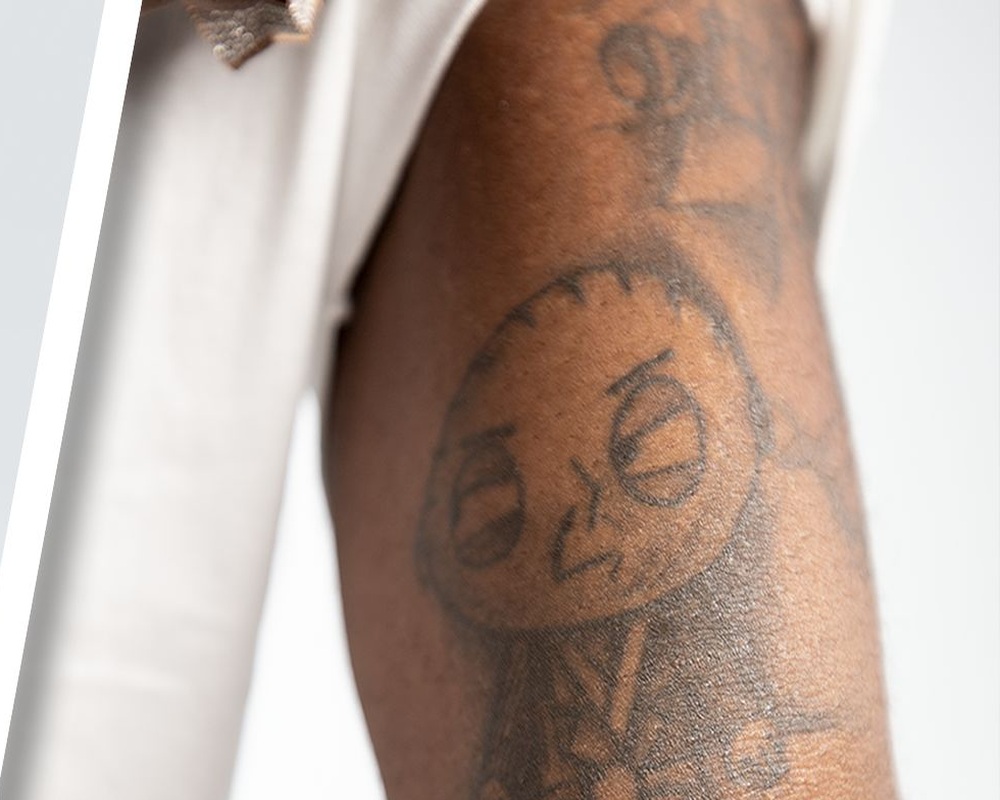
One of the more unusual pieces is Scarface Stewie from Family Guy. Burna says he cannot explain the full reason for getting it and that only people who knew him in 2010 would understand. That uncertainty is part of the record. A tattoo can be real and clearly visible without having a public explanation attached to it.
He also gives a useful warning at the end of the tour: do not jump into a tattoo and make sure it is something you can live with. His own collection includes serious family portraits, national symbols, album references and a cartoon character whose original joke is private. That mix is exactly what makes it interesting.
Seen together, Burna Boy’s tattoos are not one neat sleeve with one message. They move from Psalm 38 to Rock Star, from family names to Fela Kuti, from the Nigerian coat of arms to African Giant. Some pieces are about faith, some about music, and some are simply records of friends, albums or an earlier version of himself. The clearest guide keeps each tattoo beside the image and explanation that actually support it.
The collection also rewards a slower look at placement. Burna’s hand tattoos are always close to the camera when he handles a microphone, while the larger arm work can vanish under a sleeve. The torso lettering needs a different kind of photograph because the words stretch across a wider area. Those changes are not evidence that a tattoo has disappeared; they are simply the result of clothing, posture and the way a picture was taken. Dates matter as well. A design connected with an early album belongs to a different stage of his career from the African Giant lettering or a later tribute. Reading the tattoos in that order makes the collection feel like a timeline rather than a random gallery. It also keeps the descriptions honest. When Burna gives a name or explanation, it can be reported directly. When a photograph only shows a dark outline, the safer description is the visible shape and location, not a confident story about private meaning. That approach leaves room for the tattoos to be personal without pretending every detail has been explained publicly.
That is why the best images show the ink clearly while leaving the surrounding story in Burna’s own words.
The photographs make the separate designs easier to compare, especially when clothing hides part of the collection.