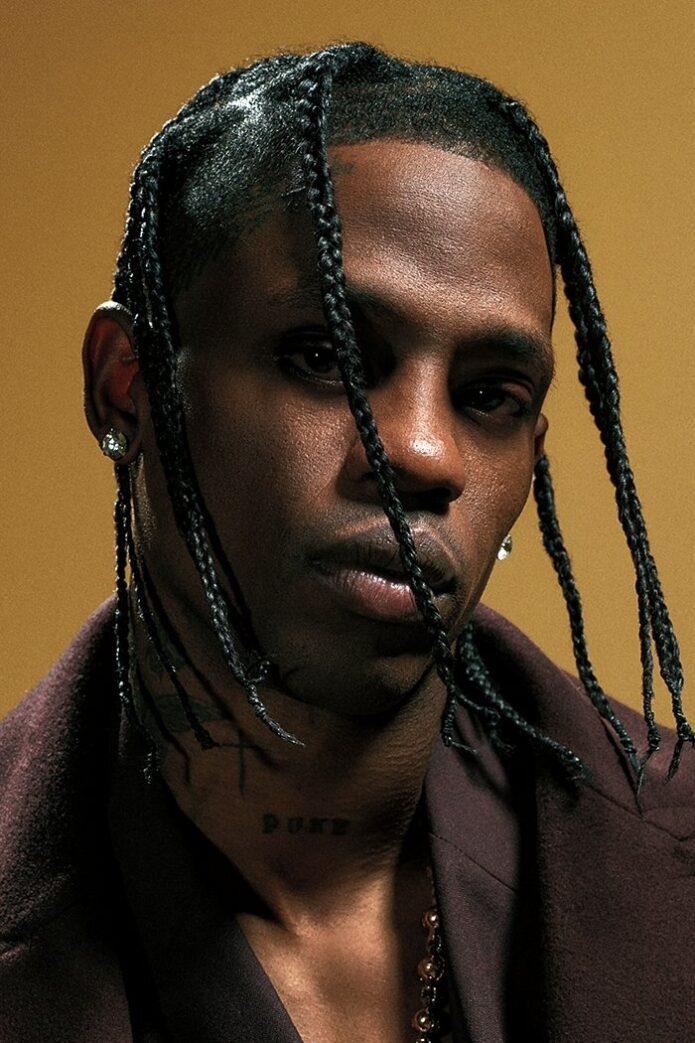
Travis Scott’s tattoos are easiest to understand as a changing map rather than a complete numbered list. The public record shows work on his head, arms, hands, ankles, neck, chest and torso. Some designs have a clear story, such as the matching butterfly with Kylie Jenner or the Portland landscape he has discussed. Others are simply visible pieces that have been named by tattoo references without a first-person explanation.
This guide keeps those evidence levels separate. A photograph can establish that a design is present and show where it sits. An interview or direct statement can explain why it was chosen. The two kinds of information belong together, but they are not interchangeable.
The large temple tattoo changed the shape of Travis Scott’s face
One of Scott’s most recognisable later tattoos is the large geometric or tribal-style piece on the left side of his head near the temple. Reports connect that work with tattoo artist Scott Campbell and place it around the period when Scott was preparing for the Astroworld tour. The size matters visually: it is not a small symbol hidden near the ear, but a major addition that changes the balance of the face and scalp.
Scott’s public message around the tattoo has been treated by some coverage as a sign that he was getting “tour ready,” but that does not provide a detailed meaning for every line. The secure description is the placement, the scale, the period in which it appeared and the reported artist connection. Claims about strength, unity or personal transformation are interpretations unless Scott himself attaches those ideas to the design.
The head tattoo also explains why dated photographs matter. A portrait before the piece can look like a different tattoo collection from a later concert image, even when the arm and chest work has not changed. The absence of the temple design from an older photograph is a date clue, not evidence that it was removed.
The moon above a bat is one of the clearest arm compositions
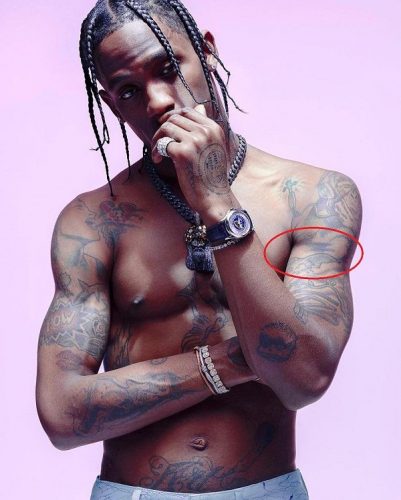
A full moon over a bat is repeatedly identified on Scott’s upper left arm. The two images read as one composition, which is why they should be catalogued together rather than listed as unrelated moon and animal tattoos. The moon sits above the bat, giving the piece a nocturnal quality that fits several of the darker visual motifs in his collection.
The design is well documented visually, but its private meaning is not established by a direct explanation in the sources used here. It is tempting to assign a story about nightlife, danger or the night sky, yet those are reader interpretations. The responsible entry is simpler: a full moon and bat on the upper arm, visible in close photographs and distinct from the other illustrated work around it.
Other reported arm designs include a monkey wearing headphones, a rose, cactus imagery and cartoon-like faces. These pieces can be described when the photograph is sharp enough to show their subjects. They should not be treated as a single sleeve designed in one session unless a source documents that connection. Scott’s arm images come from different periods, angles and levels of visibility.
Hand and wrist lettering is easy to see but harder to interpret
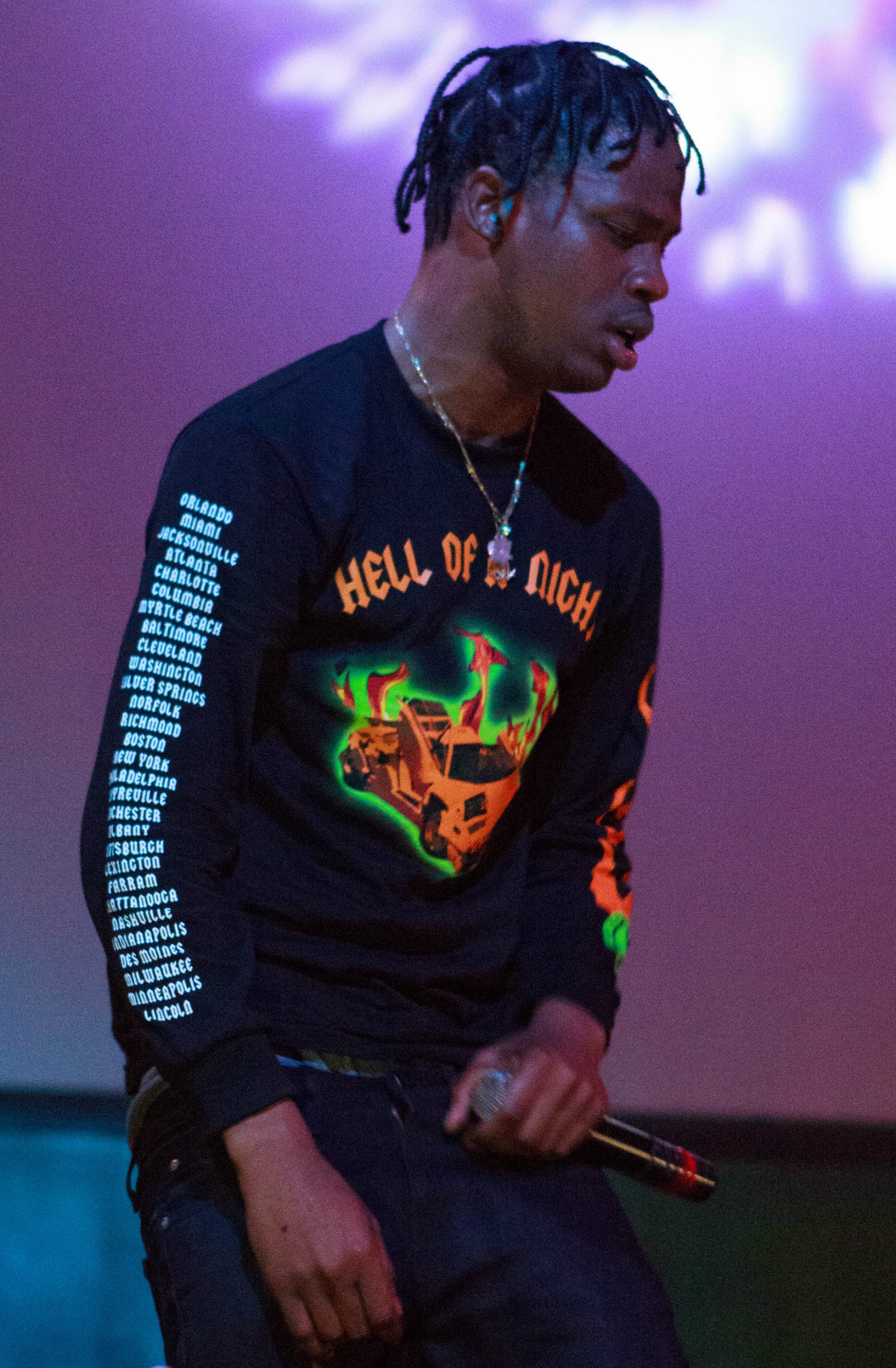
Scott’s hands and wrists carry smaller designs that appear in close-up photographs and performance images. Tattoo references identify lettering such as “Mercy”, the number 713, knuckle characters and a small “Free” tattoo below the eye. The marks are part of the public visual record, but not every one has a confirmed personal explanation.
A scenic landscape on the back of his hand has been associated with Portland, a city Scott has described as important to him. That context is stronger than a generic claim that a landscape must represent freedom or escape. Even so, the wording should stay careful unless Scott directly identifies the tattoo as a Portland tribute in the source being cited.
Hand tattoos are especially vulnerable to misreading. A microphone, rings or a bent finger can hide part of a word, and stage lighting can flatten thin lines. A close image may establish that a mark exists without making every letter legible. That is why this inventory names the designs that recur across clear photographs while leaving uncertain transcriptions out of the headline list.
The matching butterfly connects Scott, Kylie Jenner and Stormi
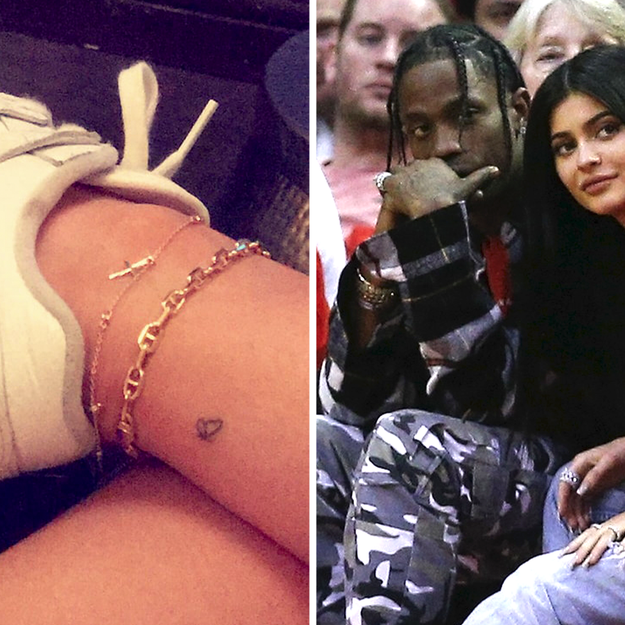
Scott and Kylie Jenner got matching butterfly tattoos on their ankles early in their relationship. Jenner later explained that the butterfly represented their relationship and their daughter Stormi. That statement gives the tattoo a documented personal meaning that is stronger than the common assumption that it only refers to Scott’s song “Butterfly Effect.”
The song is relevant context because the tattoos appeared during the period around that release, and reports connected the image with the track. It should remain context rather than replace Jenner’s explanation. The design’s importance comes from the combination of a shared motif, matching placement and the couple’s family story.
The butterfly is small, so it disappears easily beneath socks, shoes or trouser hems. That is why it appears inconsistently in public photographs. The absence of the ankle tattoo from a red-carpet image says very little; a close view of the ankle is much better evidence.
Neck and chest tattoos add lettering, symbols and animal imagery

Published tattoo references identify a tiger, a cross, a bee and the word “PUKE” around Scott’s neck and upper body. The tiger belongs to the wider animal vocabulary of his collection, while the smaller symbols sit in the spaces around the neck and chest. Their visibility changes sharply with necklaces, clothing and camera angle.
The story attached to “PUKE” is often repeated as a reference to an unpleasant night, but it is not as firmly documented as the matching butterfly or Jenner’s explanation. It is safer to describe the lettering and note that secondary coverage has offered that account than to present it as a direct quote from Scott.
Other photographs show a flying bird, a woman, broken-heart imagery and additional lettering around the chest and waist. Those marks belong in a period-specific visual inventory. They should not be merged into one current body map, because the public images were taken at different times and do not show the same amount of skin.
His wider arm and torso collection grew around the named pieces
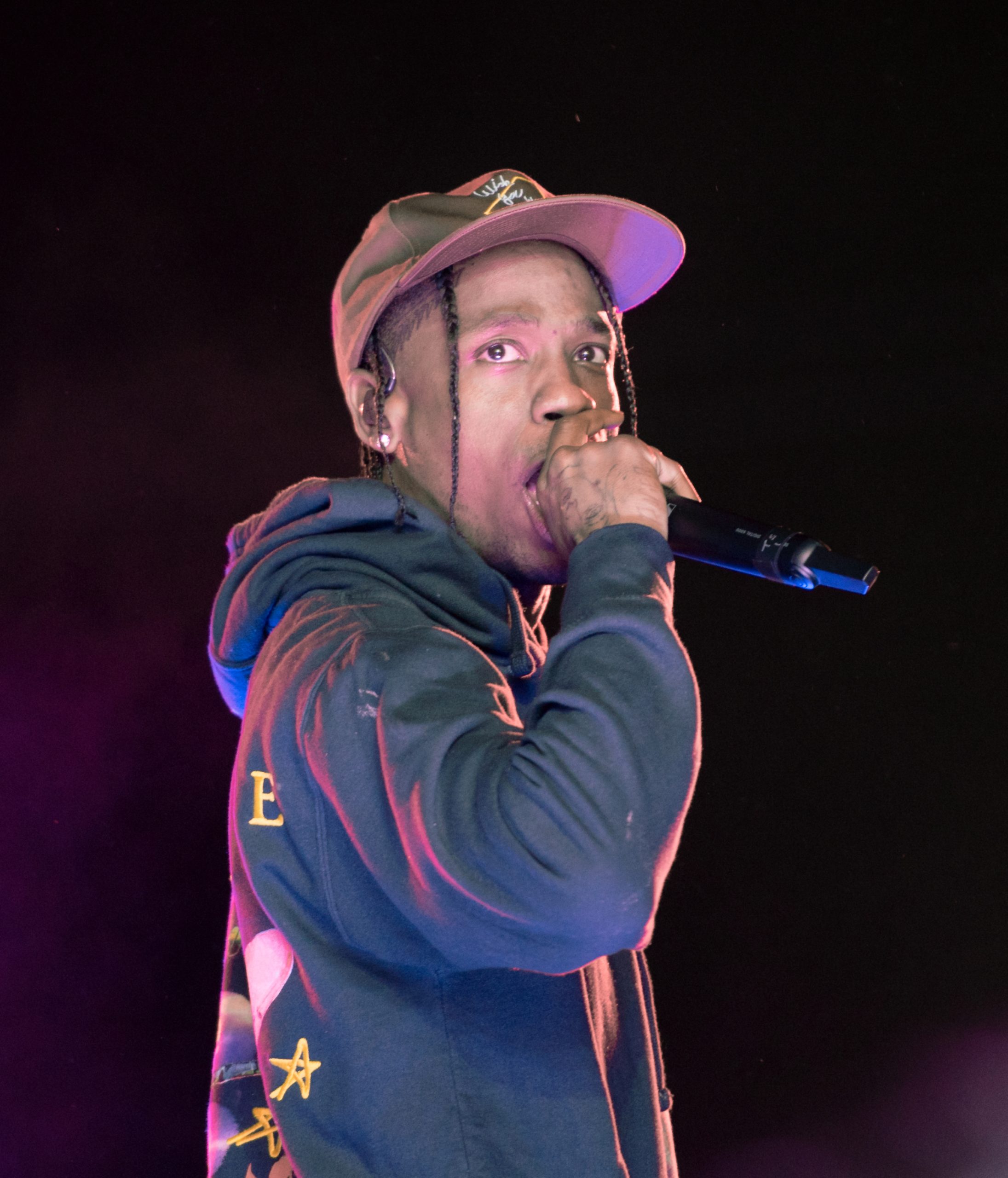
Scott’s tattoos extend beyond the pieces that have become search headlines. The arms and torso include smaller symbols, illustrated faces, lettering and designs that are visible only when he is shirtless or wearing a particular style of clothing. A photograph can show a tattoo clearly without revealing who designed it or why it was chosen.
The collection also changed as his career moved through different stages. Early performance images show some of the arm and hand work before the later head tattoo appeared. Later portraits show more connected ink across the upper body, but a newer photograph is not automatically a complete replacement for the older record. It is one dated view of a body that has been added to, covered by clothing and photographed under different conditions.
There is no reliable official count that turns the collection into a fixed number. A useful guide instead records the body area, the visible design, the date or period and the evidence level. The temple piece and moon-and-bat composition are strong visual anchors. The butterfly has a clear personal explanation. Smaller lettering and torso motifs can be included when the image supports them, while uncertain readings should remain qualified.
That approach makes Travis Scott’s tattoos more interesting because it leaves room for both fact and uncertainty. The head tattoo marks a major change in his appearance, the bat and moon form a recognisable arm scene, the hands carry difficult-to-read lettering, the butterfly preserves a family moment and the neck and torso pieces show how the collection kept expanding. The visual record is substantial, but it is not a permission slip to invent a meaning for every mark.