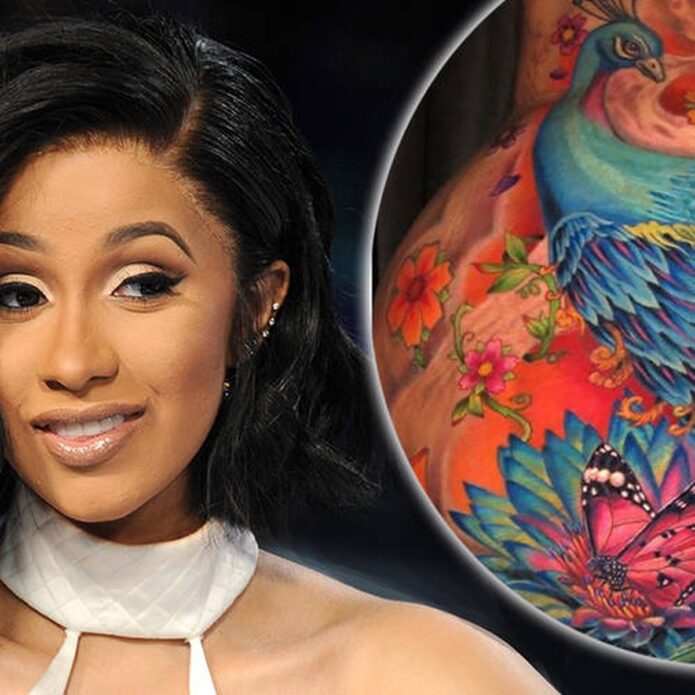
Cardi B’s tattoos are easy to recognise because they refuse to stay in one lane. There is a huge, brightly coloured peacock spreading across her thigh, hip and backside. There are small names written in fine script. There is a wedding date on her hand and a face tattoo that arrived later in her family story. The collection is colourful, but the timeline matters just as much as the colour.
Some of the pieces have a clear explanation from Cardi or a strong report from the artist’s side. Others are easier to describe than to interpret. This guide sticks to what the photographs actually show, then adds the meaning that has been reported rather than turning every flower into a private symbol.
The peacock is Cardi B’s biggest and most recognisable tattoo
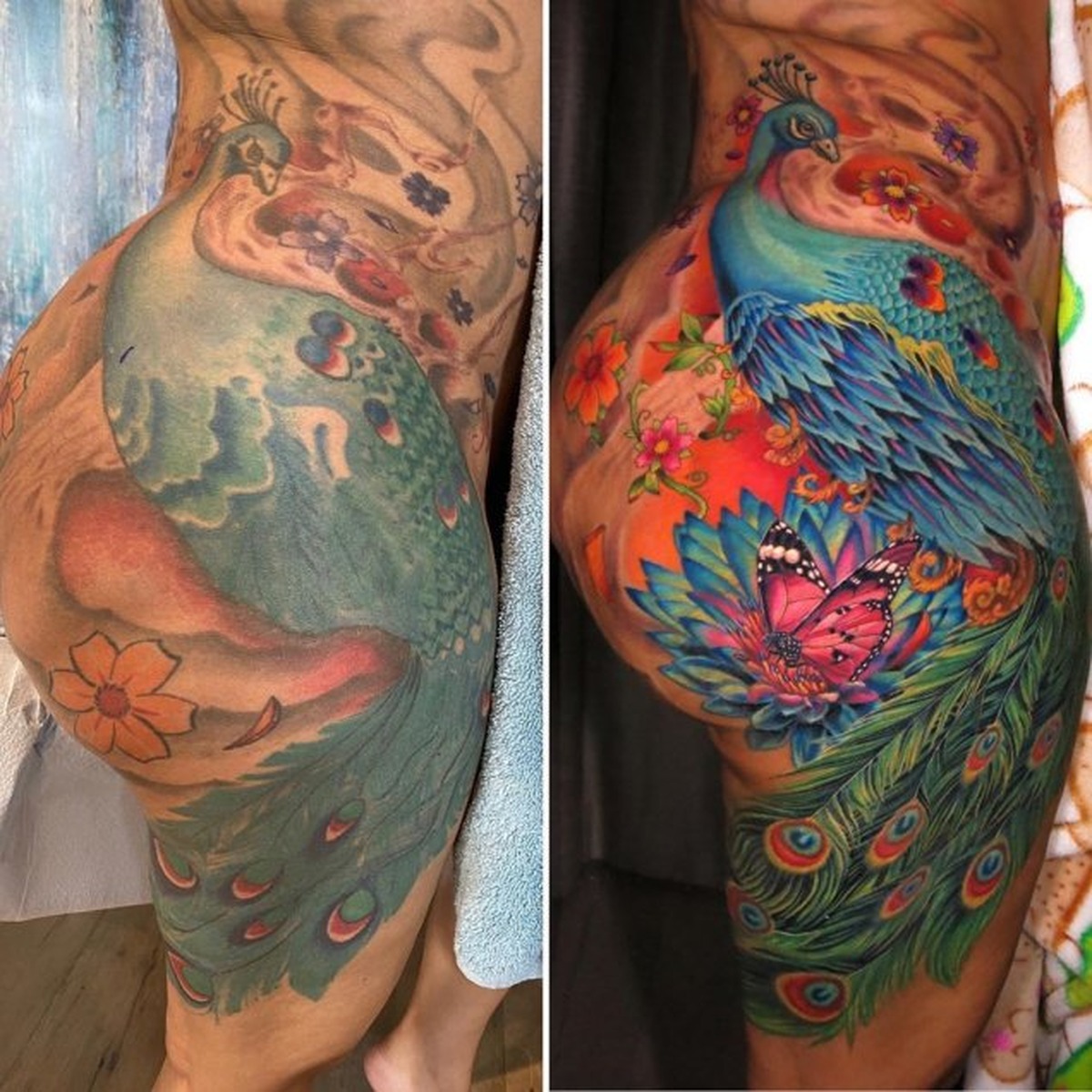
Cardi’s peacock thigh tattoo runs from the side of her thigh toward the hip and buttock. The bird is surrounded by flowers, a butterfly and a fan of blue and green feathers. It is not a small isolated emblem. It is a large composition that changes shape as it crosses different parts of the body.
The piece became especially well known after Cardi had it refreshed in 2020. Reports connected the seven-day session with Los Angeles artist Schene, and Cardi spoke openly about how painful the work was. That detail gives the tattoo a proper timeline. She did not simply reveal a brand-new peacock overnight. The older colour work was reworked, strengthened and made more detailed after years on the skin.
The refreshed version has stronger blues, greens and pinks than many older photographs. The feathers are easier to separate, while the surrounding flowers have more contrast. A photograph from before the session can therefore look like a different tattoo even when it is the same broad design. Lighting, camera distance and the condition of the old ink all change the way the composition reads.
There is no need to invent a separate meaning for every feather. Cardi has discussed the tattoo’s size, pain and refresh, but the available reporting does not provide a private explanation for every colour choice. The useful facts are the peacock subject, the thigh-to-hip placement and the 2020 rework.
The back work continues the peacock’s flowers and bird imagery
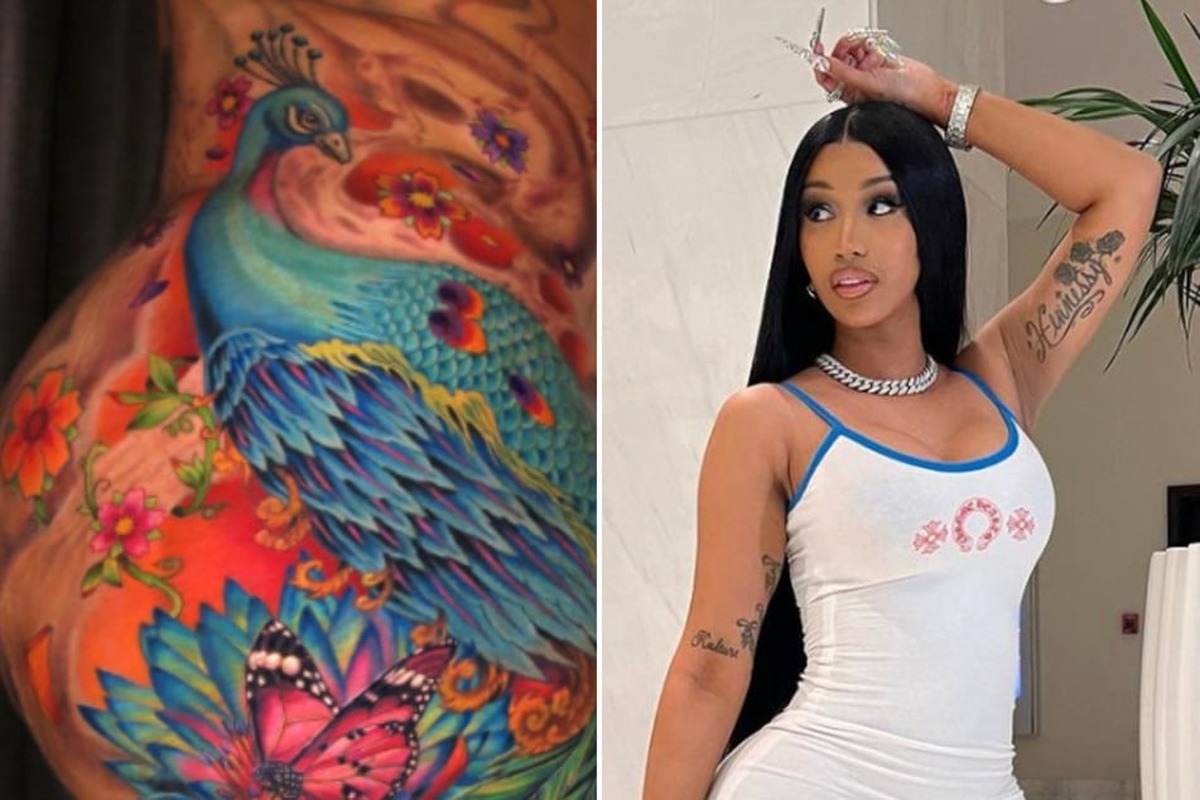
The back section carries the same colourful visual language. In photographs, the bird sits among red, orange and pink flowers, with the composition spreading across the back instead of stopping at one neat rectangle. This is why it is better described as connected botanical and bird work than as a list of unrelated flowers.
A close image shows how the design moves with the body. The blue bird draws the eye first, then the flowers fill the spaces around it. The butterfly adds another small winged shape without competing with the peacock itself. Those details are visually clear even when a source does not assign a separate personal meaning to each one.
Reports have linked the work with tattoo artist Jamie Schene, although artist attributions should be kept attached to the pieces the source actually discusses. The credit does not prove that Schene created every tattoo Cardi has ever shown. It is safer to connect the name with the colourful peacock and botanical work specifically.
The back photographs also explain why a general red-carpet portrait is weak evidence for this subject. Clothes, hair and camera angles hide most of the composition. The tattoo becomes useful to a reader only when the image shows enough of the skin to establish the bird, the flowers and the relationship between the upper and lower sections.
Wave is Cardi’s small face tattoo for her son
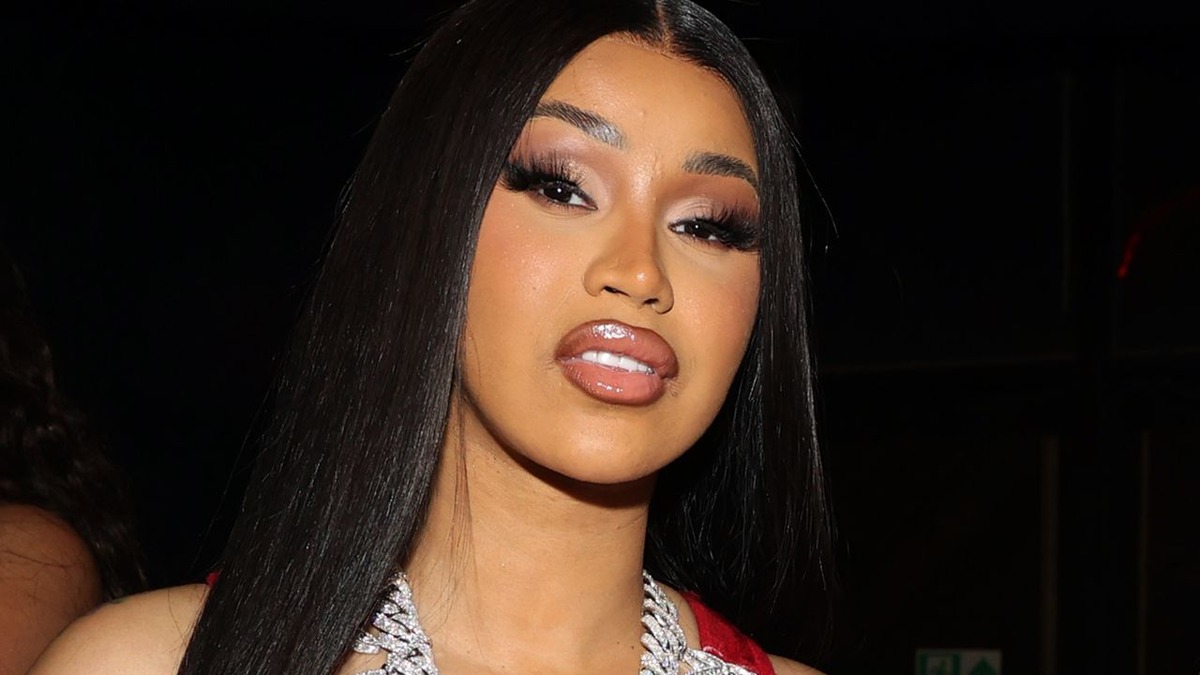
Cardi’s Wave face tattoo is much smaller than the peacock and much more direct in meaning. The name is written in cursive along the jawline, and reports connect it with her son Wave. The lettering sits close to the face, so an ordinary event photograph can make it look like a stray shadow. A close portrait is needed to read the letters properly.
The family connection is unusually well supported because Cardi publicly connected the name with her son. That is stronger evidence than a fan caption guessing at a tiny mark. The tattoo does not need a dramatic theory attached to it. The name, the placement and the family explanation already tell the story.
It also shows a change in scale across Cardi’s collection. The peacock takes up a broad section of the body and depends on colour. Wave is a narrow line of text that works because it is personal. The contrast makes the collection feel more like a record of different moments than one fixed style.
Kulture’s name adds another family marker on the arm
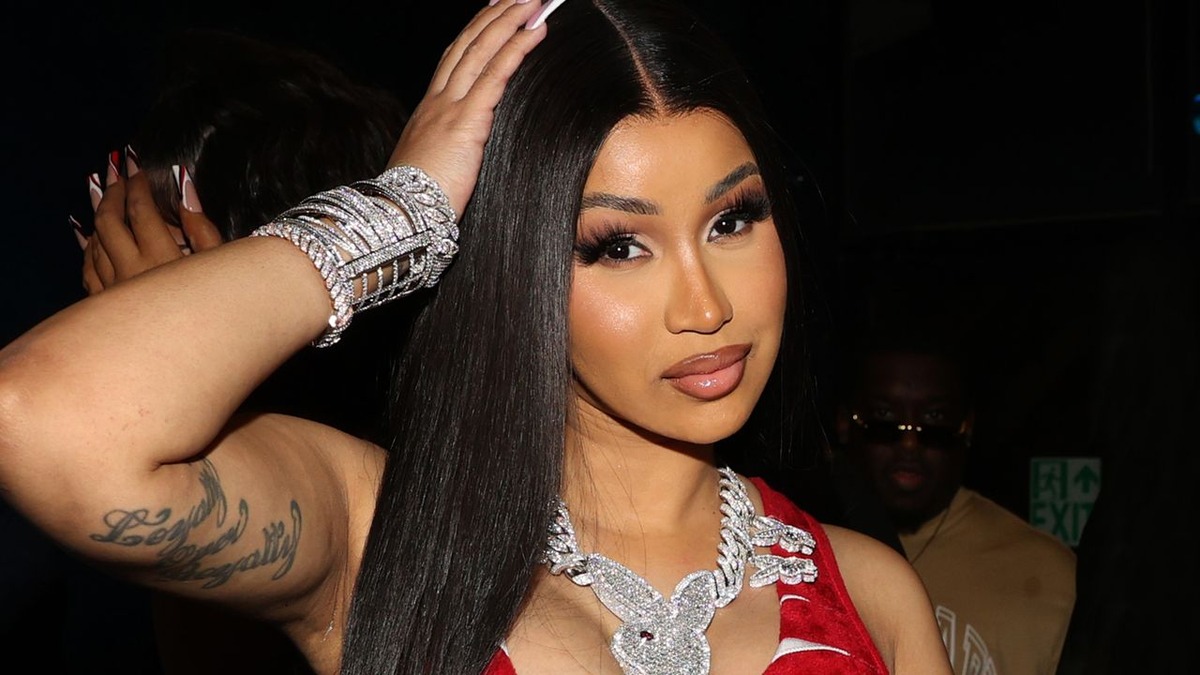
The Kulture bicep tattoo belongs in its own part of the inventory. It is associated with Cardi’s daughter and should not be merged with the Wave lettering simply because both are names. The locations are different, and the point of the two tattoos is that each child has a separate place in the collection.
Small name tattoos can be difficult to document. A bicep photograph may show the edge of the lettering while hiding the first or last character. Cardi’s hair, clothing and the angle of her arm can also change how much of the design is visible. The responsible description is therefore the reported name and placement, with the warning that not every photograph gives a full view.
The lettering also sits outside the bright peacock palette. That does not make it less important. It shows Cardi using ink in two different ways: large colour for a statement composition and fine script for family references. The designs do not have to match stylistically to belong to the same tattoo history.
The 9.20.17 tattoo records a shared date with Offset
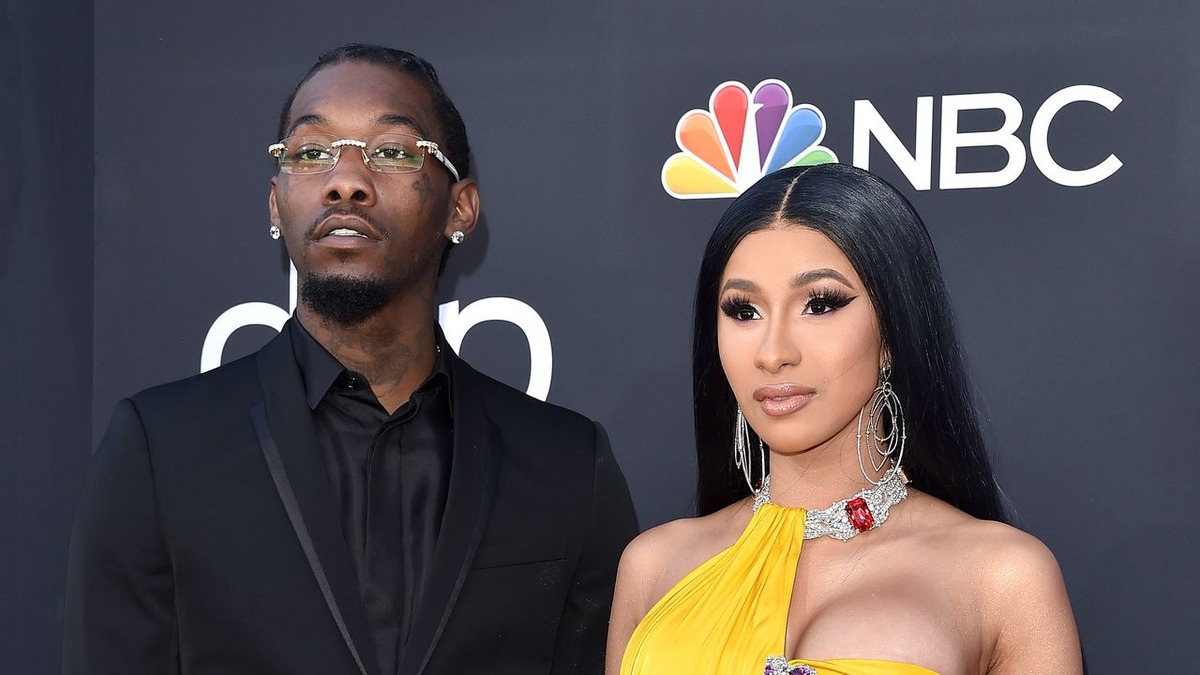
Cardi and Offset tattooed 9.20.17 on each other’s hands as a wedding-date gesture. Allure reported the session and connected it with tattoo artist Nikko Hurtado. The date is literal, which makes this tattoo easier to catalogue than a symbol whose meaning has to be guessed from its shape.
Hand tattoos are also unusually public and unusually difficult to photograph well. The fingers bend, rings interrupt the view and small numbers can disappear when the hand is turned. A sharp close-up can establish the digits, but a distant photograph should not be treated as proof that every line is still identical years later.
The date records a moment in the relationship, even though relationships and tattoos continue to exist on different timelines. The ink can remain as evidence of when the gesture happened without telling a reader how Cardi feels about that period now. That distinction keeps the article grounded instead of turning a dated design into a current claim.
The peacock tattoo refresh changed how the whole collection reads
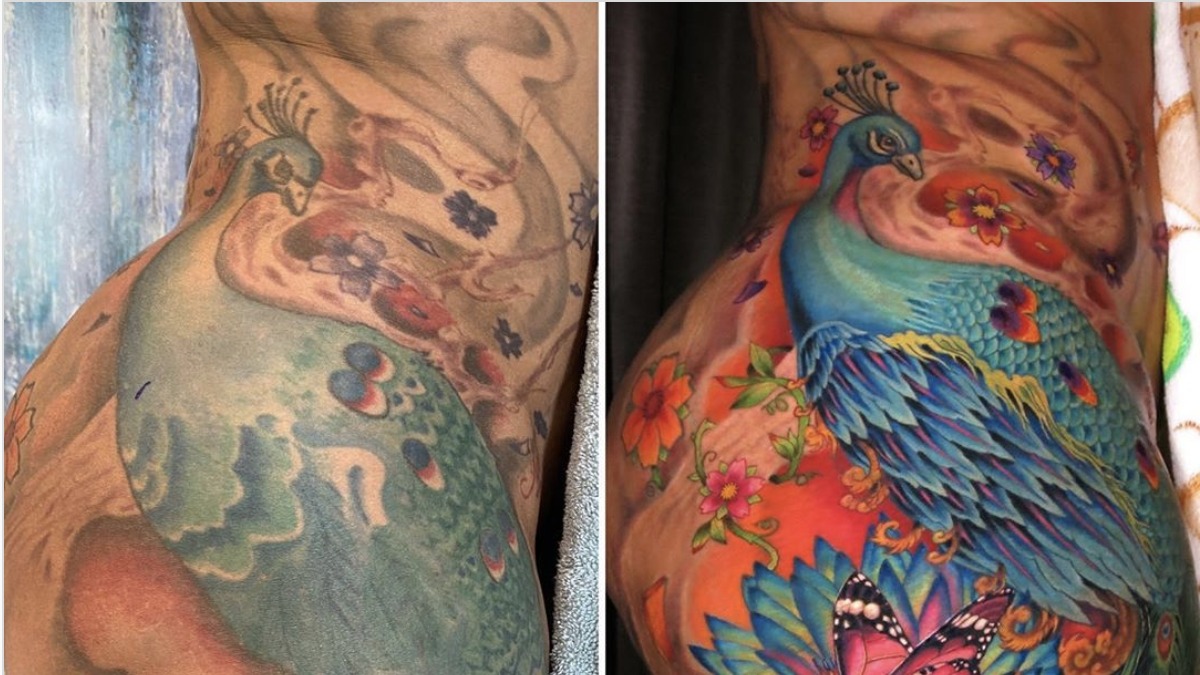
The 2020 refresh is important because it changed the visual balance of Cardi’s collection. Before the session, the peacock could look softer and more faded in older photographs. After the work, the feathers became brighter and the flowers gained sharper edges. The design was still recognisable, but the new saturation made it read as a much larger statement.
That kind of change is common with large tattoos. Skin, sun exposure, camera processing and the age of the ink all affect colour. A guide that places an old photograph beside a new one should label the period instead of treating one frame as the permanent version. Cardi’s tattoo history is not a single still image.
The same caution applies to the smaller pieces. Wave and Kulture are easier to lose in a wide portrait, while 9.20.17 can disappear behind jewellery or a hand pose. A good tattoo catalogue pairs each design with a photograph that actually shows it. A generic celebrity image may be attractive, but it cannot prove a placement or a letter.
Taken together, Cardi B’s tattoos move between three strong ideas. The peacock and its flowers are the large visual centre. Wave and Kulture put family names on visible parts of the body. The matching date records a shared event in small numbers. The work is colourful, but the meaning is not identical from one tattoo to the next.
The safest reading is also the most interesting one. Cardi has a major composition that she has maintained and refreshed, alongside smaller pieces that mark people and moments. Some details are confirmed by her own explanations. Some are supported by close photographs. Where the sources stop, the description should stop too. That leaves readers with a clear map of the tattoos instead of a polished story made from guesses.
That balance is why the smaller tattoos deserve the same attention as the famous peacock. A name on the jaw, a name on the arm and a date on the hand can be more specific than a broad symbol. They also give the reader a way to follow Cardi’s life through design, placement and time without claiming private meaning that she has not shared.
One thought on “The stories behind Cardi B’s peacock, family names and matching ink”