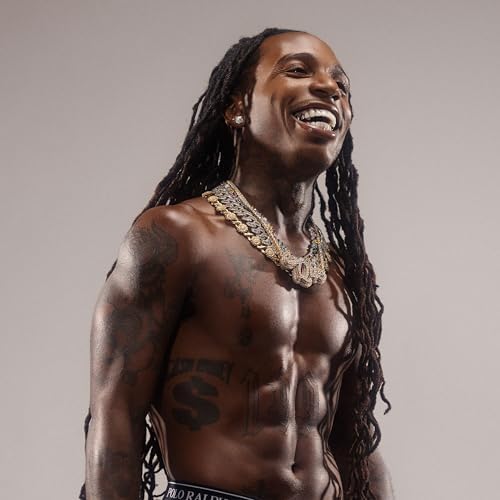
Jacquees has never presented his tattoos as one perfectly planned sleeve. In the GQ Tattoo Tour, he moves from the ink he got as a teenager to the family names, symbols and small jokes that accumulated around it. That makes the collection interesting: the story is not just how many pieces he has, but how the tattoos mark different ages, loyalties and turning points.
Some designs are easy to identify in photographs. Others are explained best in Jacquees’s own account. The guide below keeps those two kinds of evidence separate, so a visible symbol is not given a made-up meaning simply because it looks dramatic.
Fear God was the hand tattoo he got at 15
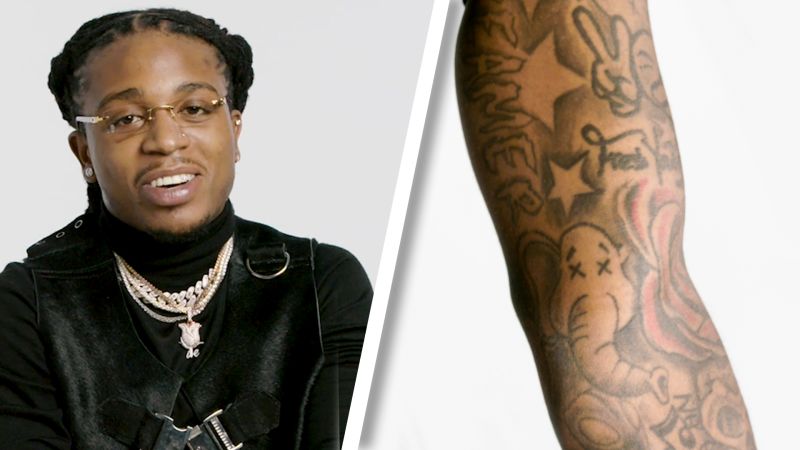
The hand lettering is the most immediately recognisable piece in Jacquees’s tattoo record. He says he got “Fear God” at about 15, after being influenced by Lil Wayne’s visible tattoos. The phrase sits across the hand in a way that makes it readable from a distance, but the lettering is still part of a much larger collection rather than a standalone brand.
His explanation is fairly direct. Jacquees does not claim that the words describe a secret code or a complicated private philosophy. They are a public statement, chosen young and kept visible. That age matters because it places the piece before the later family portraits, body symbols and career references. It is one of the tattoos that shows how quickly he moved from experimenting with ink to treating it as part of his appearance.
The first neck tattoo was Que with notes and stars
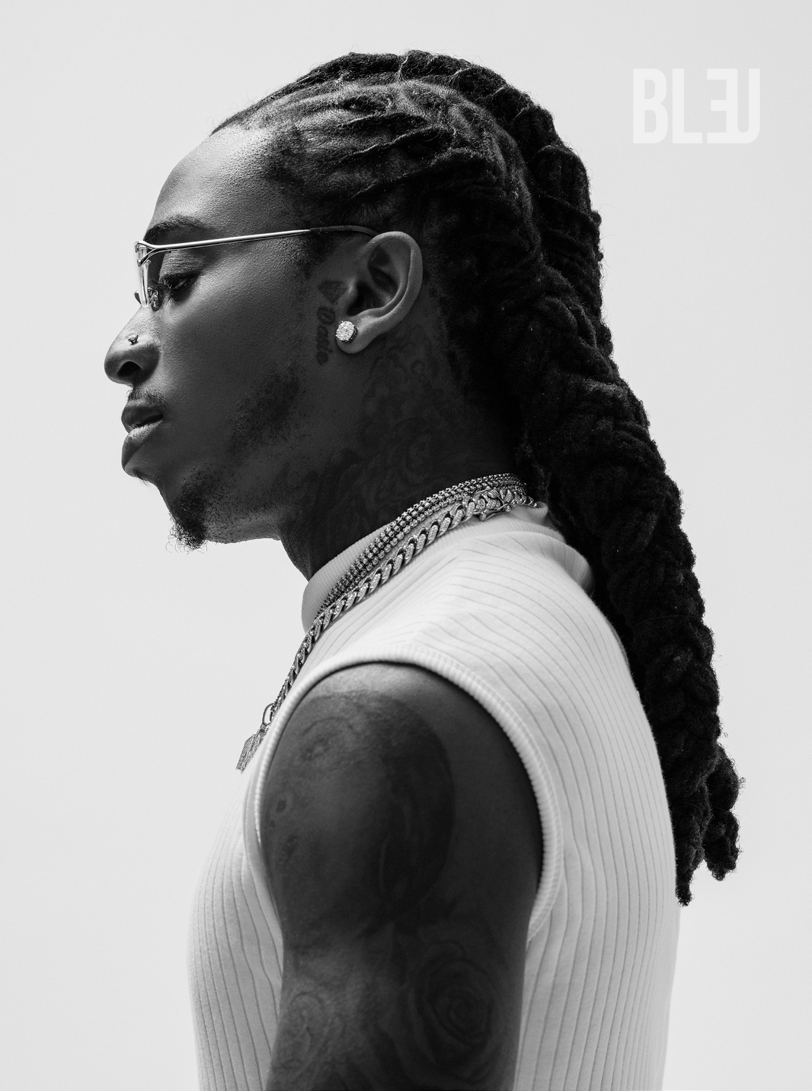
Jacquees says his first tattoo arrived at 13 because he did not want to be the only kid at school without one. The original design was his nickname, “Que,” surrounded by music notes and stars on his neck. It was an early marker of both identity and music, although the tattoo was later covered.
The cover-up is part of the story rather than a footnote. A first tattoo can feel permanent when it is chosen at 13, but the later change shows how his taste and public image developed. The neck is also a difficult place to hide, so the decision to put a nickname there made the piece unusually visible for such a young first attempt. Photographs can establish the position and later layers; Jacquees’s tour supplies the reason it was there in the first place.
Confidence, Jesus, the rose and doves built the neck sequence
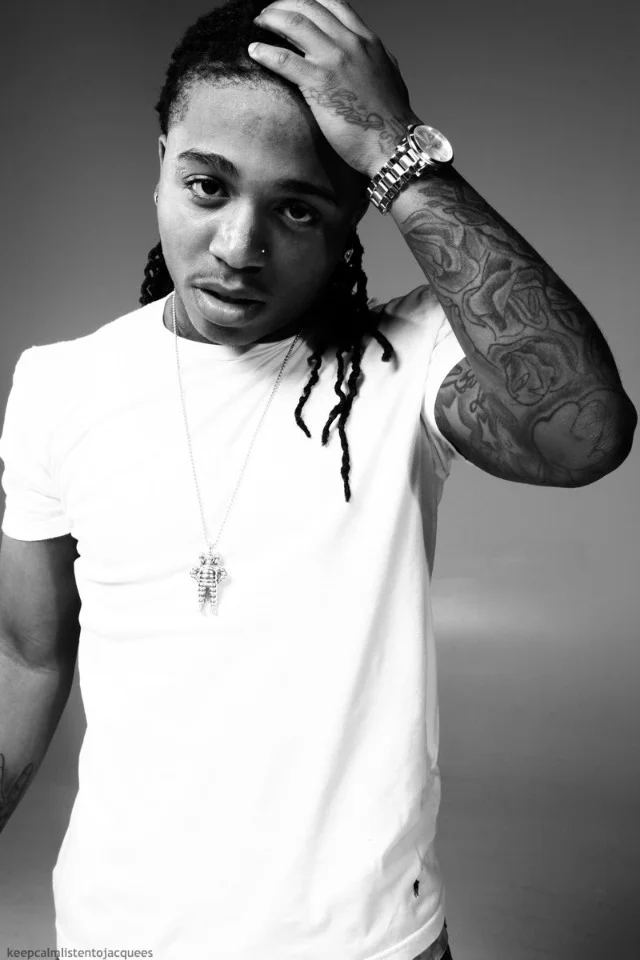
At 17, Jacquees added “Confidence is a stain they can’t wipe off” to his neck. He describes it as a line that stayed with him, and the long lettering gives the neck a different visual character from the compact nickname it replaced. The quote is worth keeping intact because it explains the tattoo more clearly than a general claim about confidence ever could.
The neck then became a record of several different ideas. Jacquees identifies a Jesus tattoo, a rose, the original Atlanta Braves sign, a heart at the back of the neck and doves associated with peace and love. Those pieces should not be flattened into one invented theme. The religious image, sports reference, floral design and birds can sit beside one another without having one single documented explanation.
That layering also explains why the neck looks different across photographs. Hair, angle and lighting hide parts of the work, while a close portrait can make the lettering look heavier than it does in person. The images show placement and scale. The interview is what confirms which pieces Jacquees himself names.
FYB, roses, the spaceship and the three wise monkeys fill out the arms
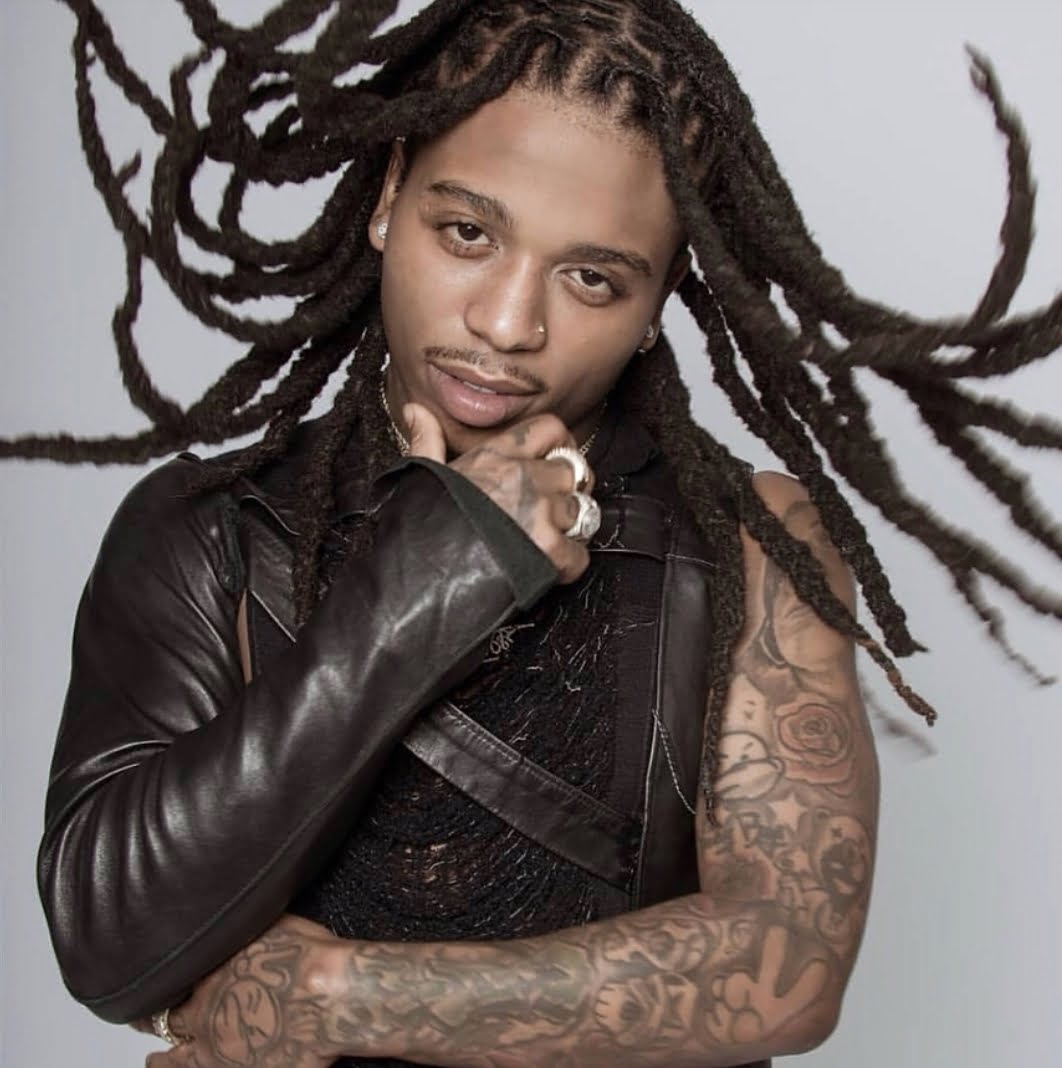
The arms carry more of the collection’s group identity. FYB, short for Fresh Young Boyz, appears as a recurring reference, including an elbow label. Jacquees also describes three roses on the East side, a spaceship that fits his explanation, “I’m outta here,” and the familiar see-no-evil, hear-no-evil and speak-no-evil monkeys.
These designs do not all have the same emotional weight. FYB is tied to the people around him. The roses carry a location reference. The spaceship is a playful phrase made visual, while the three monkeys belong to a recognisable symbol group that many tattooed people interpret in their own way. Jacquees’s account confirms that he had the set around 18, but it does not require us to assign a separate private confession to each monkey.
He also names a statement about sin, saying that no one sin is greater than another. The wording belongs in the article because it is his explanation, not because every nearby dark or religious image must be made to represent it. A strong tattoo record keeps the confirmed sentence beside the design it actually describes and leaves uncertain connections open.
Family names, portraits and the symbols on his face
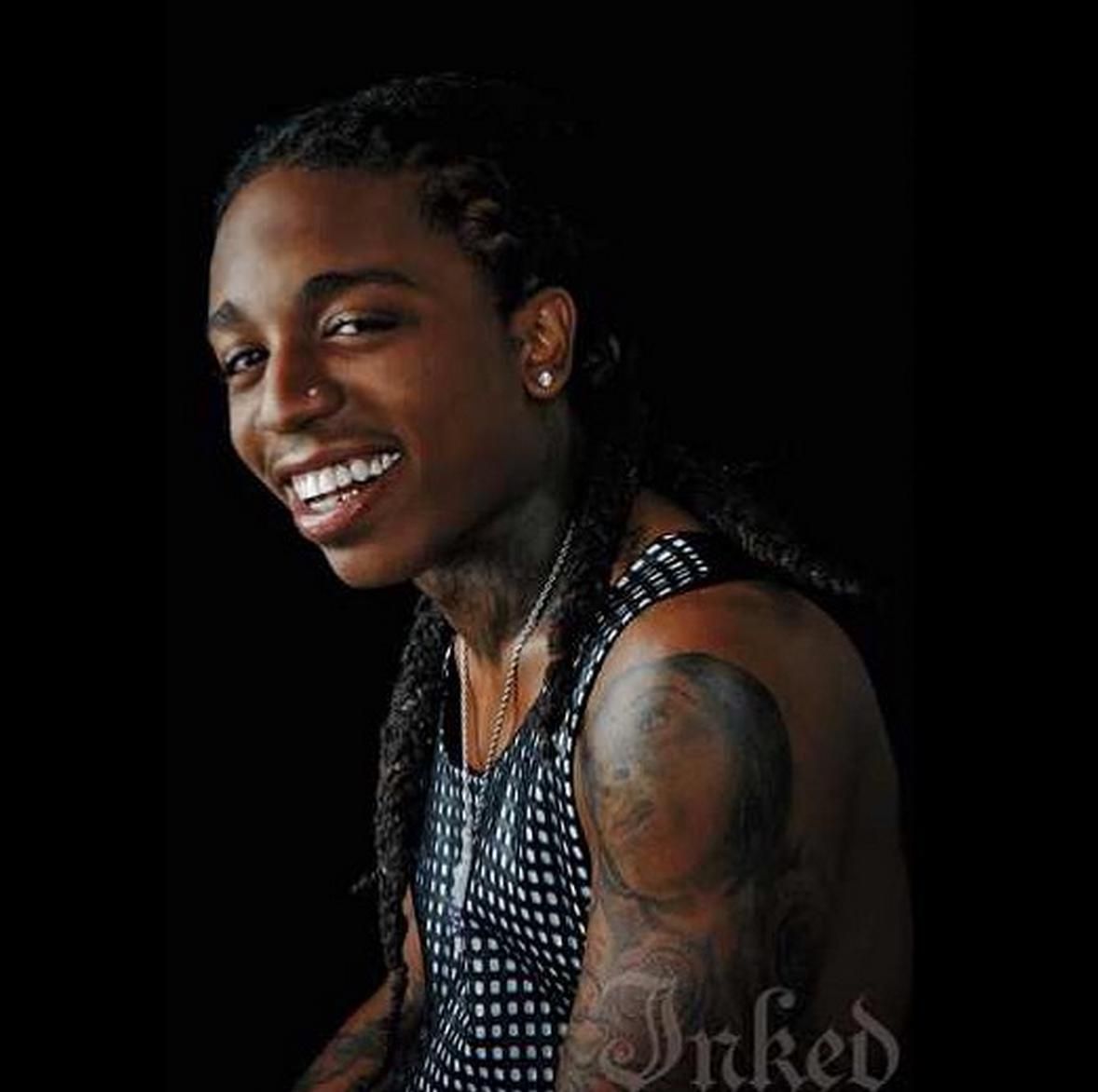
The most personal part of the collection is the family material. Jacquees points to tattoos connected with his grandmother Daisy, his mother Rosy, his sisters and his nephew Little Ray. He also describes a cartoon version of himself on the back of his arm, a guardian angel and two angels with wings. These pieces make the collection feel less like a catalogue of fashionable flash and more like a visual list of people he wants close.
His favourites are revealing: he singles out the grandmother, mother, FYB, long-life and family-name pieces. That does not mean the other tattoos are unimportant, only that these are the designs he returns to when asked what matters most. A tattoo catalogue can identify a portrait or lettering, but the preference comes from Jacquees’s own answer.
The face and ear details are smaller but still part of the record. He mentions a star on his ear from ninth grade, a diamond, a cheek tattoo associated with strength and courage, and other small marks. Small facial tattoos are easy to misread in a soft photograph, so the safest descriptions stick to designs he names rather than guessing at every line near the eye or cheek.
Jacquees’s body tattoos extend beyond the neck and arms. He identifies a king symbol on his leg, which he got at 18, along with CM for Cash Money and Rodriguez, his first name. He also talks about a triquetra representing three things that cannot be untied, a design shared with his sisters.
Those pieces give the collection a useful final layer. The king symbol is a statement of self-image, the Cash Money initials connect the body to his musical world, and Rodriguez is direct family identity rather than an abstract emblem. The triquetra is the clearest example of a design whose meaning is specifically reported: it stands for the bond between the siblings.
Jacquees says he wants room to grow and does not want to flood his body. That comment helps explain why the collection contains many individual marks without becoming one solid black suit of ink. The open skin is part of the design strategy. He can add another memory later without erasing the spaces that let each existing tattoo remain readable.
What the tattoo tour confirms
Jacquees’s tattoos cover several stages of his life: a nickname chosen at 13, a hand phrase from 15, a confidence quote at 17, family names, music references and symbols added as his career developed. The strongest descriptions combine the close-up image with the explanation he gives himself.
The collection is therefore best understood as a changing record rather than a finished map. Some pieces are clearly visible, some have been covered, and some meanings belong only to the people who were present when the ink was chosen. That balance keeps the article specific without inventing stories that the photographs and interview do not support.